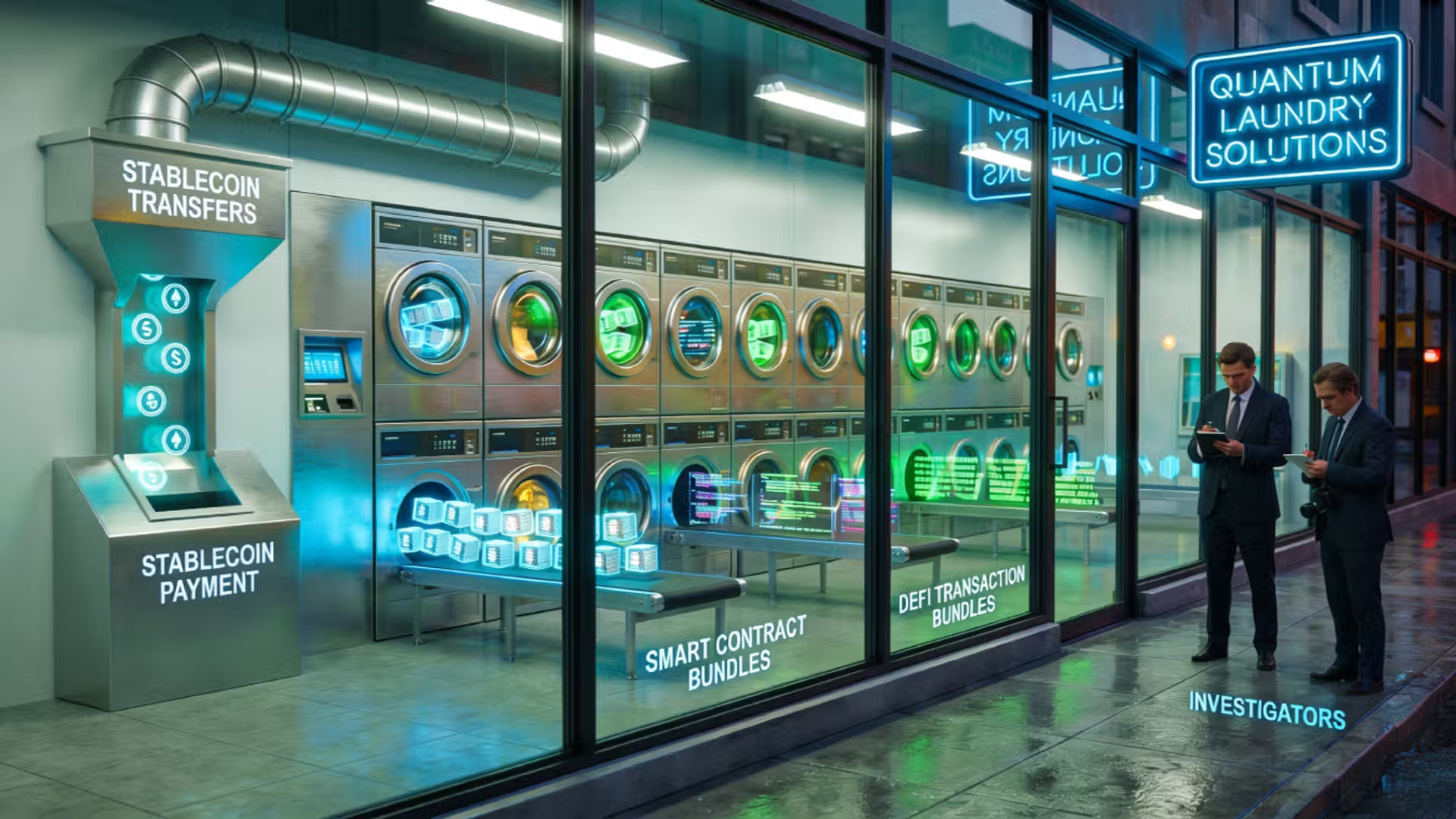
Regulatory expectations for virtual asset service providers in South Korea are currently at a crossroads as authorities propose a significant shift in oversight methodology. The primary point of contention involves a transition from traditional risk-based monitoring to a rigid rule-based reporting system for high-value transfers. Under the proposed framework, all transactions exceeding a specific monetary threshold would be subject to mandatory disclosure regardless of whether they exhibit suspicious characteristics. This crypto-focused approach is intended to provide greater transparency and prevent the concealment of illicit funds within the burgeoning digital economy. However, the introduction of these strict reporting duties has sparked a vigorous debate regarding the operational feasibility and the potential for data saturation within national intelligence units. As the legislative process unfolds, the dialogue between the state and the private sector remains focused on finding a balance between robust security and the maintenance of a functional trading environment.
Table of Contents


Industry Resistance to Mandatory Crypto Reporting
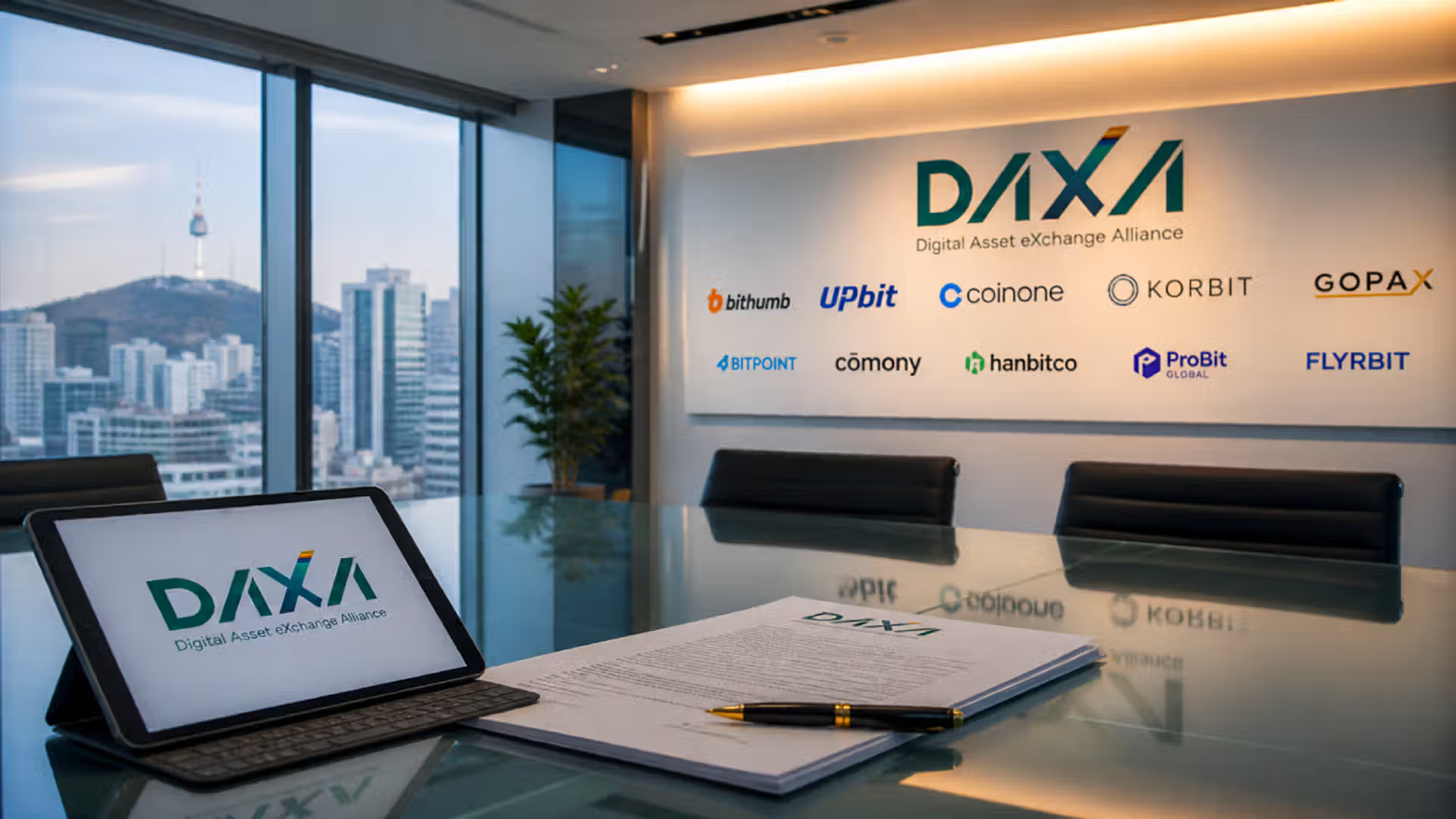
The Digital Asset Exchange Alliance (DAXA) functions as the primary representative body for the virtual asset industry in South Korea and serves as a unified voice for registered operators. Formed as a collaborative consultative group, the organization includes the nation’s five most prominent exchanges: Upbit, Bithumb, Coinone, Korbit, and Gopax. Beyond these major market leaders, the alliance also represents twenty-two smaller licensed operators who must navigate the increasingly complex domestic regulatory environment. Recently, this group submitted a formal objection to the proposed anti-money laundering rules through the Korea Legislation Research Institute public comment portal. This collective action represents the interests of both major exchanges and smaller licensed operators who argue that the new mandates could lead to an unmanageable surge in administrative requirements. By establishing a fixed 10 million won threshold for reporting, the government aims to synchronize crypto oversight with the standards already applied to traditional financial institutions. Industry representatives, however, suggest that the inherent differences between blockchain technology and legacy banking make such a direct translation problematic. They contend that the high frequency and volume of virtual asset transfers would result in a massive increase in filings, potentially diluting the effectiveness of monitoring efforts by burying genuine threats under a mountain of legitimate data.
The formal submission through the public comment portal serves as a critical mechanism for the industry to voice its technical and legal concerns before the rules are finalized. This pushback is centered on the belief that a more nuanced, risk-based approach would be more effective at identifying criminal behavior than a blanket reporting rule based solely on monetary value. The alliance has pointed out that the current regulatory climate already places significant pressure on digital asset operators, and the proposed changes could exacerbate existing operational strains. Furthermore, the industry is concerned about the broader implications for user privacy and the potential for these new rules to alienate legitimate investors who may feel overly scrutinized. The outcome of this consultation period is expected to significantly influence the final version of the enforcement decree that will govern the sector for years to come. By engaging with the Korea Legislation Research Institute, the industry is attempting to ensure that the voice of the private sector is heard at the highest levels of the legislative process, advocating for a framework that is both secure and sustainable.



Technical and Administrative Implications of New Rules
The proposed changes to the Specific Financial Information Act involve a fundamental restructuring of how crypto service providers interact with the Financial Intelligence Unit. One of the most technically demanding aspects is the push for real-time ledger reconciliation to ensure that internal records match actual blockchain holdings at all times. Instead of the industry standard of daily checks, the new rules suggest that these reconciliations should occur every five minutes. This requirement is intended to mitigate liquidity risks and ensure that customer assets are fully protected against technical errors or insolvency. While regulators view this as a necessary step for consumer protection, firms are concerned about the substantial infrastructure costs and potential latency issues associated with such frequent auditing. This level of granular oversight requires a massive investment in automated systems and real-time data processing capabilities, which could be particularly challenging for smaller licensed operators.
Beyond technical requirements, the proposed rules introduce a higher level of accountability for executive officers who will be held responsible for the integrity of a firm’s anti-money laundering program. This shift toward individual accountability is designed to ensure that compliance is prioritized at the highest levels of corporate governance. The industry, through its formal objection, has questioned the severity of potential administrative actions for minor identification errors, noting that the proposed penalties are significantly harsher than those faced by traditional banks for similar lapses. The debate continues to center on whether the unique risks of the crypto market justify such a departure from the established norms of financial supervision. As the government prepares for a final cabinet vote, the industry remains hopeful that the public comment process will lead to a more balanced regulatory framework. This balance is crucial for ensuring that South Korea remains a competitive hub for digital innovation while effectively addressing the legitimate concerns of financial regulators. The successful implementation of these rules will depend on a high degree of cooperation between the public and private sectors, as well as a shared commitment to maintaining the integrity of the nation’s financial systems.


Future Trajectory of Crypto Oversight
The conclusion of the current legislative review will likely define the operational landscape for South Korean crypto exchanges through 2026 and beyond. Compliance professionals are already preparing for a future where high-volume transaction reporting is the new normal, regardless of the final threshold established by the state. The move toward August 2026 as a pivotal implementation date for certain provisions gives firms a narrow window to upgrade their internal monitoring systems. The integration of advanced blockchain analysis tools and automated reporting software is becoming essential for meeting the proposed standards. These technologies help compliance teams handle the anticipated surge in data while still identifying the complex layering and structuring patterns used by sophisticated money laundering syndicates. As the sector evolves, the focus will increasingly shift toward more sophisticated forms of transaction monitoring that go beyond simple monetary thresholds.
The push for greater transparency is also expected to include new rules for stablecoin issuers and the expansion of the travel rule to cover smaller transactions. By bringing these segments of the market under formal oversight, the government aims to create a comprehensive safety net that covers all potential avenues for illicit finance. The dialogue initiated by the Digital Asset Exchange Alliance through the official comment portal underscores the importance of a collaborative approach to regulation. While the state remains committed to stripping away the anonymity of the crypto frontier, the industry is focused on ensuring that the resulting rules are technically viable and do not place domestic firms at a competitive disadvantage. The final result of this process will be a blueprint for how a major economy integrates decentralized assets into a highly regulated financial framework. This blueprint will likely be closely watched by other jurisdictions as they seek to develop their own regulatory responses to the challenges posed by virtual assets. Ultimately, the goal is to create an environment where the benefits of blockchain technology can be fully realized while minimizing the risks of financial crime and market instability.
Money Laundering Typologies
AML professionals must remain alert to specific behaviors that might be used to circumvent the new 10 million won reporting threshold.
- Smurfing and Structuring: The practice of breaking down large sums of money into multiple transfers just below the reporting limit to avoid triggering an automatic disclosure to the authorities.
- Mule Account Utilization: Using the verified identities of third parties to conduct transactions on behalf of a single beneficial owner to hide the total volume of funds being moved.
- Hopping and Layering: Moving digital assets rapidly across multiple platforms and converting them between different tokens to create a convoluted trail that is difficult to reconstruct.
- Threshold Manipulation: Coordinating with multiple individuals to send a series of high-value transfers that collectively represent a large criminal proceeds while individually staying within the low-risk category.
Key Points
- The Digital Asset Exchange Alliance filed a formal objection to new transaction reporting rules through the Korea Legislation Research Institute.
- Proposed rules would require mandatory reporting for all virtual asset transfers exceeding 10 million won.
- Industry representatives argue that the new rules could increase the reporting burden by more than eighty times.
- Regulators are pushing for near-real-time ledger reconciliation to be conducted every five minutes for all exchanges.
- Final legislative decisions are expected in mid 2026 with full implementation following shortly thereafter.
Related Links
- Financial Services Commission of South Korea
- Korea Financial Intelligence Unit
- Korea Legislation Research Institute Public Portal
- FATF Guidance on Virtual Assets and VASPs
- Korean Digital Asset eXchange Alliance
Other FinCrime Central Articles About South Korea’s Stance on Crypto
- South Korea Levies 5.2 Billion Won Fine Against Coinone for AML Violations
- South Korea Imposes 20 Percent Ownership Cap on Crypto Exchanges to Curb AML Risk
- South Korean Authorities Bust Crypto Laundering Ring Worth 102M$
Source: MEXC
Some of FinCrime Central’s articles may have been enriched or edited with the help of AI tools. It may contain unintentional errors.
Want to promote your brand, or need some help selecting the right solution or the right advisory firm? Email us at info@fincrimecentral.com; we probably have the right contact for you.