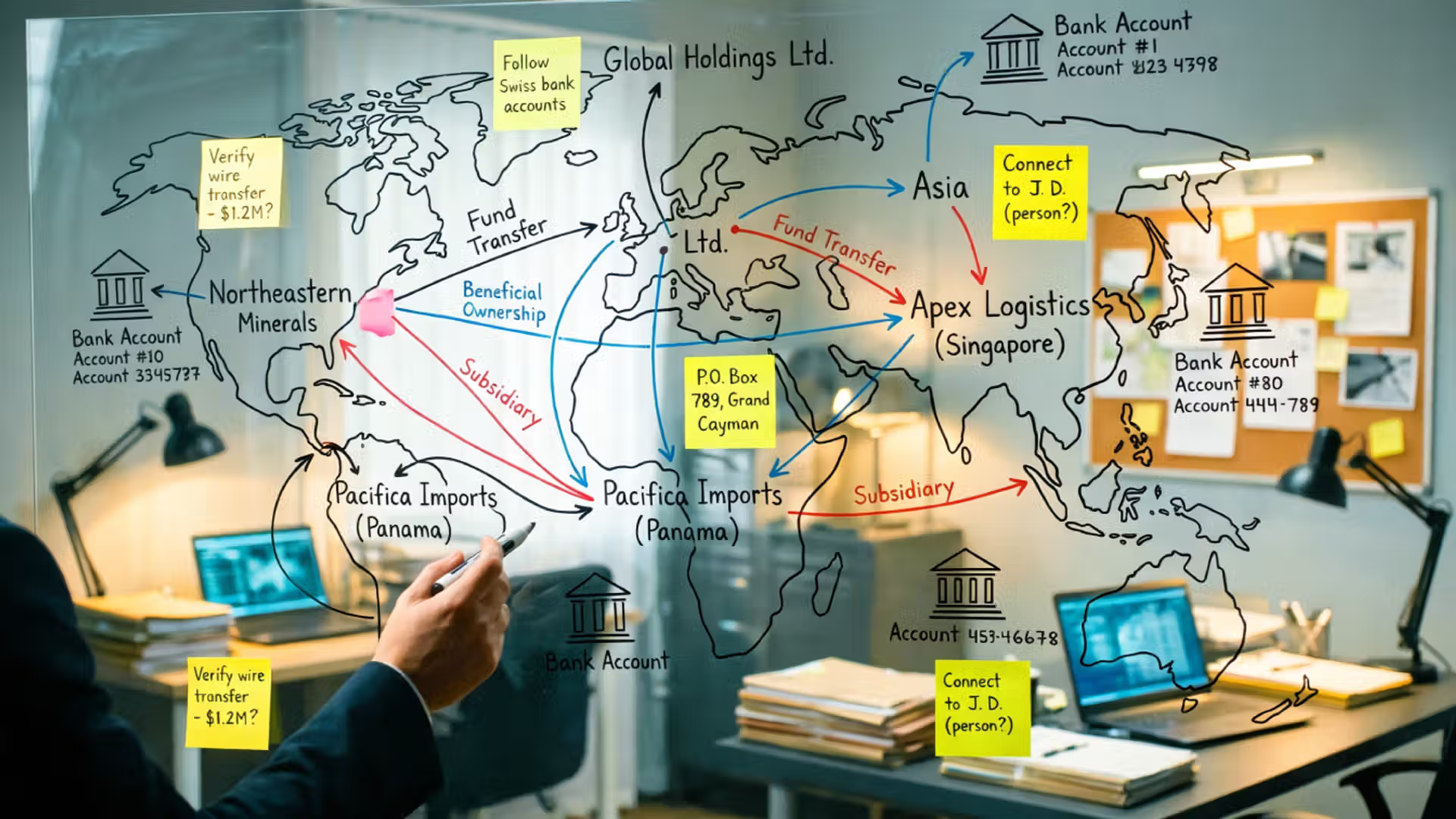
The Financial Transactions and Reports Analysis Centre of Canada (FINTRAC) recently published a detailed analysis concerning the exploitation of established trade corridors for the movement of restricted technologies. This report highlights how certain procurement networks and money laundering gangs within the South Asian diaspora are being leveraged to facilitate the acquisition of dual-use goods. These entities utilize their deep connections to international shipping hubs to circumvent economic measures intended to restrict the flow of sensitive components to sanctioned jurisdictions. Reporting entities are urged to enhance their monitoring of transactions involving high-tech exports to ensure that the Canadian financial system is not used to support prohibited military industrial activities. By understanding the specific methods used by these groups to mask the final destination of goods, compliance professionals can more effectively safeguard national security and maintain the integrity of global trade.
Table of Contents


Trade-Based Procurement and Global Transshipment Hubs
The primary focus for investigators involves the illicit export of electronics and machinery that possess both civilian and military applications. Within the South Asian diaspora, these activities often manifest through small to medium-sized export firms that appear to be engaged in legitimate commerce with markets in the Middle East and Central Asia. A recurring pattern involves the purchase of specialized components in Canada, which are then shipped to intermediary jurisdictions where the documentation is altered. For example, the report identifies instances where Canadian businesses exported electronic integrated circuits to a trading hub in the United Arab Emirates, which were subsequently diverted to a sanctioned state. These networks rely on the high volume of trade between Canada and South Asian transit points to hide the relatively small shipments of restricted technology.
Money laundering gangs often provide the financial infrastructure for these procurement efforts, using trade-based money laundering to move value without attracting attention. These groups may use a technique where a Canadian firm exports low-value consumer goods to a partner in South Asia but receives payments far in excess of the market value of the shipment. This surplus capital is then used to fund the purchase of dual-use goods from other Canadian suppliers. By co-opting legitimate diaspora businesses, these gangs create a veneer of normalcy that can be difficult for automated screening tools to penetrate. This integration of criminal finance and strategic procurement requires a more holistic approach to due diligence that considers the relationship between the parties involved and the technical specifications of the merchandise being traded.
Another significant example involves the use of front companies that share common ownership or operational addresses with established firms in the diaspora. These entities are often created specifically to handle a single high-value transaction before being dissolved to break the audit trail. In one highlighted case, a network used a series of shell companies across multiple continents to purchase laboratory equipment from a Canadian manufacturer. The funds were routed through several accounts to obscure the fact that the ultimate beneficiary was a sanctioned research institute. This level of sophistication demonstrates the need for financial institutions to conduct deep dives into the beneficial ownership of all corporate clients engaged in international trade, particularly when the goods involved have potential military utility.



Community-Based Financial Flows and Risk Indicators
The resilience of these procurement networks is often attributed to their ability to exploit informal value transfer systems that are prevalent in many South Asian communities. While these systems are widely used for legitimate remittances, they can also be used by money laundering gangs to settle debts and move funds for restricted purchases without entering the formal banking system. AML professionals should monitor for patterns of settlement where a Canadian business receives frequent, large transfers from seemingly unrelated individuals or small businesses within the same community. These payments may be intended to cover the costs of technology exports that are being managed by a different arm of the network. Identifying these indirect financial links is critical for uncovering the full scope of a procurement operation.
The behavior of the entities involved often provides the most reliable red flags for compliance teams. A firm that has traditionally specialized in the import of textiles or food products and suddenly begins exporting high-precision navigational sensors or specialized chemical processing equipment warrants immediate scrutiny. This shift in business profile is a common indicator that a firm has been co-opted by a procurement network or a money laundering gang. Additionally, inconsistencies in shipping documentation, such as vague descriptions like mechanical parts for highly specific industrial items, are used to mislead customs and bank compliance officers. When these factors are combined with a lack of a physical presence or a credible online profile for the foreign buyer, the risk of sanctions evasion is significantly elevated.
Monitoring should also focus on the geographical destinations of the goods and the source of the funding. Procurement networks frequently route items through countries that have not fully aligned their export controls with international standards. If a shipment of advanced telecommunications hardware is destined for a trading company in a jurisdiction known for transshipment to sanctioned zones, the likelihood of diversion is high. Financial institutions must calibrate their risk models to account for these specific transit corridors and the types of goods most sought after by sanctioned regimes. By integrating geopolitical intelligence with transaction data, firms can develop a more accurate picture of the risks associated with diaspora-led international trade.


Strengthening Compliance Through Technical Awareness
Effectively countering the activities of money laundering gangs and procurement networks requires a higher degree of technical awareness within compliance departments. Staff handling trade finance must be trained to recognize the classifications of dual-use goods and the specific industries they serve. For instance, understanding that a specific type of microchip is not typically used in consumer electronics but is essential for missile guidance systems can help a compliance officer flag a suspicious order. This technical knowledge allows the firm to challenge the stated end use of the products and to request additional documentation from the client. The goal is to ensure that all participants in the supply chain are fully vetted and that the economic purpose of the trade is clear.
Collaboration between the public and private sectors is essential for staying ahead of evolving typologies. The regulator provides regular updates on the specific items being targeted by procurement networks and the methods being used by money laundering gangs to fund these acquisitions. Reporting entities should use this information to update their internal watchlists and to refine their transaction monitoring rules. Furthermore, engaging with legitimate leaders in the South Asian business community can help foster a culture of compliance and transparency. By providing clear guidance on the risks and legal requirements associated with strategic exports, the government can help prevent unintentional involvement in illicit procurement schemes while protecting the reputation of the diaspora trade sector.
As the global landscape becomes increasingly complex, the methods used by criminal organizations will continue to adapt. The use of digital assets and encrypted communication channels presents new challenges for tracking the movement of funds and goods. However, the fundamental principles of anti-money laundering and sanctions compliance remain the same. By maintaining a focus on transparency, accountability, and the thorough verification of all trade partners, the Canadian financial sector can successfully disrupt these networks. The objective is to create a secure environment where legitimate diaspora businesses can thrive while ensuring that Canada remains a leader in the global fight against the financing of prohibited activities and the proliferation of sensitive technologies.
Operational Typologies for Detecting Illicit Trade
Strategic procurement networks within the South Asian diaspora are being leveraged by money laundering gangs to facilitate the illicit export of sensitive Canadian technology. These criminal syndicates exploit established community trade corridors to move dual-use goods to sanctioned jurisdictions while masking the true origin of funds:
- Industry Profile Shifts: A key indicator of co-option is when a firm traditionally dealing in consumer goods suddenly begins exporting high-precision industrial or navigational hardware.
- Illicit Technology Diversion: Networks are acquiring Canadian dual-use goods, such as electronic integrated circuits and laboratory equipment, and diverting them to sanctioned states.
- Strategic Transshipment Points: Goods are frequently routed through trading hubs like the United Arab Emirates to alter documentation and obscure the final destination.
- Money Laundering Synergy: Gangs provide financial liquidity using trade-based money laundering, often overpaying for low-value exports to generate surplus capital for restricted purchases.
- Exploitation of Legitimate Trade: Criminal actors co-opt legitimate small to medium-sized diaspora businesses to create a veneer of normalcy and bypass automated bank screening.
- Informal Financial Systems: The use of informal value transfer systems allows for the settlement of international trade debts without leaving a digital footprint in the formal banking sector.
- Nested Corporate Structures: Procurement agents establish complex webs of shell companies with common ownership to frustrate beneficial ownership investigations.
- Documentation Manipulation: Inconsistent shipping descriptions and vague labeling are used to hide the technical military utility of the merchandise from customs and compliance officers.
Key Points
- Procurement networks within the South Asian diaspora are being used to acquire and divert dual use goods to sanctioned states.
- Money laundering gangs provide the financial liquidity for these operations through trade based techniques and informal value transfers.
- Common tactics include the use of transshipment hubs in the Middle East and the manipulation of shipping documentation.
- Reporting entities must evaluate the technical specifications of goods and the economic logic of transactions to detect evasion.
Related Links
- FINTRAC Advisory on Illicit Procurement and Diaspora Networks
- Public Services and Procurement Canada Controlled Goods Program
- Global Affairs Canada Export and Import Controls
- FATF Guidance on Countering Proliferation Financing
Other FinCrime Central Articles About FINTRAC’s Latest Moves
- FINTRAC Intelligence Targets Canadian Extortion and Money Laundering Networks
- FINTRAC Enforcement Against Money Laundering in the Aerospace Sector
- FINTRAC Mandates Beneficial Ownership Disclosure to Curb Money Laundering
Source: FINTRAC
Some of FinCrime Central’s articles may have been enriched or edited with the help of AI tools. It may contain unintentional errors.
Want to promote your brand, or need some help selecting the right solution or the right advisory firm? Email us at info@fincrimecentral.com; we probably have the right contact for you.