
Category: Best Market Practice

Singapore Regulatory Circular Enforces Faster Wealth Onboarding Guidelines
The Monetary Authority of Singapore has ordered private banks to optimize Monetary Authority of Singapore Compliance Directives and cut account opening times to under thirty days.
Read More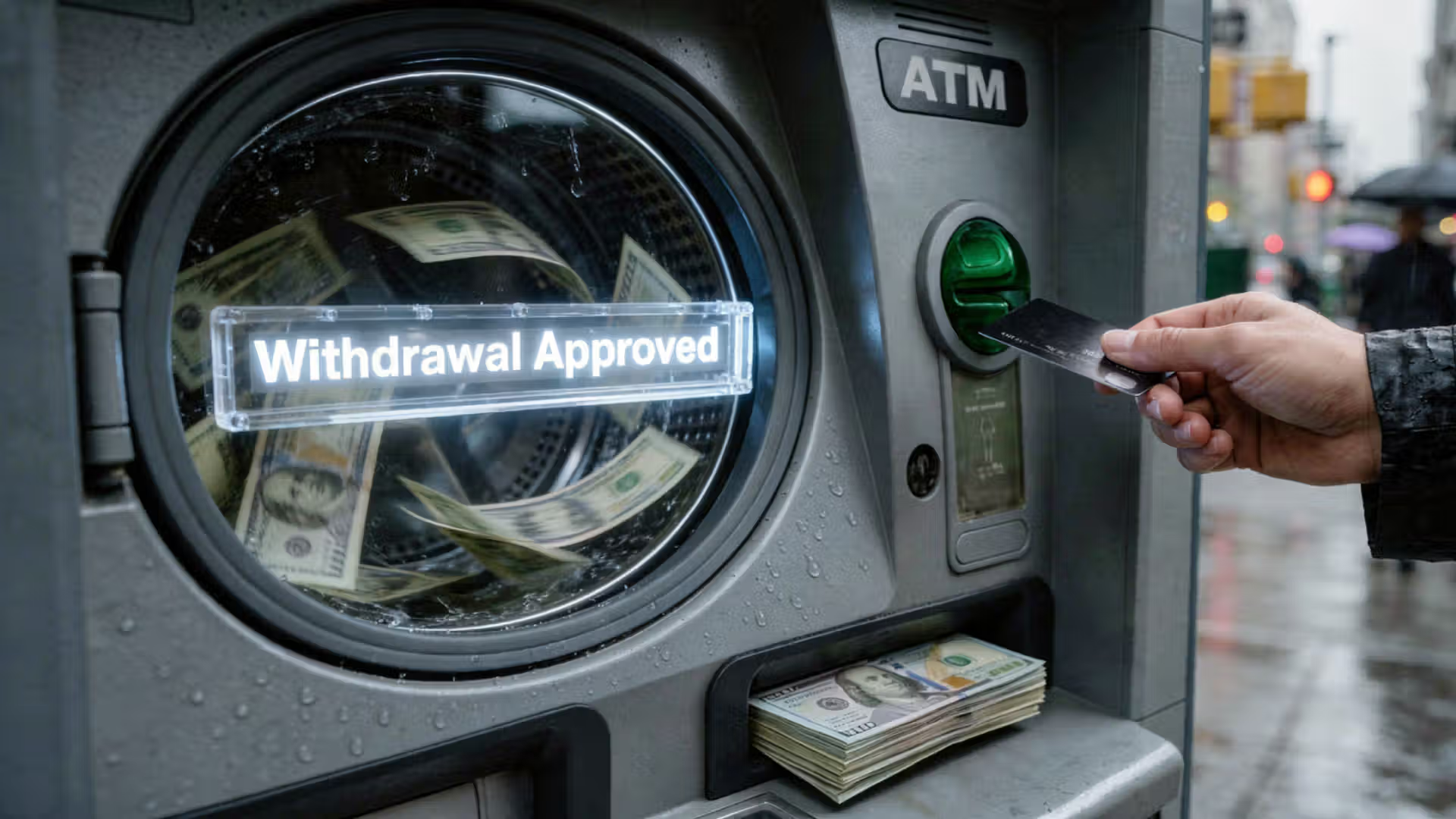
The Off-Ramp Problem Nobody Wants to Discuss
When crypto AML controls collapse due to outsourced fiat access, financial institutions face severe systemic risk at the final bank transfer point.
Read More
The Weaponization of Refunds and Chargebacks for Money Laundering Purposes
Discover how criminal networks exploit digital consumer protection protocols through e-commerce refund laundering to integrate illicit capital into global financial systems.
Read More
Model Collapse Risks Are Emerging Inside AML AI Systems
Model collapse is becoming a serious concern for AML teams as synthetic compliance datasets and AI-generated investigative content increasingly contaminate financial crime machine learning systems.
Read More
Criminal Networks Quietly Deploy AI Before Banks Catch Up
AI laundering detection is becoming critical as criminal networks deploy synthetic identities, deepfake onboarding, fake source of funds records, and AI powered mule recruitment against financial institutions.
Read More
Singapore Regulatory Circular Enforces Faster Wealth Onboarding Guidelines
The Monetary Authority of Singapore has ordered private banks to optimize Monetary Authority of Singapore Compliance Directives and cut account opening times to under thirty days.
Read More
The Off-Ramp Problem Nobody Wants to Discuss
When crypto AML controls collapse due to outsourced fiat access, financial institutions face severe systemic risk at the final bank transfer point.
Read More
The Weaponization of Refunds and Chargebacks for Money Laundering Purposes
Discover how criminal networks exploit digital consumer protection protocols through e-commerce refund laundering to integrate illicit capital into global financial systems.
Read More
Model Collapse Risks Are Emerging Inside AML AI Systems
Model collapse is becoming a serious concern for AML teams as synthetic compliance datasets and AI-generated investigative content increasingly contaminate financial crime machine learning systems.
Read More
Criminal Networks Quietly Deploy AI Before Banks Catch Up
AI laundering detection is becoming critical as criminal networks deploy synthetic identities, deepfake onboarding, fake source of funds records, and AI powered mule recruitment against financial institutions.
Read More
Singapore Regulatory Circular Enforces Faster Wealth Onboarding Guidelines
The Monetary Authority of Singapore has ordered private banks to optimize Monetary Authority of Singapore Compliance Directives and cut account opening times to under thirty days.
Read More
The Off-Ramp Problem Nobody Wants to Discuss
When crypto AML controls collapse due to outsourced fiat access, financial institutions face severe systemic risk at the final bank transfer point.
Read More
The Weaponization of Refunds and Chargebacks for Money Laundering Purposes
Discover how criminal networks exploit digital consumer protection protocols through e-commerce refund laundering to integrate illicit capital into global financial systems.
Read More
Model Collapse Risks Are Emerging Inside AML AI Systems
Model collapse is becoming a serious concern for AML teams as synthetic compliance datasets and AI-generated investigative content increasingly contaminate financial crime machine learning systems.
Read More
Criminal Networks Quietly Deploy AI Before Banks Catch Up
AI laundering detection is becoming critical as criminal networks deploy synthetic identities, deepfake onboarding, fake source of funds records, and AI powered mule recruitment against financial institutions.
Read More