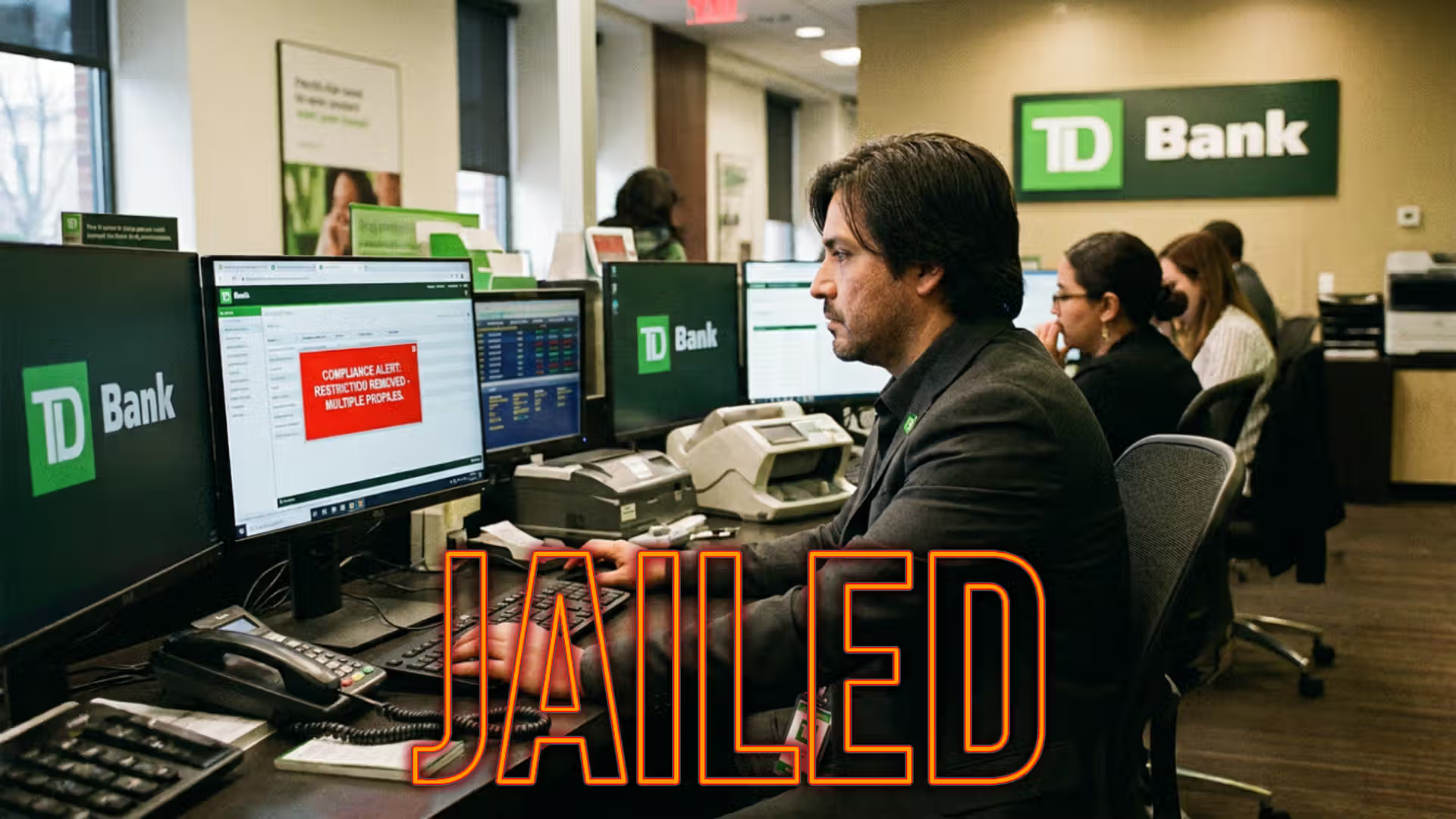
The Danish Financial Supervisory Authority (Finanstilsynet) has officially requested the National Unit for Serious Crime to investigate Nordea Finans Danmark A/S for serious breaches of the Money Laundering Act. This referral follows a comprehensive inspection conducted in June 2023, which revealed significant deficiencies in the customer due diligence processes maintained by the financial institution. Regulators determined that the company failed to obtain sufficient knowledge regarding the business relationships of a substantial group of credit card users. These systemic gaps in oversight have led to a criminal report under section 78 of the national anti-money laundering legislation. The investigation highlights critical weaknesses in risk assessment protocols and the documentation of customer intentions within the Danish financial sector.
Table of Contents



Nordea Finans Danmark AML Compliance Failures
The escalation of the case involving Nordea Finans Danmark A/S marks a pivotal moment for financial regulation within the Nordic region. According to the findings released by the Danish Financial Supervisory Authority, the company demonstrated a persistent inability to adhere to the fundamental requirements set forth in Section 11 and Section 30 of the Money Laundering Act. The core of the issue resides in the issuance of credit cards to a massive volume of clients without the necessary qualitative analysis required by law. In any functional anti-money laundering framework, the institution must understand not only who the customer is but also the underlying logic of the requested financial product. For a large group of individuals, the company did not adequately probe or document why the customers required credit cards or how they intended to utilize the credit facilities. This lack of insight creates a massive blind spot where illicit funds can be layered or integrated through revolving credit lines without triggering internal alarms. When an organization of this scale fails to maintain accurate customer files, it compromises the integrity of the entire national financial system. The regulatory body explicitly noted that the entries made in the files were insufficient to justify the business relationship, meaning the bank was essentially operating in the dark regarding the potential risks posed by these accounts. Such failures are categorized as systematic, suggesting they were not isolated human errors but rather a fundamental breakdown in the internal control environment of the company. This structural collapse in oversight demonstrates that the institution prioritized rapid product distribution over the mandatory legal safeguards designed to protect the economy from criminal exploitation.




Systematic Deficiencies in Risk Classification
Beyond the simple failure to gather information, the report indicates a complete absence of risk assessment and classification for a Beyond the simple failure to gather information, the report indicates a complete absence of risk assessment and classification for a significant portion of the customer base. Under modern regulatory standards, financial entities must apply a risk based approach to every relationship they enter. This process involves evaluating various factors, such as the geographical location of the customer, their professional background, and their expected transaction patterns. By failing to perform these classifications, Nordea Finans Danmark A/S essentially treated high risk and low risk customers with the same level of scrutiny, which is a direct violation of international standards. Without a proper risk rating, special risk factors associated with money laundering and the financing of terrorism go unnoticed and unmitigated. This oversight is particularly dangerous in the context of credit card products, which offer high liquidity and global reach. If an institution does not consider whether a customer relationship entails increased risk, it cannot apply the enhanced due diligence measures that the law demands. The Danish Financial Supervisory Authority remains firm in its assessment that these violations are not merely administrative oversights but represent a failure to comply with the very essence of the AML Act. The decision to involve the National Unit for Serious Crime underscores the gravity of the situation, as it moves the matter from a civil regulatory concern to a potential criminal liability. This case serves as a stark reminder that even established financial giants are subject to rigorous oversight and must maintain robust systems to identify and evaluate the specific threats associated with their product offerings and client profiles. Ultimately, the lack of a structured risk framework undermines the ability of the financial intelligence unit to receive high quality suspicious activity reports, effectively blinding the national defenses against organized crime.


Regulatory Accountability and National Security
The legal implications for the company are centered on section 78 of the AML Act, which provides the basis for criminal liability when violations are systematic or gross in nature. By failing to implement effective customer due diligence procedures, the firm has potentially allowed a gateway for illicit actors to move funds through the Danish economy. The National Unit for Serious Crime is now tasked with determining the extent of these failures and whether they were the result of negligence or more deep-seated organizational issues. The protection of the financial perimeter depends entirely on the frontline defenses of banks and financial service providers. When these institutions fail to ask basic questions about the purpose and intended nature of a business relationship, the entire infrastructure for detecting financial crime is weakened. The inspection from June 2023 clearly highlighted that the company did not have a grasp on the risk factors that should have been obvious under a standard compliance regime. This case also reflects a broader trend among European regulators to move away from simple fines toward more aggressive criminal referrals for systemic failures. The focus is no longer just on the recovery of illicit funds but on the accountability of the institutions that provide the pipes for the money to flow. As the investigation continues, it will likely examine the internal culture of compliance within the organization and why the warnings from internal auditors or previous reviews were apparently not enough to prevent these systematic gaps. For the broader industry, the lesson is clear that documentation and risk classification are not optional formalities but are the bedrock of legal operation within the European Union and the Danish jurisdiction.
Typologies Related to Systematic Credit Card Abuse
AML professionals must remain vigilant regarding specific patterns that emerge when credit card products are issued without proper oversight or risk classification.
- Credit Card Layering Patterns: The use of multiple credit cards to move funds between different jurisdictions or accounts to obscure the origin of the money.
- Rapid Debt Retirement: Instances where a customer settles large credit card balances using cash or transfers from third-party accounts shortly after the debt is incurred.
- Inconsistent Product Usage: Scenarios where the actual use of a credit card does not match the stated purpose provided during the onboarding process.
- Structured Overpayments: Intentionally overpaying a credit card balance to create a positive balance, which is then withdrawn as a cash advance or transferred elsewhere.
- Circular Fund Movements: Funds are being moved from a primary account to a credit card and then back to the original source through a different channel to simulate legitimate activity.
- High Frequency Cross-Border Activity: Constant international transactions on a card that was purportedly intended for domestic or personal use only.
Key Points
- The Danish Financial Supervisory Authority has reported Nordea Finans Danmark A/S to the police for criminal investigation.
- Systemic failures in customer due diligence were identified across a large group of credit card customers.
- The company failed to document the purpose and intended nature of business relationships for many clients.
- No risk assessment or risk classification was conducted for a significant portion of the customer base.
- The National Unit for Serious Crime will investigate the potential criminal liability under section 78 of the AML Act.
Related Links
- Danish Financial Supervisory Authority Official Reports
- National Unit for Serious Crime Press Releases
- Danish Ministry of Justice Money Laundering Act Database
- FATF Guidance on the Risk-Based Approach for the Banking Sector
- European Banking Authority AML and CFT Supervision Guidelines
Other FinCrime Central Articles About Danish Regulator’s Latest Actions
- Danish FSA Hits Merex International Over High Risk Iran Transfers
- Danish Regulator Updates 4 Key Areas To Boost Local Banks
- Danish FSA Identifies Major Risk Failures at Safenetpay ApS
Source: Finanstilsynet
Some of FinCrime Central’s articles may have been enriched or edited with the help of AI tools. It may contain unintentional errors.
Want to promote your brand, or need some help selecting the right solution or the right advisory firm? Email us at info@fincrimecentral.com; we probably have the right contact for you.