
The Latest FinCrime News about Regulation and Compliance
-

FinCEN Wants Fraud Information Shared to Stop Global Money Laundering
FinCEN remains willing to see fraud information being shared among banks, leveraging statutory safe harbor rules to dismantle complex money laundering networks and protect the integrity of the global financial system.
-

AMLA Concludes Inaugural Anti-Money Laundering Framework Conference
The inaugural assembly introduces advanced Anti-Money Laundering Architecture Enhancements as AMLA successfully concludes its first conference to eliminate cross-border vulnerabilities.
-

Understanding the Operational Divergence Between Stablecoin Transfers and Transactions
An analysis of stablecoins transaction complexity based on BIS research, highlighting why compliance teams must track bundled smart contract flows to prevent money laundering evasion.
-
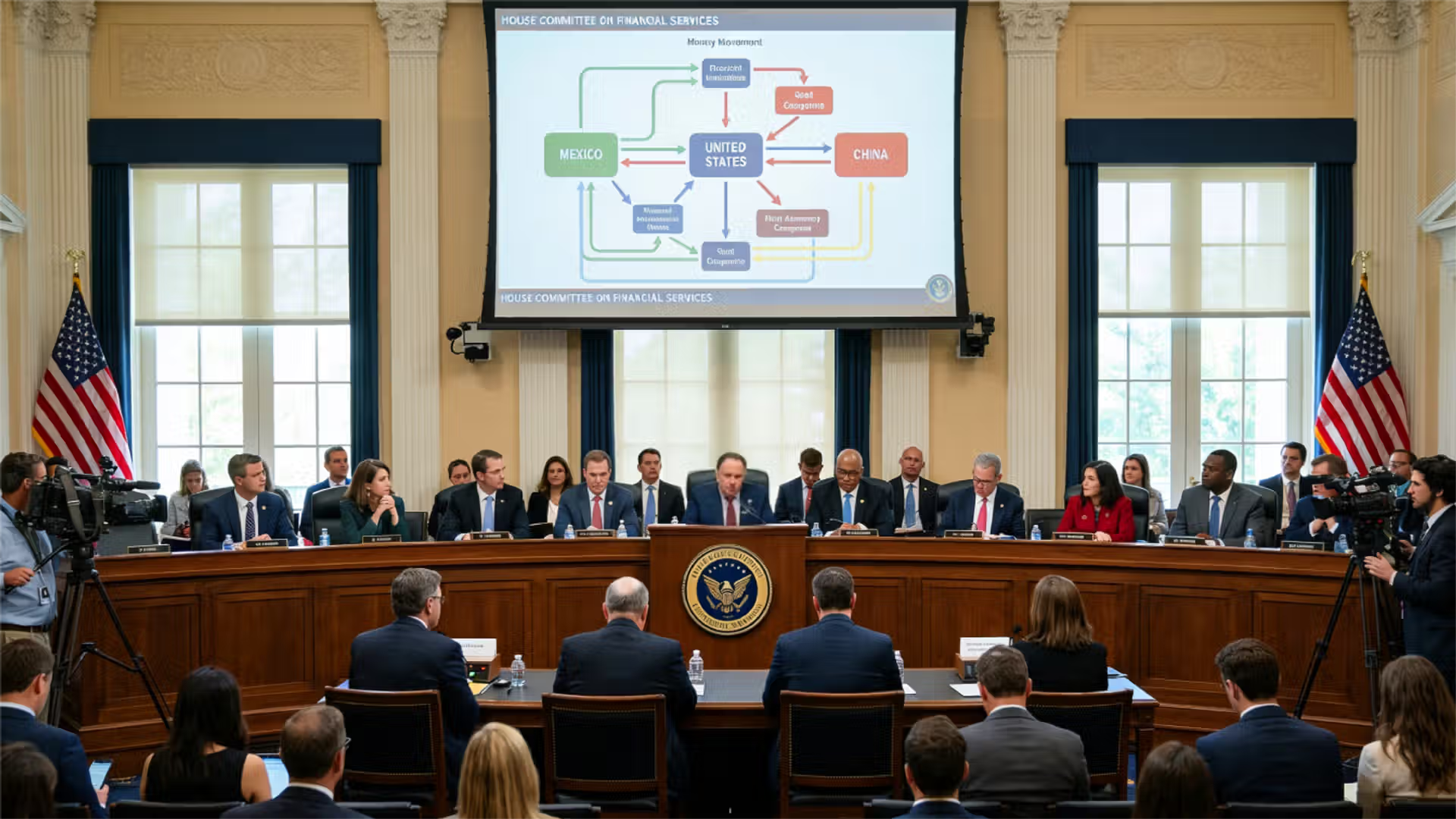
US House Committee Hearing Examines Chinese Money Laundering Networks
A US House Committee hearing examined how Chinese money laundering networks facilitate cartel financing through underground banking systems, cross-border value transfers, and sophisticated financial crime infrastructures operating within and beyond the U.S. financial system.


-

Hong Kong Court Upholds €30 Million Award Despite Sanctions Risk
An analysis of sanctions enforcement standards and recent judicial interpretations in financial crime prosecution within Hong Kong and major international commercial hubs.
-

When Does Regulatory Accountability Become a Collateral Challenge?
The enforcement of anti money laundering standards requires clear legal boundaries to prevent a collateral challenge from disrupting regulatory finality and weakening corporate accountability in financial crime cases.
-

UAE Enhances Financial System Security Through Regulatory Oversight
The UAE dramatically intensifies its domestic regulatory framework by executing thousands of field inspections to enhance supervisory oversight across virtual assets and traditional banking systems.
-

Thailand Insurance Standards Strengthened to Combat Illicit Asset Management
The Office of Insurance Commission is elevating Thailand insurance frameworks to align with global standards and prevent financial crime before the upcoming international assessment.
-

AMLA Launches Critical Anti Money Laundering Draft Guidelines For European Entities
AMLA Launches Critical Anti Money Laundering Draft Guidelines to standardize continuous transaction tracking across financial and non financial European sectors
-

Singapore Regulatory Circular Enforces Faster Wealth Onboarding Guidelines
The Monetary Authority of Singapore has ordered private banks to optimize Monetary Authority of Singapore Compliance Directives and cut account opening times to under thirty days.
-

Latest FINTRAC’s Report Alerts On Gambling And Mule Networks
FINTRAC highlights how sports betting money laundering schemes rely not only on gambling platforms but also on networks of recruited individuals, mule accounts, payment intermediaries, and fragmented financial activity.
-

The FATF Regional Compliance Progress Across the Caribbean Perimeter
An analysis of the updated Caribbean financial transparency measures introduced to satisfy international FATF compliance mandates.
-

FATF Evaluation of Financial Oversight Progress in Central Africa
The FATF evaluated regional progress across Central Africa, detailing updates to anti-money laundering frameworks and structural tracking mechanisms inside Gabon, the Democratic Republic of Congo, and the Republic of the Congo.
-
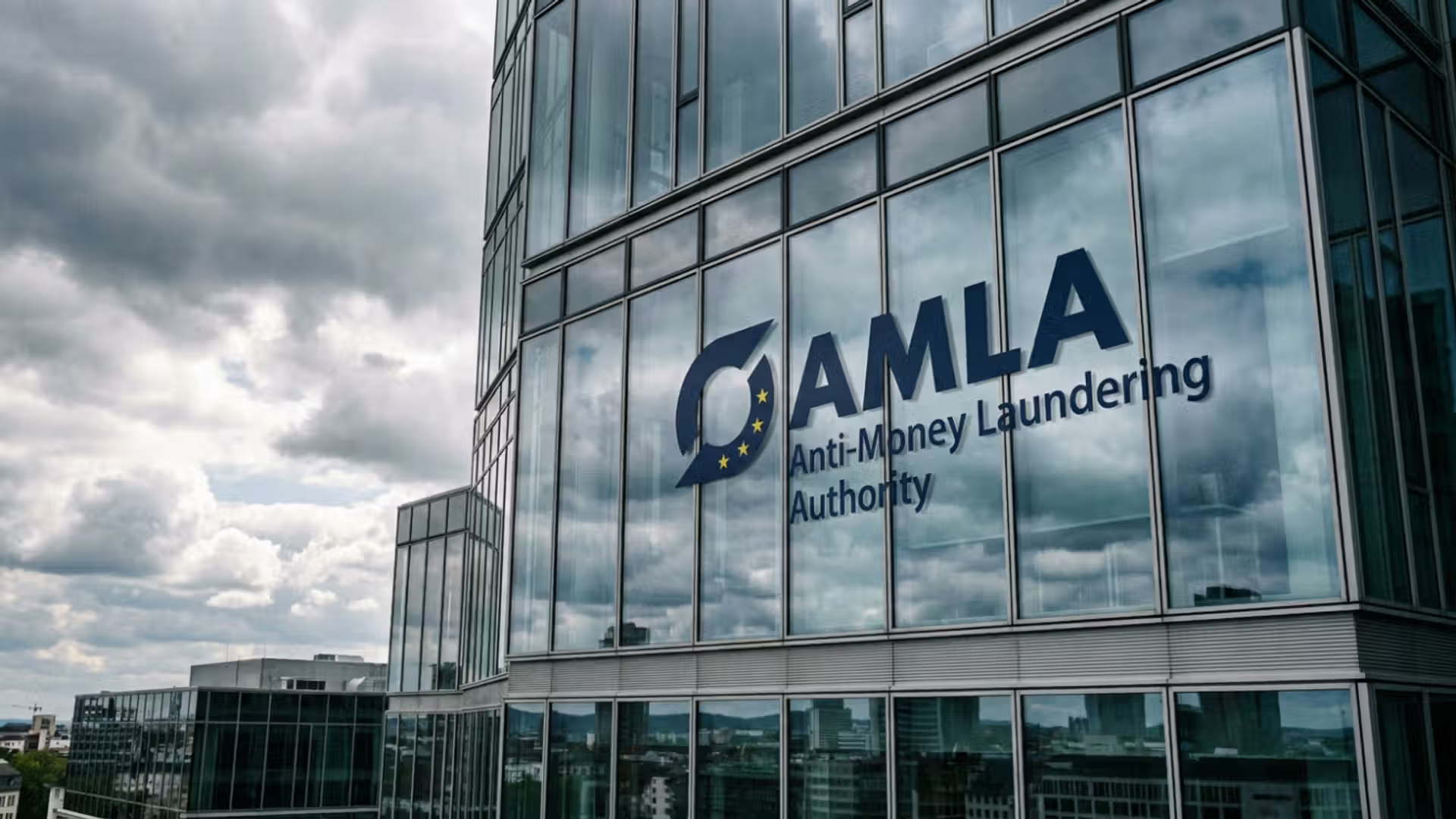
Navigating the New AMLA Draft Regulatory Guidelines for European Union Market Risk
An analysis of the new AMLA framework guiding the business-wide risk assessment process for European firms balancing proportionality with strict targeted financial sanctions screening protocols.
-

Community Federal Savings Bank Faces OCC Action Imposing Zero Dollar Fine
Community Federal Savings Bank faces a comprehensive regulatory enforcement action targeting severe systemic deficiencies within its compliance tracking architecture and payment processing tracking lines.
-

Swedish Norion Bank Fined 90 Million Kronor For Regulatory Breaches
Norion Bank AB has received a formal remark and a 90 million kronor administrative fine from the Swedish Financial Supervisory Authority for failing to meet corporate customer due diligence and anti money laundering regulations.

Other News About Compliance and Regulation
FinCEN Wants Fraud Information Shared to Stop Global Money Laundering
FinCEN remains willing to see fraud information being shared among banks, leveraging statutory safe harbor rules to dismantle complex money laundering networks and protect the integrity of the global financial system.
AMLA Concludes Inaugural Anti-Money Laundering Framework Conference
The inaugural assembly introduces advanced Anti-Money Laundering Architecture Enhancements as AMLA successfully concludes its first conference to eliminate cross-border vulnerabilities.
Understanding the Operational Divergence Between Stablecoin Transfers and Transactions
An analysis of stablecoins transaction complexity based on BIS research, highlighting why compliance teams must track bundled smart contract flows to prevent money laundering evasion.