
Category: Opinion
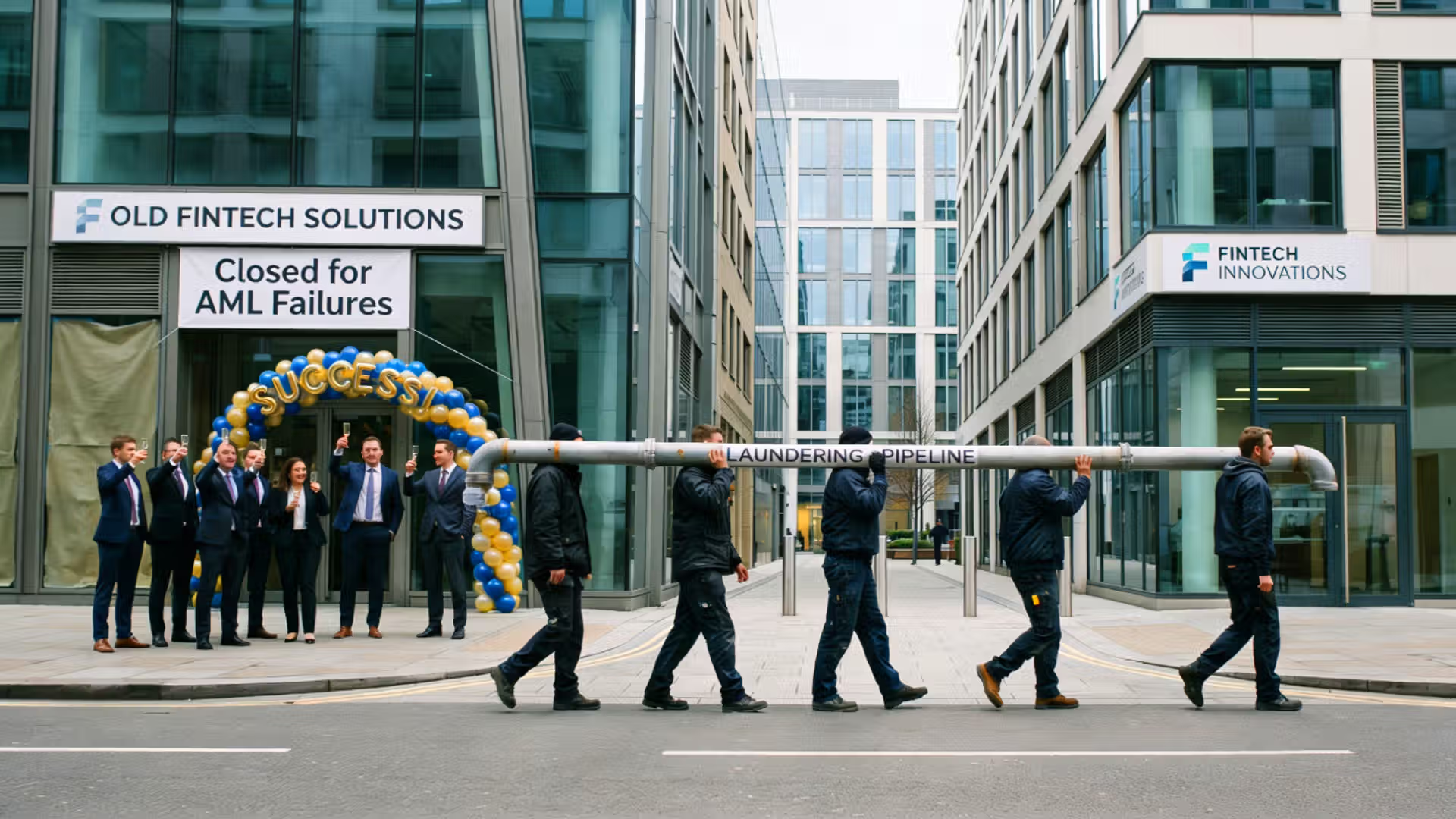
Losing the Laundering Channels, Keeping the Capability
Money laundering channels can survive the loss of accounts, institutions, and entire financial channels as long as they retain two assets: the capital to redeploy and the know-how to rebuild. The real AML challenge is not closing today’s channel, but identifying the next one before criminal operators migrate their money and expertise elsewhere.
Read More
When Payment Providers Become the Front Line of Financial Crime
Payment Providers AML has become a critical challenge as FinTechs increasingly serve as the first line of defence against money laundering, fraud, sanctions evasion, and organised financial crime.
Read More
Uncontrolled Trade-Based Money Laundering Gaps in Global Banking
A deep analysis of how trade-based money laundering remains the largest unmonitored channel for financial crime due to global banking system gaps.
Read More
The Sanctioned Exchange Problem: Why Crypto AML Still Fails at the Off-Ramp
Crypto off-ramp infrastructure has emerged as a critical AML challenge as sanctions actions involving exchanges linked to high-risk jurisdictions expose vulnerabilities in conversion networks.
Read More
When Does Regulatory Accountability Become a Collateral Challenge?
The enforcement of anti money laundering standards requires clear legal boundaries to prevent a collateral challenge from disrupting regulatory finality and weakening corporate accountability in financial crime cases.
Read More
Losing the Laundering Channels, Keeping the Capability
Money laundering channels can survive the loss of accounts, institutions, and entire financial channels as long as they retain two assets: the capital to redeploy and the know-how to rebuild. The real AML challenge is not closing today’s channel, but identifying the next one before criminal operators migrate their money and expertise elsewhere.
Read More
When Payment Providers Become the Front Line of Financial Crime
Payment Providers AML has become a critical challenge as FinTechs increasingly serve as the first line of defence against money laundering, fraud, sanctions evasion, and organised financial crime.
Read More
Uncontrolled Trade-Based Money Laundering Gaps in Global Banking
A deep analysis of how trade-based money laundering remains the largest unmonitored channel for financial crime due to global banking system gaps.
Read More
The Sanctioned Exchange Problem: Why Crypto AML Still Fails at the Off-Ramp
Crypto off-ramp infrastructure has emerged as a critical AML challenge as sanctions actions involving exchanges linked to high-risk jurisdictions expose vulnerabilities in conversion networks.
Read More
When Does Regulatory Accountability Become a Collateral Challenge?
The enforcement of anti money laundering standards requires clear legal boundaries to prevent a collateral challenge from disrupting regulatory finality and weakening corporate accountability in financial crime cases.
Read More
Losing the Laundering Channels, Keeping the Capability
Money laundering channels can survive the loss of accounts, institutions, and entire financial channels as long as they retain two assets: the capital to redeploy and the know-how to rebuild. The real AML challenge is not closing today’s channel, but identifying the next one before criminal operators migrate their money and expertise elsewhere.
Read More
When Payment Providers Become the Front Line of Financial Crime
Payment Providers AML has become a critical challenge as FinTechs increasingly serve as the first line of defence against money laundering, fraud, sanctions evasion, and organised financial crime.
Read More
Uncontrolled Trade-Based Money Laundering Gaps in Global Banking
A deep analysis of how trade-based money laundering remains the largest unmonitored channel for financial crime due to global banking system gaps.
Read More
The Sanctioned Exchange Problem: Why Crypto AML Still Fails at the Off-Ramp
Crypto off-ramp infrastructure has emerged as a critical AML challenge as sanctions actions involving exchanges linked to high-risk jurisdictions expose vulnerabilities in conversion networks.
Read More
When Does Regulatory Accountability Become a Collateral Challenge?
The enforcement of anti money laundering standards requires clear legal boundaries to prevent a collateral challenge from disrupting regulatory finality and weakening corporate accountability in financial crime cases.
Read More