
The latest news about Best AML Practice
-

Singapore Regulatory Circular Enforces Faster Wealth Onboarding Guidelines
The Monetary Authority of Singapore has ordered private banks to optimize Monetary Authority of Singapore Compliance Directives and cut account ope...
-
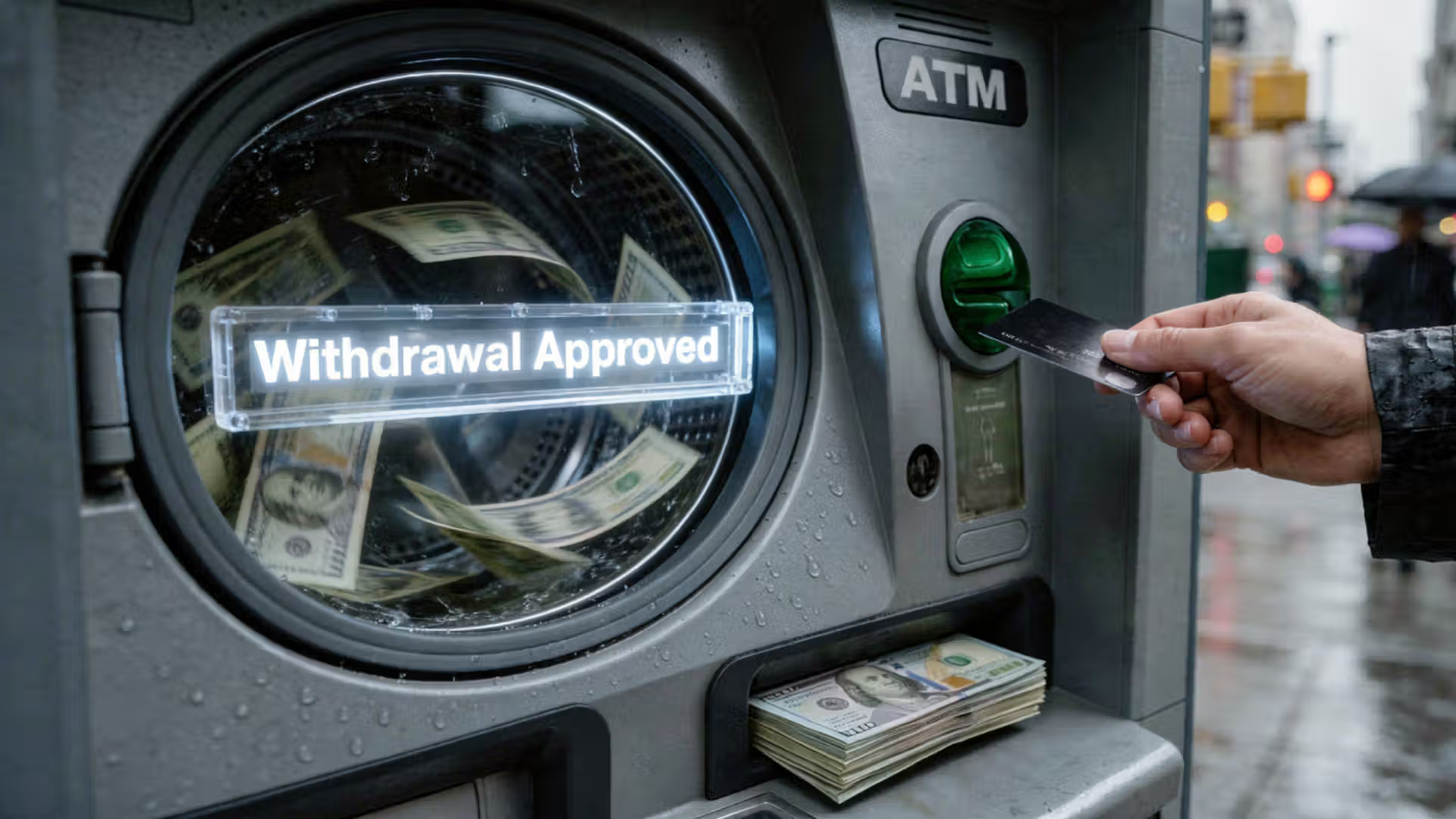
The Off-Ramp Problem Nobody Wants to Discuss
When crypto AML controls collapse due to outsourced fiat access, financial institutions face severe systemic risk at the final bank transfer point.
-

The Weaponization of Refunds and Chargebacks for Money Laundering Purposes
Discover how criminal networks exploit digital consumer protection protocols through e-commerce refund laundering to integrate illicit capital into...
-

Model Collapse Risks Are Emerging Inside AML AI Systems
Model collapse is becoming a serious concern for AML teams as synthetic compliance datasets and AI-generated investigative content increasingly con...




-

Criminal Networks Quietly Deploy AI Before Banks Catch Up
AI laundering detection is becoming critical as criminal networks deploy synthetic identities, deepfake onboarding, fake source of funds records, a...
-

Money Laundering Millions Through Fraudulent Commercial Staffing Networks
Analyzing how international money laundering networks use multi tiered corporate shell subcontractors, fake payroll files, and reloadable prepaid c...
-

Combating the Rise of Money Mule Networks in Modern Finance
Money mule networks pose significant threats to financial integrity through deceptive recruitment and high- velocity fund transfers designed to byp...
-

The Citibank example: Compliance reads data; Fraud reads scenarios.
The Citibank Revlon payment error revealed how AML and operational controls can validate transactions technically while completely missing contextu...

-

MT103 Fields Explained for AML Monitoring and Risk Detection
MT103 AML analysis is critical for detecting suspicious wire transfers, helping compliance teams interpret transaction data, identify red flags, an...
-

4,500 Frauds in 28 Months: Lessons From the Home Depot Miami Case
The Mauricio Jimenez case at Home Depot Miami reveals the dangers of Inverted AML and how misaligned incentives allowed a $4.3 million fraud to thr...
-

The Brain of Compliance Is Scattered
The AML methodology framework is emerging as the critical weak point in compliance programmes, with regulators increasingly focusing on how institu...
-

Shifting Legal Landscapes: Navigating Jurisdictional Drift in AML Compliance
Maintaining jurisdictional requirements in AML systems is critical as legislative nuances shift, requiring proactive identification and adjustment ...
-
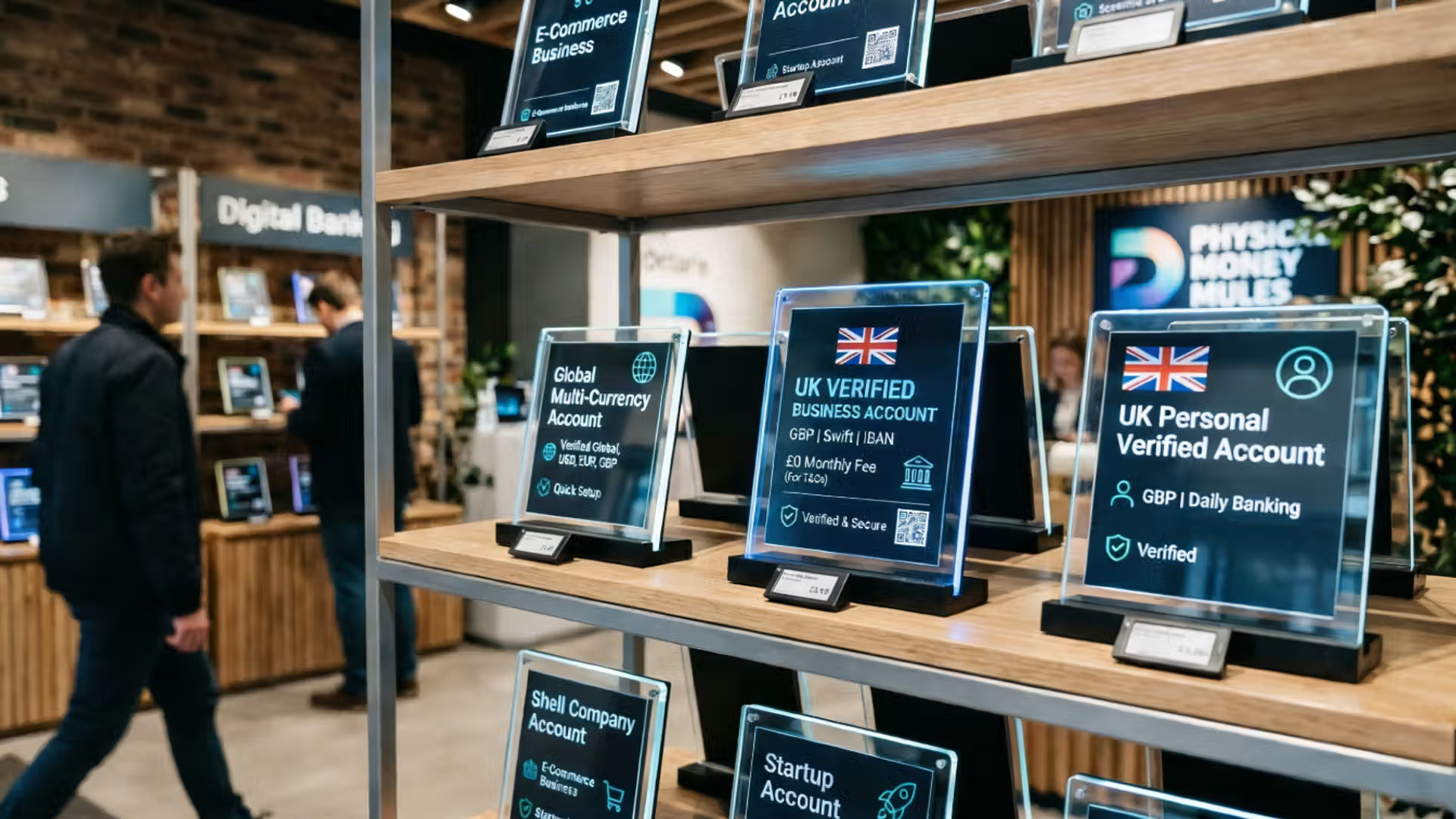
The Rise of Mule Accounts as a Service (MAaaS): A Growing Underground Economy
Mule Accounts as a Service (MAaaS) is reshaping global money laundering, enabling scalable criminal operations and challenging AML controls through...
-

AI Drift and Model Decay in Modern AML Compliance Systems
The hidden risk of anti money laundering systems lies in AI drift, where models learn from their own mistakes and create recursive feedback loops t...
-

The US Move to Repeal Key Beneficial Ownership Reporting Requirements
The US House Financial Services Committee has voted to repeal the Corporate Transparency Act, potentially removing key Beneficial Ownership disclos...
-

The European Banking Authority (EBA) Updates Anti Money Laundering Reporting Standards
The EBA reporting framework 4.3 update introduces vital technical standards and DPM 2.0 database structures to enhance anti money laundering oversi...

Other News About Best AML Practice
Singapore Regulatory Circular Enforces Faster Wealth Onboarding Guidelines
The Monetary Authority of Singapore has ordered private banks to optimize Monetary Authority of Singapore Compliance Directives and cut account opening times to under thirty days.
The Off-Ramp Problem Nobody Wants to Discuss
When crypto AML controls collapse due to outsourced fiat access, financial institutions face severe systemic risk at the final bank transfer point.
The Weaponization of Refunds and Chargebacks for Money Laundering Purposes
Discover how criminal networks exploit digital consumer protection protocols through e-commerce refund laundering to integrate illicit capital into global financial systems.