The Office of Foreign Assets Control (OFAC) issued a significant alert on April 28, 2026, regarding the persistent sanctions risks associated with independent oil refineries in China. These entities, commonly known as teapot refineries, have played a central role in importing and refining Iranian crude oil throughout the current year and the previous fiscal period. Financial institutions must recognize that dealings with these refineries can trigger severe enforcement actions and blocking orders under existing executive mandates. Treasury officials emphasize that the maximum pressure campaign remains in full effect to prevent the Iranian regime from accessing global revenue streams. Entities found facilitating these transactions face total exclusion from the United States financial system and the immediate freezing of all domestic assets.
Table of Contents


Teapot Refineries Sanctions Risk and Financial Compliance
The global financial landscape is currently facing a heightened state of alert as the United States Treasury Department intensifies its scrutiny of independent Chinese petroleum processors. These specific entities, concentrated largely within the Shandong Province, have become a focal point for international sanctions enforcement due to their continued acquisition of sanctioned energy products. Since early 2025, the regulatory environment has shifted toward a zero-tolerance policy regarding the movement of Iranian-origin crude oil into Asian markets. The Office of Foreign Assets Control has identified a systemic pattern where these smaller, independent refineries serve as the primary destination for nearly ninety percent of Iran’s total petroleum exports. This massive influx of capital into the Iranian economy provides the necessary resources for the regime to fund activities that the United States government deems a threat to international security and regional stability. Financial professionals operating within compliance departments must understand that these refineries are not merely commercial actors but are now classified as high-risk facilitators of sanctioned trade. The designations made under Executive Order 13902 provide the legal basis for targeting the petroleum and petrochemical sectors of Iran, extending the reach of U.S. law to any entity, regardless of its geographic location, that provides material support to these sectors. Because many of these teapot refineries utilize the U.S. dollar for their international trade and rely on American technology for their operational infrastructure, they fall directly within the jurisdictional reach of federal investigators. Any bank or clearing house that processes a payment for a designated refinery is essentially engaging in a prohibited transaction, which can lead to catastrophic legal and reputational consequences. The recent alert serves as a formal notice that the grace period for these independent processors has ended, and the full weight of the maximum pressure strategy is being applied to disrupt the financial networks that sustain them.




Strategic Oversight of Shandong Province Petroleum Imports
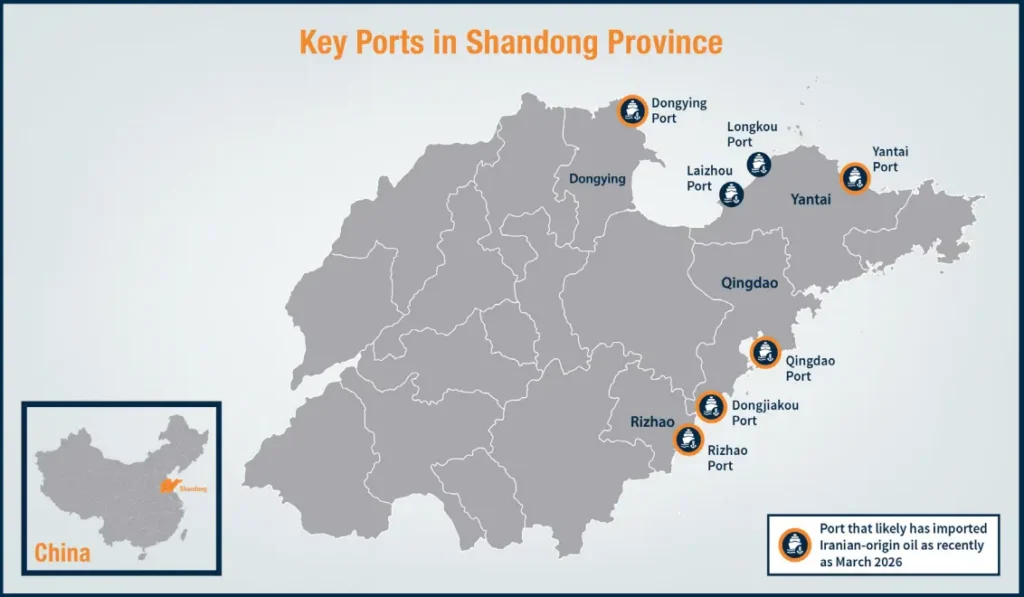
The geographic concentration of teapot refineries in the Shandong Province creates a unique challenge for compliance officers who must monitor trade finance and maritime logistics. This region has historically been the heart of China’s independent refining sector, characterized by a fragmented market of private enterprises that operate outside the direct control of the largest state-owned energy conglomerates. However, this independence has allowed these refineries to bypass traditional trade norms and engage in high-risk procurement strategies involving sanctioned jurisdictions. The Office of Foreign Assets Control has highlighted several key ports, including Dongying, Longkou, Laizhou, and Qingdao, as critical nodes in the supply chain for Iranian oil. These maritime gateways are frequently used by vessels that have engaged in deceptive shipping practices designed to hide the true origin of their cargo. Compliance teams are encouraged to look beyond the immediate names of the refineries and investigate the entire logistics chain, including port terminal operators and cargo inspection services. Since the signing of National Security Presidential Memorandum 2, there has been a coordinated whole-of-government effort to map these networks and designate the individuals and companies that provide the essential services required for these shipments to reach their destination. The scale of this trade is immense, with billions of dollars worth of oil being refined in facilities that have now been placed on the Specially Designated Nationals and Blocked Persons List. When a refinery is designated, the legal implications are immediate and absolute. All property and interests in property belonging to the entity that are within the United States or in the possession of a U.S. person must be blocked and reported. Furthermore, the fifty percent rule applies, meaning any subsidiary owned by a designated refinery is also subject to the same blocking requirements, even if that subsidiary is not specifically named in the OFAC announcement. This creates a complex web of ownership that requires deep investigative due diligence to navigate safely.

Regulatory Expectations for International Banking Institutions
International banking institutions and non-U.S. entities must recognize that their exposure to sanctions is not limited to direct interactions with the Iranian government. The current regulatory framework specifically targets the facilitators and middlemen who bridge the gap between sanctioned sellers and global buyers. Treasury officials have made it clear that foreign financial institutions risk losing their access to the U.S. financial system if they are found to be facilitating significant transactions for designated teapot refineries. To mitigate this risk, banks must implement enhanced due diligence procedures that go far beyond standard know your customer protocols. This involves a granular review of every transaction involving China-based refineries, with a particular emphasis on those located in the Shandong and Hebei regions. Financial institutions should communicate their compliance expectations clearly to their correspondent banking partners in China, ensuring that all parties in the payment chain are aware of the risks. Gathering additional information on customers, including the review of original sales contracts, bills of lading, and certificates of origin, is now a fundamental requirement for operating in the energy sector. The alert issued in April 2026 highlights the use of front companies and generic business entities that act as brokers to disguise the nature of the trade. These middlemen often have nondescript business purposes and are used to manage onshore storage and handle the financial transfers that settle the oil trades. By focusing on the flow of funds and the documentation associated with vessel berthing and discharge, compliance officers can identify the red flags that indicate a connection to sanctioned activity. The goal of the current enforcement actions is to make the cost of dealing with Iranian oil so high that it becomes commercially unviable for the teapot refineries and their financial partners to continue the practice.
Typologies of Sanctions Evasion in Maritime Oil Shipments
Understanding the specific typologies used by the Iranian regime and its partners is essential for any AML professional tasked with identifying illicit trade. One of the most common methods involves the use of a shadow fleet, which consists of aging tankers that operate under flags of convenience and maintain opaque ownership structures. These vessels frequently engage in ship-to-ship transfers in the open ocean, often under the cover of darkness or in areas with limited maritime surveillance, to transfer Iranian oil to non-sanctioned vessels. Another prevalent tactic is the manipulation of the Automatic Identification System, where a vessel will turn off its transponder or broadcast false coordinates to mask its visits to Iranian ports. This practice, known as going dark, is a significant red flag for any shipment originating in the Middle East or Southeast Asia. Furthermore, the use of zombie vessels has become a growing concern for regulators. This involves a ship reporting identifying information that belongs to a vessel that has already been scrapped or is no longer in operation, effectively creating a ghost identity that allows the ship to evade detection by port authorities and tracking services. In many cases, the oil itself is physically altered or mislabeled to hide its origin. Cargoes are often blended with petroleum products from third countries or provided with forged documentation that relabels the product as a Malaysian blend or another non-sanctioned variety. Front companies based in Hong Kong and the United Arab Emirates are frequently used to broker these shipments and manage the financial transactions. These companies often lack a physical presence or legitimate business history, serving only as a conduit for funds and a layer of separation between the refinery and the sanctioned seller. AML professionals should be particularly wary of payments to logistics providers and cargo inspectors that appear to be involved in the storage or transportation of oil through the designated ports in Shandong. By analyzing the patterns of these deceptive practices, financial institutions can build more robust monitoring systems that are capable of detecting the subtle signs of sanctions evasion before a prohibited transaction is processed.
Key Points
- The Office of Foreign Assets Control designated five major teapot refineries for their involvement in the Iranian oil trade.
- Iranian oil currently accounts for ninety percent of China’s total oil imports, with teapot refineries being the primary buyers.
- Prohibited evasion tactics include ship-to-ship transfers, vessel location data manipulation, and the use of zombie vessels.
- Foreign financial institutions face the risk of losing U.S. correspondent banking access for facilitating transactions with blocked refineries.
- Enhanced due diligence must include the verification of oil origins and the scrutiny of front companies in Asia and the Middle East.
Related Links
- OFAC Sanctions List Search Tool
- Treasury Department Iranian Sanctions Overview
- National Security Presidential Memorandum 2 Fact Sheet
- Financial Action Task Force Guidance on Proliferation Financing
- Executive Order 13902 Sectoral Sanctions Information
Other FinCrime Central Articles About Iran and Oil Sanctions Evasion
- U.S. Treasury Cranks Up Sanctions on Chinese Importers of Iranian Oil
- How Iran’s Oil Smuggling Network Exploits Maritime Loopholes
- US Judge Orders HSBC, Standard Chartered To Release Bank Records in Iran Sanctions Case
Source: OFAC
Some of FinCrime Central’s articles may have been enriched or edited with the help of AI tools. It may contain unintentional errors.
Want to promote your brand, or need some help selecting the right solution or the right advisory firm? Email us at info@fincrimecentral.com; we probably have the right contact for you.