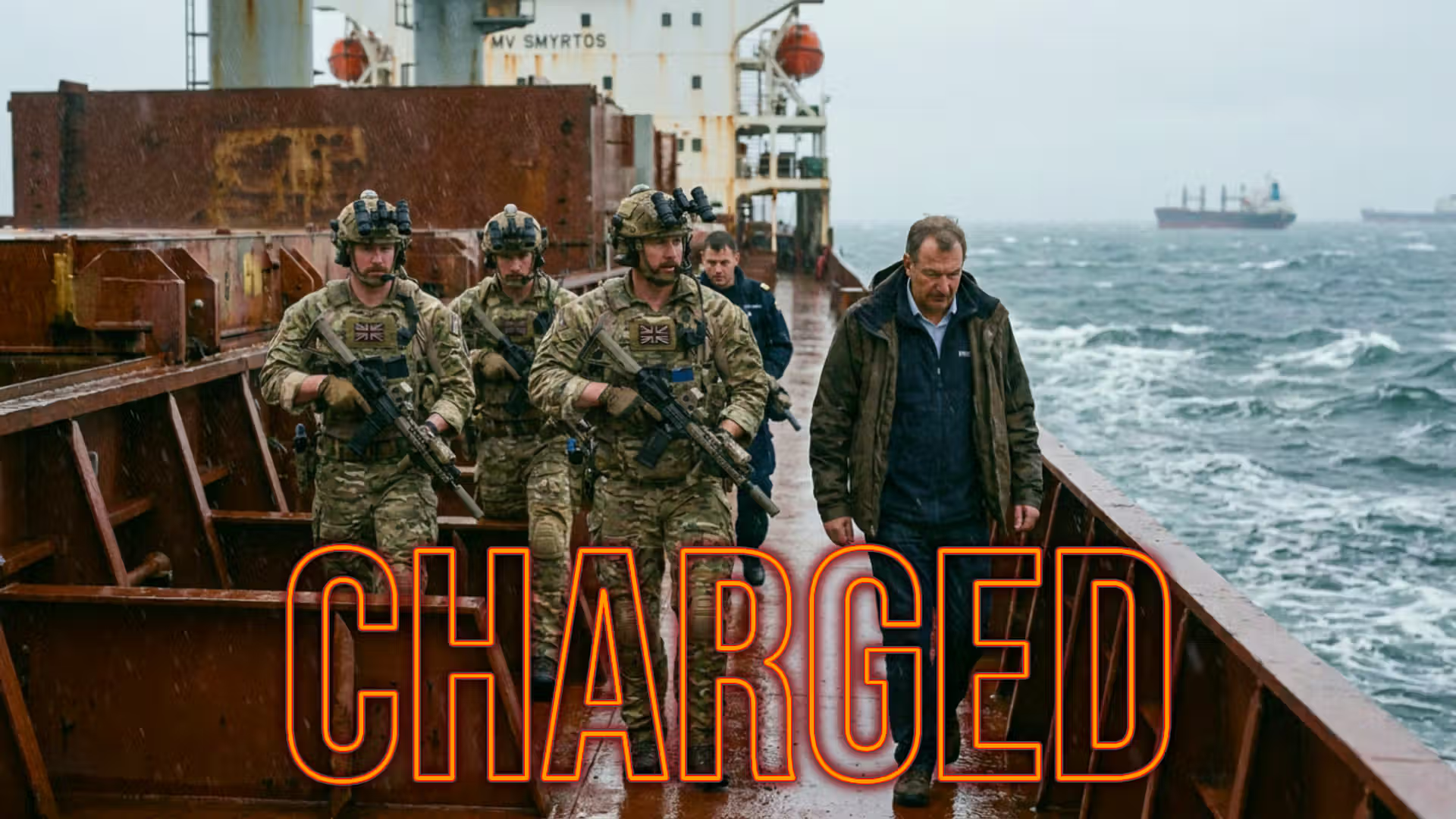
The seizure of the shadow fleet oil tanker MV Smyrtos in the English Channel by British law enforcement and military personnel has culminated in criminal charges carrying a maximum penalty of ten years in prison, a fine, or both, for the vessel commander. The National Crime Agency led an extensive investigation that resulted in the Crown Prosecution Service authorizing charges against Indian national Ajay Pant on June 15, 2026. This enforcement action targets illicit financial flows generated by maritime trade evasion, specifically focusing on the mechanisms used to bypass strict international embargoes. Interdicting unflagged vessels carrying illicit cargo represents a critical evolution in how jurisdictions combat the systemic money laundering networks that sustain transnational criminal activities and illicit state finance.
Naval forces and investigators intercepted the vessel during its transit through international waters within the English Channel, halting a maritime transport operation designed to obfuscate the origin of the commodity. The legal action focuses on the direct or indirect supply and delivery of prohibited crude oil from a heavily sanctioned jurisdiction to third-party markets. Financial flows supporting the shadow fleet rely heavily on complex corporate structures, shell companies, and opaque banking arrangements across multiple jurisdictions to mask the ultimate beneficial ownership of the assets. By targeting the command structure of the vessel, law enforcement disrupts the operational link between illicit logistics and the financial networks that facilitate global sanctions evasion.
The prosecution of the individual commander marks a shift from purely administrative asset designations to active criminal enforcement under domestic trade and financial regulations. Regulatory frameworks such as the Russia Sanctions EU Exit Regulations 2019 provide the primary legal basis for addressing these maritime evasion strategies. Investigators are shifting their focus toward the corporate entities and financial institutions providing insurance, ship-to-ship transfer coordination, and banking services to stateless or improperly flagged vessels. Documenting the financial footprint of these maritime operations reveals how corporate networks in jurisdictions with relaxed oversight enable the conversion of sanctioned commodities into clean, untraceable capital within the global financial system.
Table of Contents


Corporate Obfuscation and Illicit Asset Management Networks
Opaque corporate ownership structures remain a fundamental vulnerability within the global shipping sector, allowing illicit actors to purchase and operate large transport vessels without triggering standard regulatory alarms. The vessel involved in this maritime interdiction was owned by a corporate entity based in Hong Kong, a jurisdiction frequently exploited for its dense financial ecosystem and rapid corporate formation capabilities. Shell companies within the maritime industry often possess no physical presence, operating entirely through nominee directors and corporate secretaries who manage hundreds of similar entities simultaneously. This layer of separation prevents compliance professionals from identifying the true beneficiaries of the shipping revenue, effectively laundering the proceeds of prohibited trade before they enter regional banking systems.
Financial institutions processing transactions for maritime logistics face severe risks when corporate entities utilize nested bank accounts to distribute profits from sanctioned trade. Payments for bunkering services, port fees, crew wages, and vessel maintenance are frequently routed through secondary and tertiary intermediaries to sever any visible connection to the sanctioned asset. The money laundering process is further hidden by using multi-currency transactions and trade-based financial structures, such as letters of credit issued by non-compliant financial institutions. Compliance officers must scrutinize the entire corporate hierarchy of shipping clients, looking beyond the immediate vessel owner to identify corporate links with high-risk jurisdictions or historical sanctions evasion campaigns.
The capital generated by shadow fleet operations is often integrated into legitimate economic sectors through real estate investments, luxury asset procurement, and integration into global supply chains. Corporate entities managing dark fleet logistics frequently obscure their financial trails by reinvesting profits into secondary maritime service providers, including private security firms, salvage operators, and ship-making facilities. This creates an ecosystem where illicit capital constantly rotates within the maritime economy, making detection exceptionally difficult for standard transaction monitoring systems. Addressing this specific typology requires deep institutional cooperation between customs authorities, financial intelligence units, and international corporate registries to ensure that asset transfers are tracked in real time.




Stateless Vessel Tactics and Jurisdictional Arbitrage in Trade Finance
Exploitation of flag registries constitutes a primary method for evading maritime surveillance and bypassing the strict monitoring protocols established by international financial institutions. The vessel seized in the English Channel had recently been stripped of its registry by Cameroon following international diplomatic pressure, leaving the ship legally stateless during its transit. Stateless vessels operate outside the regulatory oversight of a sovereign flag state, allowing operators to bypass safety inspections, crew certification standards, and mandatory financial reporting requirements. This status facilitates jurisdictional arbitrage, where dark fleet operators actively seek out registries with minimal compliance enforcement to obtain temporary documentation for illicit voyages.
The removal of flag registration triggers immediate compliance concerns for maritime insurers and financial institutions providing trade finance products. Operating a vessel without a valid flag violates international maritime law and automatically invalidates standard protection and indemnity insurance policies. The financial networks supporting these operations must therefore rely on unrated, captive insurance firms or state-backed indemnity providers located within non-cooperative jurisdictions. Financial compliance teams must treat any rapid change in a vessel’s registry or the use of flags of convenience as a critical indicator of potential trade-based money laundering and sanctions circumvention.
Trade finance operations are vulnerable to manipulation when documentation reflects fraudulent flag data or outdated registration certificates to secure banking clearances. Money laundering networks routinely falsify bills of lading, certificates of origin, and vessel registration details to convince compliance departments that a cargo transaction is fully compliant. These falsified documents are then used to justify large international wire transfers that move the proceeds of illicit oil sales across global financial networks. Mitigating this risk requires financial institutions to implement automated vessel tracking solutions that cross-reference active maritime transponder data with official registry updates provided by international regulatory databases.

Port Exploitation and Ship-to-Ship Commodity Laundering
Physical manipulation of commodities at sea via ship-to-ship transfers represents a highly effective method for breaking the audit trail of prohibited goods. Dark fleet operators frequently coordinate these transfers in international waters or areas with limited radar coverage, moving bulk oil cargoes between multiple vessels to obscure the original loading port. This physical blending or transferring of cargo allows illicit networks to generate new documentation, claiming the commodity originated from a non-sanctioned jurisdiction. The financial transactions accompanying these transfers are structured to mimic standard commercial trade, hiding the underlying illicit nature of the operation from correspondent banks.
The financial infrastructure facilitating ship-to-ship transfers relies on alternative payment mechanisms and specialized maritime brokers who operate outside conventional financial channels. Payments for these mid-sea operations are often settled using digital assets, cash over the counter, or complex barter arrangements involving other commodities to avoid electronic financial tracking. Maritime intelligence indicates that these offshore transfer hubs are strategically located near major trade lanes, allowing shadow vessels to integrate their illicit cargo into legitimate commercial streams. Financial institutions must monitor transactions involving maritime service companies that exhibit unusual operational expenses or frequent dealings with offshore transfer points.
Furthermore, the integration of laundered commodity revenues into the formal banking system is completed when the final buyer processes the transaction through reputable financial hubs. The final purchasers of the blended oil products often utilize standard corporate banking facilities to settle invoices, unaware or deliberately indifferent to the illicit origin of the supply chain. This requires an enhanced level of due diligence from corporate compliance departments, which must mandate independent chemical tracing and detailed historical transit verification for all high-risk bulk commodity imports. Regulatory bodies are increasingly holding financial institutions accountable for failing to detect the underlying trade anomalies that characterize these multi-layered maritime laundering networks.
Anti-Money Laundering Frameworks and Sanctions Evasion Typologies
Anti-money laundering professionals must adapt their risk assessment models to detect the specific behavioral and financial patterns associated with shadow fleet operations and maritime sanctions evasion.
AML professionals should look for the following typologies to identify and understand risks in maritime trade and corporate structures:
- Deactivation of Automatic Identification Systems: Vessel operators deliberately disable tracking transponders during transits near sanctioned ports or high-risk maritime corridors to conceal the geographical origin of cargo.
- Rapid Alteration of Vessel Names and Registries: Frequent modifications to a ship’s registered name, flag, or corporate ownership within a short timeframe to break the administrative audit trail across international maritime databases.
- Complex Corporate Layering via Offshore Jurisdictions: Utilizing multiple tiers of shell companies incorporated in disparate jurisdictions to obscure the ultimate beneficial ownership and control of the transport asset.
- Discrepancies in Maritime Trade Documentation: Presentation of bills of lading, invoices, and certificates of origin that contain contradictory data regarding cargo weight, vessel capacity, or origin ports.
- Frequent Ship-to-Ship Cargo Transfers: Conducting mid-sea commodity transfers in international waters known for minimal regulatory surveillance to blend or re-document prohibited bulk commodities.
- Use of Unrated or Captive Insurance Providers: Securing protection and indemnity coverage from unknown, state-backed, or non-traditional insurance firms located within jurisdictions that do not enforce international standards.
Key Points
- The Crown Prosecution Service authorized criminal charges against Captain Ajay Pant on June 15, 2026, following a detailed National Crime Agency investigation into maritime sanctions evasion.
- The dark fleet oil tanker MV Smyrtos was intercepted and seized by British law enforcement and military personnel during its transit through the English Channel.
- Legal proceedings focus on the prohibited direct or indirect supply and delivery of crude oil from Russia to a third country, violating domestic trade regulations.
- The targeted vessel was operating as an unflagged, stateless entity after its registration was revoked by Cameroon, establishing a clear international legal basis for physical interdiction.
- The individual charged faces a maximum statutory penalty of up to ten years in imprisonment, a significant financial penalty, or both, upon conviction in court.
Related Links
- Crown Prosecution Service Official Press Releases
- National Crime Agency Enforcement Updates
- United Kingdom Government Sanctions Regime Databases
- Financial Action Task Force High Risk Jurisdiction Guidance
Other FinCrime Central Articles About Shadow Fleets
- French Navy Intercepts Shadow Fleet Grinch Tanker Over Russian Sanctions Evasion
- Russia’s Shadow Fleet: How Western Shipowners Fuel Sanctions Evasion
- How Shadow Fleet Laundering Fuels Iran’s Hidden Billions
Source: Crown Prosecution Service
Some of FinCrime Central’s articles may have been enriched or edited with the help of AI tools. It may contain unintentional errors.
Want to promote your brand, or need some help selecting the right solution or the right advisory firm? Email us at info@fincrimecentral.com; we probably have the right contact for you.