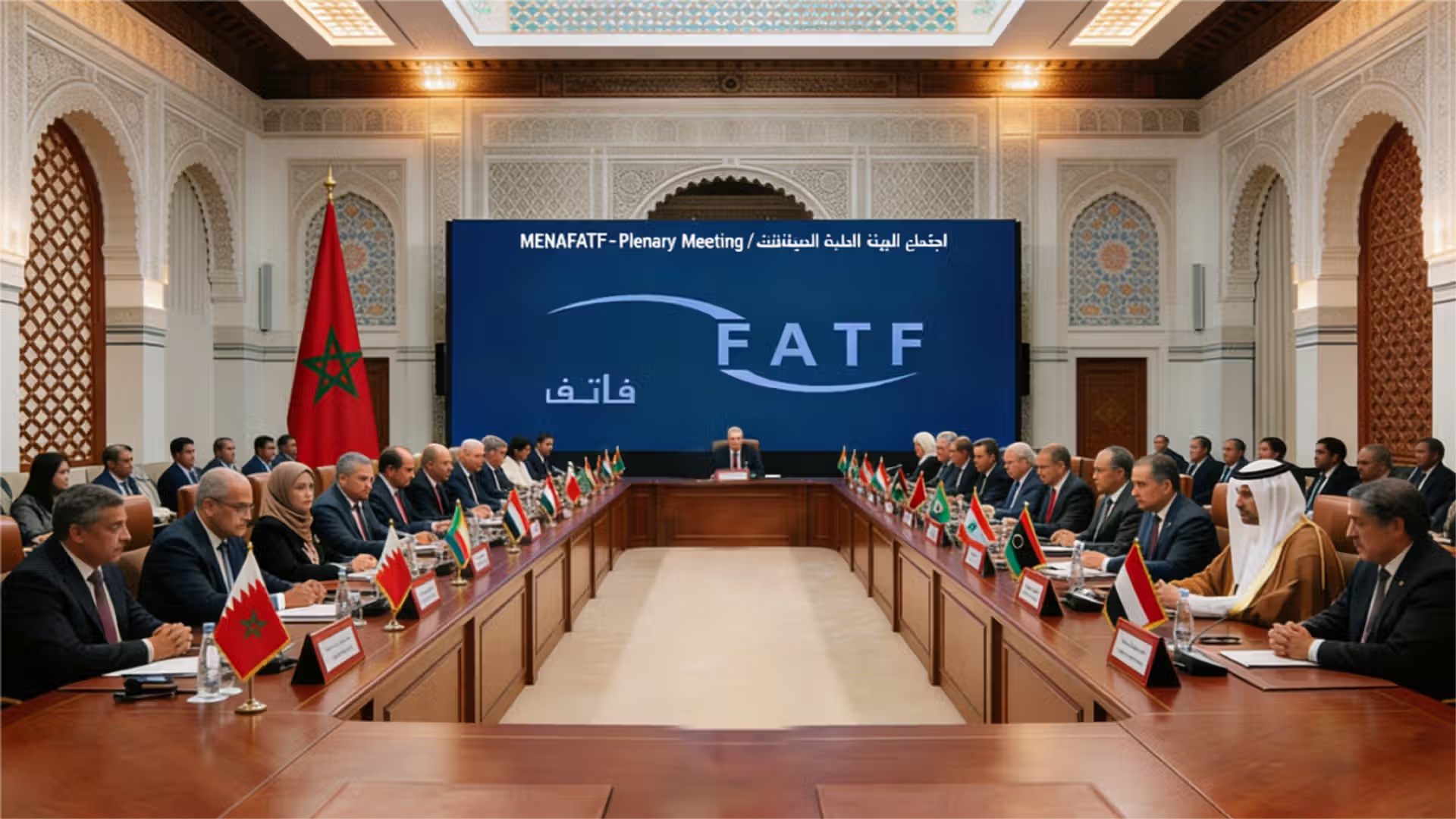
International financial oversight bodies have intensified their scrutiny regarding the circulation of untaxed wealth within the Pakistani economy as the federal budget for fiscal year 2026-27 approaches. The International Monetary Fund recently issued a stern directive requiring the nation to implement robust controls to curb illegal financial flows before the new fiscal cycle begins. This push for reform targets specific vulnerabilities within the banking, real estate, and non-financial business sectors where regulatory gaps have historically allowed for the concealment of illicit assets. Pakistani authorities are now under immense pressure to demonstrate faster enforcement actions and improve the exchange of beneficial ownership information to maintain international financial stability. These developments highlight a critical juncture for the country as it attempts to align its fiscal strategy with global anti-money laundering standards while addressing a significant volume of documented financial irregularities.
Table of Contents



Trade-Based Money Laundering Challenges in Pakistan
The integrity of the Pakistani financial system faces significant risks stemming from the sophisticated nature of trade-based money laundering, which remains a primary concern for international regulators. This specific method of moving value across borders involves the manipulation of invoices, the overvaluation or undervaluation of goods, and the use of shell companies to disguise the true origin of funds. The International Monetary Fund has expressed deep dissatisfaction with current oversight mechanisms, noting that the existing framework fails to adequately capture the scale of suspicious activities occurring within the commercial sector. For AML professionals and regulatory bodies, the focus has shifted toward closing these loopholes through enhanced monitoring of cross-border transactions and more rigorous verification of trade documentation. The government is expected to introduce comprehensive reforms that require exporters and importers to provide more transparent records, thereby making it harder for criminal elements to use legitimate trade channels as a front for cleaning black money. These measures are seen as essential for restoring investor confidence and ensuring that the country meets its international obligations regarding financial transparency and fiscal discipline.
Beyond the immediate concerns of trade, the banking sector is also being pushed to upgrade its automated systems for detecting unusual patterns of behavior. Financial institutions are being urged to move beyond basic compliance and adopt more proactive strategies for identifying complex layering schemes that often involve multiple accounts and rapid transfers of funds. The lack of effective communication between different regulatory agencies has also been identified as a major bottleneck in the fight against financial crime. To address this, the International Monetary Fund has demanded a more streamlined process for sharing data between the Federal Board of Revenue and the Financial Monitoring Unit. This integrated approach is intended to ensure that suspicious transaction reports are not merely filed but are followed by swift and decisive investigative actions. The ultimate goal of these reforms is to create a hostile environment for money launderers by increasing the probability of detection and the severity of legal consequences for those found to be facilitating the movement of illicit wealth.




Real Estate and Non-Financial Business Oversight
The real estate market in Pakistan has long been identified as a significant destination for the placement and integration of untaxed capital, largely due to its historical lack of documentation and regulatory scrutiny. During recent budget discussions, the International Monetary Fund highlighted the unsatisfactory performance of the monitoring systems designed to track transactions within this high-risk sector. Despite the establishment of specialized units within the Federal Board of Revenue, the reporting of suspicious financial activities from real estate agents and developers remains alarmingly low. This lack of transparency allows individuals to invest enormous sums of undeclared wealth into property, effectively shielding it from the tax authorities and law enforcement. In response to these findings, the government has begun a series of raids on various housing societies and property development projects to uncover hidden assets and undeclared investments. These enforcement actions are intended to send a clear message to the industry that the era of anonymity in large-scale property transactions is coming to an end.
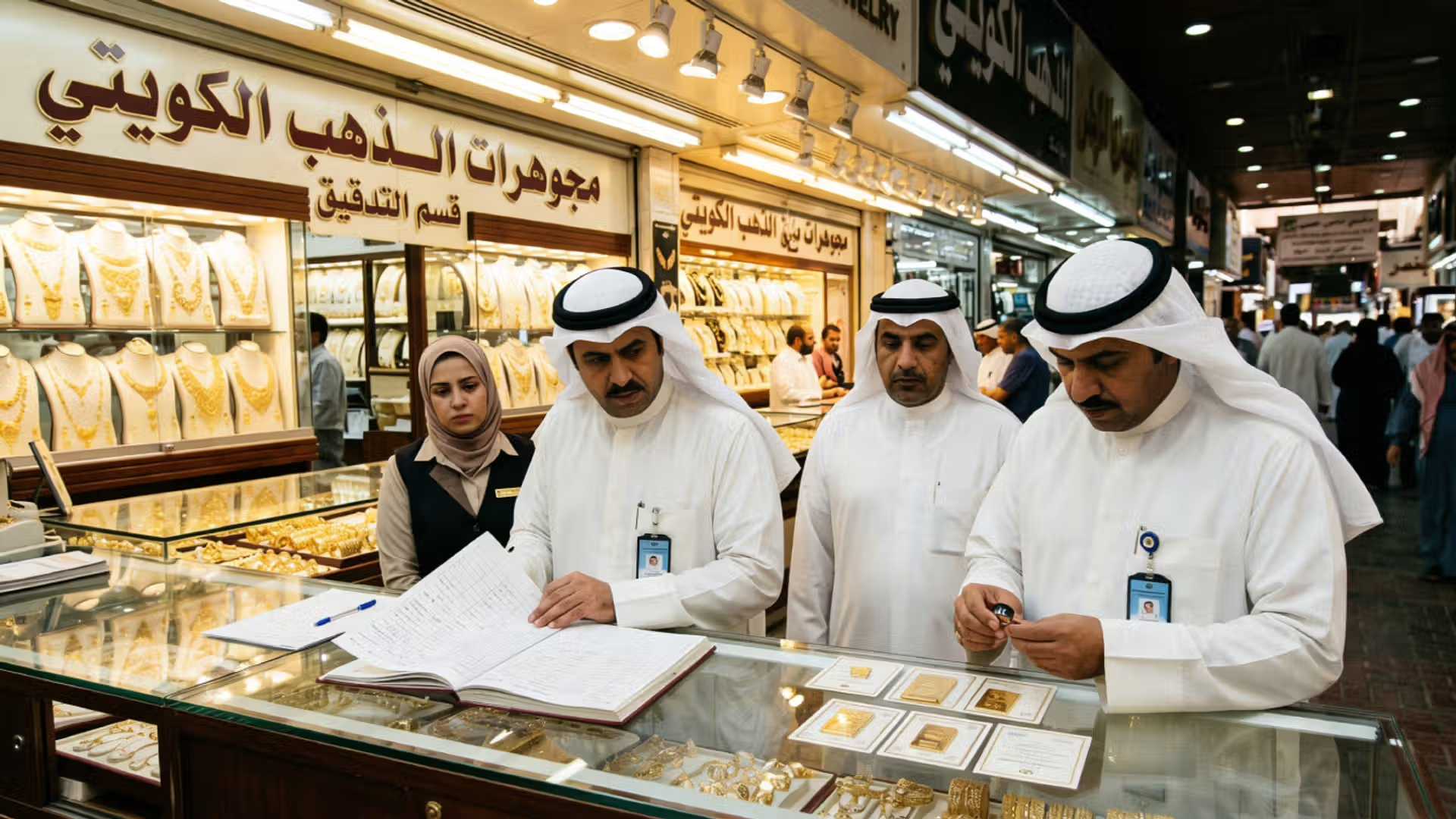
Furthermore, the category of designated non-financial businesses and professions, which includes jewelers, lawyers, and accountants, has been singled out for its weak compliance with anti-money laundering regulations. These sectors are often utilized by those seeking to move illicit funds without entering the formal banking system, where scrutiny is typically higher. The International Monetary Fund has stressed that without significant improvements in the reporting of suspicious transactions by these professionals, the broader efforts to clean up the economy will remain incomplete. Regulatory bodies are now working on training programs and stricter licensing requirements to ensure that these gatekeepers understand their obligations under the law. The push for better documentation also extends to the beneficial ownership of corporations, as the use of nominee directors and complex ownership structures has historically made it difficult to trace the ultimate beneficiaries of financial crimes. By mandating a centralized and accessible register of beneficial ownership, Pakistan aims to peel back the layers of corporate secrecy that have protected corrupt actors for decades.


Strengthening Enforcement and Fiscal Transparency
Achieving long-term financial stability in Pakistan requires a fundamental shift in how the state manages its fiscal responsibilities and enforces its laws against economic crimes. The upcoming negotiations between the government and the International Monetary Fund delegation will focus heavily on setting realistic tax targets and ensuring that government expenditures are aligned with budget goals. A key component of this strategy is the formalization of the economy, which involves bringing millions of undocumented businesses and individuals into the tax net. This process is not merely about increasing revenue but also about creating a paper trail that makes it harder for money laundering to go unnoticed. The circulation of black money is viewed by international observers as a direct threat to the country’s economic sovereignty, as it undermines the effectiveness of monetary policy and creates an uneven playing field for legitimate businesses. Consequently, the Federal Board of Revenue has been tasked with intensifying its investigations into concealed income and expanding the scope of its audit programs to cover a wider range of economic activities.
The role of the Financial Monitoring Unit is also being expanded to provide more sophisticated analysis of the data collected from various reporting entities. This includes the use of data analytics to identify trends in money laundering and to flag sectors that may be experiencing a sudden influx of suspicious capital. The government is also looking at ways to strengthen the legal framework by introducing tougher penalties for non-compliance and by providing law enforcement agencies with better tools for asset recovery. International cooperation remains a vital part of this effort, as much of the illicit wealth generated in Pakistan is eventually moved to offshore jurisdictions. By working closely with global partners and adhering to the standards set by the Financial Action Task Force, Pakistan hopes to improve its standing in the international community and secure the financial support necessary to stabilize its economy. These reforms, while challenging to implement, are seen as the only viable path toward a transparent and resilient financial system that can support sustainable economic growth.
Identifying Trade-Based Money Laundering Typologies
AML professionals must remain vigilant regarding the methods used to disguise the movement of illicit value through international trade transactions. Trade-based money laundering remains one of the most complex financial crime typologies due to the volume of global commerce, the manipulation of documentation, and the involvement of multiple jurisdictions. Understanding these mechanisms is essential for detecting suspicious trade activity and preventing the abuse of commercial supply chains:
- Under-Invoicing and Over-Invoicing: Deliberately misrepresenting the value of imported or exported goods to transfer value between parties across borders while avoiding detection by financial institutions or customs authorities.
- False Description of Goods: Mislabeling the type, quality, or quantity of products shipped in order to conceal the true nature of a transaction or justify abnormal payment flows.
- Multiple Invoicing Schemes: Issuing several invoices for the same shipment of goods to support duplicate payments and move additional funds internationally under the appearance of legitimate trade.
- Phantom Shipments and Fictitious Trade: Creating entirely fake import-export transactions supported by forged shipping documents, bills of lading, or customs declarations to legitimize illicit financial transfers.
- Trade Diversion Through Shell Companies: Using front companies established in intermediary jurisdictions to obscure the true buyer, seller, or destination of goods involved in suspicious trade flows.
- Commingling of Legitimate and Illicit Trade Activity: Blending criminal proceeds with revenues generated from genuine commercial operations to make suspicious international transactions appear consistent with normal business activity.
Key Points
- The International Monetary Fund has linked the approval of the 2026-27 federal budget to the implementation of stricter anti-money laundering controls.
- A major focus of the reform efforts is the real estate sector, where the reporting of suspicious transactions has been found to be unsatisfactory.
- Authorities are increasing raids on housing societies to uncover hidden assets and undeclared investments tied to untaxed wealth.
- Enhanced monitoring of trade-based money laundering is a primary requirement for Pakistan to meet international financial transparency standards.
- The Federal Board of Revenue is intensifying investigations into concealed income to increase tax compliance and discourage illegal financial practices.
Related Links
- FATF Recommendations on International Standards on Combating Money Laundering
- IMF Country Report on Pakistan and Financial Structural Reforms
- Financial Monitoring Unit of Pakistan Statutory Reports and Guidelines
- Federal Board of Revenue Anti-Money Laundering Regulations for DNFBPs
- United Nations Office on Drugs and Crime Money Laundering and Trade Profiles
Other FinCrime Central Articles About Pakistan
- Pakistan Prime Minister Orders Prosecution in $430 Million Solar Money Laundering Case
- IMF Issues Powerful Call to Boost AML Efforts in Pakistan
Source: Daily Times
Some of FinCrime Central’s articles may have been enriched or edited with the help of AI tools. It may contain unintentional errors.
Want to promote your brand, or need some help selecting the right solution or the right advisory firm? Email us at info@fincrimecentral.com; we probably have the right contact for you.