The United States Department of the Treasury, through the Financial Crimes Enforcement Network, has issued a formal alert to combat the sophisticated money laundering operations used by the Islamic Revolutionary Guard Corps. This regulatory action highlights how the organization utilizes illicit oil sales and complex shadow banking systems to fund global terrorist activities and procurement networks. Financial institutions are now under a mandatory obligation to identify and report suspicious transactions linked to these specific Iranian procurement channels. Failure to comply with these enhanced scrutiny requirements could result in significant regulatory penalties and secondary sanctions against non-compliant entities. The primary objective is to disrupt the financial infrastructure that allows the regime to move billions of dollars through the international banking system.
Table of Contents



IRGC Financial Networks and Global Money Laundering Methods
The recent FinCEN alert provides a comprehensive framework for understanding how the Islamic Revolutionary Guard Corps executes large-scale money laundering to bypass international sanctions. At the heart of this operation is the sale of illicit oil, which serves as the primary revenue stream for the organization. To move the proceeds of these sales without detection, the group employs a vast network of shell companies and financial facilitators located across multiple jurisdictions. These entities are designed to create layers of separation between the Iranian regime and the final destination of the funds. By using these methods, the organization can access the global financial system to purchase weapons, fund proxy groups, and develop domestic military technology. Compliance officers must recognize that these networks are not static and often involve the use of legitimate appearing trading companies that act as fronts for the Iranian military.
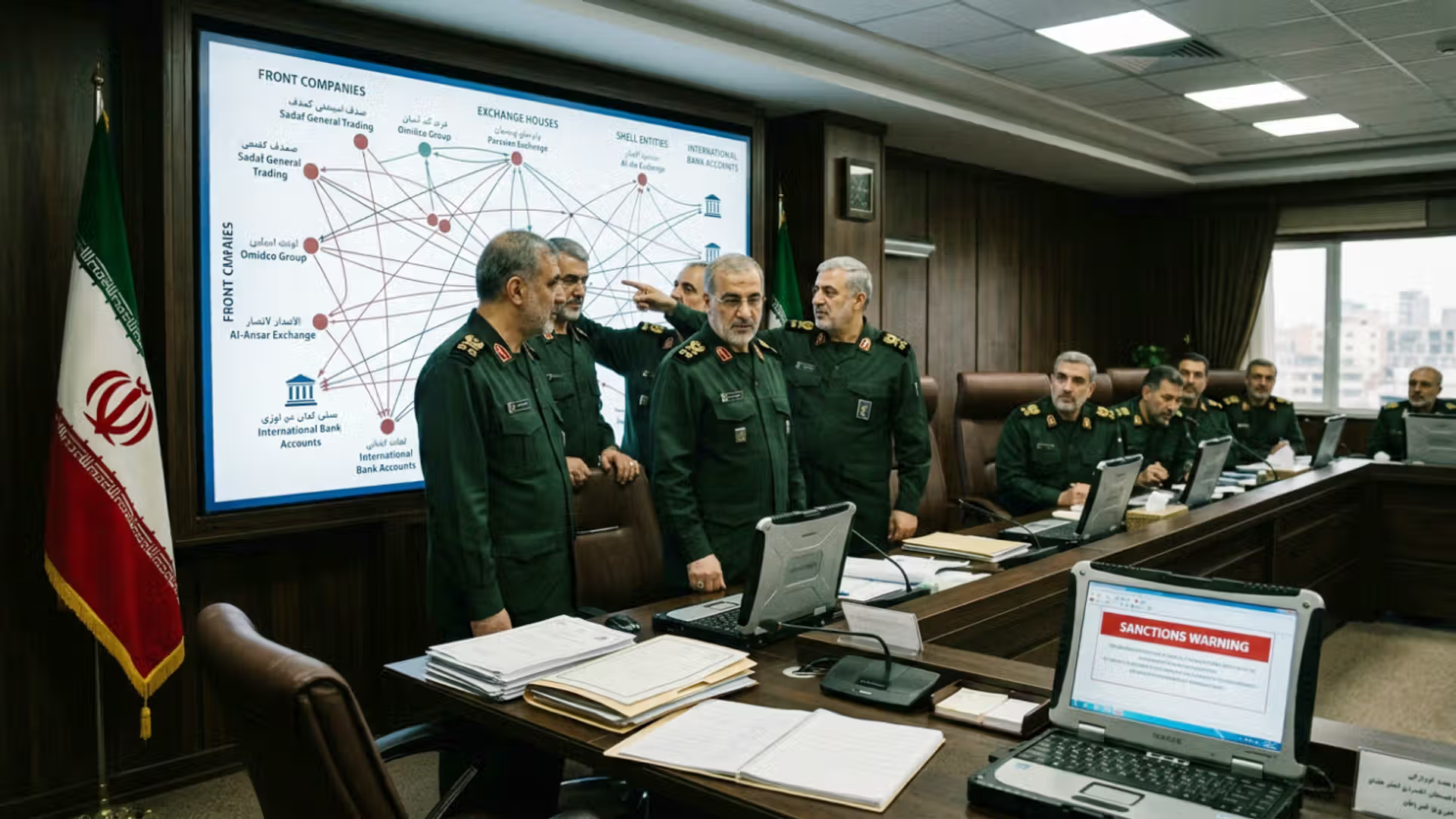
The shadow banking system utilized by the regime relies heavily on exchange houses located within Iran that control third-country front companies. These front companies establish bank accounts in international financial centers, allowing sanctioned actors to receive and remit payments without ever repatriating the funds to Iran. This circular flow of capital ensures that the money stays within the international system, where it can be used for further illicit procurement. The complexity of these arrangements often involves the assistance of money services businesses, investment firms, and trust providers who may be providing services unwittingly. However, the alert makes it clear that the responsibility for detection lies with the financial institutions. Any entity found facilitating these transactions risks being cut off from the United States financial system through secondary sanctions, which would have devastating consequences for their business operations and reputation.
In addition to the financial infrastructure, the regime relies on the strategic use of facilitators who operate in jurisdictions with historically weak anti-money laundering controls. These facilitators provide the necessary veneer of legitimacy to transactions that would otherwise be flagged immediately. For instance, a front company might engage in the trade of innocuous goods like textiles or construction materials to justify large transfers of currency. Once the funds are successfully integrated into the banking system of a neutral country, they are then layered through multiple accounts before being used to purchase sensitive dual-use technology. This process makes it incredibly difficult for standard automated monitoring systems to detect the ultimate beneficial owner of the funds. Consequently, financial institutions must adopt a more holistic approach to risk assessment, looking beyond individual transactions to the broader network of relationships.
Furthermore, the IRGC has demonstrated a remarkable ability to adapt to shifting regulatory landscapes. As soon as one front company is identified and sanctioned, several more are created to take its place. This game of regulatory cat and mouse requires a constant flow of intelligence between government agencies and the private sector. The FinCEN alert is a critical piece of this intelligence, providing the red flags and typologies necessary for banks to stay one step ahead. It also emphasizes the importance of international cooperation, as the IRGC often exploits the lack of communication between different national regulators. By standardizing the red flags associated with Iranian oil smuggling, the global community can more effectively squeeze the financial lifeblood of the regime.




Strategic Use of Shadow Fleets and Digital Asset Obfuscation
A critical component of the money laundering cycle involves the physical movement of oil through a shadow fleet of aging vessels. These ships often operate without proper insurance or adherence to maritime safety regulations, making them difficult to track through standard channels. To further disguise the origin of the cargo, the oil is frequently blended with products from other countries or relabeled with fraudulent documentation. This process of physical laundering mirrors the financial laundering taking place in bank accounts. Once the oil is sold, the proceeds are moved through the shadow banking network, which now increasingly includes the use of digital assets. Stablecoins have become a preferred tool for these facilitators due to their high liquidity and relative price stability compared to other cryptocurrencies.
The maritime dimension of these operations is particularly concerning for global security. The use of older vessels increases the risk of environmental disasters, which the IRGC uses as a form of leverage. These ships often engage in ship-to-ship transfers in the middle of the night, turning off their transponders to avoid satellite detection. This dark activity is a hallmark of the shadow fleet. Once the oil reaches a refinery that is willing to turn a blind eye to its origins, the financial transaction is often settled using a combination of traditional wire transfers and digital asset payments. This hybrid approach allows the facilitators to take advantage of the speed of crypto while maintaining the appearance of a standard commercial transaction.
Digital asset service providers based in Iran play a pivotal role in connecting the regime to the broader global crypto ecosystem. The lack of uniform regulation across different jurisdictions allows these actors to exploit gaps in oversight to move funds quickly across borders. FinCEN has noted that digital asset transactions are often used as a specific leg of the shadow banking process to add another layer of anonymity. Financial institutions are advised to monitor for unusual patterns, such as digital asset payments originating from petroleum or shipping companies that do not traditionally deal in cryptocurrency. By integrating digital assets into their traditional money laundering typologies, the IRGC has created a resilient financial structure that requires advanced forensic tools and enhanced due diligence to dismantle effectively.
Moreover, the IRGC uses digital assets not just for moving money, but also for securing value outside the reach of traditional asset forfeiture. By holding significant portions of their illicit wealth in decentralized wallets, they can ensure that their operations remain funded even if their bank accounts are frozen. This presents a unique challenge for law enforcement, as seizing digital assets requires a different set of technical skills and legal authorities. The Treasury has responded by blacklisting specific wallet addresses associated with the IRGC, but the decentralized nature of the technology means that new addresses can be generated instantly. Therefore, the focus remains on the on-ramps and off-ramps where digital assets interface with the traditional financial system.


Compliance Mandates and the Impact of Economic Fury Actions
The Treasury Department is currently executing a strategy known as Economic Fury, which aims to maximize pressure on the financial capabilities of the Iranian regime. This initiative has already led to the disruption of billions of dollars in projected oil revenue and the freezing of nearly half a billion dollars in cryptocurrency linked to the regime. The current regulatory environment demands that financial institutions go beyond basic know your customer protocols and engage in deep dive investigations of their counterparties. This includes examining the ownership structures of shipping firms and verifying the true origins of commodities. The alert serves as a formal warning that any person or vessel involved in facilitating this illicit trade is a target for enforcement actions.
Under the Economic Fury framework, the United States is also targeting the secondary facilitators who make these transactions possible. This includes lawyers, accountants, and company formation agents who help the IRGC set up their shell company networks. By targeting these professional enablers, the Treasury hopes to make it significantly more expensive and difficult for the regime to operate. This strategy also involves high-level diplomatic engagement with countries that serve as hubs for Iranian front companies. The goal is to encourage these nations to strengthen their own AML and CFT frameworks, thereby closing the loopholes that the IRGC currently exploits.
As the international community tightens its grip on traditional banking channels, the reliance on nested digital asset service providers and peer-to-peer exchangers is expected to grow. Financial institutions must remain vigilant against the use of unregistered money services businesses that act as intermediaries for Iranian interests. The Treasury remains prepared to take action against any foreign company supporting these activities, including airlines and independent oil refineries. This global approach ensures that there are no safe havens for the proceeds of IRGC activities. The ultimate goal of these AML efforts is to prevent the regime from reconstituting its production capacity and projecting power outside its borders through the exploitation of the global financial infrastructure.
The impact of these sanctions extends beyond the immediate freezing of assets. They also serve as a powerful deterrent, discouraging legitimate businesses from engaging with any entity that might have ties to the IRGC. This isolation is a key component of the pressure campaign, as it forces the regime to rely on increasingly desperate and inefficient methods of moving money. The resulting economic friction reduces the total amount of resources available for terrorist proxies and weapons development. In this context, the role of the financial institution is not just a matter of regulatory compliance, but a vital part of national and international security. Every suspicious activity report filed by a bank contributes to a larger picture of the regime’s financial movements, enabling more targeted and effective sanctions in the future.
IRGC Money Laundering Typologies for Financial Institutions
AML professionals should be prepared to identify several specific patterns and behaviors that indicate potential involvement in the illicit financial networks described in the FinCEN alert. Detecting these schemes requires a nuanced understanding of how maritime trade and shadow banking intersect.
- Vessel Identity Masking: The deliberate disabling of automatic identification systems or the frequent changing of vessel names and flags to hide the origin of oil shipments.
- Document Forgery and Blending: The use of fraudulent certificates of origin or the mixing of Iranian crude with oil from non-sanctioned jurisdictions to bypass import restrictions.
- Third Country Front Companies: Establishing entities in jurisdictions with weak regulatory oversight to open bank accounts that serve as conduits for sanctioned Iranian actors.
- Complex Nested Transfers: Utilizing multiple layers of digital asset service providers or peer-to-peer exchanges to break the audit trail of funds moving from Iran to the global market.
- Unusual Exchange House Activity: Large or frequent transfers involving exchange houses that do not align with the stated business purpose of the corporate client.
- Shadow Banking Intermediaries: The involvement of investment companies or trust providers in transactions that lack a clear economic rationale or involve high-risk jurisdictions.
- Split Shipments and Indirect Routing: Arranging for goods to be shipped through multiple intermediate ports to disguise the fact that the ultimate destination or origin is Iran.
- Inconsistent Trade Pricing: Commodities being bought or sold at prices significantly different from market value, which often indicates value transfer through trade-based money laundering.
- Sudden High Volume Activity: A previously dormant account suddenly receiving large wire transfers from entities associated with the shipping or petroleum industries.
- Reliance on Third Party Payments: A customer requesting that payments for legitimate goods be made to a third party that has no apparent connection to the transaction.
Key Points
- FinCEN has issued a high-level alert targeting the IRGC oil smuggling networks and shadow banking operations used for global money laundering.
- The IRGC utilizes a shadow fleet of aging vessels and fraudulent documentation to disguise the origin of illicit oil sales.
- Proceeds are laundered through a multi-jurisdictional network of front companies and exchange houses to fund terrorism and weapons procurement.
- The use of stablecoins and digital asset service providers has become a significant component of Iran’s sanctions evasion and financial obfuscation strategy.
- Financial institutions face severe regulatory consequences and secondary sanctions for failing to detect and report activity linked to these Iranian networks.
Related Links
- FinCEN Alert on IRGC Illicit Finance and Oil Smuggling
- OFAC Sanctions Search and Iranian Regulatory Information
- Treasury Department Press Release on Economic Fury Initiatives
- FATF Guidance on Counter Proliferation Financing and Sanctions Evasion
- State Department Reports on Iranian State Sponsorship of Terrorism
Other FinCrime Central Articles About Sanctions on Iran
- US Judge Orders HSBC, Standard Chartered To Release Bank Records in Iran Sanctions Case
- Sanctions Hit Iranian Network Over 150 Million Crypto Fraud
- OFAC Issues Warnings on Iranian Oil Trade for Chinese Teapot Refineries
Source: FinCEN
Some of FinCrime Central’s articles may have been enriched or edited with the help of AI tools. It may contain unintentional errors.
Want to promote your brand, or need some help selecting the right solution or the right advisory firm? Email us at info@fincrimecentral.com; we probably have the right contact for you.