
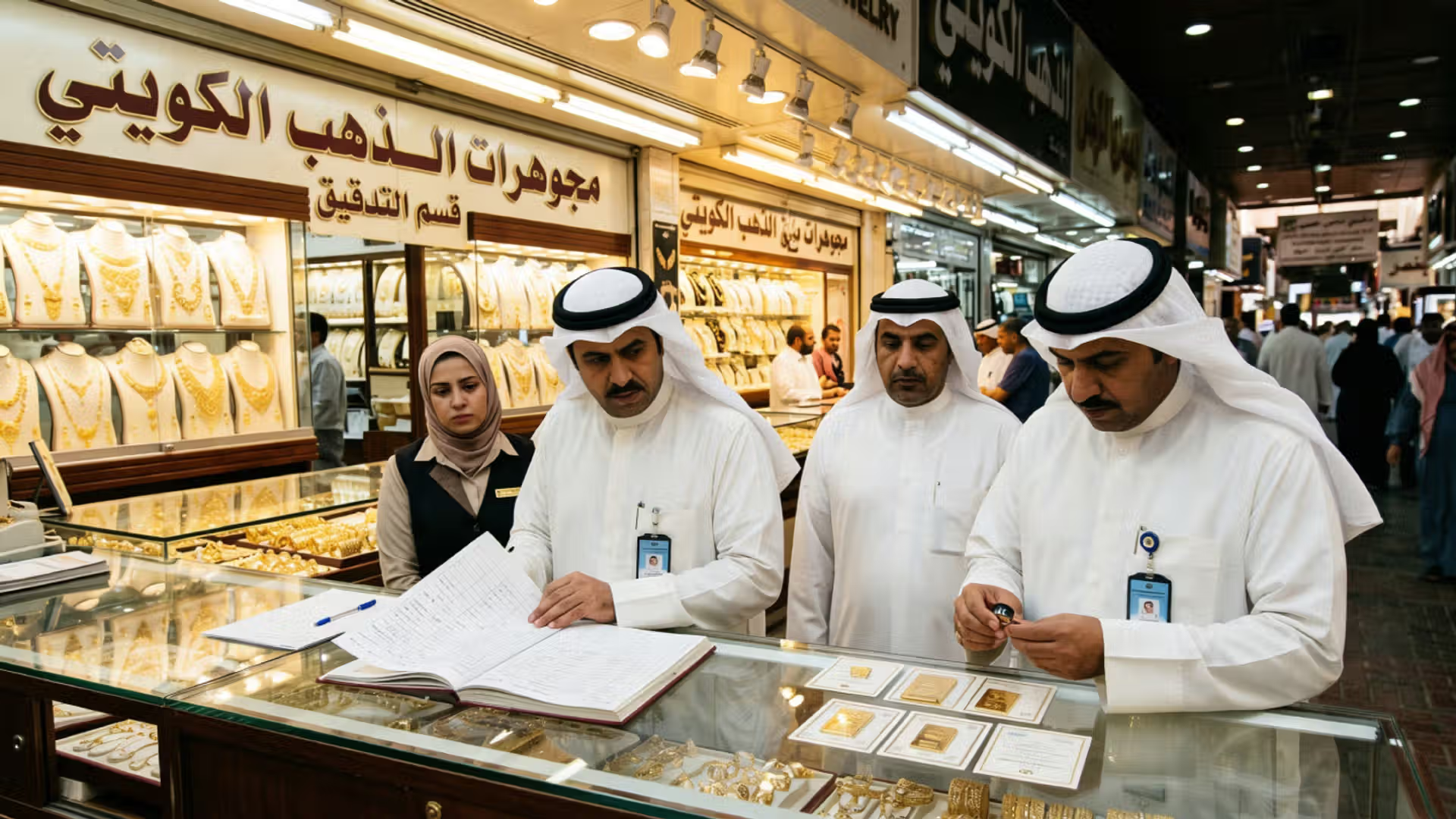
The Ministry of Commerce and Industry in Kuwait recently launched a sweeping regulatory campaign against the precious metals sector, resulting in 134 recorded financial violations. This aggressive enforcement action targets gold shops and jewelry outlets found to be in non-compliance with strict anti-money laundering regulations and technical standards. Authorities have emphasized that these measures are essential to safeguard the national economy from illicit financial flows and to ensure the integrity of the local gold market. The crackdown reflects a broader commitment to international standards and the strengthening of internal oversight mechanisms within the domestic retail sector.
Table of Contents



Combating Money Laundering in the Kuwaiti Precious Metals Market
The gold and jewelry industry has long been identified globally as a high-risk sector for the placement and layering of illicit funds due to the high value and portable nature of the assets involved. In Kuwait, the recent wave of inspections has highlighted significant gaps in how these businesses document transactions and verify the identities of their clientele. Regulatory teams from the Ministry of Commerce and Industry conducted extensive field tours across various governorates to monitor compliance with Law Number 106 of 2013, which governs anti-money laundering and the financing of terrorism. The 134 violations uncovered during these inspections indicate a systemic need for tighter controls and more rigorous auditing of sales records and inventory management.
Officials have noted that the gold sector often attracts individuals looking to convert large sums of cash into untraceable physical commodities. Without proper reporting of suspicious transactions or the maintenance of comprehensive customer due diligence records, the retail market becomes a vulnerable entry point for criminal proceeds. The current enforcement drive is designed to close these loopholes by imposing immediate administrative and legal penalties on offending establishments. By documenting these violations, the government is signaling to the international financial community that Kuwait is taking proactive steps to mitigate the risks associated with trade-based money laundering and high-value retail transactions.
The inspections were not limited to financial record keeping but also extended to the technical specifications and hallmarking of the gold being sold. Ensuring that the weight and purity of the gold match the official seals is a critical component of consumer protection and market stability. When gold shops fail to adhere to these technical standards, it creates an environment of opacity where illegal financial activities can be masked by legitimate trade discrepancies. The Ministry has made it clear that any shop found violating these laws will face closure or the revocation of their commercial licenses as part of a zero-tolerance policy toward financial misconduct.



Regulatory Oversight and Institutional Accountability for Gold Retailers
The scale of the 134 violations underscores the complexity of regulating a decentralized retail environment where cash transactions are traditionally common. To address this, the Kuwaiti government has moved toward digitizing and centralizing the monitoring of precious metals sales. Regulatory bodies are now requiring gold shops to implement sophisticated electronic systems that link sales data directly to oversight departments. This level of transparency is intended to prevent the manipulation of invoices and to ensure that every gram of gold sold is accounted for within a legitimate financial framework. The recent storm of violations serves as a catalyst for these technological upgrades across the industry.
Beyond the technical aspects of the law, there is a heavy emphasis on the role of the compliance officer within these small and medium-sized enterprises. Every licensed gold dealer is required to appoint a person responsible for reporting any transaction that exceeds the legal threshold or exhibits unusual patterns. The findings from the recent inspections suggest that many businesses had either failed to appoint such officers or that the officers were not performing their duties according to the statutory requirements. This failure in internal governance is a primary driver behind the high number of recorded offenses and remains a focal point for future regulatory training and enforcement.
The legal framework in Kuwait provides for severe penalties, including heavy fines and imprisonment for those found guilty of facilitating money laundering through the gold trade. The Ministry of Commerce and Industry works in close coordination with the Public Prosecution and the Kuwait Financial Investigation Unit to ensure that detected violations are prosecuted to the fullest extent of the law. This interagency cooperation is vital for building a robust defense against financial crimes that seek to exploit the traditional retail sectors of the Gulf region. As the authorities continue their oversight, the expectation is that the gold market will undergo a period of professionalization and heightened transparency.


Enhancing Financial Integrity Through Continuous Market Surveillance
The long-term goal of the current regulatory actions is to foster an environment of trust and stability that attracts legitimate investment while repelling criminal actors. Kuwaiti authorities are aware that a clean gold market is essential for the country to maintain a positive standing in global financial evaluations such as those conducted by the Financial Action Task Force. By identifying and penalizing 134 violations in a short period, the government demonstrates its ability to conduct effective market surveillance and its willingness to confront powerful interest groups within the local economy. This transparency is expected to improve the overall health of the Kuwaiti financial system and reduce the shadow economy.
Future inspections are expected to be even more frequent and data-driven, with regulators using advanced analytics to identify shops that deviate from standard pricing or volume trends. The gold sector is being integrated into a broader national strategy that views every retail transaction as a potential data point in the fight against organized crime. Shop owners are being urged to view compliance not as a burden but as a necessary protection for their own business interests and the national security of the state. The message from the Ministry is clear that the days of unregulated cash-based gold trading are coming to an end in favor of a modern and fully audited marketplace.
As the legal proceedings for the 134 violations move forward, the public and the business community are watching closely to see the severity of the sanctions imposed. The effectiveness of these measures will be judged by whether they lead to a sustained change in behavior among gold retailers. Continued education and outreach programs are being developed to help small business owners understand their obligations under the anti-money laundering laws. However, for those who continue to ignore the warnings, the state has proven that it possesses the tools and the will to intervene decisively to protect the integrity of its borders and its currency.
AML Typologies Relevant to the Precious Metals and Gold Sector
Professional investigators and compliance officers must remain vigilant against specific methods used to obscure the origins of wealth through the gold trade. Identifying these patterns is essential for the timely filing of suspicious activity reports and the prevention of financial crimes.
- Smurfing and Structured Cash Deposits: Individuals making multiple small cash purchases of gold bars or jewelry across several different shops to avoid triggering the mandatory reporting thresholds set by financial regulators.
- Trade-Based Overvaluation or Undervaluation: Intentional misrepresentation of the purity or weight of gold on invoices to move value across borders or to create artificial expenses that mask the movement of illicit funds.
- Recycled Gold Schemes: Claiming that newly mined or illicitly obtained gold is actually scrap or recycled jewelry to bypass requirements for proving the legal source of the metal.
- Third Party Payment Intervention: Allowing sales to be settled by parties who are not the documented buyers, which facilitates the layering of funds and hides the true beneficial owner of the assets.
- Anonymous High Value Transactions: Attempting to purchase significant quantities of bullion or high-end jewelry without providing valid identification or by using forged documents to maintain anonymity.
Key Points
- Kuwaiti Ministry of Commerce and Industry officials identified 134 financial and technical violations during recent gold shop inspections.
- The enforcement actions focus on compliance with Law Number 106 of 2013 regarding anti-money laundering and terrorism financing.
- Authorities highlighted the lack of proper documentation and failure to report suspicious transactions as primary areas of concern.
- Penalties for non-compliance include administrative closure of shops and potential referral to the Public Prosecution for criminal investigation.
- The crackdown is part of a national strategy to align the Kuwaiti precious metals market with international financial transparency standards.
Related Links
- Kuwait Ministry of Commerce and Industry Official Portal
- Kuwait Financial Investigation Unit AML Guidelines
- Financial Action Task Force Recommendations on Precious Metals
- Central Bank of Kuwait Regulatory Framework
Other FinCrime Central Articles About Gold and Money Laundering
- The 24-Karat Laundromat: Italy Seizes €1.3 Million in Assets and Gold
- US Treasury Sanctions Million Dollar Hezbollah Gold Shipping Laundering Ring
- £2 Million Gold Seizure At Manchester Airport Uncovers Hidden Money Laundering Network
Source: Arab Times
Some of FinCrime Central’s articles may have been enriched or edited with the help of AI tools. It may contain unintentional errors.
Want to promote your brand, or need some help selecting the right solution or the right advisory firm? Email us at info@fincrimecentral.com; we probably have the right contact for you.


