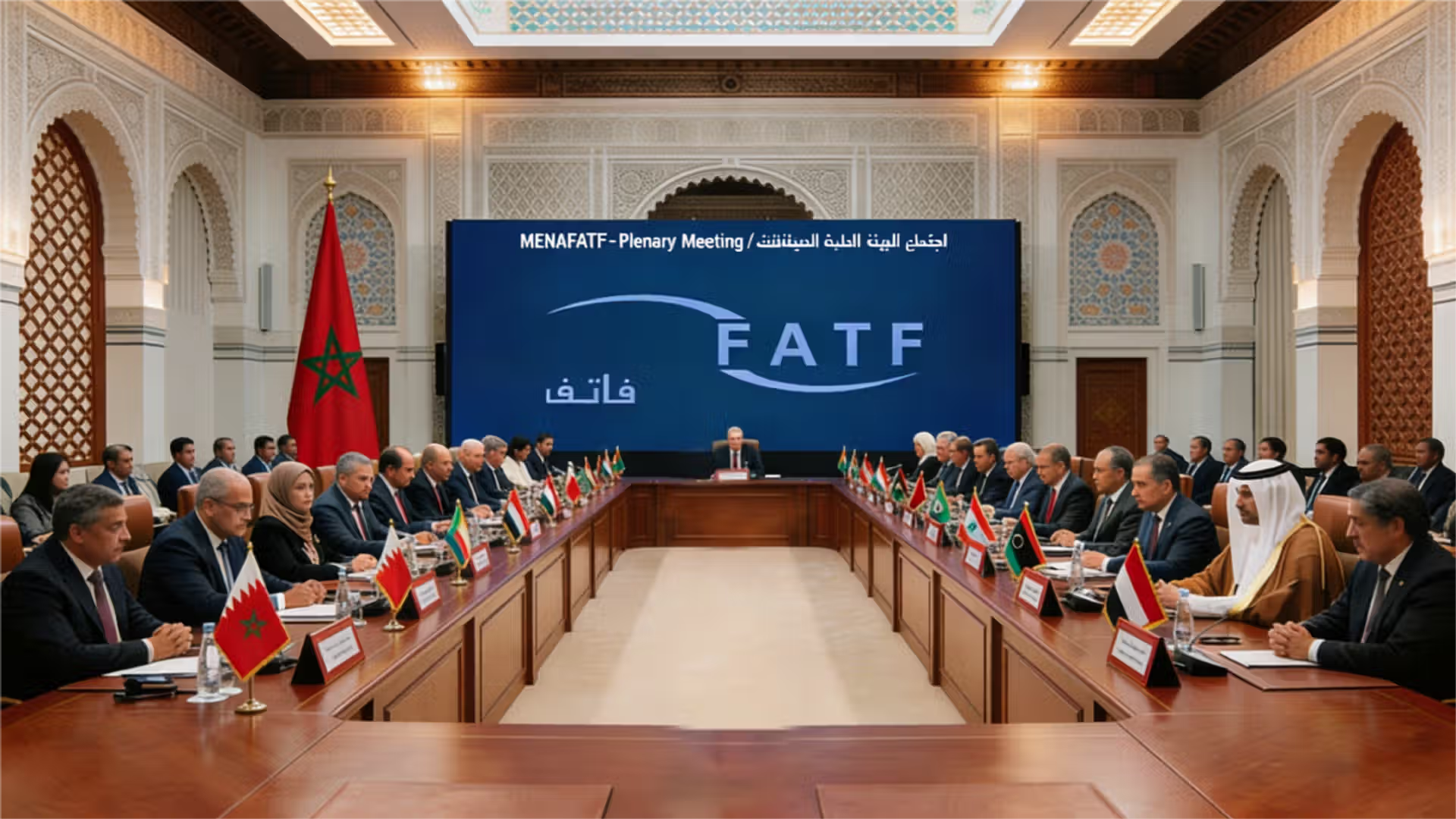
The MENAFATF 42nd Plenary recently concluded in Rabat, marking a significant milestone for regional financial integrity and the tightening of anti-money laundering controls across the Middle East and North Africa. This high-level gathering brought together representatives from member states and international observers to address the evolving landscape of financial crime. Throughout the sessions, the focus remained fixed on enhancing the effectiveness of existing frameworks and ensuring that technical compliance translates into tangible results. The discussions highlighted the critical need for cross-border cooperation to dismantle the complex networks used by illicit actors to hide the proceeds of crime. Delegates emphasized that the battle against financial opacity requires a unified front and a commitment to the highest international standards. By fostering a culture of transparency and accountability, the organization aims to protect the regional economy from the destabilizing effects of illegal financial flows.
Table of Contents



Global Standards and MENAFATF Anti-Money Laundering Efforts
The primary focus of the Rabat meeting was the rigorous evaluation of member states against the international standards set by the Financial Action Task Force. These evaluations are not merely academic exercises; they serve as the foundation for identifying vulnerabilities within the regional financial system. When a country undergoes a mutual evaluation, every aspect of its legal and regulatory framework is scrutinized to ensure it can effectively detect and prevent the laundering of illicit funds. During the 42nd Plenary, several mutual evaluation reports were discussed, providing a clear picture of the progress made and the challenges that remain. The process involves a detailed analysis of how well a country implements the necessary measures to combat the movement of criminal proceeds. This includes the effectiveness of financial intelligence units, the robustness of banking supervision, and the ability of law enforcement to prosecute financial crimes. The plenary emphasized that technical compliance with the recommendations is only the first step. The true measure of success lies in how effectively these laws are applied in practice to disrupt the financial lifelines of criminal organizations. By sharing best practices and providing mutual support, member states are working to close the loopholes that allow financial criminals to operate with impunity. The commitment to these standards is essential for maintaining the integrity of the global financial network and ensuring that the Middle East and North Africa region is not perceived as a weak link. As the methods used by money launderers become increasingly sophisticated, the work of MENAFATF must evolve to stay ahead of the curve. This involves embracing new technologies and enhancing the analytical capabilities of regulatory bodies.




Enhancing Regional Cooperation Against Financial Crimes
One of the central themes of the 42nd Plenary was the absolute necessity of seamless cooperation between nations to combat the global nature of modern financial crime. Money laundering often involves a complex web of transactions spanning multiple jurisdictions, making it difficult for any single country to track and seize illicit assets. The Rabat meetings provided a platform for member states to strengthen their bilateral and multilateral ties, facilitating the exchange of information and expertise. Delegates discussed the implementation of mechanisms for faster asset recovery and the streamlining of mutual legal assistance requests. These tools are vital for ensuring that criminals cannot find safe havens for their wealth by simply moving it across borders. The plenary also addressed the role of the private sector, particularly financial institutions, in identifying and reporting suspicious activities. Banks and other financial entities are on the front lines of this fight, and their cooperation is essential for a comprehensive defense strategy. By improving the quality of suspicious activity reports and enhancing the dialogue between the public and private sectors, the region can create a more hostile environment for those seeking to exploit the financial system. The sessions in Rabat highlighted successful case studies where regional cooperation led to the dismantling of major laundering rings, proving that collective action produces results. The focus is shifting toward a more proactive approach, where intelligence is shared in real time to prevent the movement of funds before they can be layered and integrated into the legal economy. This shift requires a high level of trust and a shared vision for a secure financial future.


Emerging Risks and Technical Assistance Initiatives
As the financial landscape changes with the rise of digital assets and fintech, the MENAFATF has identified new frontiers in the struggle against financial crime. The 42nd Plenary dedicated significant time to discussing the risks associated with virtual assets and the potential for these technologies to be used for anonymous value transfer. While innovation brings many benefits, it also provides new avenues for illicit actors to move funds without detection. Member states are being encouraged to develop robust regulatory frameworks for virtual asset service providers, ensuring they are subject to the same rigorous oversight as traditional financial institutions. The plenary also focused on the importance of technical assistance and training for countries that may lack the resources to fully implement the necessary controls. By providing targeted support, the organization helps to level the playing field and ensure that no country is left behind in the global effort to secure the financial system. This assistance includes training for judges, prosecutors, and financial investigators on how to handle complex financial cases. The goal is to build a professional cadre of experts across the region who are capable of tackling the most sophisticated schemes. Furthermore, the discussions in Rabat touched upon the intersection of environmental crimes and financial flows, recognizing that the proceeds from illegal logging, mining, and wildlife trafficking are often laundered through the same channels as drug money or corruption. By broadening the scope of what constitutes a predicate offense for money laundering, the region can more effectively target the financial motivations behind a wide range of criminal activities.
Strengthening the Future of Regional Financial Integrity
The conclusion of the 42nd Plenary in Rabat signifies a renewed commitment to a long-term strategy for financial stability and security. The road ahead requires persistent effort and a willingness to adapt to an ever-changing threat environment. The decisions made during this meeting will guide the actions of member states in the coming months, as they work to address the deficiencies identified in their mutual evaluation reports. The organization continues to play a pivotal role as a guardian of the regional economy, ensuring that the progress made so far is not undermined by complacency. Moving forward, the focus will remain on the effective implementation of the revised standards and the promotion of a culture of compliance that extends from the highest levels of government to the smallest financial entities. The strength of the MENAFATF lies in its ability to bring diverse nations together under a common cause, recognizing that financial crime is a threat to the stability and prosperity of all. By continuing to prioritize the fight against the concealment of illicit wealth, the region can attract legitimate investment and foster sustainable economic growth. The Rabat plenary has laid the groundwork for a more resilient financial system, but the success of these initiatives depends on the continued political will and cooperation of all stakeholders. The fight is far from over, yet the clarity of purpose demonstrated in Morocco suggests that the region is better equipped than ever to face the challenges of the future. The emphasis on transparency, the rule of law, and international cooperation remains the best defense against those who seek to use the financial system for nefarious purposes. As the organization moves toward its next gathering, the momentum generated in Rabat will be essential for driving further reforms and achieving a cleaner, safer financial environment for the entire region.
Key Points
- The Rabat plenary emphasized the critical role of mutual evaluations in identifying systemic vulnerabilities within regional financial frameworks.
- Member states reached a consensus on the urgent need to regulate virtual assets and digital payment systems to prevent their misuse.
- The meeting facilitated new bilateral agreements aimed at accelerating the process of international asset recovery and legal assistance.
- Enhanced technical assistance programs were launched to provide specialized training for financial intelligence units across the MENA region.
Related Links
- FATF Recommendations on International Standards
- MENAFATF Mutual Evaluation Reports and Updates
- United Nations Office on Drugs and Crime Money Laundering Resources
- International Monetary Fund Financial Integrity Initiatives
Other FinCrime Central Articles about MENAFATF
- UAE Aims At Strengthening Regional Defenses During 2026 MENAFATF Presidency
- Jordan and Egypt Step Up AML Reforms Following MENAFATF Assessment
- MENAFATF plenary meeting bolsters regional AML CFT collaboration
Source: Big News Network
Some of FinCrime Central’s articles may have been enriched or edited with the help of AI tools. It may contain unintentional errors.
Want to promote your brand, or need some help selecting the right solution or the right advisory firm? Email us at info@fincrimecentral.com; we probably have the right contact for you.