The unsealing of a federal indictment in Cincinnati has revealed a massive financial operation designed to move illicit narcotics profits across international borders. Yan Lin, a 41-year-old resident of California, appeared in court to face charges involving the laundering of tens of millions of dollars on behalf of drug trafficking organizations based in Mexico. Authorities allege that between early 2022 and late 2024, Lin managed a sophisticated network that converted cash from fentanyl and cocaine sales into legitimate assets. The conspiracy allegedly utilized global trade routes and mirror transactions to ensure that cartels received their profits without detection by traditional banking monitors.
Table of Contents


Chinese Money Laundering Network Operations
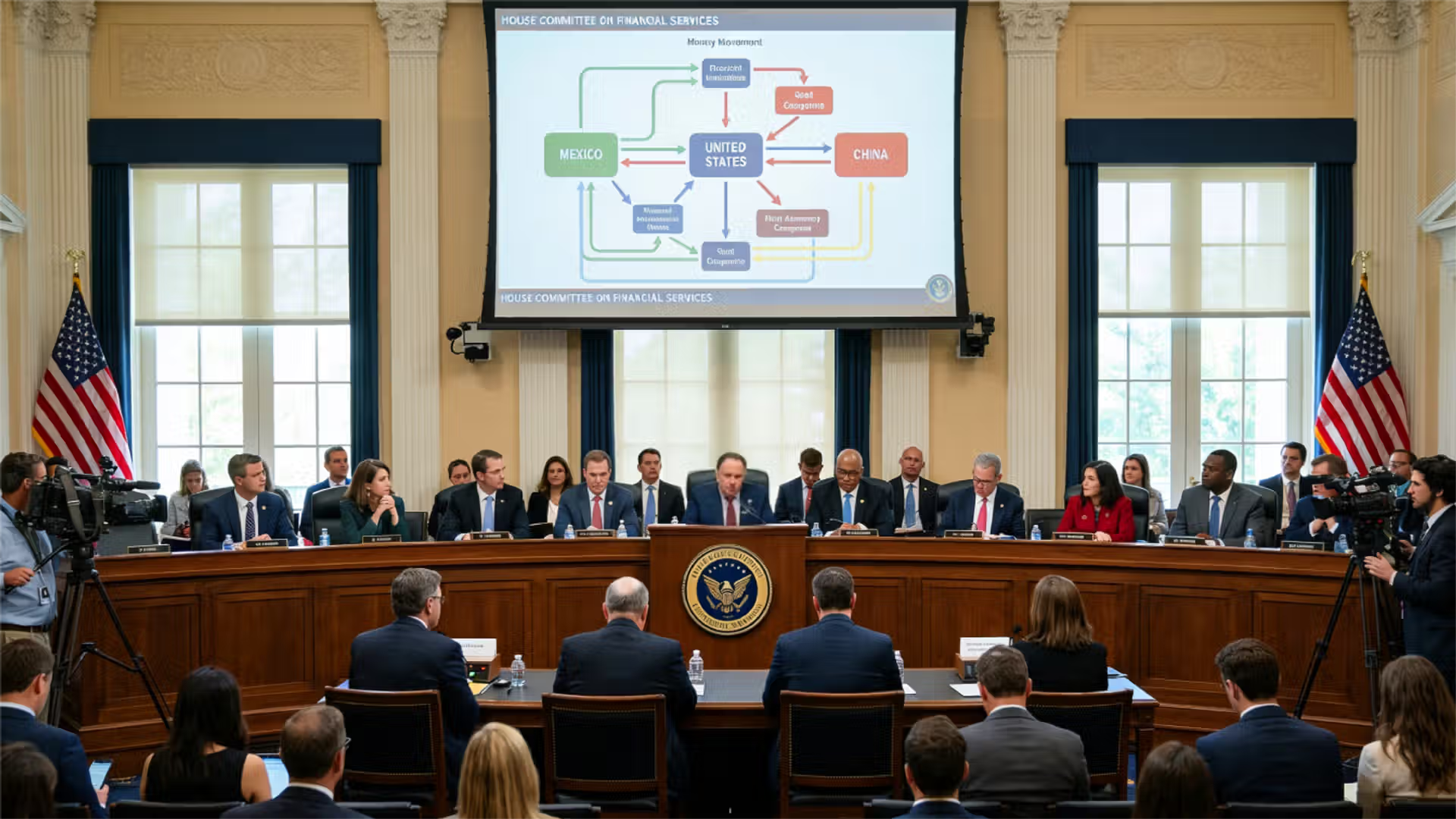
The structural complexity of the organization led by Yan Lin highlights the evolving nature of illicit financial flows within the United States. According to the federal indictment, Lin served as a pivotal coordinator for Mexico-based drug traffickers who required a secure method to repatriate vast sums of cash generated from the sale of methamphetamine and other controlled substances. The operation functioned by collecting bulk currency in various American cities and then integrating those funds into the global economy through the purchase of consumer electronics. This method, often referred to as trade-based laundering, allowed the criminal enterprise to move value without physically transporting currency across the southern border. By shipping high-value goods to entities in Hong Kong and other parts of China, the network created a legitimate-looking paper trail that masked the criminal origin of the underlying wealth.
The scale of this specific network is evidenced by ledgers seized during the investigation, which documented a staggering volume of transactions in a relatively short timeframe. For the year 2024 alone, a single ledger captured records showing the movement of over 27.4 million dollars in bulk cash. This figure represents only a portion of the total contracts managed by Lin, suggesting that the true scope of the laundering operation was significantly larger. The use of multiple nodes across the United States, including cities like New York, Philadelphia, and Atlanta, demonstrates the national reach of the conspiracy. By decentralizing the collection of cash, the network attempted to minimize the risk of large-scale seizures, yet federal investigators were able to piece together the domestic activities to reveal the overarching international scheme.
The involvement of Chinese nationals and entities in the laundering of Mexican cartel profits has become a primary focus for federal law enforcement agencies, including the Federal Bureau of Investigation and the Drug Enforcement Administration. These networks provide a specialized service that traditional criminal organizations often lack, which is the ability to navigate the complexities of international trade and foreign exchange. In the case of Yan Lin, the reliance on co-conspirators in Asia provided a layer of insulation between the drug sales in America and the ultimate recipients of the funds in Mexico. This strategic partnership between different transnational criminal groups poses a unique challenge to financial regulators and investigators who must track value as it transforms from physical cash into electronic goods and finally into foreign currency.
Mechanics of Mirror Transactions and Trade Integration
A central component of the allegations against Yan Lin involves the execution of mirror transactions to finalize the movement of funds. This technique allows for the transfer of value between two parties in different countries without any actual money crossing the border. In this specific scenario, once the bulk cash was delivered to Lin’s associates in the United States and the receipt of electronics was confirmed in Asia, an equivalent amount of money was released to the drug traffickers in Mexico. This secondary payment was typically made in local currency, minus a pre-arranged commission for the laundering service. This system relies on a high degree of trust and synchronization between the domestic collectors and the international facilitators who manage the accounts in Mexico and China.
The integration of illicit proceeds into the electronics market serves a dual purpose for money laundering organizations. First, it provides a justification for the movement of large sums of money through corporate accounts that appear to be engaged in legitimate import and export activities. Second, the demand for high-end electronics in global markets ensures that the goods can be quickly liquidated, providing the necessary liquidity to settle the mirror transactions. Investigators noted that the network specifically targeted electronics because they are easily transportable and hold their value well across different jurisdictions. This trade-based approach effectively bypasses the stringent anti-money laundering controls that banks have implemented to detect suspicious wire transfers and large cash deposits.
Federal prosecutors have emphasized that the destruction of these financial bridges is essential to the broader strategy of dismantling drug cartels. Without the services provided by individuals like Yan Lin, the cartels would be burdened with massive amounts of physical currency that remain difficult to use or invest. The indictment suggests that the efficiency of Lin’s network allowed for a continuous and rapid cycle of drug distribution and profit repatriation. By targeting the financial infrastructure, law enforcement aims to create a bottleneck that disrupts the supply chain of narcotics entering the country. The collaborative effort between the Internal Revenue Service and Homeland Security Investigations underscores the priority placed on following the money to identify the high-level facilitators who rarely handle the drugs themselves.
Legal Consequences and Enforcement Perspectives
The charges filed against Yan Lin carry significant legal weight, reflecting the severity with which the United States government views large-scale money laundering. Lin is specifically charged with conspiracy to commit money laundering and concealment of money laundering, both of which are federal felonies. If he is convicted on these counts, he faces a maximum statutory penalty of twenty years in federal prison. This potential sentence serves as a deterrent to others who might consider providing financial services to criminal enterprises. The prosecution is being handled by the Money Laundering, Narcotics, and Forfeiture Section of the Justice Department, a specialized unit that focuses on the intersection of organized crime and illicit finance.
Law enforcement officials from various agencies have voiced their commitment to pursuing the individuals who act as the financial lifeblood for transnational criminal organizations. The Acting Special Agent in Charge of Homeland Security Investigations in Detroit noted that attacking the movement of illicit proceeds is a direct strike against the operational capacity of drug traffickers. Similarly, the United States Attorney for the Southern District of Ohio highlighted that money launderers are being held accountable as if they had participated in the drug trafficking itself. This policy of aggressive prosecution aims to eliminate the profit incentive that drives the global narcotics trade. The multi-agency cooperation seen in this case, involving local, state, and federal partners, illustrates the comprehensive approach required to investigate and prosecute modern money laundering networks.
The ongoing investigation into the broader network suggests that the indictment of Yan Lin may be part of a larger effort to map out and neutralize similar laundering cells operating within the United States. As criminal organizations become more adept at using technology and international trade to hide their tracks, law enforcement agencies are increasingly relying on financial intelligence and forensic accounting to build their cases. The use of seized ledgers and communication records has proven vital in demonstrating the intent and organization required for a conspiracy conviction. The case serves as a reminder that even the most sophisticated financial schemes are vulnerable to persistent and coordinated investigative efforts.
Strategic Impact on Transnational Criminal Groups
The removal of a key facilitator like Yan Lin has immediate implications for the Mexican drug traffickers who relied on his services. When a primary laundering route is compromised, the criminal organization must find alternative ways to move its wealth, often incurring higher costs and greater risks. The commission-based nature of these transactions indicates that the cartels are willing to pay a premium for security and anonymity. By disrupting these networks, the government effectively increases the cost of doing business for the cartels, which can lead to internal instability and reduced resources for their illicit operations. The focus on Chinese money laundering networks specifically addresses a significant and growing trend in the global underground economy.
Furthermore, this case highlights the importance of international cooperation in addressing money laundering. While the activities described in the indictment took place largely within the United States and Mexico, the role of entities in China and Hong Kong demonstrates the global nature of the problem. Federal authorities continue to work with international partners to share information and track the movement of goods and funds that support criminal activity. The ultimate goal is to create an environment where the financial systems of the world are no longer hospitable to the proceeds of crime. Through the application of existing laws and the diligent work of investigators, the United States remains focused on protecting its communities from the harm caused by drug trafficking and the financial networks that enable it.
As the legal proceedings against Yan Lin move forward, the details revealed in the indictment provide a roadmap for understanding the methods used by modern money launderers. The combination of bulk cash collection, trade-based integration, and mirror transactions represents a sophisticated challenge to the rule of law. However, the successful identification and charging of Lin demonstrate that these networks are not invisible. The persistence of the Department of Justice and its partner agencies sends a clear message that those who profit from the suffering caused by narcotics will be pursued and brought to justice. The case stands as a significant milestone in the ongoing effort to secure the financial system and dismantle the infrastructure of global organized crime.
Key Points
- Yan Lin is accused of laundering drug profits totaling tens of millions of dollars for Mexican cartels.
- The operation involved collecting bulk cash in the United States and purchasing electronics for shipment to Asia.
- A single ledger from 2024 revealed that over 27.4 million dollars was moved through this network.
- Lin faces up to twenty years in prison if convicted of money laundering conspiracy and concealment.
- The investigation involved multiple federal agencies, including the FBI, DEA, IRS, and HSI.
Related Links
- United States Department of Justice Office of Public Affairs
- Drug Enforcement Administration Financial Investigations
- Federal Bureau of Investigation Money Laundering Resources
- Financial Action Task Force Trade-Based Money Laundering Reports
- Internal Revenue Service Criminal Investigation Division Annual Report
Other FinCrime Central Articles About Trade-Based Money Laundering
- Operation Cash-a-Lot: Portugal Dismantles a $209M Trade-Based Money Laundering Scheme
- Hezbollah’s Secret Car Trade Networks in Canada Fuel Billions in Dirty Money
- Billions In Cartel Proceeds Moved Through Chinese Networks Says FinCEN
Source: US DOJ
Some of FinCrime Central’s articles may have been enriched or edited with the help of AI tools. It may contain unintentional errors.
Want to promote your brand, or need some help selecting the right solution or the right advisory firm? Email us at info@fincrimecentral.com; we probably have the right contact for you.