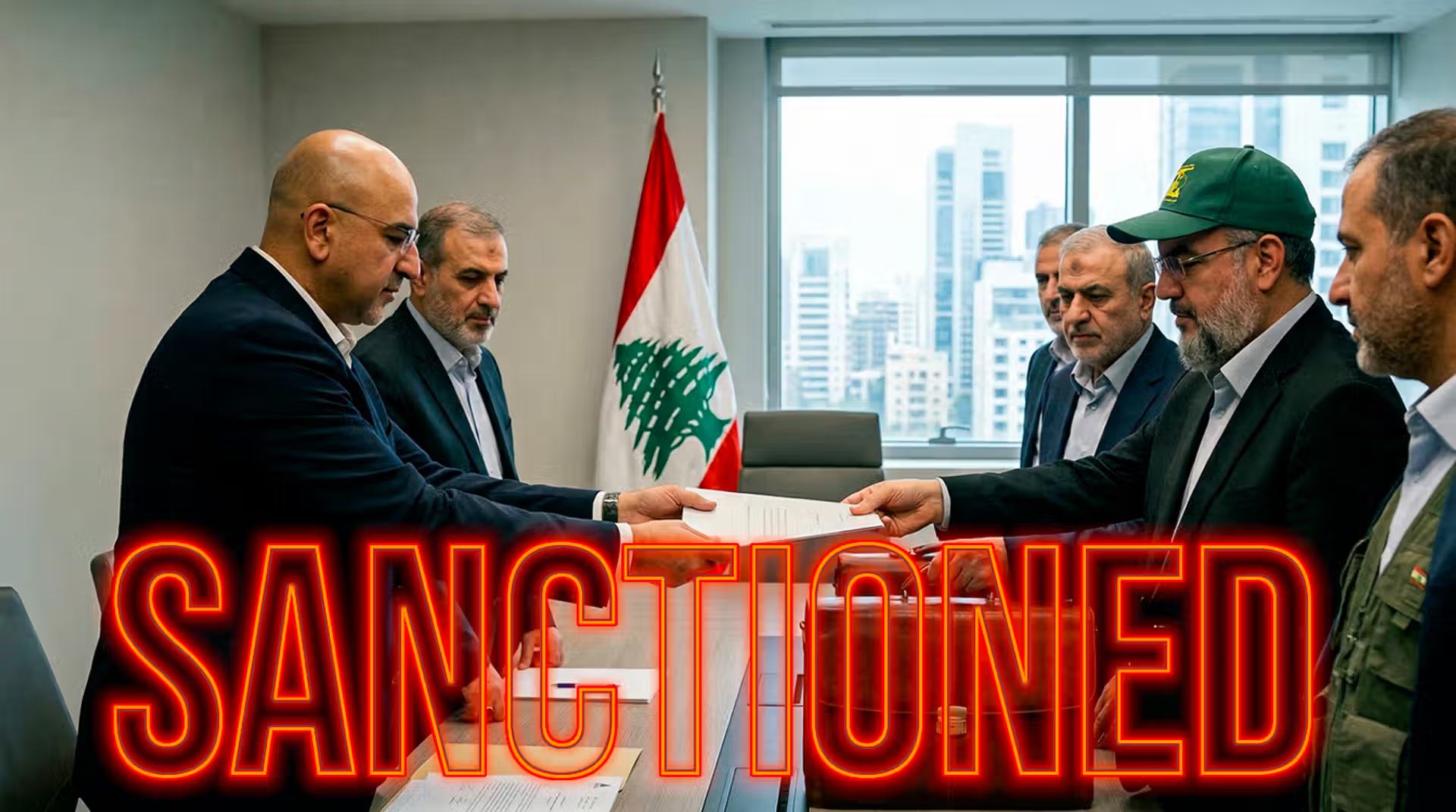
The United States Department of the Treasury has designated a network of sixteen individuals and entities led by Alaa Hassan Hamieh for diverting over 100 million dollars since 2020. This enforcement action targets a sophisticated global web across Lebanon, Syria, Poland, Slovenia, Qatar, and Canada that facilitates money laundering and terrorist financing. Secretary of the Treasury Scott Bessent emphasized that these measures aim to disrupt the financial lifelines that sustain militant activities and regional instability. By applying these sanctions, the government intends to protect the integrity of the international financial system from exploitation by proxy groups. The penalties involved include the immediate freezing of all assets within American jurisdiction and the potential for significant criminal or civil prosecution for any violations.
Table of Contents


Strategic Asset Freezing and Global Terrorist Financing
The recent actions taken by the Office of Foreign Assets Control highlight a systemic effort to dismantle the financial infrastructure used by Alaa Hassan Hamieh. This individual, a former official at the Investment Development Authority of Lebanon, utilized his high-level position to channel state resources into private accounts and illicit projects. The complexity of the operation involved a variety of shell companies and proxies designed to mask the true origin and destination of the funds. By establishing entities in diverse jurisdictions such as Poland and Slovenia, the network attempted to bypass traditional oversight mechanisms. These companies, including Calllync and the Seven Seas Group, functioned as conduits for moving capital across borders under the guise of legitimate business activities such as telecommunications and logistics. The scale of the diversion, exceeding 100 million dollars, demonstrates the significant threat posed by state-affiliated actors who misuse their authority to support sanctioned organizations. This specific case illustrates the multifaceted nature of modern money laundering, where legitimate commerce is blended with clandestine movements of wealth to evade detection by international regulators and law enforcement agencies.
Federal investigators found that the group relied heavily on family members and close associates to maintain operational control while keeping the primary leaders out of the direct line of sight of regulators. For example, Alaa Hamieh transferred ownership of several subsidiaries to his brother, Muhammad Hasan Hamieh, and his nephew, Daniel Hamieh. This tactic of using family ties is a common feature in global money laundering, as it relies on a foundation of trust that is harder for external agencies to penetrate. These associates were not merely passive owners but were active participants in tracking funds and managing the day-to-day financial flows. The coordination between these individuals and previously designated figures like Muhammad Al Bazzal shows a persistent and resilient structure that adapts to previous rounds of sanctions by shifting assets into new names and jurisdictions. Such networks often operate with a degree of redundancy, ensuring that if one node is compromised, the broader financial pipeline remains functional through other channels. The geographic diversity of the network, stretching from the Middle East to Central Europe and North America, highlights the challenges faced by authorities in tracking and freezing illicit assets that move with high velocity through the global banking system.



Diversion of Public Funds and Government Corruption
A central component of this case involves the exploitation of a trade agreement between Iraq and Lebanon intended for national reconstruction. While serving as the Vice President of the Investment Development Authority of Lebanon, Alaa Hamieh was in a unique position to influence the selection of contractors and the disbursement of millions of dollars. Instead of following transparent procurement processes, he ensured that Hezbollah-associated projects received the bulk of the funding. This specific instance of public corruption illustrates how administrative power can be weaponized to generate revenue for non-state actors. The dual nature of his role allowed him to blend legitimate governmental duties with illicit financial engineering, creating a blurred line that complicated early detection by international observers. By siphoning off funds meant for public infrastructure and economic recovery, the network not only financed militant activity but also directly harmed the economic well-being of the Lebanese people. This form of embezzlement is particularly damaging in regions already facing economic instability, as it erodes public trust in state institutions and diverts essential capital away from critical services.
Beyond the misuse of trade agreements, the network established a money exchange business in collaboration with Hamdan Ali Al Lakis. This exchange served as a critical node for converting illicit proceeds into usable currency and further distancing the money from its corrupt sources. By collecting the majority of profits through this exchange while leaving the management to Al Lakis, Hamieh successfully avoided the appearance of a conflict of interest during his tenure in government. Money exchanges are frequently targeted by regulators because they often operate with less transparency than traditional banks, providing an ideal environment for the rapid movement of cash. The control over this exchange allowed the Hamieh brothers to fund their various business needs without triggering the standard reporting requirements that might have alerted Lebanese or international authorities to the scale of their wealth. These informal financial sectors are often difficult to monitor, making them a preferred tool for money launderers who require liquidity and anonymity. The integration of these exchanges into a broader corporate network allowed the group to cycle funds through multiple layers of transactions, a process known as layering, which is designed to obscure the audit trail and make it nearly impossible for investigators to trace the money back to its original illicit source.
International Proxies and Corporate Deception
The global reach of the network was facilitated by a group of international proxies and gray arms dealers who provided the necessary infrastructure for sanctions evasion. Bahaa Addin Hashem, a Syrian national, played a pivotal role by co-owning companies with Alaa Hamieh and registering entities in the European Union. These European firms, specifically those located in Slovenia, provided a veneer of legitimacy that helped the network interface with the global economy. Similarly, Mohamad Jamil Salami was involved in procurement schemes for telecommunications equipment destined for the Iranian regime in Syria. These activities highlight the intersection of commercial trade and national security threats, where seemingly mundane business transactions are repurposed to support military and intelligence objectives. By utilizing proxies in countries with stable regulatory environments, the network was able to exploit the trust associated with those jurisdictions to conduct business that would otherwise be flagged as high risk. This form of corporate deception is a cornerstone of global money laundering, as it relies on the creation of complex ownership structures that hide the ultimate beneficial owner behind a series of front companies and nominees.
In Canada, the network extended its influence through Raoof Fadel and the Seven Seas for International Trading and Logistics. This Canadian branch was used to facilitate logistics and trade that ultimately benefited the central finance team in Lebanon. The use of a North American entity underscores the audacity of the group and the necessity for global cooperation in enforcing sanctions. Furthermore, individuals like Maya Boustany acted as proxies to set up front companies in Iraq, demonstrating a regional strategy to capture emerging markets and reconstruction funds. By spreading their operations across multiple continents, the group aimed to ensure that the closure of any single entity would not result in the total collapse of their financial capabilities. This fragmented yet interconnected structure required a highly coordinated response from multiple international regulatory bodies. The ability of the network to operate in such diverse environments as Poland and Qatar shows a high level of sophistication in navigating different legal systems and financial regulations. It also points to the importance of information sharing among allies to identify and disrupt these types of cross-border financial conspiracies.
Enforcement Consequences and Future Compliance
The imposition of these sanctions carries immediate and severe consequences for the designated individuals and the companies they control. All property and interests in property that come within the possession of United States persons are now blocked, effectively severing the network from the American financial system. This includes any entity that is owned fifty percent or more by the blocked persons, a rule that prevents the simple shifting of assets to slightly different corporate structures. The strict liability basis for civil penalties means that financial institutions must be extremely diligent in their screening processes, as even unintentional dealings with these parties can lead to massive fines. This creates a powerful deterrent for any legitimate business that might otherwise be tempted to engage with these shell companies. Compliance officers must now update their internal watchlists and conduct retroactive reviews of any historical transactions that might involve the newly designated parties. The ripple effect of these sanctions is significant, as foreign financial institutions that continue to process transactions for these individuals risk being cut off from the United States dollar clearing system, a move that can be fatal for any global bank.
The Treasury Department also highlighted the whistleblower incentive program, which offers rewards for information leading to successful enforcement actions. This program encourages insiders to come forward, further increasing the risk for those involved in illicit financial schemes. The ultimate objective of these measures is to force a change in behavior and to protect the global economy from being used as a tool for violence and destabilization. While the removal from the sanctions list is possible if the parties demonstrate a permanent cessation of their illegal activities, the current evidence points to a deeply entrenched network that has consistently sought to evade international law. The ongoing monitoring of these entities will be crucial to ensure that new proxies do not emerge to replace those who have been neutralized by this latest round of designations. Furthermore, this case serves as a warning to other public officials who might consider using their positions to facilitate illicit finance, demonstrating that the reach of international law is long and that the consequences of such actions are both personal and professional. As the global financial landscape continues to evolve, the tools used by regulators must also adapt to meet the challenges posed by increasingly complex and technologically advanced money laundering networks. The success of this operation depends not just on the initial designations but on the sustained enforcement and the continued vigilance of the international community in upholding the standards of financial integrity.
Key Points
- The United States Treasury designated a network of sixteen individuals and entities for laundering over 100 million dollars.
- Alaa Hassan Hamieh exploited his government position in Lebanon to divert reconstruction funds to sanctioned groups.
- The illicit operation utilized shell companies in Poland, Slovenia, and Canada to move money across international borders.
- Enforcement actions include blocking all American assets and providing incentives for whistleblowers to report sanctions violations.
Related Links
- OFAC Recent Actions and Sanctions List Updates
- FATF Guidance on Counter Terrorist Financing and Proliferation
- Executive Order 13224 Regarding Counterterrorism Sanctions
- FinCEN Whistleblower Program Information and Filing
Other FinCrime Central Articles About Hezbollah Financing Networks
- US Treasury Sanctions Million Dollar Hezbollah Gold Shipping Laundering Ring
- US Treasury Sanction Exposes Hezbollah Secret High Volume Cash Laundering Structure
- Hezbollah’s Secret Car Trade Networks in Canada Fuel Billions in Dirty Money
Source: US Treasury
Some of FinCrime Central’s articles may have been enriched or edited with the help of AI tools. It may contain unintentional errors.
Want to promote your brand, or need some help selecting the right solution or the right advisory firm? Email us at info@fincrimecentral.com; we probably have the right contact for you.