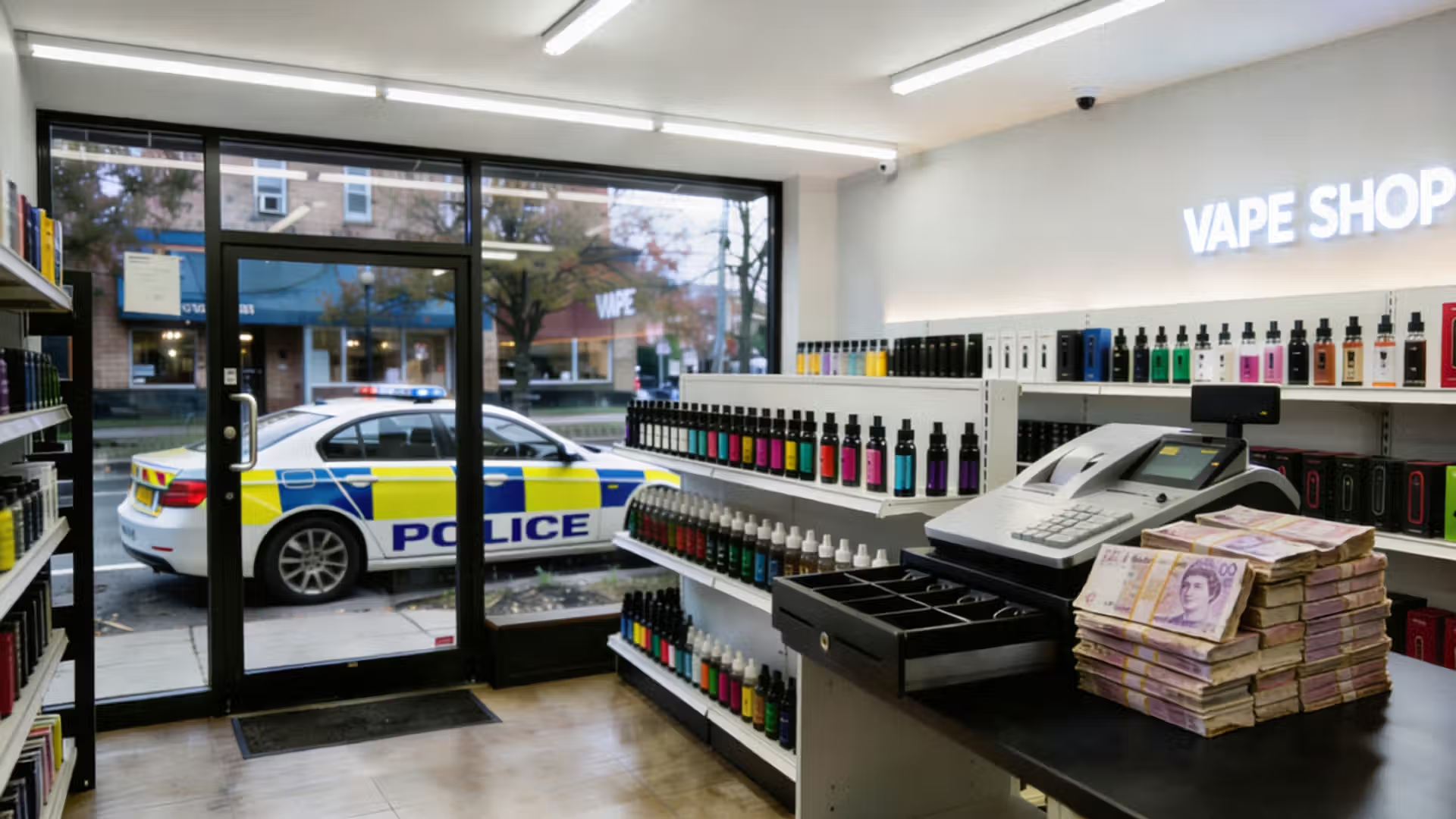
The Home Office and the National Crime Agency have initiated an extensive enforcement strategy to eradicate front operations used by illicit networks on British high streets. This multi-agency intervention targets business fronts that facilitate tax evasion, regulatory non-compliance, and illicit financial flows across retail sectors. Official estimates suggest that organised syndicates generate at least twelve billion pounds in criminal currency annually within the jurisdiction, with one billion pounds laundered directly through standard commercial establishments. The implementation of this strategy establishes permanent enforcement mechanisms, enhanced intelligence sharing frameworks, and heightened local policing presence to systematically dismantle front networks.
Table of Contents



High Street Organised Crime Unit Targets Retail Underworld
The creation of the High Street Organised Crime Unit represents a significant structural shift in how regulatory bodies and police forces address retail front networks. This specialized entity unifies capabilities from government departments, local policing units, and Trading Standards to target enterprises operating in plain sight. Operating under executive ministerial oversight, the unit focuses on the systemic exploitation of retail spaces, including barber shops, electronic vapor supply stores, mini marts, and confectionery outlets. These establishments frequently mask underlying illicit operations, functioning as mechanisms to integrate substantial quantities of physical currency into the legitimate financial grid.
To support this collaborative framework, substantial funding allocations have been directed toward enhancing the law enforcement infrastructure. A centralized multi-agency coordination cell has been embedded within the National Crime Agency to act as a clearinghouse for strategic intelligence. This structural development ensures that localized suspicions can be aggregated to map out national criminal architectures. By analyzing operational anomalies across regional boundaries, investigators can trace the ultimate beneficial ownership of seemingly independent high street retail outlets.
In tandem with centralized intelligence assets, regional capabilities are receiving direct personnel increases to bolster enforcement actions on the ground. Seventy-five specialized officers are being integrated across the National Crime Agency, Greater Manchester Police, West Midlands Police, and a unified Kent and Essex policing unit. This tactical deployment places dedicated investigators within identified geographical hotspots where illicit front networks have saturated commercial zones. These officers are tasked with conducting rapid interventions, executing entry warrants, and executing cash seizures to disrupt the liquidity of criminal enterprises.




Regulatory Enforcement Amplified Through Enhanced Trading Standards Funding
Complementing the direct policing response, Trading Standards authorities have been allocated targeted funding to strengthen business compliance monitoring. This funding underpins an extensive training program designed to equip local inspectors with the analytical skills necessary to identify suspicious corporate behavior. Trading Standards officers operate on the primary layers of retail oversight, making their ability to detect anomalies critical for early intervention strategies. The training focus centers on detecting sham corporate structures, verifying supply chain legitimacy, and identifying patterns of underreporting that signify systematic tax evasion.
The increased resource allocation enables regulatory bodies to conduct more frequent and rigorous inspections of businesses displaying high-risk indicators. These activities focus heavily on product legitimacy, employment practices, and compliance with corporate registration requirements. When businesses fail to demonstrate transparent operational histories, Trading Standards works alongside law enforcement to initiate formal enforcement procedures. This integrated approach ensures that minor regulatory infractions can be used as investigative entry points to uncover broader financial crimes.
Furthermore, authorities are conducting an accelerated legislative review to expand the enforcement powers available to local responders. A central component of this review is a public consultation aimed at extending the statutory duration of closure orders. Under current frameworks, temporary closures provide a brief disruption, but extended closure powers would allow authorities to shutter compromised premises for prolonged durations. This legislative enhancement aims to permanently deny criminal syndicates access to prime high street locations, preventing the rapid resurrection of disrupted front operations.


Operation Machinize Establishes Blueprint For Economic Crime Disruption
The current nationwide strategy builds directly upon the operational outcomes achieved during Operation Machinize, a long-term enforcement initiative targeting high street economic crime. Over an eighteen-month period, this coordinated effort brought together police forces, His Majesty’s Revenue and Customs, Immigration Enforcement, and Trading Standards. The collaborative framework resulted in more than nine hundred and fifty arrests and the successful recovery of over ten million pounds in illicit value. The operational data gathered during this phase confirmed that high street retail vulnerabilities were being systematically exploited by sophisticated networks.
A subsequent enforcement phase executed in November demonstrated the scale of the systemic issue, involving coordinated raids across two thousand seven hundred and thirty-four commercial premises. This single intensification campaign led to nine hundred and twenty-four individual arrests and the seizure or restraint of more than thirteen million pounds in suspected criminal proceeds. Additionally, authorities intercepted and destroyed illicit commodities valued at over two million seven hundred thousand pounds. The breadth of these seizures underscored the degree to which physical retail shops serve as critical nodes for handling criminal property.
The asset recovery outcomes achieved through these actions contribute to a broader financial enforcement landscape, which saw three hundred million pounds in criminal assets recovered by law enforcement during the preceding fiscal period. Recovered funds are systematically rechannelled into front-line enforcement capabilities, creating a self-sustaining financial model for combating serious organized crime. This funding loop directly supports the development of the National Police Service, an initiative designed to integrate the distinct capabilities of the National Crime Agency, Counter Terrorism Policing, and regional organised crime units into a singular, cohesive national framework.
High Street Money Laundering Typologies
- Cash Intensive Retail Fronts: Utilizing high-volume cash businesses, such as barber shops or confectionery stores, to blend illicit currency with legitimate commercial receipts, making the source of funds difficult to trace.
- Artificially Inflated Commercial Revenues: Overstating the daily sales volume and manipulating accounting ledgers within retail software to justify the deposit of large amounts of unexplained cash into corporate banking accounts.
- Illicit Supply Chain Integration: Purchasing counterfeit goods, unregulated tobacco, or illicit electronic vapor products from unverified suppliers to generate undocumented cash profits while undercutting legitimate market rates.
- Underreported Corporate Tax Evasion: Systematically failing to record cash transactions and misstating corporate earnings to evade value-added tax liabilities while utilizing the unregistered cash to fund secondary criminal operations.
- Exploitative Informal Labor Arrangements: Employing undocumented personnel or utilizing illegal working arrangements to minimize operating expenses, escape regulatory payroll scrutiny, and facilitate cash-based remuneration networks.
Key Points
- The Home Office and National Crime Agency launched a nationwide initiative targeting criminal front operations on British high streets.
- Financial intelligence estimates that approximately one billion pounds in criminal currency is laundered annually through legitimate-looking retail shops.
- The strategy establishes a new High Street Organised Crime Unit to coordinate actions between policing forces, government bodies, and Trading Standards.
- Funding supports the recruitment of seventy-five specialized officers across key regional forces to execute raids, business closures, and asset seizures.
- Operational precedents from Operation Machinize resulted in over nine hundred arrests and the restraint of thirteen million pounds in criminal proceeds.
Related Links
- National Crime Agency Strategic Updates
- Home Office Serious and Organised Crime Strategy
- Financial Action Task Force Guidance on Vulnerable Sectors
- UK Government Business Compliance and Enforcement Frameworks
Other FinCrime Central Articles About Retail Money Laundering
- UK’s Crackdown Seizes £10.7M In Dirty Cash From High Street Crime
- How Supply Chains Are Used to Launder Funds in the Food and Retail Sector
- Guatemalan Money Laundering Network Using a Retail Chain Busted in US
Source: GOV.UK
Some of FinCrime Central’s articles may have been enriched or edited with the help of AI tools. It may contain unintentional errors.
Want to promote your brand, or need some help selecting the right solution or the right advisory firm? Email us at info@fincrimecentral.com; we probably have the right contact for you.