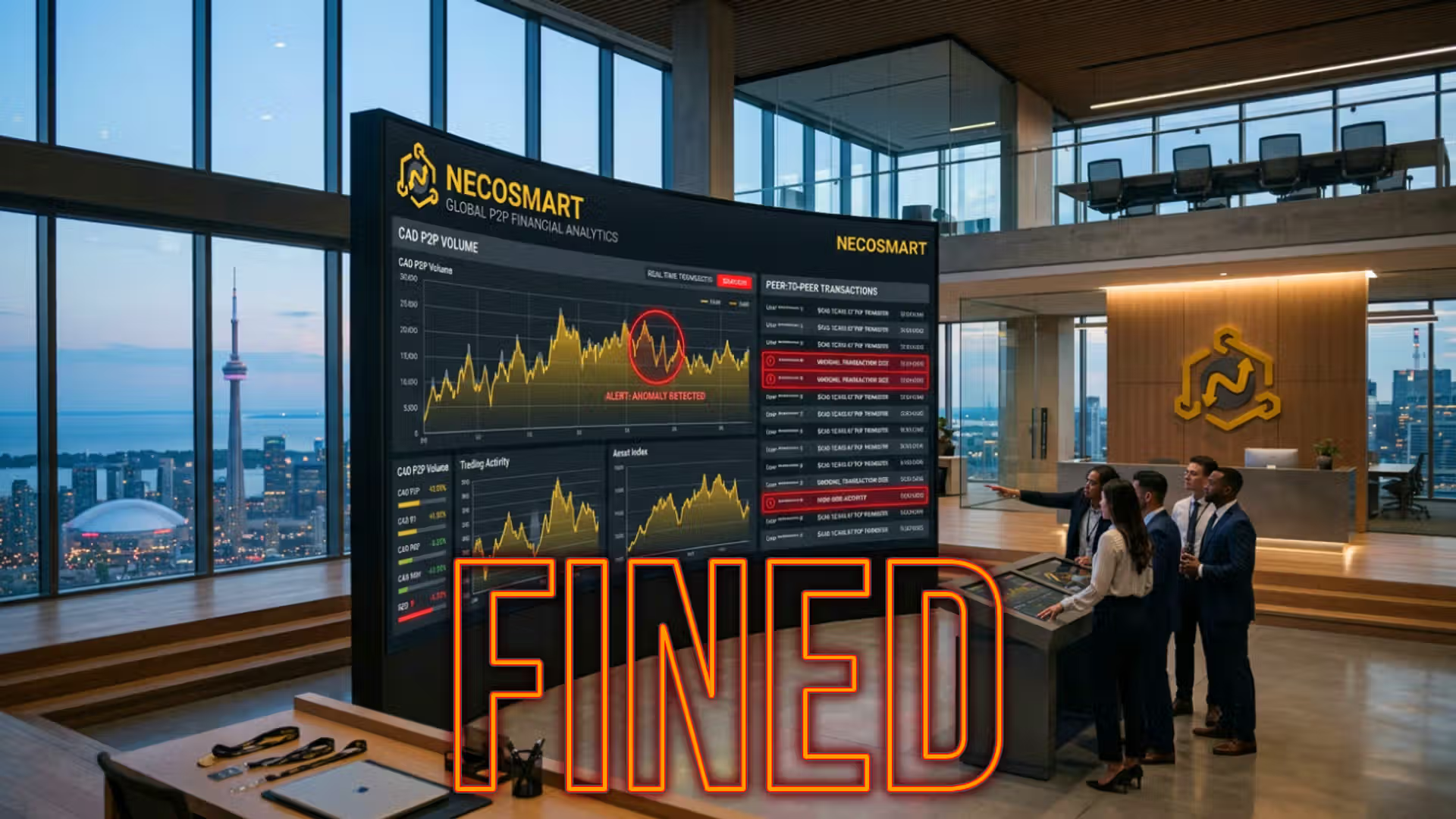
The Financial Transactions and Reports Analysis Centre of Canada announced a major enforcement action involving an administrative monetary penalty of 693,742.50 dollars imposed on the financial firm Necosmart. This significant regulatory sanction, finalized on March 27, 2026, highlights severe gaps in the compliance frameworks required of modern money services businesses operating within the country. A comprehensive compliance examination executed by the national financial intelligence unit uncovered a total of five distinct operational infractions that directly undermined national efforts to combat illicit financial flows. The primary regulator stressed that maintaining rigorous transaction oversight remains a non-negotiable legal obligation for all registered entities processing capital transfers. By publicly disclosing this enforcement action, the regulatory agency emphasizes its ongoing commitment to defending the integrity of the domestic marketplace from the vulnerabilities introduced by negligent corporate practices.
Table of Contents



Compliance Overhaul Required After FINTRAC Penalizes Necosmart
The supervisory evaluation of Necosmart, an enterprise doing business in Edmonton, Alberta, revealed structural deficiencies that exposed the corporate infrastructure to potential exploitation by criminal networks. The central supervisor documented a critical failure to submit required documentation when there were reasonable grounds to believe transactions were linked to money laundering or the financing of prohibited activities. The oversight body explicitly identified four specific instances where the money services business failed to file mandatory suspicious transaction reports despite encountering unmistakable behavioral flags. These indicators included transaction patterns that bore absolutely no logical correlation to the established financial standing or known professional profile of the clients involved. By failing to execute these filings, the corporation severely diminished the capacity of law enforcement agencies to track and intercept suspicious capital flows traversing the regional economy. Furthermore, the operational review demonstrated that the leadership failed to conduct a holistic assessment of these problematic patterns, which effectively prevented the firm from meeting the legislative reporting thresholds established under the Proceeds of Crime Money Laundering and Terrorist Financing Act.
The regulatory investigation also focused heavily on the lack of proper corporate governance and internal mechanisms necessary to detect modern financial crimes. Auditors discovered that the company did not adequately design or implement comprehensive written compliance policies and procedures approved by a senior corporate officer. This fundamental structural omission left compliance staff without updated guidelines to address the shifting methodologies deployed by sophisticated money laundering syndicates. A robust compliance program is mandated by federal legislation to serve as the primary line of defense against the integration of illegitimate funds into the legitimate banking infrastructure. Without standardized, formal procedures, the daily oversight of high-volume financial transactions becomes dangerously fragmented and arbitrary. The absence of corporate officer endorsement further reflects an inadequate institutional commitment to maintaining internal controls, leaving the entire organization exposed to systematic operational oversights and severe regulatory liabilities.




Strategic Risk Assessment Gaps in Money Services Businesses
The deficiencies in the corporate framework extended directly into the domain of client risk classification and mitigation strategies. Necosmart was cited for failing to adequately develop and execute enhanced due diligence measures when interacting with high-risk clients and volatile transaction structures. Under prevailing Canadian regulatory standards, entities dealing with elevated risk categories must implement rigorous verification protocols, determine the legitimate source of client wealth, and conduct continuous, intensive monitoring of all related financial movements. The oversight agency noted that while the firm occasionally identified individual risk flags, it routinely neglected to apply the mandatory risk-mitigation safeguards necessary to neutralize those vulnerabilities. This lack of rigorous follow-through created an environment where high-risk clients could move significant volumes of capital without facing the heightened scrutiny required to confirm the legitimacy of the underlying economic activity.
In tandem with the failure to execute enhanced due diligence, the corporation failed to properly document and assess its overarching exposure to money laundering and terrorist financing threats. A comprehensive risk assessment must meticulously evaluate specific factors, including geographic location, customer demographics, delivery channels, and the precise nature of the financial products offered. The enforcement documentation confirms that the risk evaluation methodology utilized by the firm completely failed to analyze all inherent vulnerabilities present within its business model. For money services businesses dealing in peer-to-peer mechanisms or virtual currency conversions, a precise and exhaustive assessment of operational risk is essential to prevent systemic abuse. Failing to catalog and analyze these inherent operational exposures effectively blinds an institution, making it impossible to allocate defensive compliance resources to the areas of greatest vulnerability.


Virtual Currency Documentation Failures and Regulatory Enforcement
The final categories of non-compliance centered on the severe mismanagement of digital asset transactions and poor record-keeping practices. The regulatory examination proved that the corporation failed to maintain sufficient occupational information and transactional records on its virtual currency exchange tickets. In the rapidly evolving virtual asset sector, maintaining a pristine and complete audit trail is a foundational requirement for regulatory conformity. Money services firms must record precise details regarding the professional occupations of clients and the exact mechanics of every digital asset conversion executed. This specific data is vital for investigators who rely on transaction tickets to reconstruct complex digital financial paths during asset tracing operations. The failure to secure and archive this fundamental client data severely disrupted the transparency of the transactions, making it significantly harder to determine if the digital asset volumes matched the legitimate socioeconomic profiles of the participants.
The substantial financial penalty levied against this Edmonton enterprise reflects a broader, accelerating trend of aggressive enforcement by Canada’s primary financial intelligence unit. During the 2024 to 2025 fiscal period, the supervisor issued twenty-three individual notices of violation for non-compliance, marking the highest volume of annual enforcement actions ever recorded in the history of the organization. These combined historical enforcement measures resulted in total penalties exceeding twenty-five million dollars across multiple commercial sectors. Since gaining the statutory authority to issue administrative monetary penalties in 2008, the regulator has successfully executed over one hundred and fifty separate financial sanctions against non-compliant entities. These monetary penalties are explicitly designed to act as a corrective mechanism, transforming corporate behavior, ensuring strict adherence to federal statutes, and sending a powerful deterrent message to the entire financial services industry.
AML Typologies to Identify in Peer-to-Peer Virtual Currency Platforms
Compliance personnel and anti-money laundering professionals must maintain continuous awareness of specific behavioral patterns and operational red flags when monitoring peer-to-peer virtual currency transactions and money services business activities. Observing these specific typologies is critical for ensuring that an institution can effectively identify, mitigate, and report suspicious financial movements before illicit capital becomes fully integrated into the financial network.
- Incongruous Transaction Profiles: Transactions executed by an individual or entity that bear no reasonable alignment with the established net worth, known occupation, or disclosed financial position of the client.
- Unjustified Structural Complexity: Financial transfers or digital asset exchanges that utilize unnecessarily convoluted routing, multiple intermediary accounts, or rapid layering techniques without any clear economic or legitimate purpose.
- Deficient Entity Documentation: The systematic failure to collect, verify, or update client occupational data and comprehensive transactional details on digital asset exchange tickets.
- Inadequate Enhanced Due Diligence: The failure to apply heightened monitoring, wealth verification, and rigorous source-of-funds investigations when managing accounts classified as high-risk or processing elevated transaction volumes.
- Absence of Governance Approval: Operating a compliance framework with unapproved, outdated, or completely absent written policies that fail to provide clear guidance for reporting suspicious activities to national regulators.
Key Points
- FINTRAC issued an administrative monetary penalty of 693,742.50 dollars against the money services business Necosmart on March 27, 2026.
- The enforcement action followed a compliance examination that uncovered five distinct violations of federal anti-money laundering regulations.
- The company failed to file suspicious transaction reports in four separate instances despite encountering clear indicators of potential financial crime.
- Severe internal gaps were identified in the firm’s written compliance policies, high-risk client mitigation strategies, and formal risk assessments.
- The business failed to maintain adequate records regarding client occupations and transaction data on its virtual currency exchange tickets.
Related Links
- Financial Transactions and Reports Analysis Centre of Canada Public Notices
- Proceeds of Crime Money Laundering and Terrorist Financing Act
- Financial Action Task Force Guidance for a Risk-Based Approach to Virtual Assets
- Government of Canada Anti-Money Laundering and Anti-Terrorist Financing Regime
Other FinCrime Central Articles About FINTRAC’s Latest Actions
- FINTRAC Issues Over 118,000 Dollars in Fines to Multiple Entities
- FINTRAC Intelligence Targets Canadian Extortion and Money Laundering Networks
- Canada’s Northern Isga Foundation Faces FINTRAC Compliance Enforcement
Source: FINTRAC
Some of FinCrime Central’s articles may have been enriched or edited with the help of AI tools. It may contain unintentional errors.
Want to promote your brand, or need some help selecting the right solution or the right advisory firm? Email us at info@fincrimecentral.com; we probably have the right contact for you.