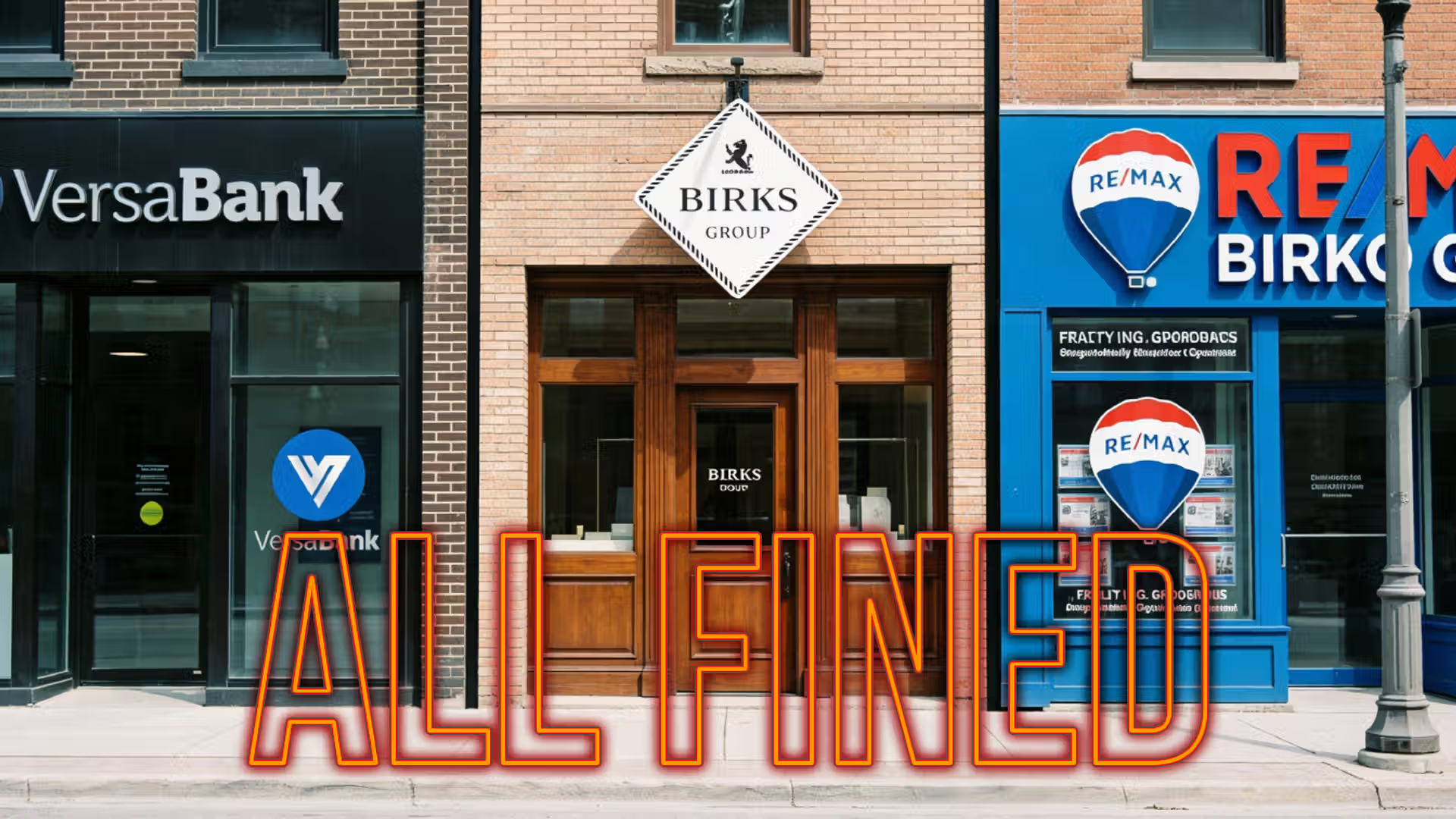
Canada recently enforced strict regulatory measures by issuing administrative monetary penalties totaling more than 118000 dollars to three distinct businesses for failing to comply with national financial security laws. These FINTRAC enforcement actions target VersaBank, RE/MAX Twin City Realty Inc, and Birks Group Inc, all of which demonstrated specific deficiencies in their anti-money laundering protocols. Financial intelligence officials emphasized that these penalties are intended to correct non compliant behavior rather than to provide a criminal record. Each entity failed to meet specific obligations designed to protect the Canadian financial system from exploitation by illicit actors. By publicizing these fines, the regulator reinforces the importance of maintaining robust compliance programs across all sectors that handle substantial financial transactions.
Table of Contents



Improving Regulatory Compliance in the Banking Sector
The banking industry remains a primary target for those looking to obscure the origins of illicit funds, making strict adherence to reporting standards a critical requirement for all financial institutions. In the first of three major enforcement actions, an Ontario bank known as VersaBank faced a penalty of 42,075 dollars for multiple violations of the Proceeds of Crime and Terrorist Financing Act. The regulator discovered that the business had failed to develop and apply written compliance policies and procedures that are kept up to date and approved by a senior officer. Without a structured and approved program, a company cannot effectively monitor transactions or identify the risks associated with its clients and business activities. This specific case highlighted a lack of rigorous internal controls that are supposed to guide staff in their daily responsibilities regarding client due diligence and suspicious activity monitoring.
Furthermore, VersaBank failed to take special measures for high-risk clients. Enhanced due diligence is mandatory because it allows a firm to mitigate areas where it might be vulnerable to financial crimes based on the nature of certain client profiles or transactions. The absence of these special measures meant that the firm was essentially operating without the heightened level of scrutiny required for entities or individuals posing a greater threat to the integrity of the financial system. Additionally, firms must ensure that their compliance frameworks are not just written but actively enforced throughout the organization. By neglecting these administrative duties, the bank created an environment where illicit financial flows could potentially bypass established safeguards, leading to the penalty imposed by the federal agency on February 23, 2026.




Real Estate Brokerages and High Risk Financial Oversight
Real estate brokerages play a pivotal role in the housing market and are therefore subject to stringent oversight to prevent the integration of dirty money into the economy. A business operating as RE/MAX Twin City Realty Inc was recently fined 24,750 dollars for failing to fulfill its legal obligations under the federal anti-money laundering framework. The violation centered on the failure to assess and document the risk of a money laundering or terrorist financing offence. Every regulated entity must take into consideration prescribed factors, such as geographic location and client types, to build a comprehensive risk profile. Without a clear assessment of these threats, the brokerage lacked the necessary foundation to ensure that all transactions were being properly vetted and reported to the authorities.
The investigation into RE/MAX Twin City Realty Inc also revealed that the failure to document risk occurred despite the brokerage having multiple branches in cities like Brantford, Cambridge, and Kitchener. Comprehensive risk assessments are essential because they serve as the first line of defense against financial crime, allowing staff to recognize the warning signs of potential money laundering specific to their local market. When a brokerage does not document its risk landscape, the entire organization becomes a weak link in the national financial security chain. Moreover, the regulator works with businesses to help them understand their obligations, yet firm action remains necessary when companies continue to bypass the required assessments. By failing to perform these foundational tasks, the brokerage made it more difficult for the regulator to ensure that the Canadian economy remains protected from criminal exploitation.


Strengthening Monitoring for Dealers in Precious Metals
The enforcement action also reached the retail sector, specifically targeting a dealer in precious metals and precious stones known as Birks Group Inc, which was ordered to pay 51,562.50 dollars. This penalty reflects the nature of the compliance failures discovered during a regulatory examination of the company’s records across its various retail locations. Dealers in high-value goods are often targeted for the layering of illicit funds, making their reporting requirements a fundamental part of maintaining transparency in the financial system. The firm in question failed to meet specific regulatory standards that are crucial for the government to track the movement of wealth and identify patterns that may indicate criminal behavior.
In addition to the financial penalty, the enforcement highlights the need for all dealers in precious metals to maintain rigorous adherence to Part 1 of the federal legislation. Ongoing monitoring and policy application involve the continuous review of client activities to ensure that they are consistent with what is known about the typical financial behavior in the retail sector. Without this proactive oversight, a business may be unable to detect unusual patterns that suggest the integration phases of money laundering. The substantial nature of this fine serves as a warning to all retailers in this category that regulatory negligence will result in financial consequences. By ensuring that these entities follow the law, the regulator aims to close the gaps that criminals use to move their proceeds through the sale and purchase of high-value assets.
Relevant Money Laundering Typologies for Industry Professionals
AML professionals must remain vigilant and recognize the specific patterns used to move illicit funds through various sectors of the economy. These typologies represent the common methods and behaviors that may indicate a business is being used to facilitate financial crimes.
- Failure to Apply Special Measures: neglecting to implement enhanced scrutiny for clients identified as high risk or those originating from jurisdictions with weak financial controls.
- Absence of Documented Risk Assessments: the lack of a formal written analysis identifying how a business could be exploited based on its products, services, and geographic footprint.
- Inadequate Compliance Approval: operating under policies that have not been vetted or officially signed off by senior management, leading to a lack of accountability.
- High Value Asset Layering: the use of precious stones and metals to convert cash into portable and high-value items that are difficult to track across borders.
- Vulnerability in Real Estate Transactions: Utilizing property purchases through brokerages that lack clear risk documentation to hide the source of illicit wealth.
- Neglecting Policies and Procedures: failing to update or apply written manuals, which often leads to inconsistent detection of suspicious financial activity.
- Retail Level Transaction Weakness: exploiting retail locations that do not strictly follow client identification or large value reporting protocols.
Key Points
- Birks Group Inc received a 51562.50 dollar penalty on March 11, 2026, for non-compliance in the precious metals and stones sector.
- VersaBank was fined 42075 dollars for failing to apply written compliance policies and neglecting special measures for high-risk clients.
- RE/MAX Twin City Realty Inc must pay 24750 dollars for failing to assess and document money laundering risks across its Ontario branches.
- The total enforcement action across these three cases amounted to over 118300 dollars in administrative monetary penalties issued by the federal regulator.
- These penalties emphasize that administrative violations regarding risk documentation and policy approval are treated with high severity by Canadian authorities.
Related Links
- FINTRAC Administrative Monetary Penalties Policy and Enforcement Overview
- Official Database for the Proceeds of Crime and Terrorist Financing Act
- FATF Risk-Based Approach Guidance for the Real Estate Sector
- FATF Canada Mutual Evaluation and Technical Compliance Report
- FINTRAC Guidance on Compliance Programs and Reporting Obligations
Other FinCrime Central Articles About the Latest FINTRAC Actions
- FINTRAC Intelligence Targets Canadian Extortion and Money Laundering Networks
- Canada’s Northern Isga Foundation Faces FINTRAC Compliance Enforcement
- FINTRAC Fines Century 21 Heritage Group CAD 150k for AML Failures
Source: FINTRAC
Some of FinCrime Central’s articles may have been enriched or edited with the help of AI tools. It may contain unintentional errors.
Want to promote your brand, or need some help selecting the right solution or the right advisory firm? Email us at info@fincrimecentral.com; we probably have the right contact for you.