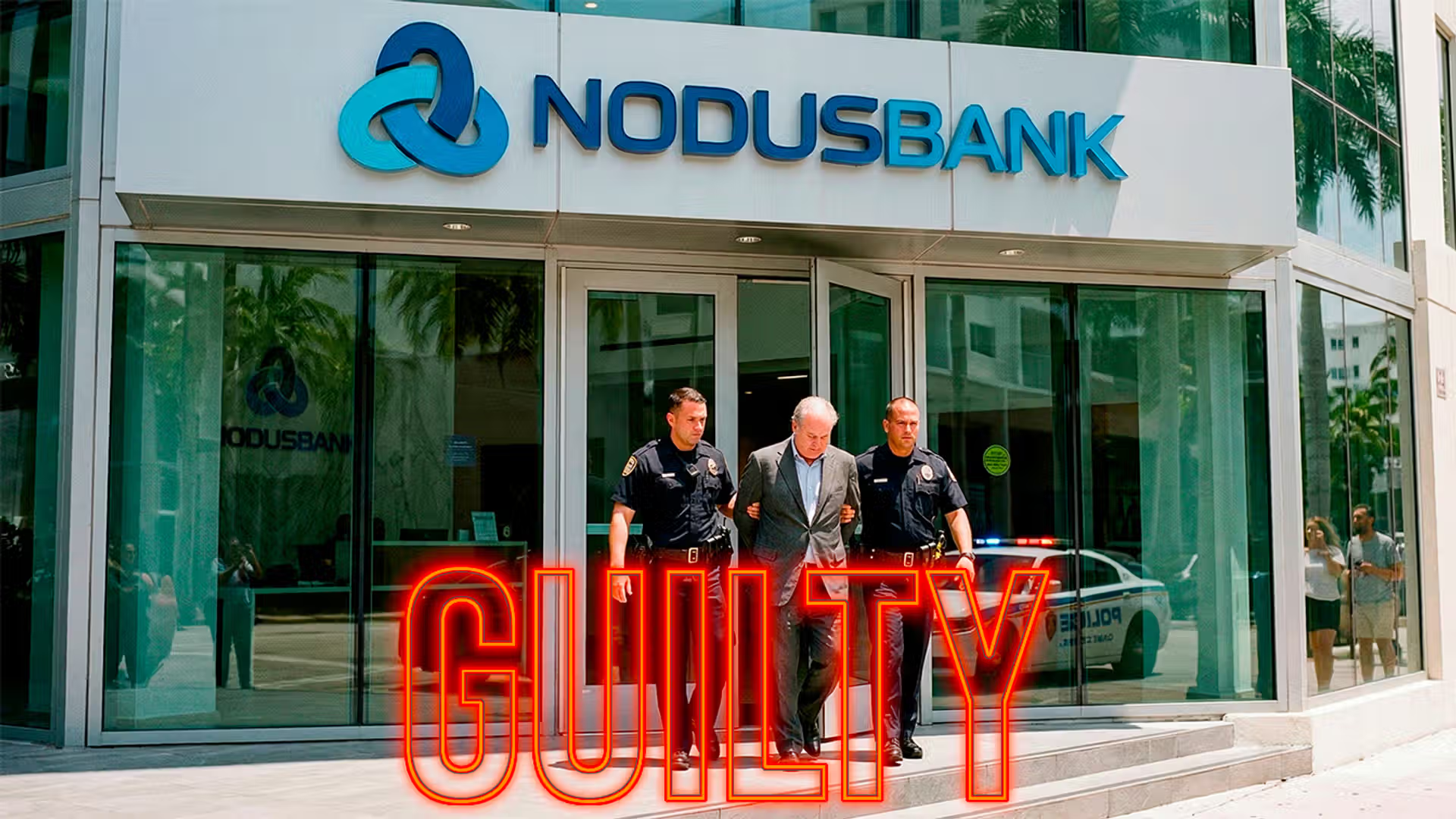
Ukrainian law enforcement officials have officially served a notice of suspicion to Andriy Yermak, the former head of the presidential office, regarding his alleged role in an 11-million-dollar money laundering operation. This high-profile legal action follows a series of investigative raids conducted by the National Anti-Corruption Bureau of Ukraine and the Specialized Anti-Corruption Prosecutor’s Office. Investigators believe that illicit funds were funneled through sophisticated luxury real estate developments situated on the outskirts of the capital city. The case represents a significant escalation in the national crackdown on financial crimes involving high-ranking public figures. Authorities are currently examining the intricate network of transactions used to conceal the origins of these funds. This probe remains a central focus for anti-corruption agencies as they seek to dismantle systemic financial misconduct within the state infrastructure.
Table of Contents


Ukrainian Political Corruption and Asset Laundering
The ongoing investigation into the financial activities of former presidential aide Andriy Yermak has revealed a complex web of transactions designed to integrate illicit wealth into the formal economy. According to official reports from anti-corruption agencies, the primary mechanism for this activity involved the procurement and development of high-end residential properties. These luxury construction projects served as a vehicle to absorb capital that investigators claim originated from kickbacks and bribery. The movement of 11 million dollars in suspected criminal proceeds highlights the persistent challenges faced by regulatory bodies in monitoring the intersection of political influence and private enterprise. Law enforcement officials have identified a group of individuals, including a former deputy prime minister and prominent businessmen, who allegedly collaborated to facilitate these transfers. The focus of the probe is not merely the initial theft of state resources but the subsequent layers of financial engineering used to obscure the audit trail. By utilizing construction as a front, the participants could justify large capital outlays and generate seemingly legitimate profits upon the completion of the real estate assets. This strategy is a classic example of using the physical property market to stabilize and clean funds derived from corrupt practices. The scale of the operation suggests a high degree of organization and access to professional financial services that assisted in bypassing standard reporting requirements. As the investigation progresses, the focus remains on identifying the full extent of the domestic and international channels used to move these specific funds through the Ukrainian financial system.




Energy Sector Kickbacks and Operation Midas
A critical element of the case against the former presidential aide is its direct connection to a much larger investigation known as Operation Midas. This sprawling probe into the energy sector has uncovered a network of bribery and theft valued at more than 100 million dollars. Specifically, investigators have traced a portion of the funds used in the luxury real estate schemes back to corrupt dealings involving Energoatom, the state-owned nuclear operator. The misappropriation of resources from such a vital state utility indicates a systemic vulnerability where high-level officials could exploit their positions for personal enrichment. Operation Midas has already resulted in notices of suspicion for several high-ranking figures, portraying a picture of coordinated financial crime that spans multiple government departments. The link between the energy sector and the real estate developments suggests that the laundered money did not remain within the industry where it was first stolen but was moved quickly into stable assets to avoid detection during audits. This cross-sector movement of capital is a hallmark of sophisticated laundering operations where the goal is to distance the wealth from the original crime as rapidly as possible. The National Anti-Corruption Bureau of Ukraine has emphasized that the 11 million dollars linked directly to Yermak is just one component of a broader pattern of illicit enrichment. The businessman identified as the primary organizer of the ring is suspected of managing the logistics of the kickback transfers, ensuring that the proceeds from Energoatom contracts were distributed among the political participants. This level of institutionalized corruption requires a robust response from judicial authorities to ensure that public assets are protected and that those who facilitated the laundering are held accountable under the law.


Judicial Proceedings and Institutional Response
Following the raids on the offices of the former presidential aide, the Ukrainian judicial system is now tasked with managing one of the most sensitive financial crime cases in recent history. The formal resignation of Andriy Yermak in 2025 occurred amid the initial stages of this investigation, suggesting that the pressure from anti-corruption agencies had been building for some time. Currently, the Specialized Anti-Corruption Prosecutor’s Office is preparing the evidence necessary to move the case toward a full trial. The defense has remained largely silent, with representatives stating that comments will only be provided once all procedural actions and evidentiary reviews are finalized. The presidency has also maintained a cautious stance, noting that the investigation must be allowed to proceed without political interference to determine the facts of the 11-million-dollar scheme. This case serves as a benchmark for the effectiveness of the anti-corruption reforms implemented in Ukraine over the last decade. The ability of domestic agencies to investigate a figure as influential as a former head of the presidential office demonstrates a shift toward greater transparency and the rule of law. Furthermore, the collaboration between different law enforcement bodies in tracking the 100 million dollar Midas network shows a more integrated approach to combating financial crime. The outcome of this case will likely have significant implications for future oversight of state contracts and the monitoring of high-net-worth individuals with political connections. As the legal process unfolds, the focus will remain on the recovery of the laundered assets and the implementation of stricter controls to prevent the exploitation of state utilities for private gain.
Identifying Laundering Typologies in High-Level Corruption
Anti-money laundering professionals must remain vigilant when monitoring transactions involving politically exposed persons and large-scale infrastructure or energy projects. The following typologies are frequently observed in cases involving the integration of illicit funds from state corruption into the private sector.
- Integration via Luxury Real Estate Development: Utilizing illicit proceeds to fund the construction or purchase of high-end residential and commercial properties to create a veneer of legitimate wealth.
- State Enterprise Kickback Funneling: Diverting funds from state-owned entities through inflated contracts or fraudulent consulting fees, which are then redistributed to political figures.
- Layering through Shell Companies: Using a series of corporate entities with opaque ownership structures to move money between different jurisdictions before final investment.
- Comingling of Funds in Private Enterprises: Mixing criminal proceeds with the legitimate revenue of established businesses, often in the construction or energy sectors, to hide the source of capital.
- Reliance on Professional Enablers: Engaging lawyers, accountants, and financial advisors to set up trusts and offshore accounts that shield the identity of the beneficial owners.
- Cross-Sector Asset Transfer: Rapidly moving stolen funds from the industry of origin, such as energy or defense, into unrelated sectors like luxury goods or real estate to break the investigative trail.
Key Points
- Former presidential aide Andriy Yermak is under investigation for a scheme involving 11 million dollars in laundered funds.
- The illicit capital is allegedly linked to a broader 100-million-dollar corruption network within the state energy sector known as Operation Midas.
- Funds were reportedly integrated into the economy through the development of luxury real estate projects located near the city of Kyiv.
- National anti-corruption agencies have served notices of suspicion to seven individuals, including former government officials and business leaders.
- The investigation highlights the use of state-owned enterprises like Energoatom as a primary source for illicit kickbacks and financial crime.
Related Links
- National Anti-Corruption Bureau of Ukraine Official Case Updates
- Specialized Anti-Corruption Prosecutor’s Office Press Releases
- FATF Guidance on Politically Exposed Persons and Financial Investigations
- Council of Europe Moneyval Ukraine Compliance Reports
Other FinCrime Central Article about PEPs
- Global Banks Face Privacy Storm Over PEP Sharing Rules
- The Hidden Operational Cost of PEP List Failures
- PEPS, High-Profile Scandals and Evolving AML Controls
Source: OCCRP, by Alena Koroleva
Some of FinCrime Central’s articles may have been enriched or edited with the help of AI tools. It may contain unintentional errors.
Want to promote your brand, or need some help selecting the right solution or the right advisory firm? Email us at info@fincrimecentral.com; we probably have the right contact for you.