United States authorities recently expanded enforcement actions against foreign organizations involved in laundering billions of dollars in illicit proceeds through sophisticated shadow banking systems. These regulatory measures follow a comprehensive briefing from the Congressional Research Service highlighting how specialized networks facilitate financial crimes for transnational criminal organizations like the Sinaloa Cartel. The report emphasizes that these groups leverage underground banking methods to bypass international currency controls and integrate illegal funds into the legitimate global economy. Federal agencies continue to prioritize the disruption of these financial pipelines to combat the flow of synthetic opioids and the evasion of international sanctions regimes.
Table of Contents


Chinese Money Laundering Networks
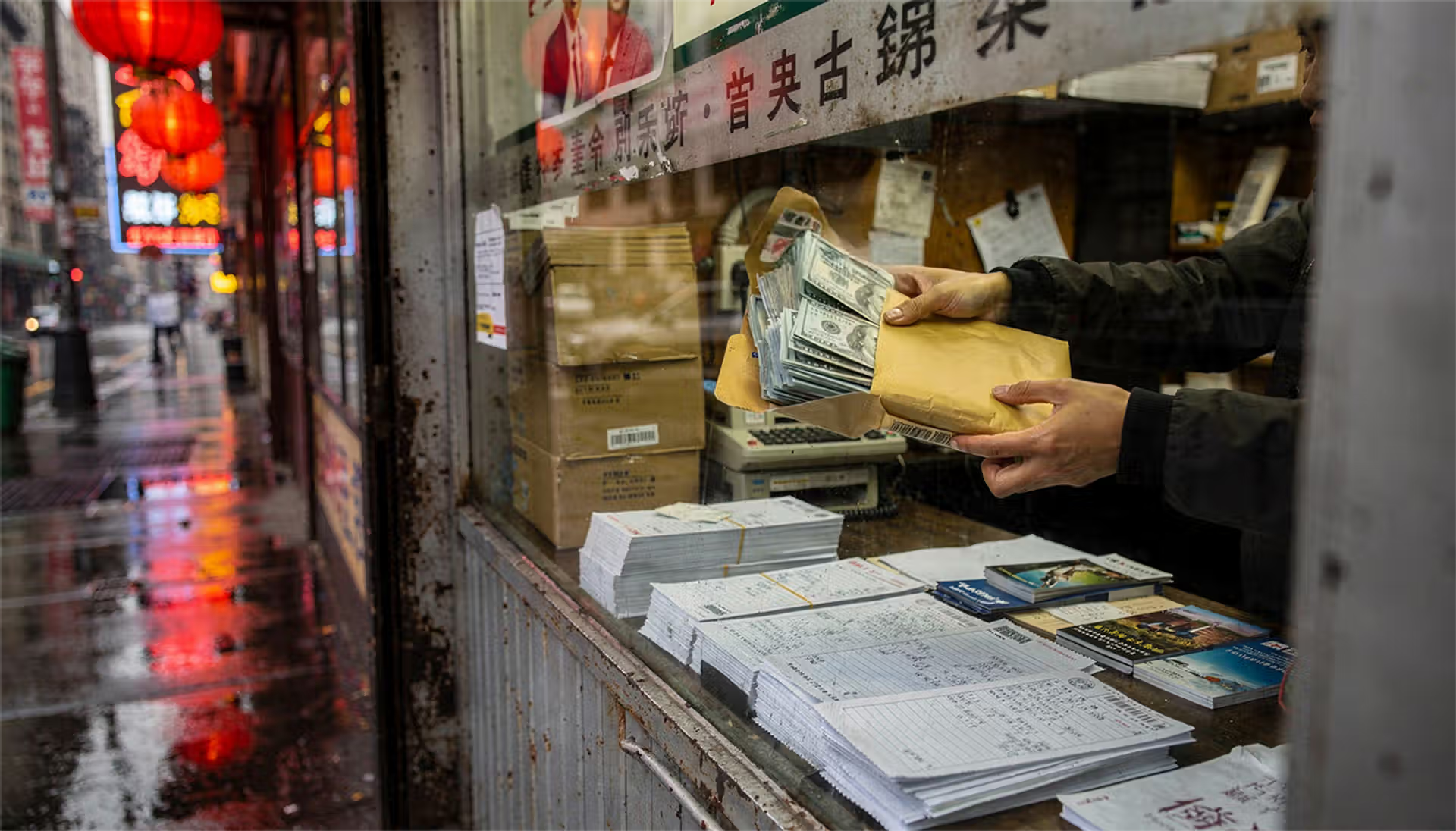
Federal investigators have identified a growing trend where Chinese money laundering networks serve as the primary financial intermediaries for transnational criminal organizations. These entities specialize in a decentralized underground banking system that allows for the rapid movement of value across borders without the need for traditional wire transfers. By facilitating mirror transactions, the networks provide a seamless solution for cartels needing to repatriate cash while simultaneously helping foreign nationals circumvent strict domestic capital flight restrictions. These organizations operate with high efficiency, often providing near real-time settlements, which makes them a preferred partner for global drug trafficking syndicates. Officials note that the ability of these groups to operate outside the conventional banking sector poses a significant challenge to standard monitoring and reporting protocols.
Regulatory Response and Statutory Authorities
The crackdown on these financial facilitators utilizes several existing legal frameworks designed to protect the integrity of the global financial system. Current enforcement strategies draw heavily from the Fentanyl Sanctions Act and Executive Order 14059, which grant the Treasury Department the power to freeze assets and block transactions of those supporting the illicit narcotics trade. These tools allow the government to target the essential financial infrastructure that enables criminal syndicates to thrive internationally. Furthermore, the 2026 National Defense Authorization Act has introduced the BUST Fentanyl Act to enhance these capabilities significantly. This new legislation empowers regulators to impose stringent penalties on foreign state agencies or instrumentalities that fail to take credible steps to prevent these money laundering activities within their jurisdictions.
Global Impact of Underground Financial Systems
The operations of these networks extend far beyond simple currency exchange, often involving complex trade-based money laundering and the strategic use of shell companies. By purchasing luxury goods or electronics in the United States and shipping them abroad, these groups can effectively scrub the origin of criminal proceeds through legitimate commercial channels. This method integrates dirty money into the global economy, making it increasingly difficult for compliance officers to detect suspicious patterns without advanced data analytics. Financial institutions have reported massive volumes of activity linked to these decentralized networks, prompting renewed calls for enhanced due diligence and better information sharing between the public and private sectors. The reliance on money mules and mobile payment applications further complicates the efforts of law enforcement to track the ultimate beneficiaries of these funds.
Strategic Analysis of Future Enforcement Trends
The evolution of these laundering tactics suggests that regulatory focus will increasingly shift toward the technology and facilitators that enable shadow banking. As criminal organizations adopt more complex methods, including the use of convertible virtual currencies and encrypted communication platforms, the legal landscape must adapt to maintain effective oversight. The recent legislative updates indicate a broader strategy to hold not just individuals, but also the institutions and jurisdictions that provide them safe harbor, accountable for their roles in the financial chain. Moving forward, the integration of sanctions with traditional anti-money laundering protocols will be vital in dismantling the economic incentives that drive international drug trafficking. Sustained pressure on the financial nodes of these networks remains the most effective way to disrupt the supply chains of transnational crime.
Key Points
- Federal reports indicate that Chinese money laundering networks are now among the most prominent professional threats facing the global financial system.
- These organizations use mirror transactions and underground banking to evade currency controls in both the United States and foreign jurisdictions.
- The BUST Fentanyl Act within the 2026 National Defense Authorization Act expands the power to sanction foreign state entities involved in trafficking.
- Regulatory authorities are increasingly targeting the financial infrastructure and facilitators that allow cartels to repatriate illicit drug proceeds.
Related Links
- Treasury Sanctions International Money Laundering Networks
- FinCEN Advisory on Chinese Money Laundering Networks
- Congressional Research Service Report on Chinese Money Laundering Networks
- Drug Enforcement Administration 2024 National Drug Threat Assessment
- National Defense Authorization Act for Fiscal Year 2026
Other FinCrime Central Articles About Chinese Money Laundering Networks (CMLN)
- Billions In Cartel Proceeds Moved Through Chinese Networks Says FinCEN
- $92 Million Chinese Money Laundering Cell Crushed in Major U.S. Operation
- Chinese Mafia Behind Plane Full of Money Mules Busted in Major Operation
Source: Global Sanctions, by Michael O’Kane
Some of FinCrime Central’s articles may have been enriched or edited with the help of AI tools. It may contain unintentional errors.
Want to promote your brand, or need some help selecting the right solution or the right advisory firm? Email us at info@fincrimecentral.com; we probably have the right contact for you.