An exclusive article by Fred Kahn
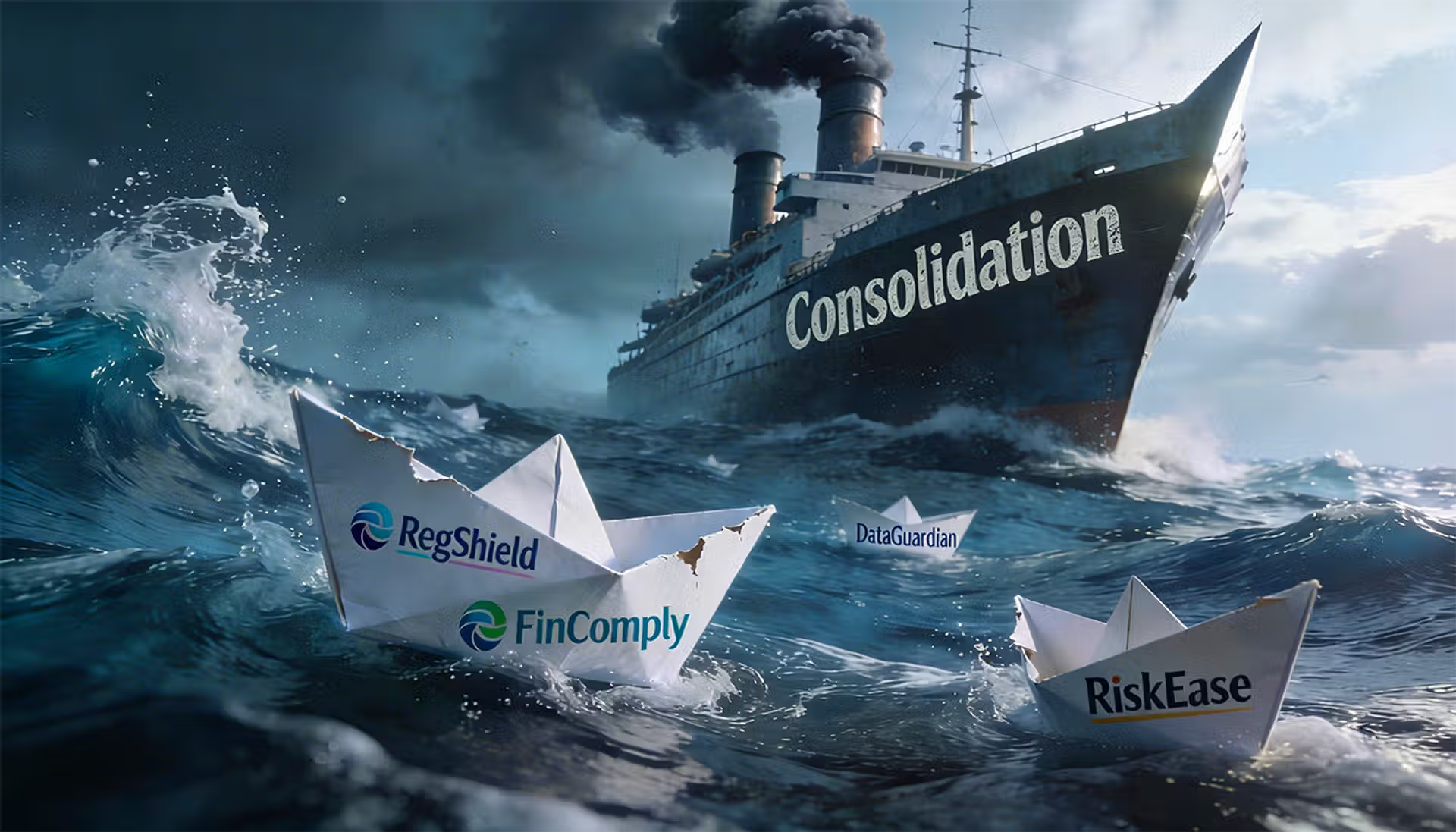
The market for anti-money laundering technology is undergoing rapid, fundamental transformation. Gone are the days when compliance teams relied on monolithic, rules-based software to monitor transactions or screen customers. Today, the emergence of next-gen AML solutions—driven by AI, machine learning, and cloud computing—has created a fiercely competitive landscape among vendors, each promising sharper detection, lower false positives, and greater efficiency. For AML professionals, this surge of innovation brings both opportunity and challenge. Choosing the right partner, integrating new technologies, and future-proofing compliance architecture are now central to maintaining an effective and resilient program.
Table of Contents


Next-gen AML solutions: emerging technologies and the new vendor landscape
The focus keyword, next-gen AML solutions, captures the wave of innovation sweeping through the compliance sector. New entrants and established vendors alike are deploying technologies that go beyond basic transaction monitoring. Modern platforms now feature advanced analytics, graph databases, federated learning, and no-code automation—tools that empower compliance teams to identify complex typologies, adapt rapidly to new threats, and scale programs without proportional headcount increases.
AI-powered transaction monitoring is at the heart of most next-gen offerings. Machine learning models analyze behavioral patterns, customer peer groups, and network data to detect unusual activity that rules-based systems often miss. These models continually learn and evolve, offering dynamic risk scoring that adapts to new typologies and regulatory changes.
Graph databases are another major innovation, allowing for the visualization of entire networks—customers, transactions, entities, and relationships. This capability exposes hidden connections, shell company structures, and mule networks. Leading platforms also offer real-time data enrichment, integrating adverse media, sanctions lists, and open-source intelligence to create a 360-degree view of risk.
Cloud computing has made it possible to deploy scalable, modular compliance systems that can be updated and integrated with other enterprise platforms quickly. This flexibility is essential as regulatory requirements shift and as institutions expand across geographies and business lines.
What drives adoption: automation, partnerships, and scalability
The race among vendors is not just about technology but also about how these solutions integrate into the real world of compliance operations. Automation is a key driver. Solutions like those from Unit21, Skan AI, and others allow institutions to automate suspicious activity reporting (SAR) filing, case management, and workflow escalation. This reduces manual errors, improves consistency, and frees up skilled analysts for high-value investigations.
Partnerships and integrations are accelerating adoption. Recent collaborations—such as Lucinity joining forces with Zenoo—showcase how identity verification, onboarding, and transaction monitoring can be brought together in a seamless, user-friendly platform. Such integrations allow for a “single pane of glass” view, breaking down silos between customer due diligence, ongoing monitoring, and regulatory reporting.
Scalability is another critical factor. As AML programs grow more complex, compliance teams need solutions that handle increased data volumes, new product lines, and evolving risk profiles without significant increases in operational cost. Cloud-based platforms offer elastic resources and rapid deployment, essential for institutions operating in multiple jurisdictions or responding to new regulatory mandates.
Vendors are also racing to support real-time analytics, ensuring that suspicious activity is detected and escalated immediately rather than days or weeks after the fact. Open APIs, modular architecture, and vendor-neutral frameworks are now highly valued by compliance teams who want to avoid being locked into outdated or inflexible systems.
How compliance teams evaluate and implement advanced AML tools
Selecting a next-gen AML solution is a multi-stage process that involves rigorous evaluation and cross-departmental collaboration. The starting point is a clear articulation of risk appetite, regulatory obligations, and operational needs. AML teams work with IT, legal, and business units to define requirements, map existing processes, and identify gaps in legacy systems.
Vendor selection goes beyond feature lists. Due diligence includes security certifications, regulatory track record, references from similar institutions, and the flexibility of the vendor’s support model. Proof-of-concept pilots and sandbox environments allow compliance teams to test effectiveness, data integration, and user experience.
Implementation must be carefully managed to avoid disruption. Phased rollouts, parallel testing with legacy systems, and robust change management ensure that alerts, escalation protocols, and reporting remain reliable throughout the transition. Ongoing staff training and feedback loops help teams fully leverage the new technology.
The most successful implementations involve continuous improvement. Compliance teams monitor key performance indicators—such as false positive rates, alert closure times, and SAR quality—and work with vendors to refine models and workflows. Regular review sessions, threat intelligence updates, and user community engagement help ensure the solution adapts to both new criminal tactics and regulatory shifts.
Conclusion: The future of AML technology and vendor innovation
Next-gen AML solutions are redefining what is possible for compliance teams, regulators, and financial institutions worldwide. As vendors compete to deliver smarter, faster, and more scalable platforms, AML professionals have an unprecedented opportunity to improve detection, streamline processes, and manage risk proactively. The future will belong to institutions that invest in technology, foster strong vendor partnerships, and maintain a culture of adaptability. By treating compliance as both a regulatory requirement and a strategic asset, organizations can stay ahead of financial crime and build trust with clients, counterparties, and supervisors.
Related Links
- FATF: Opportunities and Challenges of New Technologies for AML/CFT
- FATF: Guidance on Financial Inclusion and Anti‑Money Laundering and Terrorist Financing Measures (June 2025)
- Exposure Draft – Baseline Standards for Automated AML Solutions (Central Bank of Nigeria, May 2025
- U.S. OCC: BSA/AML Innovative Industry Approaches (AML Act 2020)
- Deloitte: ‘NextGen AML: A Point of View’ whitepaper
Other FinCrime Central Articles On This Topic
- How RegTech Orchestration Layers Unify Legacy and Cloud AML Controls
- Streamlining KYC: How Digital Onboarding Transforms Compliance and Customer Experience
- AI in AML: Is Artificial Intelligence Revolutionizing Compliance For Real?
- How to Select the Best AML Compliance Software
Some of FinCrime Central’s articles may have been enriched or edited with the help of AI tools. It may contain unintentional errors.
Want to promote your brand with us or need some help selecting the right solution or the right advisory firm? Email us at info@fincrimecentral.com; we probably have the right contact for you.