Financial institutions in Japan operate under a sophisticated legal architecture designed to intercept the flow of illicit capital before it can destabilize the national economy. The core of this defense is the proactive identification of transactions that do not align with a customer’s known financial profile or legitimate business interests. By maintaining a high standard of vigilance, these entities act as the first line of defense against organized crime and international financial threats. Compliance with the Financial Services Agency mandates requires a comprehensive understanding of both the legal requirements and the practical indicators of suspicious activity. This involves not only the monitoring of digital records but also the careful assessment of the intent behind complex financial maneuvers. The following sections provide an exhaustive analysis of the recommendations and regulatory expectations that define the current Japanese anti-money laundering landscape.
Table of Contents


Japan Suspicious Transaction Reporting Requirements
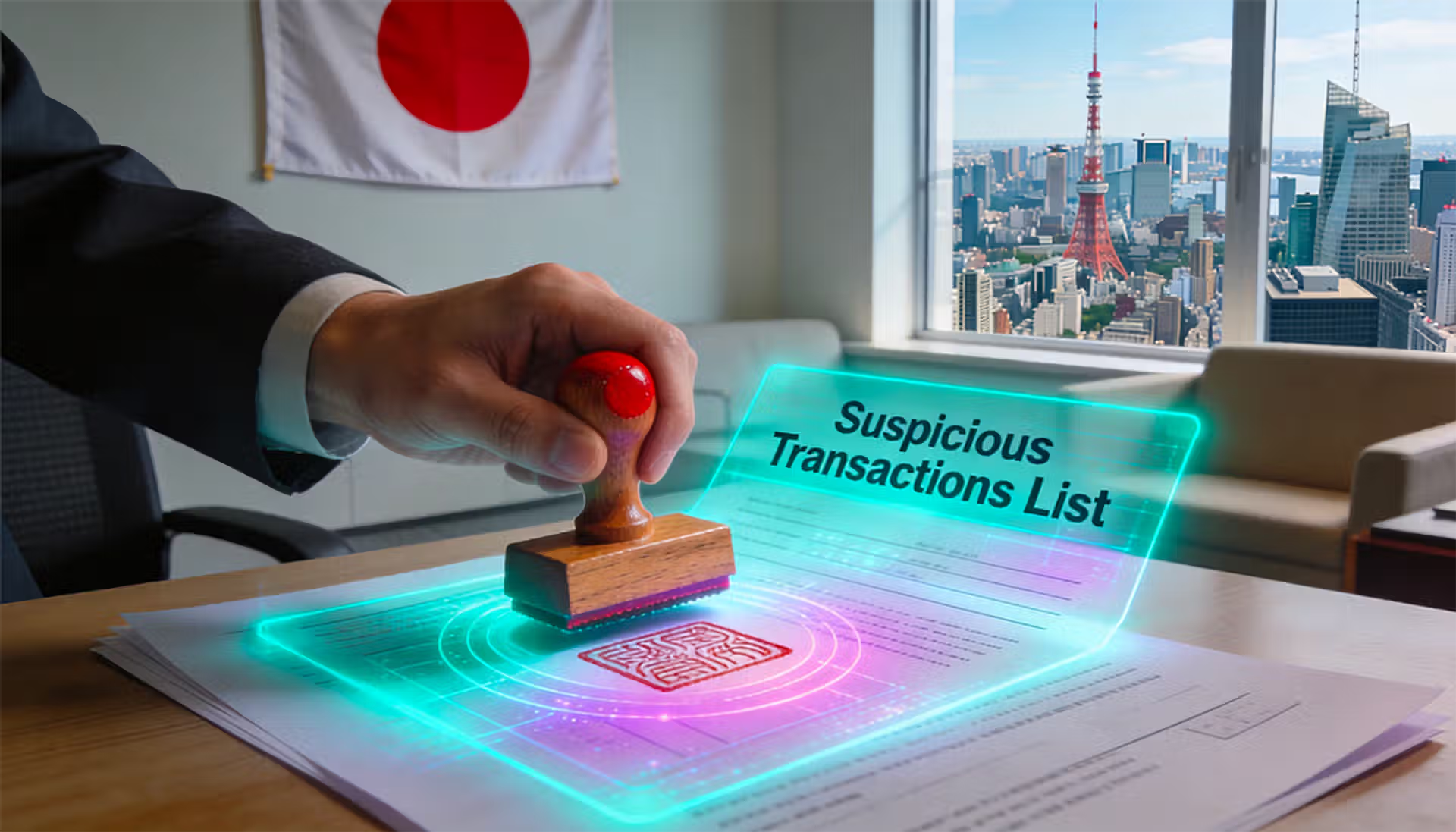
The foundation of the Japanese regulatory approach is built upon the Japanese Suspicious Transaction Reporting Requirements, which dictate when and how an institution must notify the government of potential wrongdoing. Under the Act on Prevention of Transfer of Criminal Proceeds, banks, insurance companies, and securities firms are required to establish internal systems that can detect anomalies in real time. These requirements are not merely suggestions but are mandatory protocols that ensure the integrity of the global financial network. A transaction is deemed suspicious if it involves assets suspected to be criminal proceeds or if the customer is suspected of engaging in money laundering or terrorist financing. The determination must be made based on a comprehensive evaluation of the customer attributes, the nature of the transaction, and the specific circumstances surrounding the movement of funds. It is essential for compliance officers to document the rationale behind every filed report, ensuring that the financial intelligence provided to the authorities is actionable and accurate. By adhering to these strict reporting requirements, institutions help build a transparent environment that discourages the exploitation of the Japanese banking system by criminal elements.



Recommendations for Deposit Taking and Insurance Sectors
For deposit-taking institutions, the Japanese authorities recommend a focus on the consistency between the customer’s stated occupation and their actual transaction volume. A primary red flag involves the sudden influx of large sums of cash into an account that has historically remained dormant or has only handled small, routine payments. Financial institutions are advised to scrutinize accounts where multiple third parties deposit funds through automated teller machines, particularly when those funds are immediately withdrawn or transferred to offshore accounts. In the insurance sector, recommendations focus on the early termination of high-value life insurance policies or annuities, especially when the customer is willing to accept a significant financial penalty. This behavior often suggests an attempt to launder money by converting illicit cash into a legitimate insurance payout. Furthermore, agents should be wary of policyholders who frequently change beneficiaries to unrelated third parties or who attempt to pay premiums using cash or checks from unidentified sources. Enhanced due diligence is recommended for any individual who exhibits high-risk characteristics, such as being a politically exposed person or having ties to jurisdictions with weak regulatory frameworks.
Oversight for Crypto Assets and Real Estate Professionals
The rapid growth of digital finance has led to specific recommendations for crypto asset exchange service providers, who must now comply with standards equivalent to traditional banking. These providers are urged to monitor for the rapid movement of assets between multiple wallets without a clear economic purpose, which may indicate layering. Travel rule compliance is a major recommendation, requiring the collection and transmission of originator and beneficiary information for every transfer. In the real estate sector, professionals are recommended to watch for transactions where the purchase price is significantly different from the market value or where the buyer uses a complex web of shell companies to obscure the ultimate beneficial owner. Real estate agents must report cases where a client suddenly cancels a transaction after being asked to provide identification or proof of funds. Both sectors are encouraged to use blockchain analytics and specialized database screening to identify high-risk wallets or sanctioned individuals. By maintaining rigorous records and verifying the source of wealth for high-value property acquisitions, these professionals provide a critical barrier against the integration of criminal proceeds into the physical and digital asset markets.
Guidance for Accountants and Legal Intermediaries
Certified public accountants and lawyers in Japan are subject to unique recommendations given their role as gatekeepers to the financial system. These professionals are advised to be cautious when asked to manage client funds through their own trust accounts, particularly if the client requests the funds be paid out to unknown third parties. Accountants should flag instances where a client’s business shows excessive turnover that is not supported by the number of employees or physical infrastructure. A significant recommendation for this group is to monitor for requests to create complex legal structures or trusts that appear to have no purpose other than to hide the identity of the person in control. When providing tax or auditing services, accountants are recommended to look for unusual adjustments in financial statements that could mask the true origin of capital. Legal professionals are encouraged to conduct thorough due diligence on the commercial rationale behind any cross-border merger or acquisition they are asked to facilitate. Because these intermediaries often have access to sensitive financial information, their commitment to identifying red flags is vital for the overall efficacy of the Japanese regulatory framework.
Analytical Conclusions on Future Compliance Trajectories
The evolution of financial monitoring in Japan reflects a global shift toward more granular and proactive oversight of monetary flows across all professional sectors. As the digital economy expands, the definition of a suspicious transaction will continue to broaden, requiring institutions from banks to accounting firms to be more agile in their detection strategies. The emphasis is moving away from simple threshold-based alerts toward a more holistic assessment of behavioral patterns and network analysis. Compliance is no longer a checkbox exercise but a core strategic function that protects the reputation and legal standing of the institution and the individual professional. The continued focus on beneficial transparency and the rigorous application of the Japan Suspicious Transaction Reporting Requirements will be instrumental in maintaining Japan’s status as a secure and stable global financial hub. Ultimately, the success of these efforts depends on the seamless cooperation between the private sector and regulatory bodies, ensuring that the financial system remains a hostile environment for those seeking to hide the fruits of illegal activity. Ongoing education and the refinement of internal controls will remain the most effective tools for navigating the complexities of the future regulatory landscape.
Key Points
- Japan mandates the reporting of transactions suspected of involving criminal proceeds across banking, insurance, and professional services.
- Specific sector recommendations include monitoring for early insurance policy termination and opaque real estate ownership.
- Crypto asset providers must adhere to the travel rule and monitor wallet velocity to detect layering activities.
- Professionals such as accountants and lawyers must scrutinize the use of trust accounts and the creation of complex legal entities.
- Effective compliance relies on identifying deviations from a customer’s established economic profile rather than just watching cash thresholds.
Related Links
- National Police Agency Japan Financial Intelligence Center Annual Report
- FATF Guidance for Real Estate Professionals and Lawyers
- Ministry of Finance, Japan International Anti-Money Laundering Policy
- Certified Public Accountants Act Japan Law Translation
Other FinCrime Central Articles About Japan’s Regulatory Changes and Guidelines
- Japan’s FSA Sets the Pace for Foreign Banks Compliance Excellence
- Japan’s Shift to Chip-Based Identity Will Reshape Customer Onboarding
- Japan’s progress in strengthening measures to tackle money laundering and terrorist financing
Source: Japan Financial Services Agency
Some of FinCrime Central’s articles may have been enriched or edited with the help of AI tools. It may contain unintentional errors.
Want to promote your brand, or need some help selecting the right solution or the right advisory firm? Email us at info@fincrimecentral.com; we probably have the right contact for you.