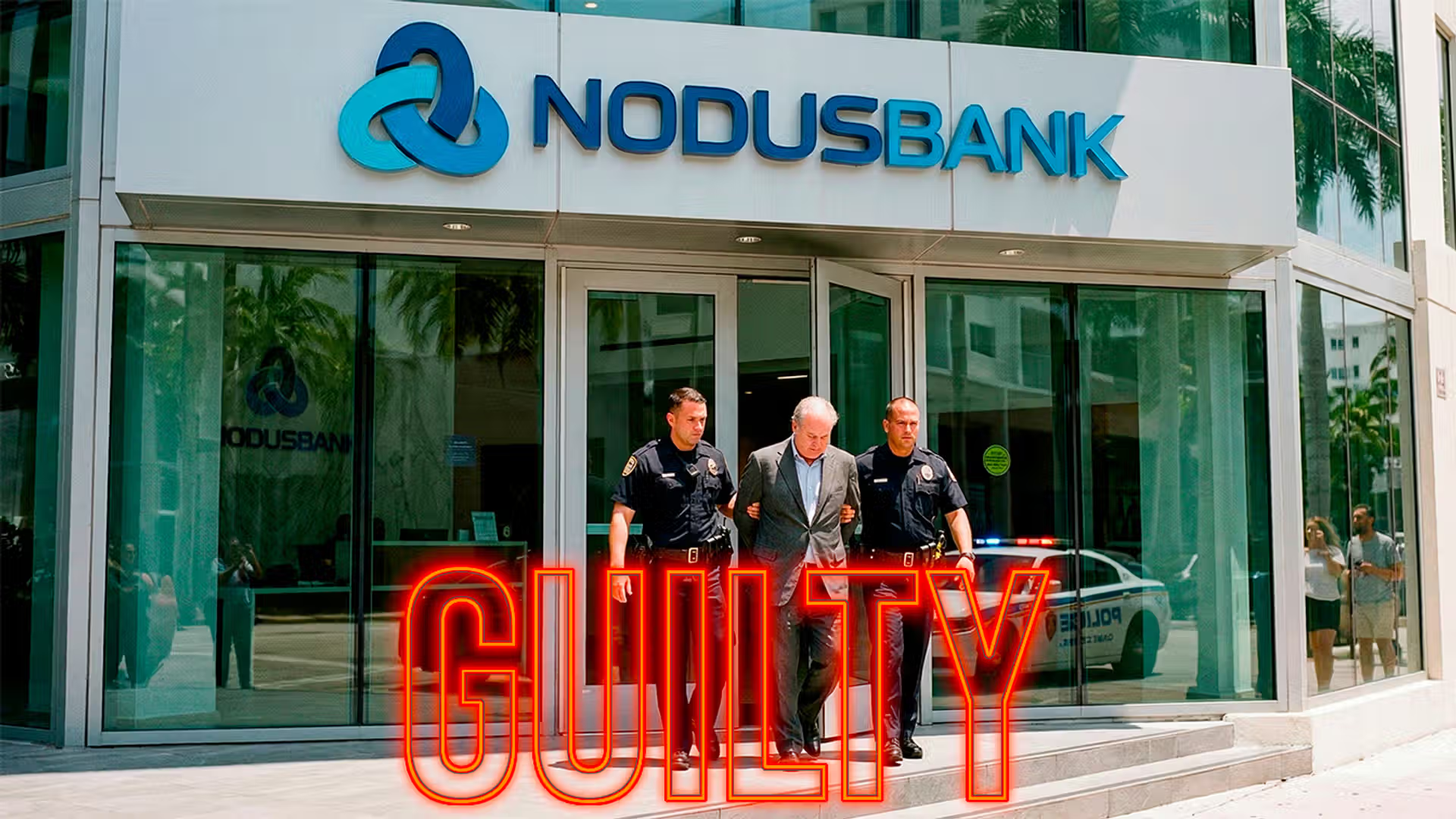
French rapper and international star Gandhi Djuna, known globally as Gims, was detained by authorities at Charles de Gaulle airport on March 25, 2026, in connection with a massive organized money laundering inquiry involving a complex international tax evasion scheme. The National Prosecutor Office for Organized Crime (PNACO), a specialized branch of the French judiciary, is currently leading the investigation into a network of companies allegedly established to circumvent national tax laws. This high-profile detention followed a warrant issued by investigating judges who are tracing the flow of millions of Euros across multiple borders. The case centers on the suspected integration of illicit capital into legitimate assets through fraudulent invoicing and opaque corporate structures. Legal representatives for the artist have not yet issued a formal statement regarding the specific allegations of financial misconduct.
Table of Contents


Organized Money Laundering Networks in the Music Industry
The investigation into the French rapper and international star Gims represents a significant development in the fight against professionalized financial crime within the entertainment sector. Authorities are focusing on an intricate web of companies spanning various jurisdictions that were allegedly utilized to hide the true origins of wealth and facilitate large-scale tax fraud. In the context of organized money laundering, the use of shell companies and fictitious invoicing is a primary method for layering funds to make them appear legitimate. The National Prosecutor Office for Organized Crime is examining how these structures may have been used to bypass Value Added Tax regulations and other fiscal obligations in France. This legal proceeding highlights the increasing pressure on high net-worth individuals to maintain complete transparency in their global business dealings and corporate holdings.
French law enforcement agencies have spent months mapping out the connections between several businesses that appear to have no physical presence but handle substantial financial transactions. By generating false invoices for services that were never rendered, criminal organizations can move money through the banking system without raising immediate red flags. The judicial inquiry seeks to determine if the French rapper and international star was a knowing participant in these maneuvers or if his business infrastructure was exploited by third parties. Organized laundering in this capacity often requires the assistance of financial gatekeepers who understand how to navigate the complexities of international banking laws. Prosecutors are looking for evidence that the capital moving through these accounts originated from unauthorized activities before being laundered into the mainstream economy.



Luxury Real Estate as a Mechanism for Financial Integration
A central pillar of the case involves a massive luxury property development in Marrakech known as the Sunset Village Private Residences. This project, which includes over one hundred high-end villas and extensive resort facilities, is being scrutinized as a potential vehicle for the integration of laundered funds. Real estate has historically been a preferred sector for money laundering due to the high value of assets and the ability to obscure the source of investment capital through various holding companies. Investigators are looking into whether the French rapper and international star used the proceeds from the alleged tax evasion scheme to finance this ambitious construction project. The goal of such financial maneuvers is often to convert “dirty” money into “clean” tangible assets that appreciate in value over time.
The Sunset Village project was launched with significant fanfare and was intended to establish the French rapper and international star as a major player in the international luxury real estate market. However, the involvement of individuals with previous links to narcotics trafficking has raised serious concerns for the French judiciary. If it is proven that the development was funded by the proceeds of crime, the assets could be subject to seizure under French and international AML statutes. This part of the investigation requires a deep dive into the beneficial ownership of every entity involved in the construction and marketing of the villas. Regulators are increasingly focused on the role that luxury developments play in providing a veneer of legitimacy to individuals who may be moving capital derived from illicit professional networks.
International Cooperation and Cross-Border Financial Crimes
The scope of the investigation against Gims necessitates a high degree of international judicial cooperation between France, Morocco, and other jurisdictions where the suspect companies are registered. Tax evasion on this scale often involves the use of offshore accounts to minimize visibility and complicate the work of domestic tax authorities. The French rapper and international star has extensive business interests across the globe, making the task of tracing every Euro a massive undertaking for the National Prosecutor Office for Organized Crime. By coordinating with foreign regulators, French investigators hope to reconstruct the entire path of the funds from their initial generation to their final investment in real estate or other luxury goods. This cross-border approach is essential for dismantling organized laundering networks that rely on the fragmentation of data across different legal systems.
The allegations of an organized tax carousel, where VAT is claimed on goods or services that were never actually traded, are particularly damaging in the European context. Such schemes deprive the state of billions in revenue and are frequently linked to other forms of organized crime. In this instance, the authorities are looking for the “paper trail” that connects the French rapper and international star to the management of these shell companies. The complexity of the case is magnified by the number of intermediaries involved, each serving a specific role in the laundering process. As the investigation progresses, the focus will remain on identifying the ultimate beneficiaries of the fraudulent invoices and determining the extent of the criminal conspiracy.
Judicial Scrutiny and the Evolving Landscape of AML Compliance
The detention of a global icon like Gims serves as a clear warning that the entertainment and sports industries are not immune to the rigors of anti-money laundering enforcement. For the French rapper and international star, the legal stakes are incredibly high, as organized money laundering carries severe penalties, including lengthy prison sentences and massive fines. This case also puts a spotlight on the due diligence requirements for banks and financial advisors who work with celebrities and high-net-worth individuals. If financial institutions failed to flag suspicious transactions related to the Marrakech project or the network of shell companies, they could also face regulatory sanctions. The modern AML framework requires proactive monitoring of all large scale capital movements, especially when they involve high-risk sectors like luxury real estate.
As the French judicial system continues its work, the distinction between aggressive tax planning and criminal tax evasion will be a central point of debate. However, when combined with allegations of organized crime and professional laundering, the situation moves into a much more serious legal category. The French rapper and international star will need to provide a clear accounting of the capital used to fund his lifestyle and business ventures. For the international community, this case illustrates the persistence of regulators in tracking down illicit wealth, regardless of the public profile of the individual involved. The final results of the inquiry will likely influence how international stars manage their global brands and the level of oversight they must apply to their various business partners.
Strengthening Financial Integrity in the Global Arena
The fight against organized money laundering is a continuous effort that requires the adaptation of laws to meet new methods of financial deception. The case involving the French rapper and international star Gandhi Djuna is emblematic of the challenges faced by modern prosecutors who must unravel layers of corporate anonymity. By targeting the financial infrastructure of organized crime, authorities aim to reduce the incentive for illegal activity and protect the integrity of the market. The use of specialized prosecutors and judges reflects the seriousness with which the French state views financial crimes that undermine the social contract. As this investigation moves forward, it will serve as a landmark case in the application of organized crime statutes to high-value financial transactions.
The resolution of this case will depend on the ability of the National Prosecutor’s Office for Organized Crime to prove a direct link between the suspected tax fraud and the assets held by the artist. This involves not just tracking the money, but also demonstrating the intent to conceal its origin. For the French rapper and international star, the path ahead involves intense legal scrutiny and a thorough examination of his entire financial history. This event marks a turning point in the intersection of celebrity culture and financial regulation, proving that the reach of the law extends to the most prominent figures in the world of music and international business. The global community continues to watch as the French judiciary works to ensure that the rules of financial transparency are applied equally to all.
Key Points
- The French rapper and international star Gims is under investigation for his role in a complex organized money laundering network involving shell companies.
- Authorities arrested the artist at Charles de Gaulle airport as part of a probe into a major international tax evasion and fraudulent invoicing scheme.
- A luxury property development in Marrakech, Sunset Village Private Residences, is being investigated as a primary destination for laundered capital.
- The National Prosecutor Office for Organized Crime is leading the inquiry, which reportedly involves several individuals with criminal backgrounds in narcotics.
- This high-profile case underscores the rigorous application of anti money laundering laws to the entertainment industry and luxury real estate sector.
Related Links
- Financial Action Task Force Standards on Money Laundering
- French National Prosecutor Office for Organized Crime Information
- Europol Analysis on Professional Money Laundering Networks
- Tracfin Reports on International Tax Fraud and Asset Seizure
- OECD Guidelines on Tax Transparency and Corporate Disclosure
Other FinCrime Central Article About Luxury Real Estate and Money Laundering
- London Real Estate Market Faces Continuous Questions Over $17M Deal By Sanctioned Criminal
- Dubai Extradites Belgian Crime Boss After Uncovering €8.5 Million Luxury Real Estate Money Laundering Network
- Luxury Real Estate Money Laundering Scandal Exposes Russian Links in Spain
Source: Le Monde
Some of FinCrime Central’s articles may have been enriched or edited with the help of AI tools. It may contain unintentional errors.
Want to promote your brand, or need some help selecting the right solution or the right advisory firm? Email us at info@fincrimecentral.com; we probably have the right contact for you.