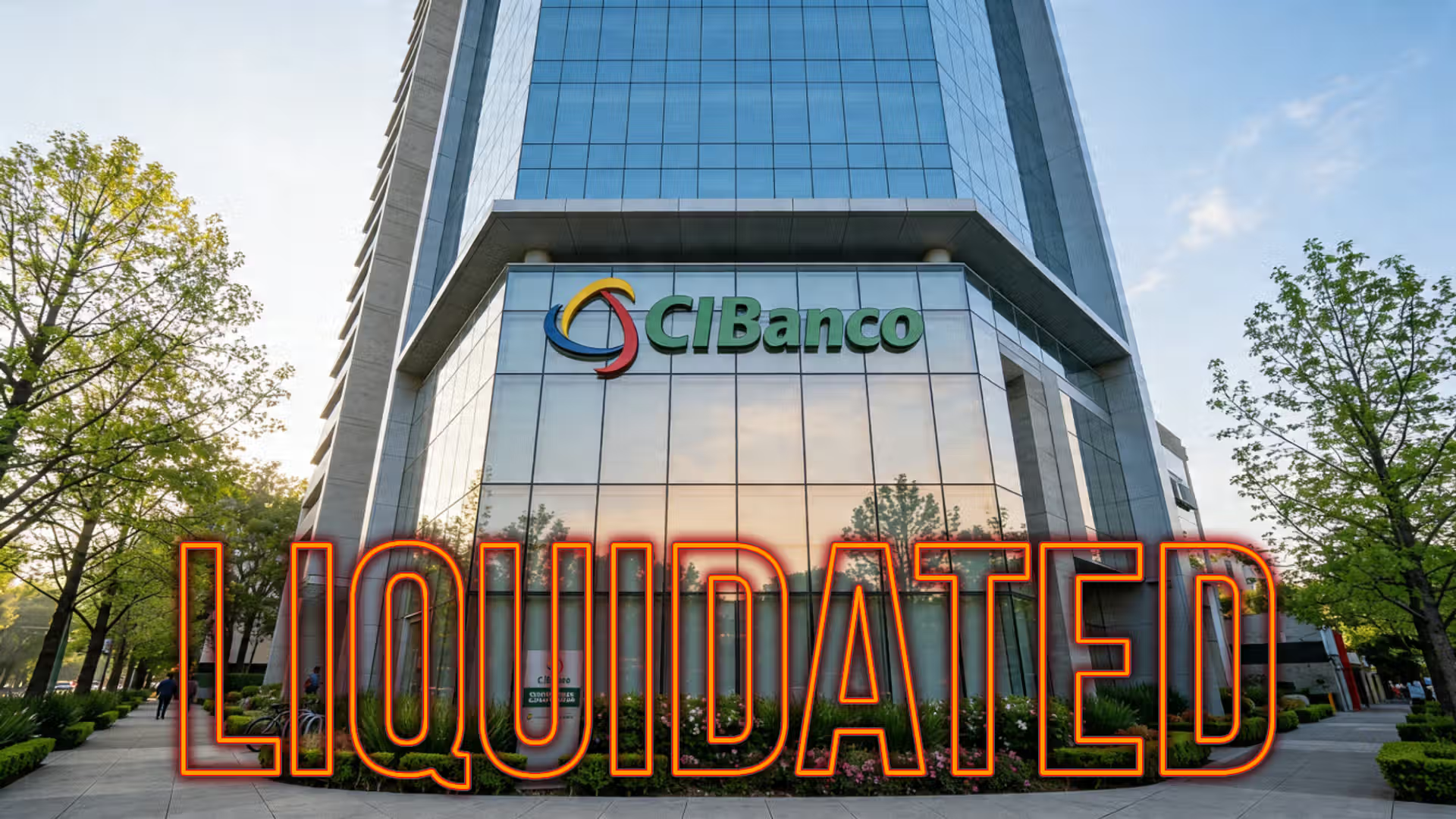
Federal authorities have officially moved to amend previous restrictions against the U.S.-based operations of CIBanco S.A. to facilitate the total liquidation of the entity following its designation as a primary money laundering concern in connection with the illicit trafficking of opioids. The Financial Crimes Enforcement Network initially identified the bank as a critical node for illicit fund movements linked to the Gulf Cartel and other major drug trafficking organizations. This latest regulatory action allows for specific fund transmittals necessary for the liquidator to dissolve the domestic footprint while maintaining a strict prohibition on standard operations. By permitting these supervised transactions, regulators aim to dismantle the financial infrastructure that supported the flow of illicit opioid proceeds through the American banking system. This decision ensures that the wind-down of the local branch occurs under the direct supervision of federal oversight bodies to prevent any further exploitation by criminal elements.
Table of Contents



CIBanco Primary Money Laundering Concern
The designation of the CIBanco domestic entity as a primary money laundering concern represents a significant escalation in the use of the FEND Off Fentanyl Act to target the local presence of foreign financial institutions. FinCEN determined that reasonable grounds existed to conclude the bank operated as a functional clearinghouse for proceeds generated by the illicit opioid trade. Specifically, the institution was found to have provided essential financial services to the Gulf Cartel, the Beltran Leyva Organization, and the Cartel Jalisco Nueva Generacion through its regional offices. These organizations utilized the bank to move vast sums of money across borders, effectively disguising the origins of capital derived from fentanyl trafficking and other criminal enterprises. The initial order issued in June 2025 established a comprehensive prohibition on transmittals of funds, cutting the domestic branch off from the United States financial system. This move was intended to protect domestic markets from the contagion of illicit capital while exerting pressure on foreign regulators to take decisive action against the bank management and ownership structure.
The sheer scale of the laundering activities linked to the CIBanco U.S. presence necessitated a coordinated response between the Department of the Treasury and the Government of Mexico. Investigations revealed that the internal controls within the domestic branch were either nonexistent or deliberately bypassed to accommodate the needs of drug trafficking groups. These criminal organizations required a stable platform to process international payments and store wealth, which the local office provided through various complex account structures. By acting as a financial gateway, the branch facilitated the expansion of the opioid crisis, which has had devastating effects on public health in North America. The FEND Off Fentanyl Act provided the legal framework for FinCEN to intervene, granting the Secretary of the Treasury the power to impose special measures against entities that facilitate the trafficking of synthetic opioids. This particular case serves as a warning to other domestic branches of foreign banks that fail to implement robust anti-money laundering protocols when dealing with high-risk jurisdictions and clients.




Regulatory Intervention and Liquidation Procedures
Following the initial FinCEN order, the government took the unprecedented step of intervening in the daily operations of the CIBanco domestic subsidiary to prevent further systemic risk. This intervention involved the complete takeover of the bank management and the installation of government-appointed liquidators to oversee the closure of the U.S.-based office. The primary goal was to ensure that the assets of the domestic branch were sold off in a manner that did not create new avenues for money laundering or allow criminal entities to reclaim their laundered funds. During this transition, the branch local assets were identified and prepared for sale, while the government worked to stabilize the broader financial system against potential shocks. This collaborative approach between U.S. and Mexican authorities demonstrates a shift toward more aggressive cross-border enforcement in the fight against narcotics-related financial crimes within the American border.
The amendment to the June 2025 order is a technical but crucial step in the final dissolution of the CIBanco domestic branch. Without this amendment, the strict prohibition on fund transmittals would have prevented the liquidators from making the payments necessary to settle legitimate obligations and finalize the closure of the American entity. The new rule allows for transactions that are ordinarily incident and necessary for the liquidation process, provided they are sanctioned by the government-appointed liquidator. This ensures that while the branch is being dismantled, the process remains under strict oversight to prevent any last-minute attempts by cartels to move capital. The liquidation process serves as a functional death penalty for the domestic presence of the financial institution, removing a major facilitator of criminal finance from the U.S. market. It also highlights the importance of the FEND Off Fentanyl Act in providing the necessary tools to dismantle the financial pillars of the drug trade.

Implications for Global Anti-Money Laundering Standards
The downfall of the CIBanco U.S. branch sends a clear message regarding the evolving standards of global anti-money laundering compliance and the risks of non-compliance for foreign subsidiaries. Financial institutions are now under greater scrutiny than ever before, especially those operating branches in regions with significant drug trafficking activity. The use of Section 2313a of the Fentanyl Sanctions Act, as amended, shows that the U.S. government is willing to use its economic leverage to isolate and destroy branches that fail to police their own systems. For the broader financial community, this case emphasizes the need for deep due diligence and a proactive approach to identifying suspicious transactions related to the chemical and narcotics trade. The failure of the CIBanco local office to detect or report the activities of major cartels resulted in its total destruction, a fate that other regional branches will be eager to avoid.
Furthermore, the case illustrates the effectiveness of international cooperation in addressing the financial aspects of the opioid epidemic through targeted domestic liquidations. The fact that the Mexican government worked in tandem with FinCEN to oversee the bank liquidation suggests a growing consensus on the need to protect the integrity of the North American financial corridor. This partnership was essential in managing the sale of assets and ensuring that the proceeds were handled according to international standards. As more countries adopt similar legislative frameworks to the FEND Off Fentanyl Act, the space for criminal organizations to hide their wealth will continue to shrink. The liquidation of the CIBanco branch is not just a singular enforcement action but a blueprint for future interventions against domestic offices of banks that choose profit over legal and ethical responsibilities in the face of the global drug crisis.
Enforcement Strategies and Future Oversight
The strategy employed by FinCEN in the CIBanco domestic case highlights a preference for targeted special measures that can be adjusted as the situation evolves. By initially imposing a total ban and then amending it to facilitate the liquidation of the U.S. branch, regulators maintained maximum leverage over the outcome. This flexibility allowed for the orderly exit of the domestic entity from the market without leaving behind a vacuum that could be exploited by other illicit actors. The move also protects innocent third parties and legitimate creditors who might have been caught in the crossfire of the initial prohibition. This balanced approach to enforcement ensures that the primary targets are neutralized while the broader stability of the financial system is maintained.
Looking ahead, the permanent removal of the CIBanco domestic branch from the financial landscape will likely trigger a reorganization of how drug trafficking groups attempt to move money through the United States. Regulators and financial intelligence units will need to remain vigilant as these organizations seek out smaller, less regulated entities or turn toward decentralized financial systems. The lessons learned from the CIBanco investigation will undoubtedly inform future FinCEN actions and help refine the indicators of narcotics-related money laundering. The focus will remain on the high-volume transmittals and the complex ownership structures that often mask the presence of cartel capital in domestic accounts. By continuing to target the financial infrastructure of the drug trade, authorities aim to reduce the incentive for large-scale trafficking and ultimately save lives by disrupting the supply chain of deadly synthetic opioids. The destruction of this laundering channel marks a pivotal moment in federal efforts to secure the domestic banking environment against the corrosive influence of international drug syndicates and their sophisticated financial facilitators who profit from the devastation of addiction.
Key Points
- FinCEN designated the CIBanco domestic entity as a primary money laundering concern due to its extensive ties to major Mexican drug cartels involved in the fentanyl trade.
- The enforcement action was taken under the authority of the FEND Off Fentanyl Act, which allows for special measures against foreign bank branches facilitating opioid trafficking.
- Government-appointed liquidators are now overseeing the dissolution of the bank’s U.S.-based footprint to prevent further illicit financial activity.
- Recent amendments to the federal order allow specific fund transmittals necessary for the liquidator to dissolve the branch while keeping general prohibitions in place.
Related Links
- FEND Off Fentanyl Act Division E of Public Law 118 50
- Treasury Department Delegation of Authority Under Section 2313a
- FATF Guidance on Anti-Money Laundering and Counter Terrorist Financing Measures
Other FinCrime Central Articles About CIBanco
- From FinCEN Sanction to Liquidation: the CIBanco Systemic Risk
- US Treasury Sanctions Mexican Banks CIBanco, Intercam, Vector in Fentanyl Money Laundering Crackdown
- Global AML Takedown Targets $Millions in Fentanyl Money Laundering
Source: US Federal Register
Some of FinCrime Central’s articles may have been enriched or edited with the help of AI tools. It may contain unintentional errors.
Want to promote your brand, or need some help selecting the right solution or the right advisory firm? Email us at info@fincrimecentral.com; we probably have the right contact for you.