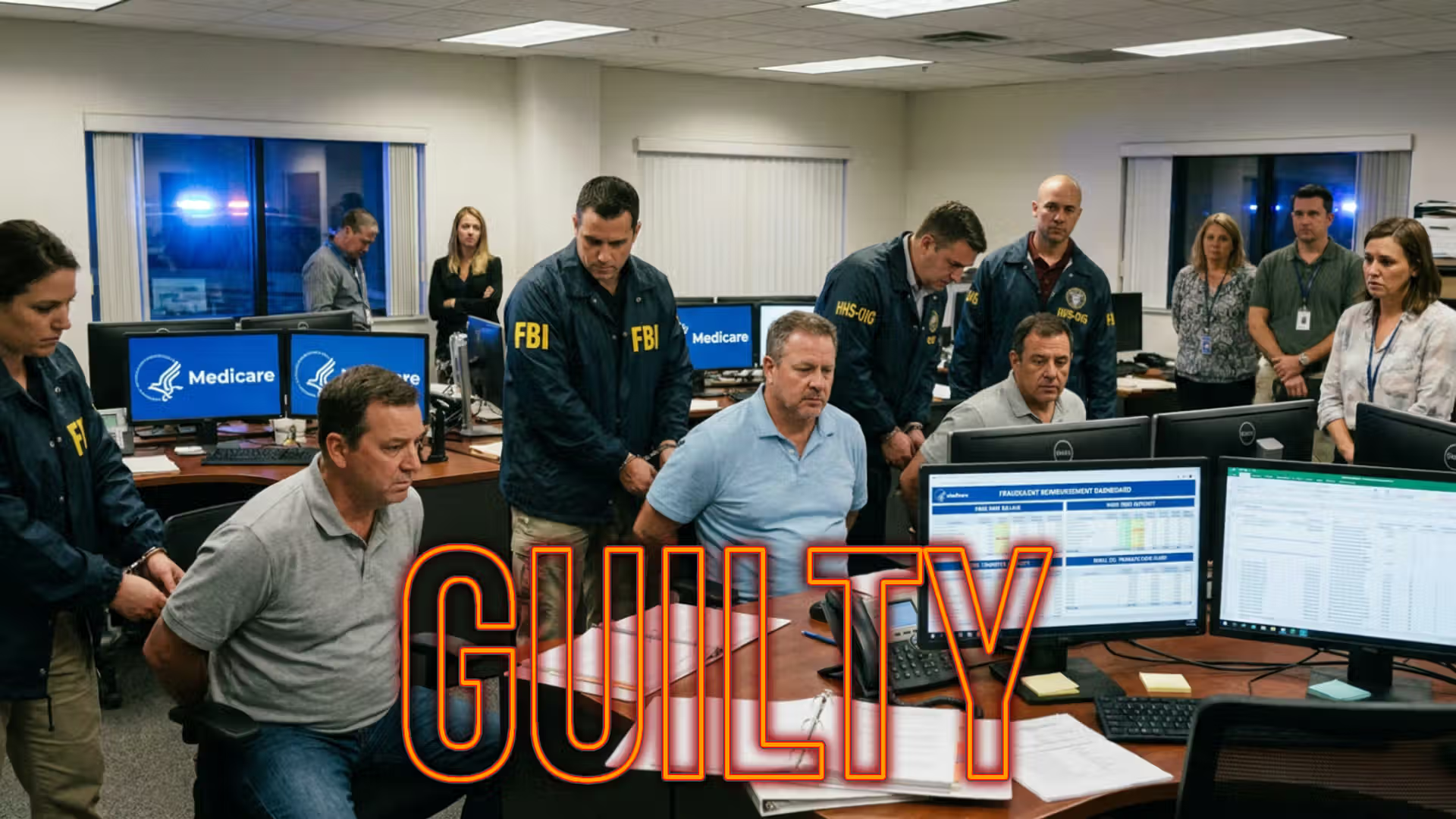
The French judiciary recently concluded a landmark legal proceeding involving the multinational cement conglomerate Lafarge, which resulted in a six-year prison sentence for former CEO Bruno Lafont and a fine of 1.125 million euros for the corporation itself. This decision addresses the grave actions taken by the company between 2013 and 2014 when it funneled millions of euros to armed groups to maintain its industrial operations amidst the Syrian civil war. The court identified a systematic failure to adhere to international standards regarding the prevention of illicit financial flows to designated entities. By prioritizing corporate stability over legal and ethical mandates, the defendants engaged in activities that the presiding judge described as a genuine commercial partnership with extremist organizations. These payments facilitated the consolidation of power by groups that committed widespread atrocities both within the Middle East and on European soil.
Table of Contents


Global Counter-Terrorism Finance Standards and the Lafarge Precedent
The intersection of corporate operations in high-risk jurisdictions and global counter-terrorism finance standards has never been more scrutinized than in the wake of the recent French court ruling against the cement giant Lafarge. This case serves as a definitive warning to multinational entities operating in conflict zones where the line between business necessity and criminal complicity often becomes blurred by the pressure to maintain profit margins. The primary focus of the judicial inquiry was the movement of approximately 5.6 million euros through various intermediaries and shell structures to reach the pockets of designated organizations. These financial maneuvers were not merely incidental to the conflict but were intentional strategies designed to ensure the continued productivity of the Jalabiya cement plant. From a regulatory perspective, this represents a total collapse of internal controls and a flagrant disregard for the anti-money laundering and counter-terrorism financing frameworks established by the Financial Action Task Force. The court emphasized that the lack of transparency regarding these transactions contributed to the extreme gravity of the offenses, as the funds were never disclosed to the relevant financial intelligence units. By allowing trucks and employees to pass through checkpoints controlled by extremist groups in exchange for cash, Lafarge effectively subsidized the administrative and military capabilities of these entities. This level of engagement transcends traditional notions of extortion and enters the realm of active collaboration, which carries heavy penalties under both French and international law. The sentencing of high-level executives like Bruno Lafont and Christian Herrault underscores the shift toward personal accountability for corporate leaders who authorize or turn a blind eye to illicit financial arrangements. It signals that the corporate veil will not protect individuals from the consequences of financing violence, even if they claim their primary motivation was the protection of local assets or staff members.




Operational Risks and Illicit Payment Channels in Conflict Zones
When analyzing the specific mechanics of the financial misconduct in this case, it is essential to look at the operational risks and illicit payment channels that were utilized to bypass international sanctions and monitoring systems. The cement plant located in northern Syria became a focal point for a complex web of payments that involved Syrian intermediaries such as Firas Tlass, who acted as a conduit between the corporate headquarters and various armed factions. These intermediaries were essential for the movement of raw materials and the safety of the workforce, but their involvement also served to obscure the ultimate destination of the company’s funds. The reliance on local fixers is a common vulnerability in anti-money laundering protocols, particularly in regions where formal banking systems have collapsed or are subject to heavy sanctions. In the instance of Lafarge, the court found that the company did not just pay for protection but actually entered into purchase agreements for raw materials like pozzolan and oil from sources controlled by extremists. This effectively turned the corporation into a customer of a designated terrorist organization, thereby providing the group with a steady stream of legitimate-looking revenue. Such activities are a direct violation of the principles meant to starve these organizations of the resources needed to govern territory and launch attacks. The judicial findings highlight that the company continued these practices long after other multinational firms had exited the country in recognition of the deteriorating security situation and the rising legal risks. The choice to remain active was driven by a staggering cynicism, according to prosecutors who argued that the potential for profit outweighed any concern for the broader implications of funding a global threat. This case demonstrates that the absence of a direct intent to support violence is not a valid defense when the financial outcomes of a business decision directly and predictably benefit criminal enterprises.

Regulatory Evolution and Corporate Liability for Terrorism Support
The legal landscape regarding corporate liability for terrorism support is evolving rapidly, as demonstrated by the dual prosecution of Lafarge in both the United States and France. Before the recent French sentencing, the company had already faced significant repercussions in the American legal system, where it pleaded guilty to conspiring to provide material support to foreign terrorist organizations. That earlier settlement, which included a massive 778 million dollar fine, marked the first time a major corporation had been held to such a standard under US law. The subsequent French ruling complements this by focusing on the individual responsibility of the executives and the specific violations of national statutes. The fine of 1.125 million euros imposed by the Paris court might seem modest compared to the American penalty, but the true weight of the verdict lies in the criminal convictions and the precedent it sets for future cases involving complicity in crimes against humanity. This ongoing legal battle suggests that companies will be held to an increasingly high standard of due diligence when operating in volatile markets. Regulators are no longer satisfied with simple checklists or superficial audits, especially when the risks involved include the financing of groups that destabilize entire regions. The transition of ownership from Lafarge to the Swiss group Holcim has not shielded the original entity from its past actions, proving that successor liability is a potent tool for enforcement agencies. National counter-terrorism prosecutors have made it clear that they will pursue these cases with the same vigor regardless of whether the defendant is an individual insurgent or a multi-billion euro corporation. This shift reflects a broader understanding that the financial infrastructure of modern conflict is often maintained by legitimate actors who fail to exercise sufficient oversight or who actively seek to exploit the chaos of war for commercial gain.
Institutional Consequences and the Future of Compliance Monitoring
Looking forward, the institutional consequences of this case will likely manifest in more rigorous compliance monitoring and a total reassessment of how corporations handle high-risk transactions. The French court has established that maintaining a factory in a war zone is not an excuse for bypassing anti-money laundering regulations or engaging in clandestine financial partnerships. The six-year sentence for Bruno Lafont serves as a stark reminder that the ultimate responsibility for a company’s financial conduct rests at the very top of the organizational chart. For compliance officers and legal departments, the takeaway is that silence or a lack of specific knowledge is not a protection if the underlying business model depends on illegal payments. The court noted that the payments were essential in enabling the extremist organizations to gain control over natural resources, which in turn funded acts of terror across the globe. This direct link between a corporate invoice and a battlefield outcome is what the legal system is now focused on breaking. Future enforcement actions will likely utilize the data gathered during this investigation to refine the markers for suspicious activity in the extractive and construction industries. As international bodies like the FATF continue to update their recommendations for the private sector, the Lafarge case will be cited as a definitive example of what happens when a firm ignores the warning signs of radicalization and conflict. The global community is moving toward a zero-tolerance policy for any financial activity that provides material support to groups involved in systematic human rights abuses. Consequently, businesses must now integrate geopolitical risk assessment directly into their financial reporting and compliance structures to avoid the catastrophic legal and reputational damage seen in this historic case.
Key Points
- The former CEO of Lafarge was sentenced to six years in prison for his role in authorizing illegal payments to extremist groups.
- The company was ordered to pay a fine of 1.125 million euros following its conviction for financing terrorist organizations in Syria.
- Evidence showed that the firm paid approximately 5.6 million euros to ensure the continued operation of its cement plant during the conflict.
- This case marks a significant precedent in holding corporate executives personally and criminally liable for illicit financial flows in war zones.
Related Links
- French National Counterterrorism Prosecutors’ Office Press Statements
- Financial Action Task Force Guidance on Countering Terrorist Financing
- United States Department of Justice Lafarge Guilty Plea Announcement
- United Nations Security Council Resolutions on Sanctions and Terrorist Funding
- French Ministry of Justice Judicial Decisions Database
Other FinCrime Central Articles About Lafarge Terrorism Financing
- French government’s awareness questioned in Lafarge terrorism financing case in Syria
- How Cement Giant Lafarge’s Syria Gamble Became a Terror-Funding Trap
Source: Le Monde
Some of FinCrime Central’s articles may have been enriched or edited with the help of AI tools. It may contain unintentional errors.
Want to promote your brand, or need some help selecting the right solution or the right advisory firm? Email us at info@fincrimecentral.com; we probably have the right contact for you.