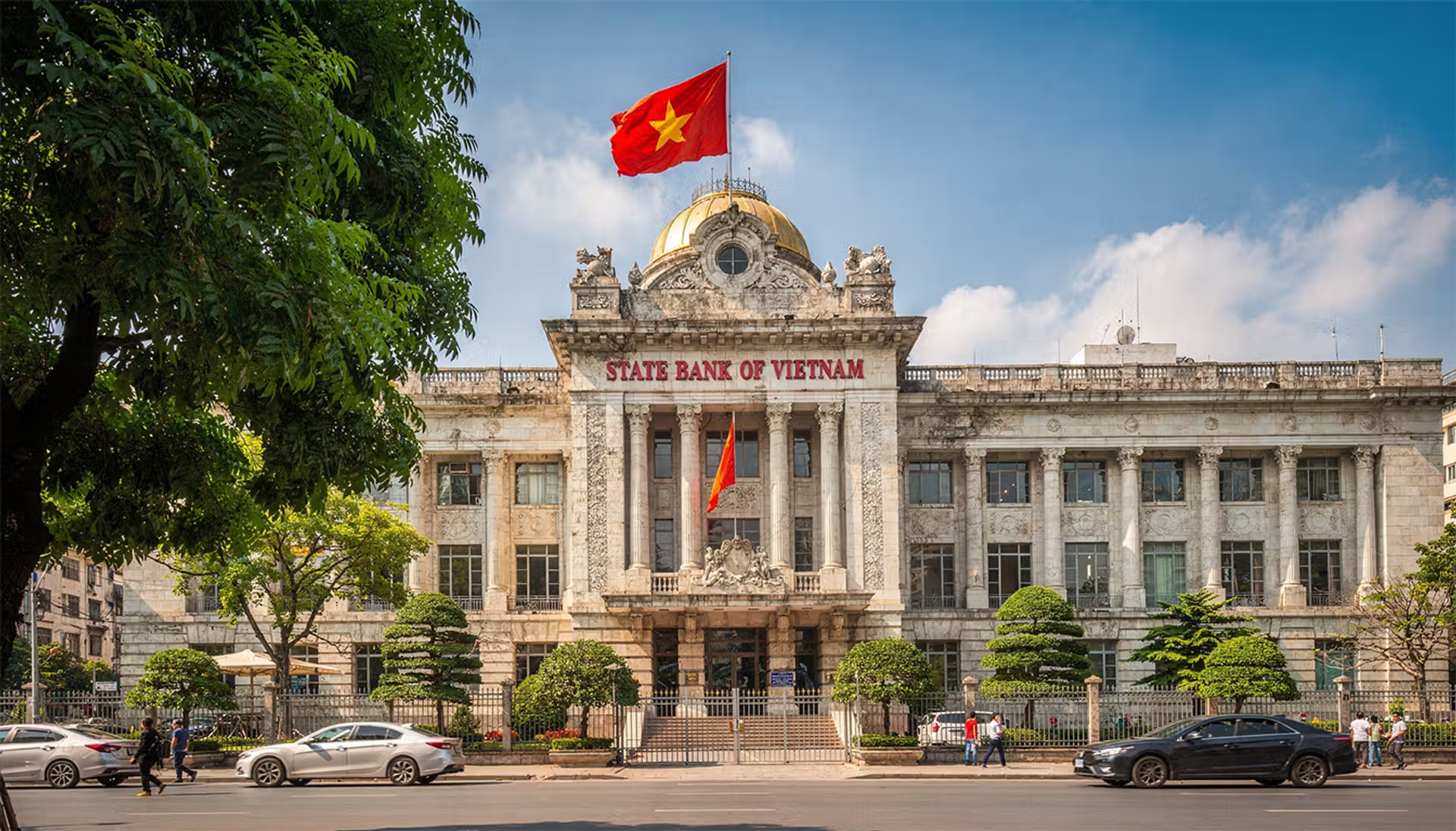
Authorities in Vietnam have intensified their oversight of financial systems following a sharp thirty percent annual increase in suspicious transaction reports submitted to the State Bank of Vietnam. This aggressive stance includes the implementation of Decree Number 329/2025/ND-CP to monitor capital flows within the newly established international financial centre and mitigate illicit activities. The government is focusing on digital assets and cross-border transactions to close loopholes previously exploited by criminal networks seeking to hide proceeds from illegal sources.
Table of Contents


Vietnam Anti-Money Laundering Law
The landscape of financial regulation in the country has shifted significantly since the introduction of the primary legal framework designed to combat the integration of illicit funds into the formal economy. Regulatory bodies have observed a consistent upward trend in the volume of reports documenting unusual financial behavior, reflecting both an increase in criminal attempts and a heightened awareness among domestic financial institutions. The Anti-Money Laundering Department now processes thousands of reports every year, indicating that the scale of the challenge has expanded alongside the modernization of the local economy. Law enforcement agencies have already disseminated hundreds of analytical documents based on thousands of these alerts to investigate potential crimes involving the layering of funds across various sectors. This surge in data highlights the necessity for robust investigative tools and a more comprehensive understanding of how modern financial products can be misused for criminal gain.
Regulating the New International Financial Centre
The development of a central hub for global finance presents a unique set of vulnerabilities that require specialized legislative responses to prevent the territory from becoming a haven for financial crime. Under the recent administrative orders, any banking entity operating within this specific zone must act as a primary barrier against the movement of black market capital. These organizations are tasked with a dual role, providing sophisticated wholesale services while simultaneously conducting rigorous due diligence on every client and transaction. The regulations demand that foreign investors and local members provide detailed justifications for any movement of currency, ensuring that the source and destination of funds remain transparent to oversight committees. This localized regulatory environment serves as a prototype for risk-controlled financial models, where innovation is permitted only if it does not compromise the integrity of the national monetary system. Banks are required to maintain exhaustive records and verify the legitimacy of all documents presented for exchange services, creating a paper trail that can be audited by state authorities at any moment.
Addressing the Challenges of Digital Asset Markets
While traditional banking sectors are becoming increasingly fortified, the rapid expansion of the virtual economy introduces a layer of anonymity that bypasses conventional monitoring systems. With approximately 26 million accounts dedicated to digital assets held by domestic users, the potential for these platforms to facilitate the movement of untraceable wealth has become a primary concern for national security. Criminal organizations often favor these decentralized networks because they allow for the rapid transfer of value across international borders without the need for traditional intermediaries. The Ministry of Public Security has identified that these underground markets operate largely outside the reach of the 2022 legislation, creating a parallel financial system that is difficult to penetrate. To counter this, the state has issued new circulars to provide clearer guidance on how to apply existing laws to these emerging technologies. The goal is to bring the gray market into the light, forcing providers of virtual asset services to comply with the same reporting standards as commercial banks.
Future Outlook for Financial Integrity and Compliance
The convergence of new physical financial hubs and virtual trading platforms necessitates a flexible and proactive approach to law enforcement. As the volume of suspicious data continues to grow, the ability of the State Bank of Vietnam to convert these reports into actionable intelligence will determine the success of the national strategy. The focus remains on strengthening the gatekeeper functions of financial institutions and ensuring that no transaction, regardless of its technological medium, remains hidden from the gaze of regulators. By bridging the gap between existing statutes and the evolving nature of digital finance, the government aims to create an environment where legitimate investment can thrive while criminal elements are systematically excluded. The commitment to maintaining a clean financial record is essential for the long-term stability of the international financial centre and the broader economic aspirations of the nation. Continued collaboration between the economic security departments and the central bank will be the cornerstone of this defensive architecture.
Key Points
- Vietnam has experienced a thirty percent annual rise in suspicious reports since the 2022 law was established.
- Decree Number 329/2025/ND-CP mandates that banks in the new financial centre verify the purpose of all funds.
- Security officials have flagged 26 million digital asset accounts as a significant risk for anonymous money laundering.
- The Anti-Money Laundering Department has issued nearly 600 investigative documents to the Ministry of Public Security.
Related Links
- State Bank of Vietnam Anti-Money Laundering Department Transactions
- Ministry of Public Security Economic Security Reports
- FATF Guidance on Virtual Assets and Red Flag Indicators
- Vietnam Government Decree on International Financial Centre Regulations
Other FinCrime Central Articles About Vietnam’s Needed AML Progress
- FATF Review Shows Vietnam’s AML Progress and Persistent Weaknesses
- Vietnam’s Costly Battle to Escape the FATF Grey List
- Vietnam Reforms its Beneficial Ownership
Source: Vietnam+
Some of FinCrime Central’s articles may have been enriched or edited with the help of AI tools. It may contain unintentional errors.
Want to promote your brand, or need some help selecting the right solution or the right advisory firm? Email us at info@fincrimecentral.com; we probably have the right contact for you.