The United States Department of the Treasury recently announced significant sanctions against six targets linked to the Cartel del Noreste, a violent Mexican criminal organization. These measures target the financial infrastructure used by the group to move illicit funds across the United States and Mexico border near Laredo, Texas. By designating three individuals and three business entities, the government aims to dismantle the sophisticated money laundering and cash smuggling networks that sustain cartel activities. The action involves blocking all American assets of the named parties and imposing strict prohibitions on any financial transactions involving their interests. Such enforcement efforts are critical to preventing criminal groups from integrating their illegal profits into the global economy.
Table of Contents



Financial Sanctions Target Cartel del Noreste Gaming Entities
The enforcement action taken by the Office of Foreign Assets Control highlights a sophisticated strategy to dismantle the economic engines of the Cartel del Noreste. This organization, which evolved from the notorious Los Zetas group, has long utilized legitimate business fronts to disguise the origins of its massive wealth. By focusing on casino operations, federal authorities are striking at the heart of the integration phase of the laundering cycle. Casinos provide an ideal environment for criminals to convert bulk cash from narcotics sales and human smuggling into seemingly legitimate gambling winnings or business revenue. This process allows the cartel to pay its soldiers, bribe officials, and purchase weaponry while maintaining a veneer of commercial respectability. The primary focus of these sanctions is to ensure that the international financial system remains closed to those who facilitate such illicit transfers.
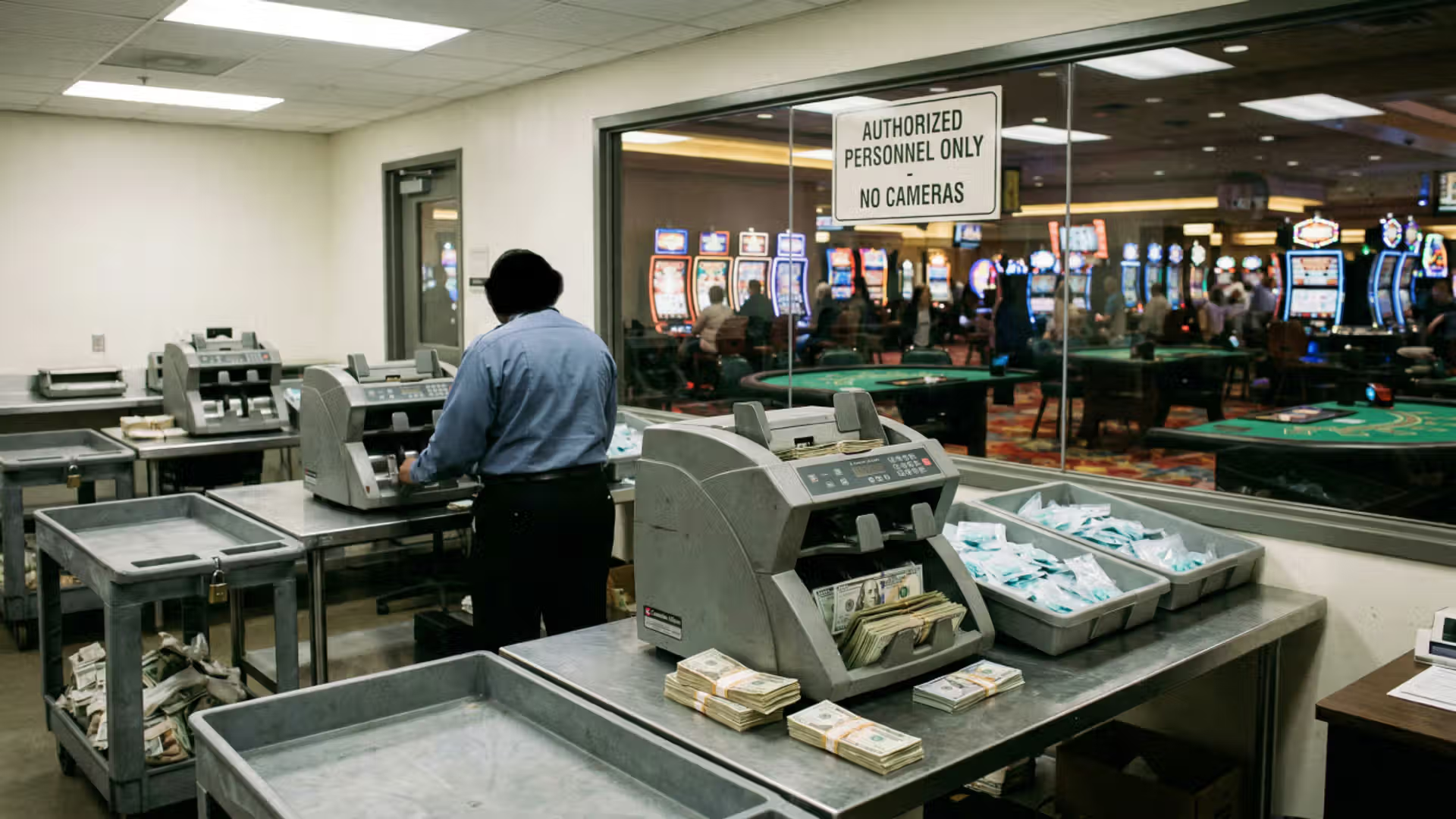
The designation of Casino Centenario in Nuevo Laredo serves as a primary example of how gaming establishments function as multipurpose hubs for criminal enterprises. This facility did not merely offer gambling, but it served as a physical stash house for dangerous narcotics, including fentanyl and cocaine. Beyond the physical storage of contraband, the entity used its gaming operations to launder illicit proceeds, effectively blending criminal cash with legal wagers. Such activities represent a profound threat to the integrity of the border economy, as the proximity of these businesses to the United States allows for the rapid movement of funds and personnel. The Treasury Department has identified that the backrooms of these establishments were even used for violent acts of intimidation, further proving that these businesses were far from independent commercial actors.
Furthermore, the reach of the sanctions extends to the corporate parent of these gaming sites, Comercializadora y Arrendadora de Mexico, S.A. de C.V., known as CAMSA. This entity managed not only the Centenario location but also the Diamante Casino in Tampico and an associated online gambling platform. By including the digital footprint of the cartel, the Treasury is acknowledging that modern money laundering often transcends physical borders through internet-based gaming. This comprehensive approach ensures that even if physical locations are shuttered, the cartel cannot simply migrate its laundering activities to a digital environment. The systematic blocking of these entities prevents them from accessing the United States financial system, which is essential for any large-scale operation attempting to move money across international lines.




Legal and Social Enablers of Border Financial Crimes
Money laundering operations rarely succeed without the assistance of professional enablers who provide a facade of legitimacy. The recent sanctions highlight the roles of individuals who use their professional standing to shield criminal activities from law enforcement scrutiny. Among those designated is Juan Pablo Penilla Rodriguez, a defense attorney who allegedly moved beyond the traditional boundaries of legal representation. Instead of merely defending clients in court, Penilla acted as an intermediary between incarcerated leaders and the active members of the cartel. This communication channel allowed for the continued management of criminal finances and logistics despite the imprisonment of high-ranking figures. When legal professionals facilitate the movement of instructions or funds for criminal organizations, they become essential nodes in the money laundering network, necessitating their removal from the financial system.
Another critical component of the cartel infrastructure involves the use of disinformation to protect financial interests and operational freedom. Jesus Reymundo Ramos Vazquez, posing as a human rights activist, allegedly led campaigns designed to discredit Mexican authorities. By filing false complaints and organizing paid protests, Ramos sought to divert law enforcement attention away from cartel operations. This form of social engineering acts as a defensive layer for the money laundering process, as it creates a hostile environment for the investigators who track illicit financial flows. When criminal organizations can influence public opinion or legal proceedings through paid proxies, they enhance their ability to operate without interruption. Identifying and sanctioning these enablers is a vital step in peeling back the layers of protection that allow cartels to thrive.
The logistical side of the cartel business, particularly human smuggling, also generates vast amounts of cash that must be laundered. Eduardo Javier Islas Valdez, known as Crosty, managed these smuggling operations and controlled the cash stash houses required to store the proceeds. The movement of people across the border is a high-volume, cash-intensive business that requires a network of safe houses and couriers. By controlling these points of origin for illicit cash, individuals like Valdez ensure that the cartel has a steady stream of revenue to feed into its laundering machines. The Treasury action effectively freezes the assets of these coordinators, making it significantly harder for them to manage the daily financial needs of their smuggling networks. This disruption at the source of the funds is just as important as the actions taken against the banks or casinos that eventually receive the money.

Enforcement Mechanisms and Global Sanctions Implications
The consequences of being placed on the Treasury sanctions list are severe and far-reaching, designed to isolate the targets from the global economy. Once an individual or entity is designated, all their property and interests in property within the United States or in the possession of American citizens must be blocked. This means that bank accounts are frozen, real estate cannot be sold, and no person or business in the United States may engage in any transaction with them. These measures are not limited to direct ownership, as the fifty percent rule ensures that any entity owned or controlled by a blocked person is also subject to the same restrictions. This creates a ripple effect that can paralyze the entire commercial network of a criminal organization, as legitimate partners quickly sever ties to avoid their own legal complications.
Violating these sanctions carries heavy penalties, and the Treasury Department operates on a strict liability basis for civil violations. This means that businesses can be fined even if they did not intend to violate the law, placing a high burden of due diligence on financial institutions and commercial enterprises. Furthermore, the United States offers significant incentives for whistleblowers who provide information leading to successful enforcement actions. Those who report sanctions violations can receive substantial monetary awards, creating an additional layer of risk for those attempting to hide cartel money. The goal is to make the cost of doing business with the Cartel del Noreste so high that even the most daring financial intermediaries will refuse to participate.
The international impact of these sanctions is amplified through the threat of secondary sanctions on foreign financial institutions. If a bank in Mexico or elsewhere knowingly facilitates significant transactions for a designated person, that bank may lose its ability to maintain correspondent accounts in the United States. This is a devastating prospect for most international banks, as access to the American financial system is essential for global trade. By leveraging this power, the Treasury Department effectively turns the global banking community into a frontline defense against cartel money laundering. The collective pressure from these various enforcement tools is intended to drain the financial resources of the Cartel del Noreste, ultimately reducing its ability to exert violence and control along the border region.
Future Perspectives on Combatting Cartel Financial Networks
Dismantling the financial structures of transnational criminal organizations requires constant vigilance and international cooperation. As cartels adapt to traditional enforcement methods, they often turn to more obscure methods of moving money, such as cryptocurrency or trade-based money laundering. The ongoing effort by the Homeland Security Task Force and the Drug Enforcement Administration shows that a multi-agency approach is necessary to keep pace with these evolving threats. By combining intelligence from narcotics investigations with the financial expertise of the Treasury, the government can map out the entire lifecycle of criminal proceeds. This collaborative model is essential for identifying the hidden links between violent street-level activity and the quiet boardrooms where the profits are cleaned and invested.
The focus on the Laredo port of entry is particularly strategic given its status as a primary hub for international trade. When cartels exert influence over such critical infrastructure, they threaten more than just public safety; they endanger the economic stability of the entire region. The use of casinos and front companies near these trade routes allows for the seamless blending of legal and illegal commerce. Continued pressure on these specific geographic points will be necessary to ensure that the legitimate flow of goods is not compromised by the presence of criminal wealth. As long as the cartels find ways to profit from the border, the United States will likely continue to expand its use of targeted sanctions to disrupt those gains.
In conclusion, the recent actions against the Cartel del Noreste and its associates represent a significant victory in the ongoing battle against organized crime. By targeting the casinos, the professional enablers, and the logistical coordinators, the Treasury Department has struck a blow against the financial foundations of the group. These sanctions serve as a warning to all who would assist criminal organizations that the price of such cooperation is total exclusion from the world’s most important financial markets. While the cartel remains a dangerous threat, the systematic removal of its financial resources is a proven method for reducing its power and influence over time. The dedication of federal agencies to tracking every dollar ensures that the house will eventually lose in the fight against global money laundering.
Key Points
- The US Treasury sanctioned six targets associated with the Cartel del Noreste, including casinos used for money laundering and drug storage.
- Two specific gaming entities, Casino Centenario and Diamante Casino, were designated for integrating illicit proceeds into the financial system.
- The sanctions target high-profile enablers such as an attorney and a fake human rights activist who facilitated cartel operations and disinformation.
- All American assets belonging to the designated individuals and entities are blocked, and US persons are prohibited from conducting business with them.
Related Links
- Office of Foreign Assets Control Recent Actions
- Financial Action Task Force Recommendations on Money Laundering
- United States Department of the Treasury Press Releases
- Drug Enforcement Administration Asset Forfeiture Program
- Homeland Security Investigations Financial Crimes Division
Other FinCrime Central Articles About Casinos Used As Money Laundering Vectors
- From Chips to Cash: Casino-Based Money Laundering in the Sinaloa Cartel Case
- Macau Casino Scheme Leads to Indictment and US$1 Billion Penalty in Taiwan
- Caesars Casino Hit With $7.8 Million Fine as Bookmaker Case Uncovers Deep Compliance Gaps
Source: US Treasury
Some of FinCrime Central’s articles may have been enriched or edited with the help of AI tools. It may contain unintentional errors.
Want to promote your brand, or need some help selecting the right solution or the right advisory firm? Email us at info@fincrimecentral.com; we probably have the right contact for you.