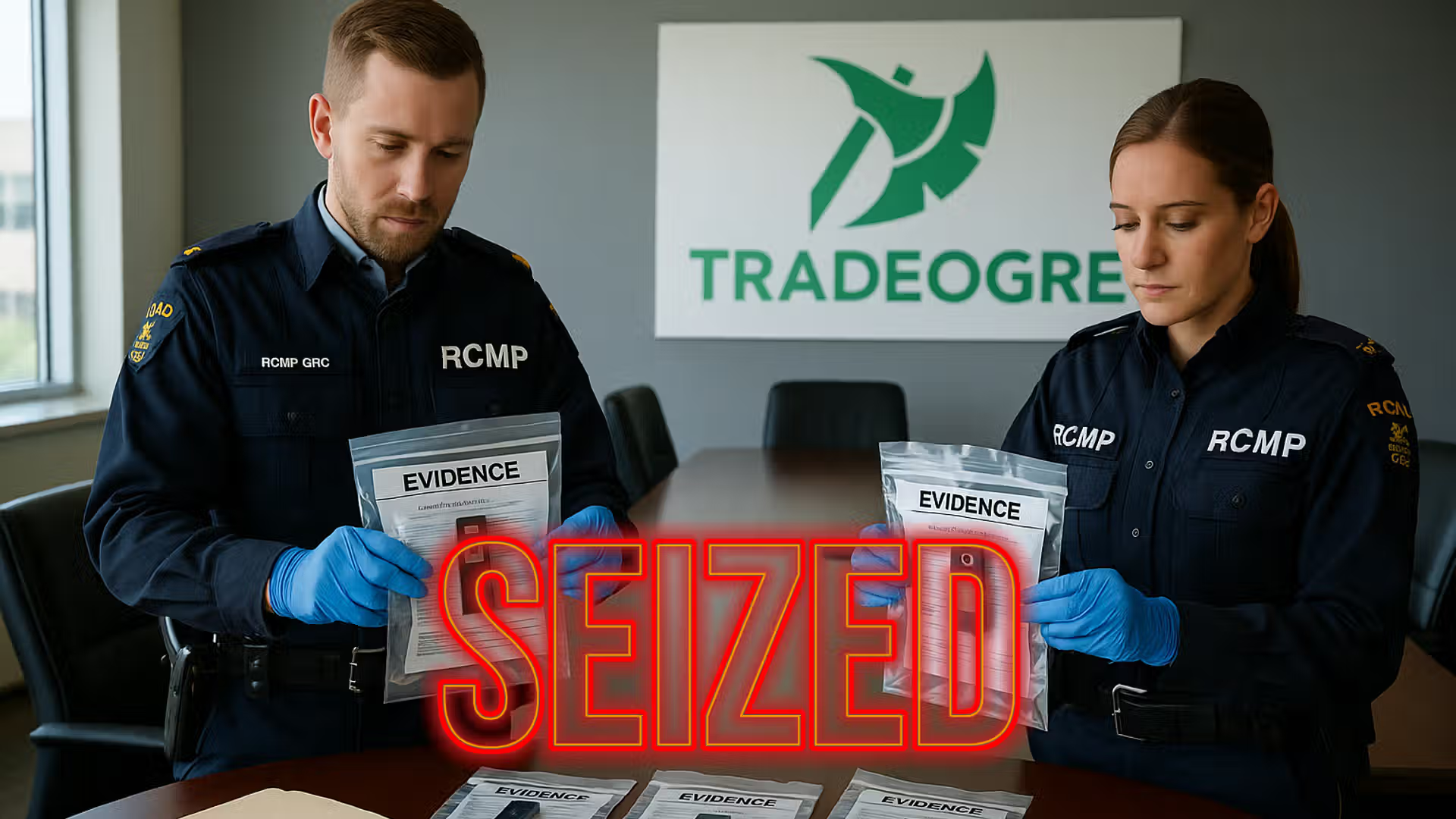
TradeOgre, a crypto trading platform that operated largely under the radar, has become central to one of Canada’s biggest anti-money laundering enforcement actions. The Royal Canadian Mounted Police seized over CAD 56 million in crypto assets in September 2025, alleging that TradeOgre facilitated laundering of criminal proceeds by operating without required registration or customer verification. The unfolding of this case reveals not just the scale of illicit activity, but the methods, legal challenges, and precedent that will reshape regulatory expectations.
Table of Contents


TradeOgre money laundering investigation and case details
TradeOgre was an unregistered crypto asset trading platform that lacked mechanisms for verifying user identity, enabling users to create accounts without Know Your Customer (KYC) checks. It also supported privacy-oriented tokens, which are harder to trace. Starting in June 2024, the RCMP’s Money Laundering Investigative Team, with cooperation from Europol, initiated an investigation after intelligence suggested that TradeOgre was operating like a money services business without any of the legal oversight required under Canadian law.
The RCMP alleges that most of the funds flowing through TradeOgre derived from criminal sources. Because users could remain anonymous and no registration or KYC was enforced, the platform served as a hub for hiding origins of funds. Layering, mixing, and the use of multiple wallets appear to have been part of the modus operandi, making tracing difficult without advanced blockchain analytics.
The seizure order effected in September 2025 resulted in the platform being shut down, and a banner placed on the site announcing that both the platform and associated cryptoassets have been seized by the RCMP. The announcement states that TradeOgre did not comply with Canadian registration or regulatory requirements. Although no suspects or operators have been charged publicly as of that date, the authorities are analyzing transaction history and user activity to identify responsibility. Users may be affected, including those whose holdings may have been innocent, if those assets are mixed or intermingled with illicit flows.
Publicly disclosed details point to cross-border elements. Although TradeOgre operates on the internet and serves a global clientele, Canadian enforcement is justified because of its accessibility to Canadian users and its failure to register with Canadian authorities when required. The case was enabled by cooperation and data shared among international agencies, especially as virtual asset flows frequently cross jurisdictions. The RCMP statement emphasizes that the platform was attracting users precisely because of its lack of identity checks and regulatory oversight.
The seizure of CAD 56 million makes this the largest cryptocurrency seizure in Canada’s history. Law enforcement has shut down platform operations, frozen or taken control of the website. TradeOgre’s social media presence had been dormant, consistent with signs that the operators were aware of mounting scrutiny. Authorities have not yet disclosed any arrests or formal charges, but investigation remains active, including tracing of wallet addresses, apprehension of persons responsible for operating TradeOgre, and determining ownership of the seized assets.
Legal violations, challenges and accountability in the TradeOgre proceedings
Under Canadian law, specifically the Proceeds of Crime (Money Laundering) and Terrorist Financing Act, TradeOgre appears to have breached key obligations: registration as a Money Services Business, customer identification (KYC), record keeping, reporting of suspicious transactions and large virtual currency transactions. Failure to register and failure to verify customer identity are offences. Asset seizure and forfeiture powers are invoked when proceeds are believed to be derived from crime.
One legal challenge is proving knowledge or willful misconduct by operators. While regulators can hold platforms accountable for failing to meet compliance obligations, criminal liability typically requires showing that the operators were aware or willfully ignored the obligations. Another challenge lies in distinguishing between criminal proceeds and legitimate user funds, especially when user accounts are mixed or there is a lack of reliable records. Innocent users may make claims for their assets; courts may have to adjudicate legitimacy of such claims.
Jurisdiction is also a factor. Even if platform operators are outside Canada, if they serve Canadians or allow transactions with Canadian residents, Canadian courts and regulators may assert authority. Mutual legal assistance treaties and cross-border cooperation are essential for such investigations, particularly in identifying wallet owners, server locations, and operator identities.
Accountability may include administrative penalties, asset forfeiture, criminal charges against operators or managers, and possibly civil actions by affected users. The investigation is ongoing, so final outcomes are not yet public, but the scale of the seizure and firm statements by RCMP indicate serious regulatory weight.
Operational risks, laundering techniques, and how TradeOgre was exploited
TradeOgre’s architecture permitted high anonymity, minimal oversight, and use of cryptocurrencies that have enhanced privacy features. These are classic enablers of money laundering. Criminal actors likely used layering techniques including transferring funds among multiple wallet addresses, converting between currencies, using privacy coins or mixing services, then eventually moving funds into less monitored assets or jurisdictions.
Because TradeOgre did not require identity verification or beneficial owner identification, it was comparatively easy for illicit users to open accounts and deposit funds without detection. Records of transactions might have been kept or partially kept, but their quality and connection to identified persons was insufficient. Lack of KYC and no enforced client due diligence meant that even large or unusual transactions could proceed without triggering alarms.
Blockchain analysis tools, likely used by RCMP and cooperating agencies, enabled tracing of wallet clusters, identifying links between known illicit addresses or dark wallet services, and following flows that crossed through multiple chains or coins. On-chain data, public blockchains, and cooperation from intermediaries (exchanges, wallets) all appear to have played parts in building a case.
TradeOgre’s reputation among some users for anonymity attracted criminal actors, but that same reputation may have reduced legitimate business adoption, making oversight minimal. Moreover, because the exchange was unregistered, no regulator had formal access or power to audit, inspect or require remediation amendments until law enforcement intervened.
Implications for AML compliance, precedent and future enforcement
TradeOgre’s seizure is likely to influence policy, compliance expectations and enforcement practices in Canada and beyond. First, it establishes a precedent that unregistered virtual asset service providers operating without KYC may face closure and asset seizure at large scale, even without having explicitly charged suspects at initial announcement.
Second, compliance obligations for virtual asset service providers will be under greater spotlight. Regulators may issue more guidance, audits, supervisory reviews, and potentially new legislation or regulatory amendments clarifying obligations around privacy coins, peer-to-peer platforms, anonymous transactions, mixing services.
Third, due diligence by financial institutions, exchanges, custodians and other intermediaries will need to account more deeply for counterparty risk involving platforms without clear registration or with poor oversight. Those institutions may face legal or reputational risk if they handle funds coming from such platforms.
Fourth, the case puts user rights into sharper relief. Courts and regulators may develop jurisprudence dealing with restitution for innocent users whose funds were on seized platforms but not part of illicit flows. Ownership claims, standards of proof, timelines of transactions, and record keeping will matter a lot.
Fifth, cross-border cooperation is reinforced as a necessity. Intelligence sharing, mutual legal assistance, tracing tools, international sanctions regimes and alignment of regulatory expectations are central to making enforcement effective against virtual asset money laundering.
Finally, TradeOgre’s fall is likely to drive more public awareness. Users will increasingly ask whether exchanges are regulated, whether they enforce KYC, how transparent their ownership and practices are. That consumer pressure combined with regulatory scrutiny may drive better compliance and risk disclosure in the virtual asset sector.
Related Links
- Proceeds of Crime (Money Laundering) and Terrorist Financing Act, Government of Canada
- FINTRAC Money Services Business registration requirements
- FINTRAC guidance on virtual currency regulations overview
- FINTRAC suspicious transaction reporting guidance
Other FinCrime Central Articles About Increasing Pressure On Crypto
- US Sanctions Hit Garantex And Grinex As Crypto Crime Network Unravels
- Massive $48.5 Million Paxos AML Enforcement Shakes Crypto Compliance
- Philippines SEC Launches Major Crackdown on Illegal Crypto Platforms
Source: Royal Canadian Mounted Police
Some of FinCrime Central’s articles may have been enriched or edited with the help of AI tools. It may contain unintentional errors.
Want to promote your brand, or need some help selecting the right solution or the right advisory firm? Email us at info@fincrimecentral.com; we probably have the right contact for you.