According to recent reports from Global Financial Integrity covering Developing Asia, Africa, and the Middle East and North Africa, illicit financial flows via trade misinvoicing have reached unprecedented levels. These massive sums, which are illegally earned, transferred, or utilized across international borders, present a primary challenge to global economic stability and domestic resource mobilization. The persistence of these flows suggests that current regulatory frameworks and customs oversight are struggling to contain sophisticated financial crimes that exploit the high volume of legitimate international trade. As these illicit transfers drain essential tax revenues and weaken governance, international authorities are calling for enhanced data sharing and the implementation of more robust anti-money laundering protocols.
Table of Contents



Trade Misinvoicing and Global Financial Crimes
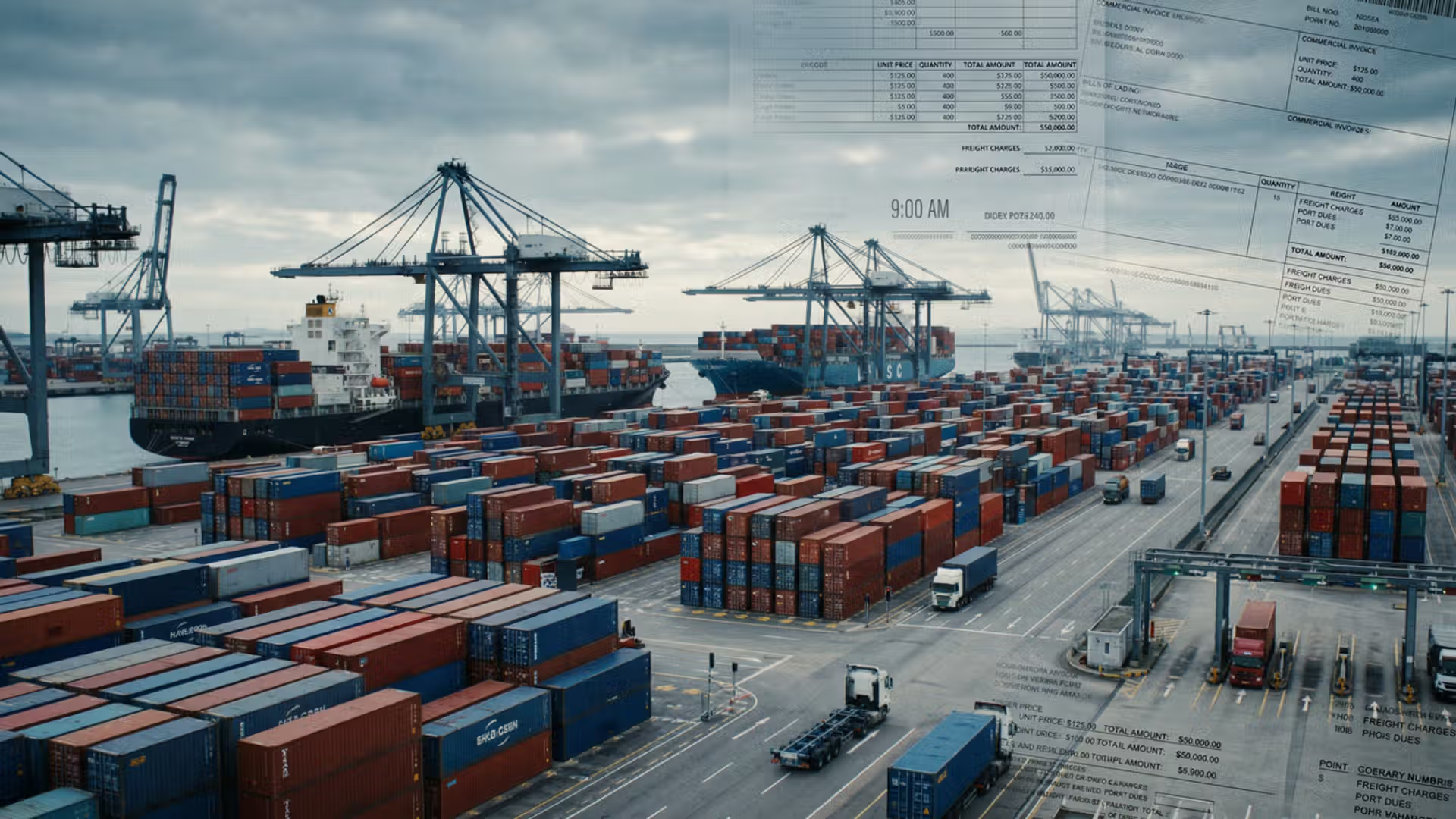
The practice of trade misinvoicing serves as a prominent and deeply entrenched channel for moving illicit wealth out of developing nations. This method involves the deliberate falsification of the price, quantity, quality, or description of goods on customs invoices to shift value across borders undetected. By manipulating these official documents, criminal actors and unscrupulous businesses can facilitate large-scale capital flight, evade customs duties, and launder the proceeds of corruption or organized crime through what appear to be routine commercial transactions. The sheer scale of this problem is illustrated by Global Financial Integrity’s analysis of mirror trade data, which compares discrepancies between what two trading partners report for the same flow of goods. In Developing Asia, the estimated trade value gaps reached approximately 1.69 trillion dollars in 2022, nearly doubling from the 824 billion dollars recorded in 2013. This upward trajectory indicates that despite global efforts to curb financial crime, the systemic vulnerabilities in international trade remain highly exploitable.
The economic consequences of these illicit flows are particularly severe for developing regions where every dollar lost represents a missed opportunity for human development. In Sub-Saharan Africa, the total value gaps were estimated at 152.9 billion dollars in 2022 alone, with South Africa recording the highest cumulative ten-year total of 478 billion dollars. These missing resources directly erode the tax base, significantly reducing the funds available for public services such as healthcare and education. Research indicates that African countries with high levels of illicit outflows spend on average, 25 percent less on health and 58 percent less on education compared to their peers with lower leakage levels. This funding gap is massive, as the 88.6 billion dollars lost annually in Africa is comparable to the continent’s total combined annual inflows of foreign aid and direct investment. Essentially, the continent acts as a net creditor to the rest of the world, with its illicit capital flight exceeding its total external debt stock.
The systemic nature of trade misinvoicing means that it is often integrated into the very fabric of how international business is conducted in certain jurisdictions. In many cases, it is not just criminal syndicates but also legitimate corporations that utilize these gaps to minimize tax liabilities or circumvent restrictive foreign exchange regulations. For example, import over-invoicing is a frequent tactic used to move capital out of a country by paying more for goods than they are actually worth, with the excess being deposited into offshore accounts. Conversely, export under-invoicing allows exporters to keep a portion of their foreign currency earnings outside the country by understating the value of the commodities they ship abroad. This is particularly prevalent in extractive industries where the complexity of grading and valuing minerals or hydrocarbons makes it difficult for customs officials to verify the accuracy of the declared values without specialized technical knowledge.




Structural Vulnerabilities in Regional Trade Networks
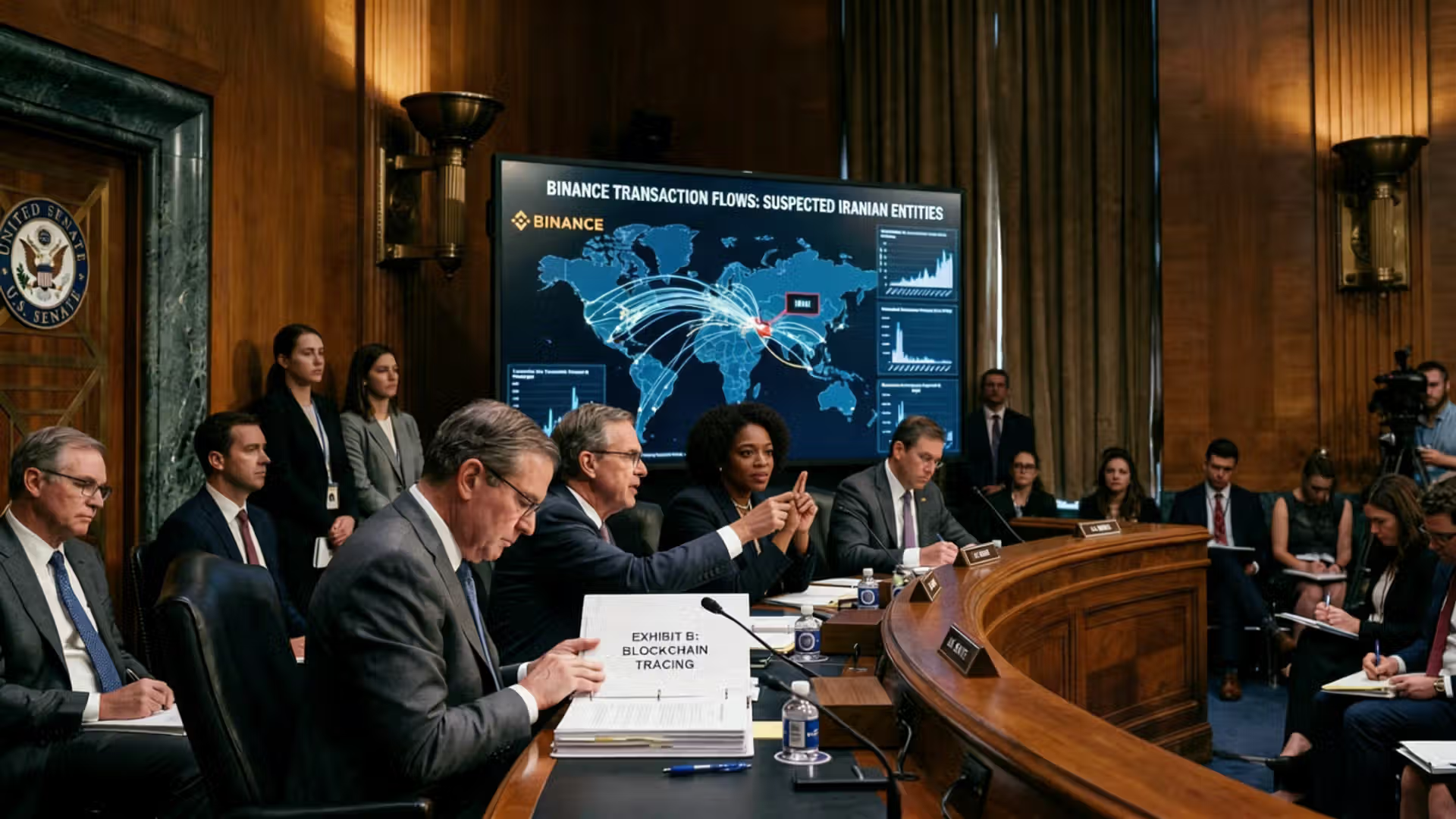
Regional economic structures and specific market characteristics often dictate the methods used for trade-related financial crimes. In the Middle East and North Africa, the region’s heavy dependence on hydrocarbon exports creates unique risks due to pricing opacity and complex multi-year contract structures. The presence of dozens of free trade zones in the region further exacerbates these vulnerabilities. These zones often offer minimal reporting requirements and zero transit duties, features that the Financial Action Task Force has identified as creating significant opportunities for trade-based money laundering. Furthermore, protracted conflicts in countries like Yemen, Libya, and Iraq have dismantled formal customs infrastructure, opening the door for smuggling and sanctions evasion. In Iran, comprehensive international sanctions have driven trade into deceptive shipping networks and shadow banking arrangements, further distorting official trade records and facilitating illicit transfers.
In the high-volume trading hubs of Developing Asia, the sheer scale of merchandise exports provides extensive cover for misinvoicing. China, as the world’s top merchandise exporter with a 14 percent global share, contributes a significant portion of the region’s cumulative trade discrepancies. The region’s 2022 trade gaps of 1.69 trillion dollars represent roughly 5.68 percent of its total regional GDP, highlighting the magnitude of this hidden leakage. Even small rates of mispricing in such a high-volume environment can translate into massive absolute value gaps that complicate national fiscal planning and monetary policy. The rebound of trade following global pandemic disruptions saw these gaps surge to new record peaks, suggesting that the underlying drivers of misinvoicing, such as capital controls and the desire for hard-currency holdings, remain unaddressed in many major economies.
Beyond the physical movement of goods, the digitalization of trade documentation and the rise of e-commerce have introduced new layers of complexity to the detection of misinvoicing. While digital systems offer the potential for better tracking, they also provide opportunities for sophisticated hackers or corrupt officials to manipulate data remotely. In some Asian economies, the rapid growth of digital trade has outpaced the ability of customs agencies to implement the necessary algorithmic tools to flag suspicious transactions in real-time. This digital divide between illicit actors and regulators creates a lag in enforcement that is frequently exploited. Moreover, the use of shell companies in jurisdictions with high levels of corporate secrecy allows the true beneficiaries of misinvoiced trades to remain anonymous, frustrating the efforts of law enforcement to trace the flow of illicit funds back to their source.

Impact on Human Development and Public Services
The human cost of these financial leakages is measured in stalled infrastructure projects, understaffed hospitals, and inadequate educational facilities. When illicit funds are siphoned out of an economy through trade misinvoicing, they bypass the national tax system entirely, depriving governments of the revenue needed to meet the Sustainable Development Goals. For Sub-Saharan Africa, curbing these flows could realistically halve the continent’s 670 to 760 billion dollar annual financing gap for sustainable development. In Uganda, for example, the estimated annual loss from illicit financial flows would have been sufficient to increase the combined health and education budgets by over 28 percent. This amount could have covered primary education for millions of children or funded vital maternal health and vaccination programs.
The erosion of the tax base often forces developing nations into a vicious cycle of debt. Unable to mobilize sufficient domestic revenue due to illicit leakages, governments frequently resort to onerous borrowing to finance essential budgets. This increases the national debt burden and diverts future government spending toward debt service rather than public investment. Furthermore, the presence of large-scale illicit flows undermines citizen trust and weakens the very governance systems required to curb financial crime. In the Middle East, the disparity in social spending between high-outflow and low-outflow countries serves as a clear indicator of how these crimes directly undermine the welfare of the population. Addressing these systemic issues is therefore not just a matter of financial integrity, but a fundamental requirement for improving the lives of millions of people in the developing world.
Furthermore, the loss of domestic capital through trade-related outflows hinders the growth of local financial markets. When wealth is moved offshore rather than being reinvested in the local economy, it reduces the availability of credit for small and medium-sized enterprises, which are the primary engines of job creation in developing countries. This lack of investment leads to lower productivity and slower economic diversification, keeping many nations trapped in a cycle of commodity dependence. In regions like North Africa, where youth unemployment is a major driver of social instability, the drain of capital caused by illicit flows directly contributes to the lack of economic opportunities for the younger generation. The social consequences of these missing funds are profound, as they limit the state’s ability to provide a safety net for its most vulnerable citizens, thereby exacerbating inequality and fueling potential unrest.
Future Strategies for Enhancing Financial Integrity
Combatting the 1.69 trillion dollar challenge of trade misinvoicing requires a transition toward more data-driven and collaborative regulatory environments. A primary strategy involves the implementation of robust beneficial ownership registries to identify the individuals who ultimately own or control legal entities. Ensuring this transparency is critical for dismantling the networks of front companies and shadow banking arrangements often used to facilitate illicit transfers. Additionally, customs authorities need to be equipped with real-time global pricing data and sophisticated risk-assessment models. By utilizing these tools, authorities can more effectively target physical inspections on the shipments that show the highest indicators of fraudulent documentation. Fewer than two percent of the world’s 860 million annual container movements are physically inspected, making data-driven targeting essential.
International cooperation is the cornerstone of any effective strategy to reduce global illicit flows. Because trade-based money laundering is inherently cross-border, it cannot be addressed by any nation acting in isolation. International bodies like the Financial Action Task Force and UNCTAD provide the necessary frameworks for setting standards and sharing best practices, but progress depends on the consistent application of these rules across all jurisdictions. This includes closing oversight gaps in free trade zones and improving the capacity of national tax and customs agencies in developing nations. The persistence of massive trade value gaps underscores that much stronger policy actions are needed to disrupt the status quo and ensure that the wealth generated by international trade contributes to national development rather than disappearing into the shadows of the global financial system.
Ultimately, the success of these efforts will depend on the political will of governments to prioritize financial integrity over short-term economic or political gains. This involves not only passing new laws but also providing the resources and independence necessary for regulatory agencies to do their jobs effectively. In many developing countries, customs and tax officials are often underpaid and lack the technological tools needed to confront sophisticated international smuggling and money laundering networks. Strengthening these institutions through technical assistance and international partnerships is a vital step toward reclaiming the trillions of dollars lost each year. By fostering a culture of compliance and transparency, nations can ensure that their participation in the global trading system leads to sustainable growth and shared prosperity for all their citizens rather than enriching a small number of illicit actors at the expense of the public good.
Key Points
- Developing Asia saw trade value gaps reach a record 1.69 trillion dollars in 2022, highlighting a massive drain on regional wealth.
- Trade misinvoicing through falsified customs documents is a dominant channel for facilitating illicit financial flows and capital flight.
- Sub-Saharan African nations lose approximately 88.6 billion dollars annually to illicit flows, which is nearly equal to all incoming foreign aid.
- Free trade zones and hydrocarbon pricing opacity in the Middle East and North Africa create significant vulnerabilities for trade-based money laundering.
- Cumulative trade value gaps in Developing Asia over the 2013 to 2022 decade sum to well over 10 trillion dollars.
Related Links
- FATF Recommendations on International Standards on Combating Money Laundering
- UNCTAD Conceptual Framework for the Statistical Measurement of Illicit Financial Flows
- World Customs Organization Study Report on Illicit Financial Flows via Trade Mis-invoicing
- United Nations Sustainable Development Goal Target 16.4 on Reducing Illicit Flows
Other FinCrime Central Articles About Trade-Based Money Laundering
- Danmarks Skibskredit Faces Regulatory Orders for Maritime Anti-Money Laundering
- Cambodia Targets Trade-Based Money Laundering to Secure 2026 Revenue
- Operation Cash-a-Lot: Portugal Dismantles a $209M Trade-Based Money Laundering Scheme
Source: Global Financial Integrity
Some of FinCrime Central’s articles may have been enriched or edited with the help of AI tools. It may contain unintentional errors.
Want to promote your brand, or need some help selecting the right solution or the right advisory firm? Email us at info@fincrimecentral.com; we probably have the right contact for you.