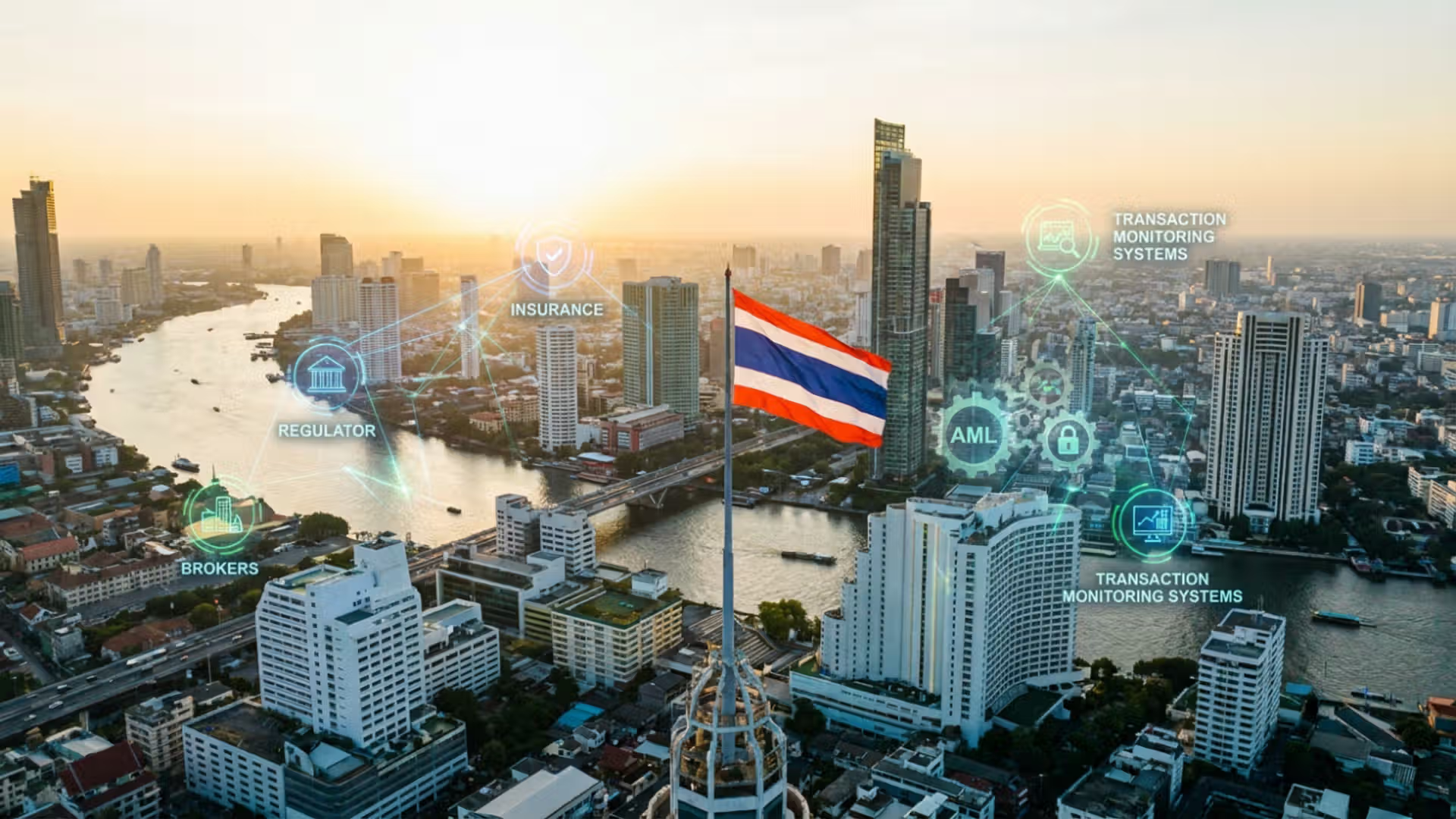
Trade-based money laundering (TBML) remains one of the most complex and under-policed channels for illicit financial flows, particularly in the Asia-Pacific region. Criminal organizations, corrupt actors, and terrorist networks increasingly exploit the vast scale and intricate logistics of global trade to mask and move illicit proceeds. TBML schemes not only threaten the integrity of financial systems but also destabilize legitimate businesses and economies that depend on fair trade.
The Asia-Pacific region, home to some of the world’s busiest ports, diverse economies, and vibrant cross-border trade corridors, is especially vulnerable. Sophisticated TBML methods leverage weaknesses in customs oversight, disparities in regulatory approaches, and the fragmented nature of supply chains that stretch across multiple jurisdictions. Despite recent regulatory advances, significant control gaps persist, often due to inconsistent enforcement, resource constraints, and the sheer volume of transactions that obscure illicit activity.
Multiple global watchdogs, including the Financial Action Task Force (FATF), have repeatedly flagged TBML as a major vulnerability in the international AML regime. The FATF’s 2023 report on TBML identified Asia-Pacific as a primary risk zone, citing ongoing abuse of free trade zones, high-value commodity trades, and lack of integration between customs, financial, and law enforcement agencies. High-profile cases in the region have illustrated how billions in proceeds from narcotics, wildlife trafficking, corruption, and tax evasion can flow undetected through seemingly legitimate trade.
Table of Contents
TBML Typologies and Evolving Criminal Techniques
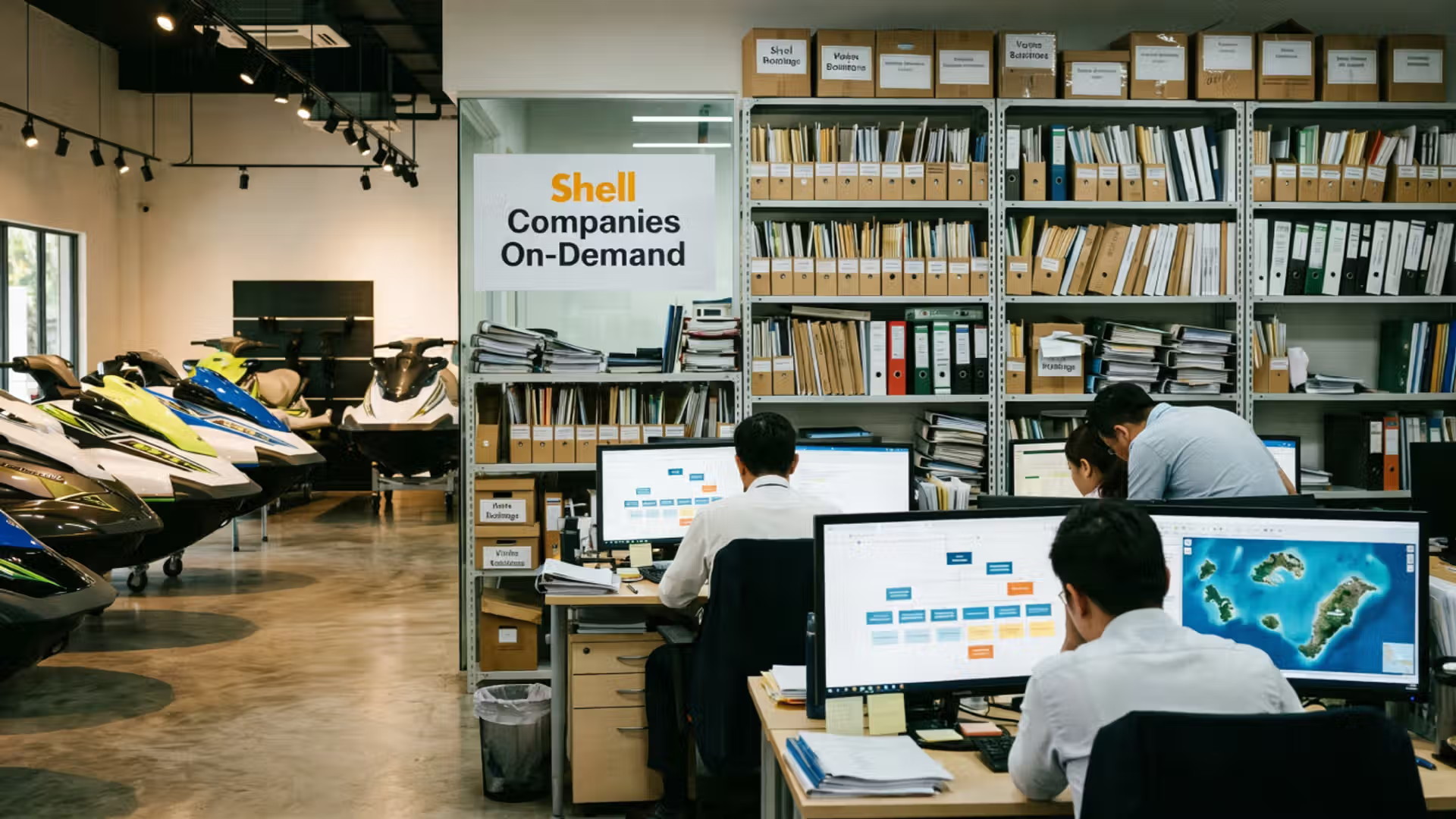
TBML typologies have evolved beyond simple mis-invoicing or under/over-valuation of goods. Today’s criminal enterprises employ layered, multi-jurisdictional structures involving multiple shell companies, complex shipping routes, and even digital documentation. These techniques often include:
- Invoice manipulation: Overstating or understating the value, quantity, or quality of shipped goods to disguise the true movement of funds.
- Multiple invoicing: Issuing more than one invoice for the same shipment, allowing illicit funds to move through different channels.
- Falsified documentation: Creating fraudulent bills of lading, certificates of origin, or inspection reports to misrepresent the contents or value of shipments.
- Commingling of goods: Blending illicit goods with legitimate shipments to obscure their true nature and origin.
- Circular trade: Repeatedly moving goods through a series of companies and jurisdictions to create complex audit trails that hinder detection.
Asia-Pacific trade corridors, including those linking China, Southeast Asia, India, and Oceania, are particularly exposed due to massive trade volumes and limited centralized controls. High-risk commodities often include electronics, textiles, precious metals, and agricultural products, which are easily mispriced or re-routed.
Authorities have also documented the use of TBML techniques in emerging sectors such as digital trade, e-commerce, and cryptocurrency-linked trade settlements. Virtual assets add layers of opacity, enabling cross-border transfers that are harder to monitor using traditional AML systems.
Regulatory Responses and Persistent Gaps
Despite high-profile warnings, many Asia-Pacific jurisdictions remain behind in implementing effective TBML countermeasures. The region’s complex patchwork of regulatory regimes, varying enforcement capabilities, and uneven information-sharing mechanisms create a permissive environment for criminal exploitation.
On the legislative front, several Asia-Pacific countries have begun updating AML frameworks to explicitly address TBML. Australia’s Anti-Money Laundering and Counter-Terrorism Financing Act (AML/CTF Act) now covers a wider range of trade activities and reporting obligations. Singapore’s AML guidelines call for enhanced due diligence in trade finance and greater scrutiny of shell companies and free trade zone transactions. Hong Kong’s authorities have ramped up risk assessments and audits in response to FATF’s 2019 Mutual Evaluation, which identified TBML as a priority vulnerability.
However, significant obstacles remain:
- Fragmented oversight: Trade, customs, financial, and law enforcement agencies often operate in silos, impeding real-time intelligence sharing.
- Resource constraints: Customs authorities and financial institutions lack the staffing and analytical tools to monitor vast quantities of documentation and cross-border flows.
- Lack of expertise: Many frontline staff are not sufficiently trained to detect TBML red flags or identify atypical trade patterns.
- Information gaps: Limited integration of customs, shipping, and financial data means key warning signs are often missed.
- Regulatory arbitrage: Criminals exploit weaker jurisdictions and inconsistencies between countries to route illicit flows through less scrutinized channels.
FATF’s 2024 Guidance on TBML reiterates the need for robust public-private partnerships, data sharing, and the adoption of advanced analytics to detect and disrupt TBML schemes. Several Asia-Pacific countries have launched pilot programs for automated trade surveillance, but adoption remains uneven and often hampered by legal or privacy restrictions.
Industry Initiatives and Technology-Driven Solutions
The private sector, especially major commercial banks, multinational corporates, and global logistics firms, plays a critical role in TBML detection and prevention. Trade finance providers are often the first line of defense, as they process the documentation and payments underpinning cross-border commerce.
Leading banks in the Asia-Pacific region have invested in artificial intelligence and machine learning systems to analyze trade documents for anomalies, flag unusual routing or pricing, and identify connections to high-risk entities or jurisdictions. These tools can process large volumes of data rapidly, cross-referencing multiple sources to detect suspicious patterns that manual reviews would miss.
Several regional banks have partnered with regtech firms to deploy blockchain solutions that provide tamper-resistant trade records, enable real-time verification of documents, and automate compliance checks. Trade finance consortia, such as the Hong Kong Monetary Authority’s eTradeConnect, offer shared platforms for secure document exchange and audit trails.
However, technology is not a panacea. The quality of outcomes depends on the accuracy of the data inputs and the ability to calibrate detection algorithms to local risks. Smaller financial institutions and corporates often lack the resources or expertise to deploy sophisticated solutions, leaving significant portions of the trade ecosystem vulnerable.
Public-private information sharing initiatives, such as the Singapore Anti-Money Laundering and Countering the Financing of Terrorism Industry Partnership (AML/CFT Industry Partnership), offer promising avenues for intelligence exchange. But legal and competitive barriers often limit the scope and effectiveness of these efforts.
Enforcement Actions and Notable TBML Cases
Asia-Pacific regulators and law enforcement agencies have recently intensified their focus on TBML, resulting in several significant investigations and penalties. These actions demonstrate both the scale of the problem and the challenges of prosecution.
Australian authorities have disrupted networks laundering hundreds of millions through mis-invoiced exports of agricultural products and precious metals. In Southeast Asia, authorities have uncovered large-scale circular trading schemes that disguised the proceeds of fraud and corruption. Hong Kong has investigated commodity trades used to channel funds linked to wildlife trafficking and organized crime.
Despite these efforts, conviction rates for TBML-related offenses remain low, reflecting the evidentiary challenges involved. Gathering proof of intent, tracing the true beneficial owners behind shell entities, and unraveling transnational networks require cross-border cooperation that is not always forthcoming.
International organizations are pushing for more robust frameworks to facilitate asset tracing and the repatriation of illicit funds. Asia-Pacific countries are increasingly participating in joint investigations, but mutual legal assistance requests remain slow and outcomes uncertain.
The Way Forward: Strengthening TBML Defenses
Asia-Pacific’s growing trade volumes and strategic importance in global supply chains demand a coordinated, intelligence-led approach to TBML. Policymakers, regulators, financial institutions, and technology providers must work in concert to address both the structural and operational gaps that enable TBML.
Key recommendations include:
- Integrated supervision: Aligning customs, trade, and financial intelligence operations to provide end-to-end visibility of trade flows.
- Data analytics and AI adoption: Accelerating the implementation of advanced analytics, machine learning, and blockchain for risk detection.
- Capacity building: Investing in training and resources for frontline staff in both the public and private sector.
- International cooperation: Enhancing information exchange, joint investigations, and mutual legal assistance across borders.
- Public-private partnerships: Fostering trusted forums for sharing red flags, typologies, and intelligence on emerging threats.
Regional organizations such as the Asia/Pacific Group on Money Laundering (APG) and the ASEAN Financial Intelligence Units play a critical role in harmonizing standards and promoting cross-border collaboration. Their efforts, combined with those of FATF, are gradually raising the bar for AML controls across the region.
Conclusion
Trade-based money laundering presents an enduring and increasingly sophisticated threat to Asia-Pacific’s financial integrity and economic security. While notable progress has been made, large-scale vulnerabilities remain, driven by fragmented regulation, technological limitations, and the relentless innovation of criminal networks. Closing the gaps in TBML controls will require persistent investment in technology, training, and international cooperation, as well as the political will to prioritize trade transparency. The next phase of the fight against TBML in Asia-Pacific will determine whether the region can safeguard its trade corridors against abuse and set a global standard for financial crime prevention.
Related Links
- FATF Guidance on Trade-Based Money Laundering
- Asia/Pacific Group on Money Laundering Publications
- Singapore MAS Guidelines on AML/CFT for Trade Finance
- Australia AUSTRAC Trade-Based Money Laundering Typologies
- Hong Kong Customs AML/CTF Information
Other FinCrime Central Articles About TBML
- Game-Changer for AML: Satellite Data Reveals Undetected TBML Schemes
- TBML Enablers: Under‑Regulated Brokers and Freight Forwarders in the Crosshairs
- Why South–South Trade Routes Are the Next TBML Battleground
Source: Bangladesh Post
Some of FinCrime Central’s articles may have been enriched or edited with the help of AI tools. It may contain unintentional errors.
Want to promote your brand with us or need some help selecting the right solution or the right advisory firm? Email us at info@fincrimecentral.com; we probably have the right contact for you.