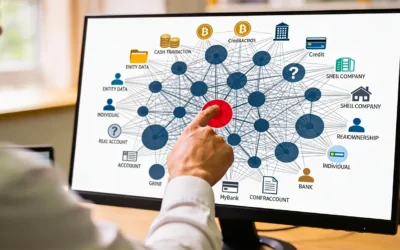
Sumsub identified a security incident in early 2026 involving unauthorized activity that originated from an external threat actor who submitted a malicious attachment through a third-party support ticketing platform in July 2024. This breach allowed for limited access to a support-related internal environment rather than the core identity verification workflows or production systems where biometric data is stored. While the company confirmed that identity document images and bank details remained secure, the exposed data included names, email addresses, and phone numbers for a specific subset of accounts. The discovery of this intrusion occurred retrospectively during a routine security review, leading to immediate incident response and direct notification to all affected customers through their support managers. Following the detection, the provider engaged independent forensic experts to validate the extent of the impact and began implementing enhanced threat protection and stricter access controls for technical personnel.
Table of Contents


Data Breach Risk
The specific nature of the unauthorized access at Sumsub highlights a growing trend where peripheral support systems serve as the primary gateway for attackers targeting financial service providers. When an adversary successfully utilizes a malicious attachment to enter a support environment, they bypass the high-level encryption typically guarding the main database. This entry point allows for the harvesting of names and contact details, which are highly valuable for the initial stages of financial crime. In the context of global anti-money laundering efforts, the theft of such identity markers is rarely the end goal but rather a prerequisite for more complex schemes. Criminals use this data to populate fraudulent applications or to impersonate legitimate account holders during the password recovery process.
The delay between the initial breach in mid 2024 and the discovery in early 2026 presents a significant challenge for risk management and compliance officers. This eighteen-month window allowed for the potential distribution of the exposed contact information across dark web forums long before any protective measures could be taken by the affected institutions. For a regulated entity, the integrity of the customer profile is the foundation of the entire monitoring system. If the basic identifiers of a customer are compromised, every subsequent transaction associated with that profile must be viewed through a lens of increased suspicion. This incident demonstrates that even when a technology partner successfully defends its core API, vulnerabilities in administrative tools can still create a ripple effect that touches thousands of individual customer records.
The response from the provider involved a comprehensive review of endpoint protection and data loss prevention controls to prevent a recurrence of the ticketing platform exploit. However, the retrospective nature of the detection suggests that traditional intrusion detection systems were not calibrated to recognize the specific signatures of this third-party platform vulnerability. For financial firms, this serves as a reminder that their security perimeter is effectively extended to include every software tool used by their vendors. A breach in a seemingly minor support tool can compromise the overall risk posture of a bank if it leads to the leakage of PII that facilitates account takeovers.



Third-Party Oversight and Cloud Vulnerabilities
Financial institutions are increasingly migrating their anti-money laundering infrastructure to the cloud to take advantage of superior processing speeds and machine learning capabilities. This shift, while necessary for modern compliance, creates a heavy reliance on the security protocols of external partners who manage these cloud environments. The risk of hosting sensitive client data on a public or private cloud is often centered on the shared responsibility model. While the cloud provider secures the underlying hardware, the software vendor is responsible for the configuration and access management of the specific applications. In this case, the use of a third-party ticketing platform introduced an additional layer of risk that was not fully isolated from the internal support environment.
A common vulnerability in cloud-based compliance solutions is the lack of strict logical segmentation between different operational tiers. When support staff require access to client data to resolve tickets, there must be a definitive barrier that prevents an external threat from moving laterally from the support tool into the broader network. The incident at Sumsub illustrates that even when core production systems are isolated, the auxiliary data available to support teams remains a target. This requires financial firms to conduct more granular due diligence that goes beyond looking at high-level certifications like SOC 2 or ISO 27001. They must understand the specific technical controls used to secure the interfaces between different cloud-based applications and the primary verification engine.
The move to private clouds is often seen as a way to mitigate these risks by providing a dedicated environment that is not shared with other tenants. However, private clouds still require administrative access points, which can be exploited if they are not protected by zero trust principles. Every interaction with the data, whether it is for a support request or a system update, must be authenticated and logged in real time. The goal of a modern security architecture should be to ensure that even if an attachment is opened or a credential is stolen, the attacker finds themselves in a dead end with no way to extract meaningful volumes of information.
Identity Fraud and the Laundering Lifecycle
Money laundering is a multi-stage process that often begins with the acquisition of legitimate data to facilitate the placement of illicit funds. The names and phone numbers exposed in recent security events provide the perfect raw material for creating synthetic identities. By blending real names with fabricated social security numbers or addresses, criminals can bypass many automated fraud detection systems. These synthetic accounts are then used to layer transactions, moving money through multiple jurisdictions to obscure its origin. The danger of a data leak from a regtech provider is that the information stolen is often the very same information used to verify the legitimacy of a user.
The exposure of email addresses and phone numbers also facilitates highly targeted spear phishing campaigns against the customers of financial institutions. An attacker who knows a person is a client of a specific fintech app can craft a convincing message that tricks them into revealing their login credentials or two-factor authentication codes. Once the account is compromised, it can be used as a money mule, receiving and forwarding illicit proceeds. This turns a simple data breach into a massive operational headache for compliance teams who must then investigate a surge in unauthorized activity and report it to the relevant authorities.
Retrospective monitoring becomes much more difficult when the data breach itself is not discovered for over a year. During that time, the suspicious activity resulting from the breach may have already been processed and cleared by the system because the underlying data appeared legitimate. This creates a backlog of potential compliance failures that must be unwrapped once the breach is finally disclosed. Financial institutions must develop the capability to look back at historical transactions with a new perspective once a vendor confirms a security incident, identifying patterns that may have been missed when the data was assumed to be secure.
Strengthening Compliance Through Technical Diligence
Mitigating the risks associated with cloud-based compliance providers requires a shift toward continuous technical monitoring rather than periodic audits. Financial firms should insist on receiving regular updates regarding the threat landscape of their partners and the specific vulnerabilities being addressed. This includes asking for details on how support environments are segmented and what types of automated threat hunting tools are being used. The implementation of data tokenization is one of the most effective ways to reduce risk in these scenarios. By replacing sensitive identifiers with non-sensitive tokens, the provider can ensure that even if a support database is accessed, the information is useless to a criminal.
Furthermore, the integration of behavioral analytics into the administrative layer of compliance software can help detect unauthorized activity much faster than manual reviews. If a support account begins querying records at an unusual rate or from an unconventional location, the system should automatically revoke access. This type of active defense is necessary in an environment where attackers are constantly looking for the weakest link in the supply chain. Financial institutions should also consider the geographic location of their data and the specific legal protections afforded to it, as different cloud regions may have different requirements for incident reporting and data protection.
Ultimately, the security of the global financial system depends on a transparent and collaborative relationship between banks and their technology partners. When an incident occurs, the focus must be on rapid disclosure and a shared effort to understand how the stolen data could be used to facilitate financial crime. By treating cybersecurity as a core component of the anti-money laundering framework, institutions can better protect themselves and their customers from the evolving threats of the digital age. The lessons learned from the recent exposure of support data must lead to a new standard of excellence in how compliance platforms are built, hosted, and monitored.
Key Points
- A threat actor gained unauthorized access to a support environment in 2024 through a third-party platform, which was not detected until 2026.
- The incident involved the exposure of limited personal data, such as names and email addresses, but did not impact core identity verification systems.
- Such data breaches provide a foundation for synthetic identity fraud and sophisticated social engineering aimed at laundering money.
- Compliance officers must prioritize technical due diligence and zero-trust architecture when selecting and monitoring cloud-based service providers.
- Delayed detection of data incidents creates a significant gap in an institution’s ability to assess and report suspicious activity accurately.
Related Links
- FATF Report on Money Laundering and Cybercrime
- Wolfsberg Group Guidance on Digital Customer Lifecycle
- Financial Conduct Authority Operational Resilience Standards
- European Banking Authority Cloud Outsourcing Guidelines
Other FinCrime Central Articles About Cloud-related Risk for AML Solutions
- DORA Compliance For AML Vendor Security Standards Using Public Cloud
- Choosing the Best AML Solution: On-Premise, Private Cloud, or SaaS?
- DORA Oversight Raises Sharp Challenges for AML Solution Providers
Source: Sumsub
Some of FinCrime Central’s articles may have been enriched or edited with the help of AI tools. It may contain unintentional errors.
Want to promote your brand, or need some help selecting the right solution or the right advisory firm? Email us at info@fincrimecentral.com; we probably have the right contact for you.