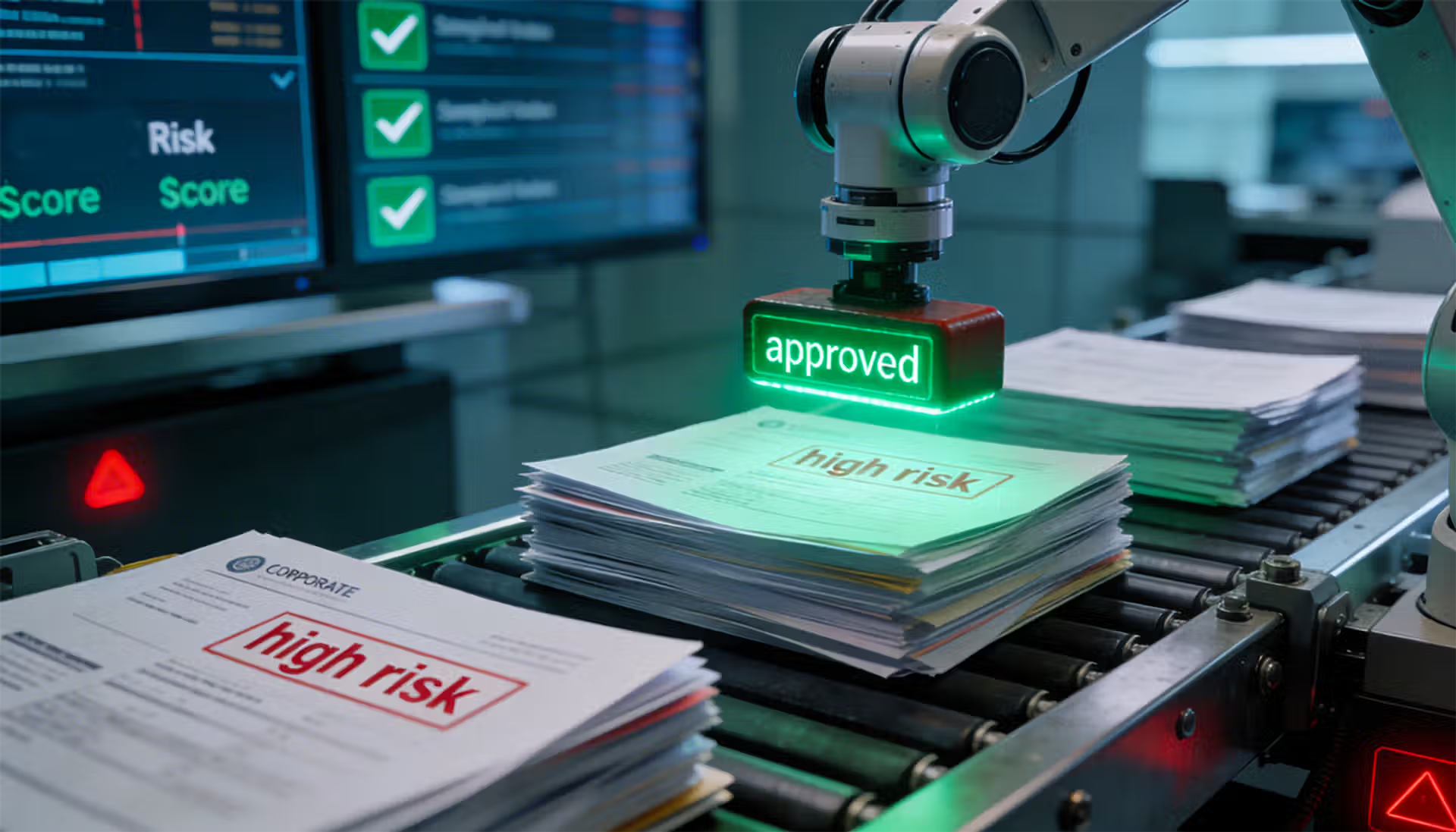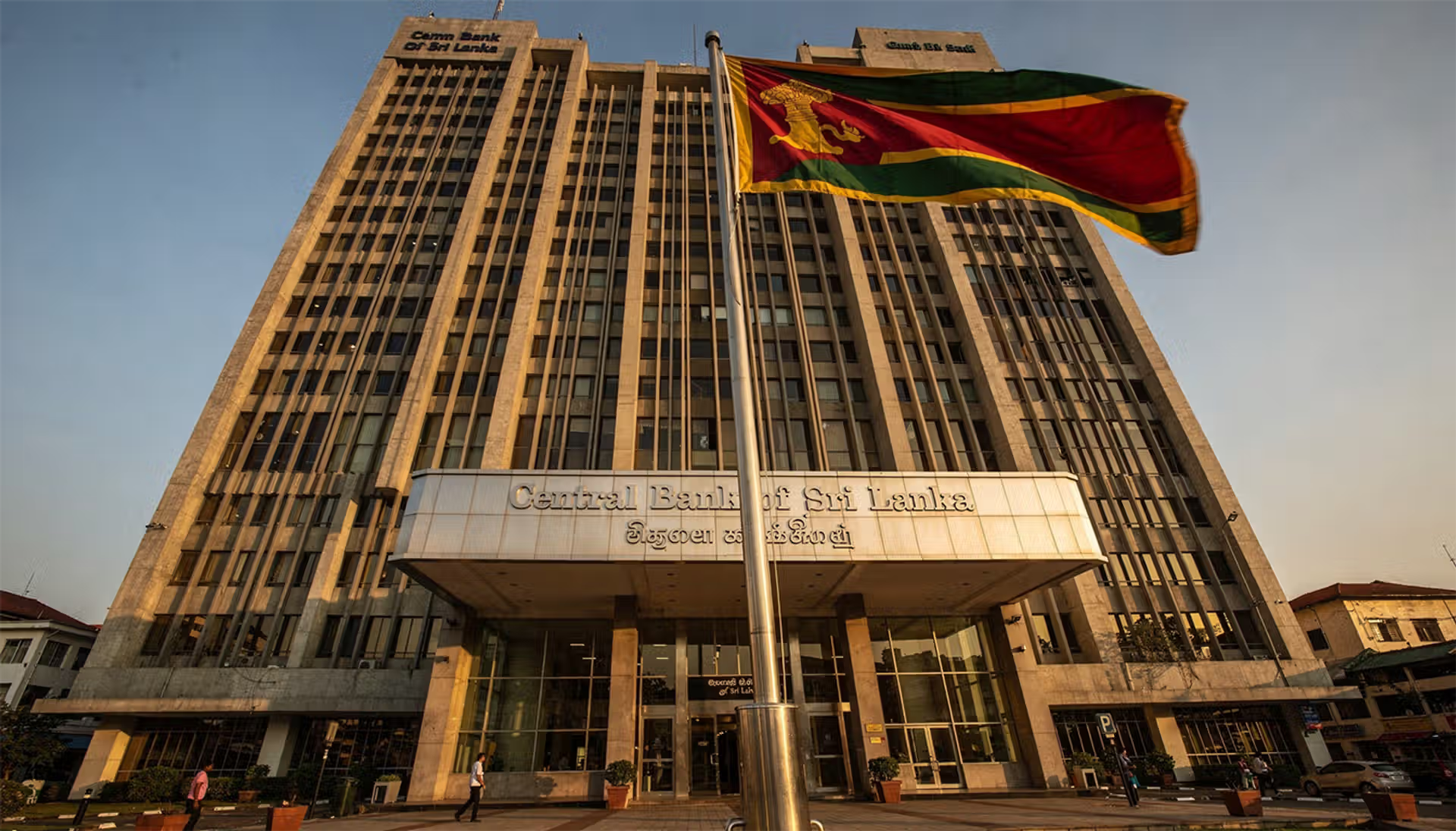
Sri Lanka must successfully navigate its 2026 anti-money laundering assessment to avoid devastating economic consequences and potential international sanctions. Central Bank Governor Dr. Nandalal Weerasinghe recently emphasized that failure to meet global standards could result in the nation being placed on the Financial Action Task Force (FATF) grey list. This status would immediately increase the cost of international financial transactions and hinder the country’s fragile economic recovery. The upcoming evaluation by the Asia Pacific Group on Money Laundering represents a critical juncture for the national financial integrity framework. Government officials are now prioritizing legislative reforms and interagency cooperation to demonstrate effective enforcement against illicit financial flows.
Table of Contents


Sri Lanka Anti-Money Laundering Evaluation
The third mutual evaluation of the national financial system represents a pivotal milestone for the regulatory landscape of the island nation in 2026. This comprehensive audit is conducted by the Asia Pacific Group on Money Laundering and focuses on how well the country adheres to international standards. The primary objective is to verify that the domestic framework effectively prevents criminals from exploiting financial channels. Dr. Nandalal Weerasinghe has clearly stated that while the nation currently occupies a position of relative strength, the risks associated with an unfavorable review remain exceptionally high. This assessment serves as a formal test of the technical compliance of the nation with the forty recommendations established by the Financial Action Task Force. Furthermore, the evaluation will scrutinize the actual effectiveness of these laws across eleven specific immediate outcomes. These outcomes measure the real-world impact of regulations rather than just their existence on paper. The Governor noted that previous significant reforms and institutional strengthening efforts have laid a foundation for a positive result. However, the complexity of the 2026 evaluation requires a coordinated effort from both the public and private sectors to succeed. Key government bodies, including the Ministry of Finance, the Ministry of Defense, and the Ministry of Justice, are now under pressure to demonstrate their collective capability. The success of this process depends on showing a higher level of technical compliance and a functional resistance to financial crimes.
Economic Risks of Grey List Designation
A negative outcome during the upcoming assessment could lead to the designation of the country as a jurisdiction under increased monitoring. This status is commonly referred to as the grey list and carries immediate and severe penalties for any economy. According to the Central Bank, being listed would lead to much higher compliance costs for every cross-border transaction. International banks often view grey-listed nations as high risk, which typically results in the restriction of correspondent banking relationships. These relationships are the vital links that allow local banks to process international payments and facilitate global trade. Without them, the flow of remittances and export earnings would face significant delays and increased fees. The Governor also warned that such a listing would damage investor confidence and reduce the inflow of foreign direct investment. Capital inflows are essential for the ongoing recovery of the nation, and any perception of a weak financial oversight regime could drive investors toward safer markets. Furthermore, the overall cost of borrowing for both the public and private sectors would likely rise due to the perceived risk premium. This would slow down domestic growth and put additional pressure on the national budget. The reputational damage from being identified as a country with strategic deficiencies in its financial oversight would take years to correct. Historical data show that countries on the grey list often experience a measurable decline in their gross domestic product growth rates.
Legislative Reforms and Institutional Readiness
To prepare for the 2026 review, the Financial Intelligence Unit has been leading a national effort to reinforce the existing legal framework. This involves monitoring stakeholder action plans and ensuring that all relevant agencies are aligned with international expectations. Significant achievements have already been recorded in the past year, including stronger mechanisms to track the progress of individual departments. The government has focused on amending core legislation related to financial transactions and the prevention of illicit activities. These legal updates aim to close gaps that were identified in previous reports or during preliminary scoping missions. The analysis and dissemination of suspicious transaction reports have also been expanded to improve the detection of potential crimes. Capacity-building programs have been implemented across various institutions to ensure that staff are trained in the latest techniques for identifying financial misconduct. The Governor emphasized that the highest level of political will and commitment are vital for the success of these preparations. Close collaboration between the Sri Lanka Police, the Attorney General’s Department, and the Sri Lanka Customs is necessary to prove that the system can actually prosecute offenders. The evaluation will look for evidence of successful investigations and the recovery of criminal assets. Technical assistance from international partners has been sought to refine these processes and ensure they meet the specific requirements of the assessors. The goal is to move beyond theoretical compliance and show a proactive stance against the shadow economy.
Strengthening National Financial Oversight
The focus for the remainder of the preparation period remains on stakeholder commitment and accountability. The Financial Intelligence Unit serves as the primary coordinator for the upcoming evaluation, managing submissions and facilitating engagements with the international assessors. This coordination is essential because the evaluation team will meet with various entities to verify the claims made in official reports. Ensuring that the private sector is also compliant is a major part of this effort, as banks and other financial institutions are the first line of defense. The Central Bank has called for a reinforced national urgency to treat the evaluation as a top-tier priority for the entire government. Any delay in implementing necessary reforms could be viewed as a lack of commitment by the Asia Pacific Group. The upcoming year will see continued efforts to improve the transparency and predictability of regulatory actions. This includes the introduction of new benchmarks and indices to better capture the economic reality of the country. By building buffers and improving institutional effectiveness, the authorities hope to secure a favorable rating that confirms the integrity of the financial system. A successful evaluation will not only prevent the negative consequences of a grey listing but also enhance the standing of the country in the global financial community. It would signal to the world that the nation is a safe and transparent place for business and investment. The path toward the 2026 assessment is a challenging one, but it is a necessary journey to safeguard the long-term stability of the economy.
Key Points
- Sri Lanka faces a critical 2026 evaluation by the Asia Pacific Group on Money Laundering to assess its financial integrity framework.
- Central Bank Governor Dr. Nandalal Weerasinghe warned that failure to pass could lead to a Financial Action Task Force grey list designation.
- Consequences of grey listing include increased cross-border transaction costs, reduced investor confidence, and higher borrowing rates.
- The national strategy involves demonstrating effectiveness across eleven immediate outcomes and forty technical recommendations.
- The Financial Intelligence Unit is leading interagency efforts to amend laws and enhance the analysis of suspicious transactions.
Related Links
- Asia Pacific Group on Money Laundering Official Website
- Financial Action Task Force Sri Lanka Country Profile
- Central Bank of Sri Lanka Financial Intelligence Unit Reports
- Sri Lanka Ministry of Finance Prevention of Money Laundering Regulations
- United Nations Office on Drugs and Crime South Asia AML Initiatives
Other FinCrime Central Articles About Sri Lanka’s Fight For Change
- Sri Lanka Faces a Make-or-Break Moment in AML Reform
- Sri Lanka’s Central Bank’s New MOU on Money Laundering
- Strengthening Sri Lanka’s AML/CFT Framework for the Mutual Evaluation
Source: Daily FT
Some of FinCrime Central’s articles may have been enriched or edited with the help of AI tools. It may contain unintentional errors.
Want to promote your brand, or need some help selecting the right solution or the right advisory firm? Email us at info@fincrimecentral.com; we probably have the right contact for you.