The recent operation by the Singapore Police Force has uncovered one of the most intricate transnational money-laundering cases of the decade. The investigation into Prince Holding Group, led by Chen Zhi and his associates, has exposed a sprawling financial network spanning multiple jurisdictions, with illicit funds traced from scam compounds and forced-labor operations into luxury assets and corporate holdings. The case has become a benchmark for the country’s commitment to maintaining integrity within its financial system and demonstrates the global nature of financial crime.
Table of Contents


Singapore Police Money Laundering Investigation
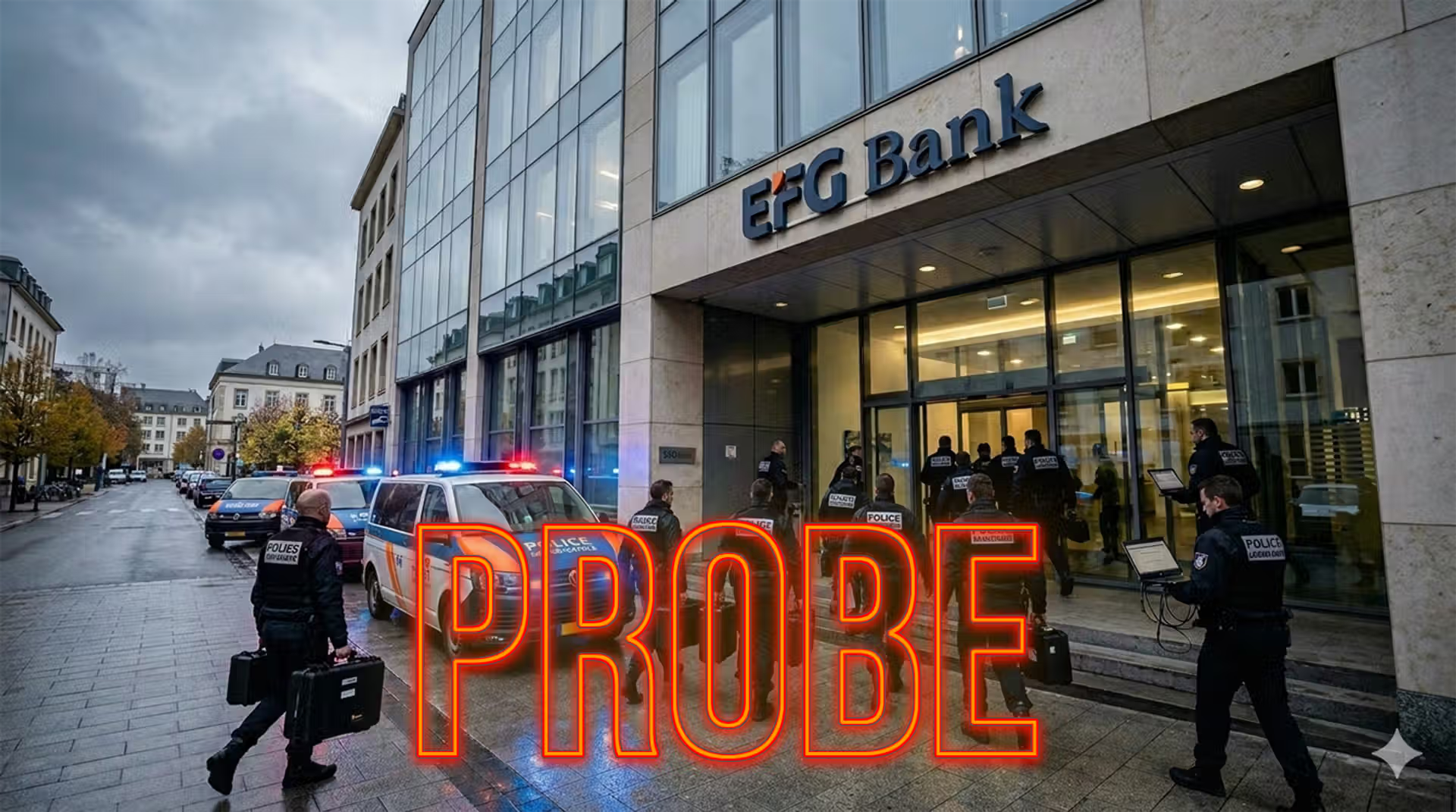
The Singapore Police Force mounted a coordinated operation on 30 October 2025, targeting properties, financial accounts and high-value goods linked to Chen Zhi, the alleged mastermind behind Prince TCO. Enforcement actions resulted in the seizure and prohibition of disposal orders over assets exceeding S$150 million. These included six real-estate properties, numerous bank and securities accounts, large sums of cash, and several luxury items such as a yacht, eleven high-end cars and a collection of rare liquors.
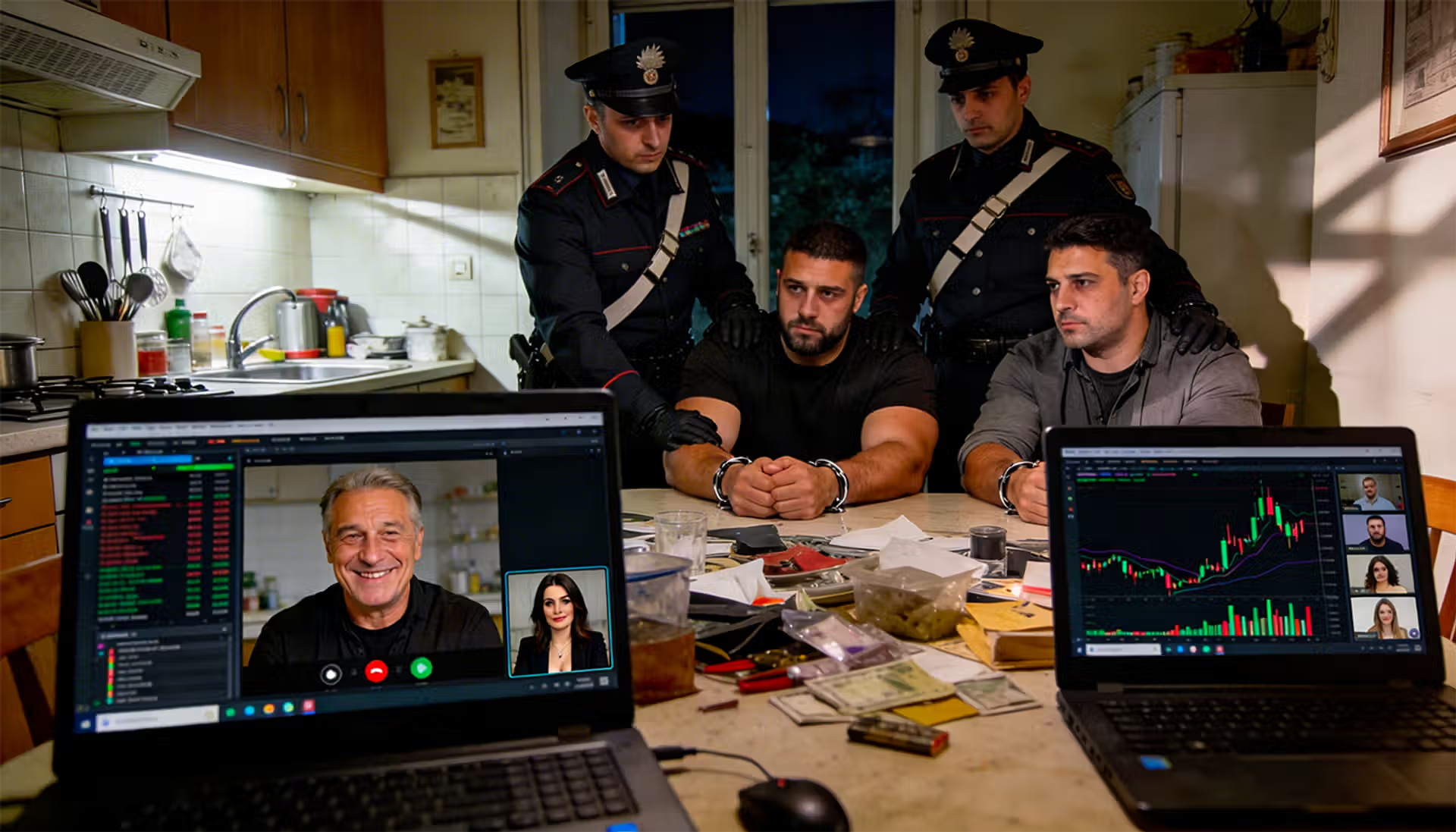
Investigations began after suspicious transaction intelligence revealed unusual fund flows connected to Prince Holding Group entities. Authorities traced the network’s footprint across Southeast Asia, Europe and the Caribbean, uncovering multiple layers of corporate ownership and fund transfers designed to obscure the origin of proceeds. Analysts discovered that the funds originated primarily from large-scale scam operations in Cambodia and neighboring countries. Victims were allegedly lured into fraudulent investment schemes, romance scams, and crypto-based hoaxes. The illicit profits were then channeled through a sophisticated chain of shell companies, eventually surfacing in legitimate-looking corporate accounts and asset portfolios in Singapore.
This case highlights how illicit networks exploit strong financial jurisdictions to legitimize criminal proceeds. The Singapore Police Force, supported by domestic and foreign partners, moved swiftly once sufficient intelligence had been consolidated. Through its Anti-Money Laundering Case Coordination and Collaboration Network, the operation ensured that asset-freezing and information-sharing mechanisms functioned seamlessly across agencies.
The Anatomy of the Prince TCO Laundering Network
The laundering cycle followed a traditional three-phase structure but was executed with exceptional sophistication. In the placement phase, profits from fraudulent activities were moved into the financial system through intermediaries and low-value transfers. During layering, these funds were fragmented and routed through several jurisdictions using corporate vehicles, trust structures and luxury acquisitions. By the integration phase, the illicit money had been converted into tangible assets: prime properties, securities investments and exclusive collectibles that blended naturally with legitimate business holdings.
At the centre of the web sat Prince TCO, a conglomerate outwardly engaged in real estate, finance and consumer goods. The group’s broad commercial presence created a credible façade for integrating laundered funds. Investigators revealed that subsidiary companies, often registered under nominees, were used to acquire high-value assets in Singapore’s premium districts and foreign capitals. These acquisitions not only concealed the proceeds’ origin but also allowed further leverage through resale, refinancing or collateralization.
Among the most striking findings was the diversity of laundering channels. Beyond real estate, the network used luxury vehicles, yachts and rare liquors—items that hold stable value and can be discreetly transferred or resold. These assets served as both repositories of wealth and mechanisms for layering transactions. By converting illicit funds into movable assets, the network reduced traceability and increased the difficulty of asset recovery.
The group also employed digital payment systems and crypto-asset transfers. The scale of digital involvement—reportedly hundreds of wallets and complex blockchain movements—showed a deliberate strategy to exploit regulatory gaps between jurisdictions. The intermixing of fiat and crypto flows illustrated a hybrid laundering method increasingly seen in transnational financial crime.
Regulatory and Cross-Border Enforcement Lessons
The case demonstrates the critical importance of collaboration between financial intelligence units, supervisors and law enforcement bodies. The Singapore Police Force’s decisive move followed close coordination with overseas authorities. Through its multi-agency network, Singapore managed to trace, restrain and freeze assets spanning multiple industries and jurisdictions before they could be dissipated.
For regulators, the case reinforces the significance of comprehensive beneficial-ownership transparency. The network’s reliance on shell companies across several tax havens exposed systemic vulnerabilities in company-registration regimes. Stricter verification of ownership information, enhanced due diligence on cross-border incorporations and the integration of beneficial-owner data into financial-intelligence analysis are necessary steps to counter similar schemes.
The Corruption, Drug Trafficking and Other Serious Crimes (Confiscation of Benefits) Act 1992 remains Singapore’s primary anti-laundering framework, criminalising the concealment or conversion of illicit proceeds. The penalties—up to ten years of imprisonment or fines reaching S$500 000—reflect the gravity of the offense. Combined with the prohibition of disposal orders, the Act ensures that enforcement agencies can immobilise assets pending final confiscation.
From a broader AML/CFT perspective, the case illustrates that high-value non-financial sectors remain highly exposed. Real-estate agents, luxury-asset dealers, and trust and company service providers must now strengthen internal controls and file timely suspicious-transaction reports. Supervisory authorities will likely intensify inspections and expect demonstrable evidence of effective risk assessment, monitoring and escalation frameworks.
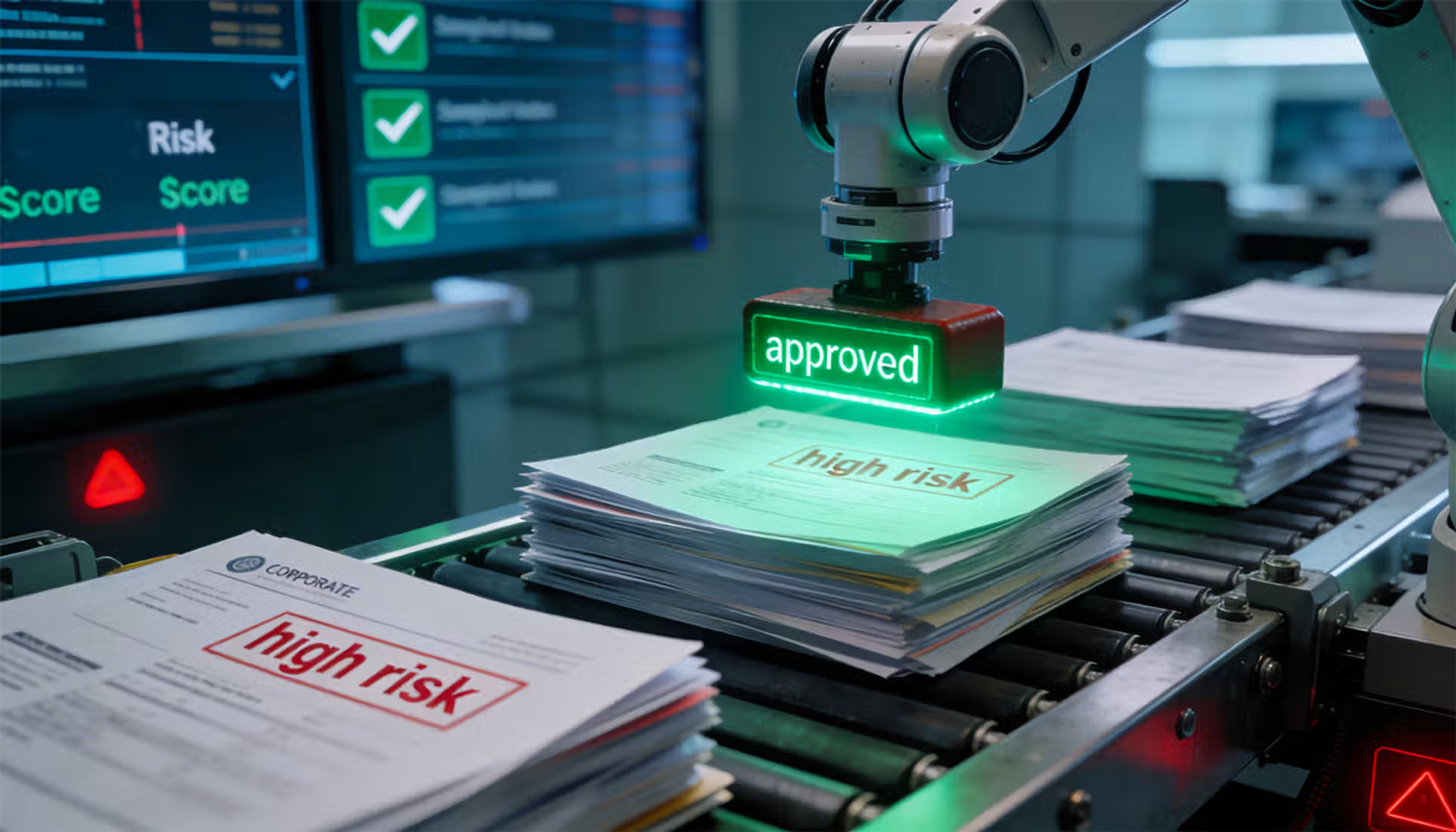
Crypto-asset service providers face particular scrutiny. The use of digital currencies in the Prince TCO network highlights the necessity for continuous blockchain analytics, counterparty screening and real-time transaction monitoring. Integrating artificial-intelligence tools capable of identifying layering patterns within both fiat and crypto channels will be central to future compliance effectiveness.
Lessons for Financial Institutions and AML Professionals
For compliance teams, the operation offers a wealth of practical lessons:
- Enhanced Beneficial-Ownership Analysis: The sheer complexity of corporate layering demands dynamic ownership-mapping tools capable of uncovering indirect control relationships. Static registry data is insufficient; continuous validation of ownership and control must be a standard practice.
- Monitoring of Non-Financial Assets: Banks and asset managers should integrate transaction triggers for purchases of yachts, premium vehicles and high-value collectibles, especially when such assets are acquired by entities without corresponding revenue streams.
- Cross-Border Pattern Recognition: Multi-jurisdictional transfers between connected entities or family-office structures should prompt enhanced due diligence. Analysts should examine the underlying documentation, the source of wealth, and the purpose of the transaction.
- Crypto-Asset Oversight: Institutions providing access to digital-asset services must ensure that both onboarding and transaction monitoring align with the Travel Rule and emerging international standards.
- Collaboration with Law Enforcement: Financial institutions should respond swiftly to asset-freezing and prohibition orders, ensuring that accounts and custodial holdings are immobilized in line with legal requirements.
By analyzing this case, AML specialists can observe how an ostensibly legitimate conglomerate leveraged complex ownership structures and cross-border transactions to launder illicit proceeds. The enforcement action reinforces that effective financial crime compliance must bridge traditional banking oversight with emerging digital-asset monitoring and luxury-asset surveillance.
Moving Forward with Stronger Defenses
The Prince TCO case marks a defining moment in Singapore’s fight against sophisticated financial crime. With S$150 million in assets already restrained, the focus will shift to prosecution, forfeiture, and international recovery proceedings. Beyond the courtroom, the case’s implications for the compliance industry are profound.
Regulators will likely expand AML obligations for high-risk non-financial sectors and tighten beneficial-ownership disclosure requirements. Financial institutions are expected to reinforce cross-border information-sharing and adopt technologies that enable earlier detection of typologies similar to those employed by Prince TCO. Meanwhile, global cooperation mechanisms—ranging from mutual legal assistance to coordinated asset-recovery frameworks—will continue to evolve to match the growing sophistication of transnational syndicates.
For compliance professionals, this case serves as a reminder that financial integrity is not static. Criminal networks continuously adapt, leveraging regulatory arbitrage and emerging technologies. The Singapore Police Force’s action demonstrates that determined enforcement, intelligence integration and international collaboration remain the most effective deterrents. As the investigation continues, it will shape policy debates and compliance practices across the Asia-Pacific region and beyond, setting a precedent for how states and institutions can dismantle laundering architectures disguised as legitimate enterprise.
Related Links
- Monetary Authority of Singapore overview of AML frameworks
- United States Department of Justice indictment summary of Chen Zhi case
- Financial Action Task Force guidance on asset-freezing and confiscation
Other FinCrime Central Articles About Scamming Empires
- Inside the Global Laundering Machine of Prince Group TCO
- Myanmar KK Park Scam Farm Exposed as Major Money Laundering Hub
- Forced Scam Labor in Southeast Asia Feeding Billions into Money Laundering
Source: Singapore Police Force
Some of FinCrime Central’s articles may have been enriched or edited with the help of AI tools. It may contain unintentional errors.
Want to promote your brand, or need some help selecting the right solution or the right advisory firm? Email us at info@fincrimecentral.com; we probably have the right contact for you.