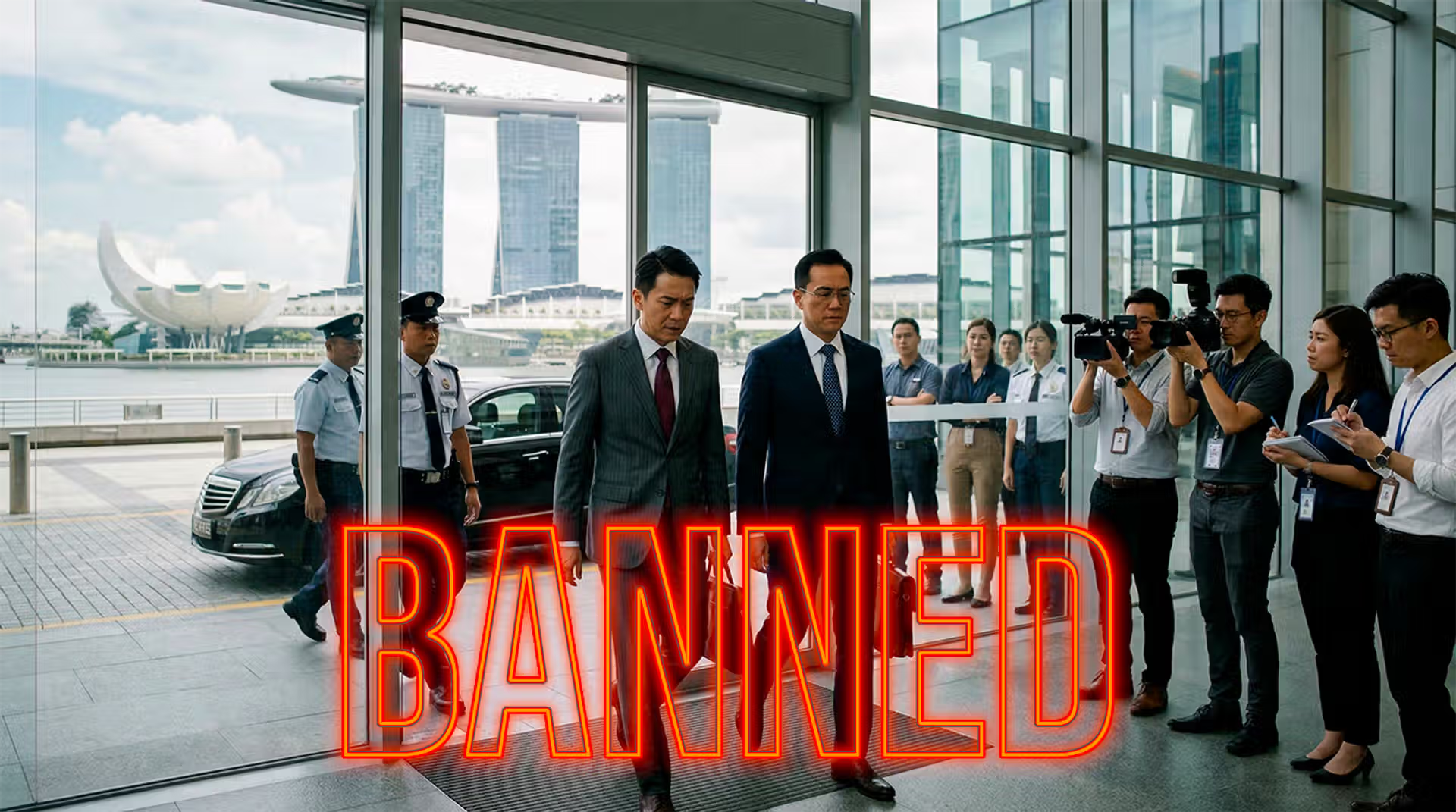
The Monetary Authority of Singapore officials issued strict prohibition orders against two former relationship managers involved in a massive three billion dollar money laundering scandal on March 17, 2026. Wang Qiming received a sixteen-year ban while Liu Kai was handed a seven-year prohibition following their criminal convictions in late 2025. These enforcement actions stem from serious lapses in financial integrity, including forgery and the obstruction of justice within the city-state banking sector. The regulatory body determined that both individuals failed to meet the fit and proper criteria required for professionals in the financial services industry. This decisive move reinforces Singapore’s commitment to maintaining a clean and transparent financial ecosystem by removing those who facilitate illicit capital flows.
Table of Contents


MAS Prohibition Orders for Wang Qiming and Liu Kai
The recent enforcement actions taken by the Monetary Authority of Singapore against Wang Qiming and Liu Kai represent a significant milestone in the aftermath of the historic August 2023 money laundering investigation. This case, which ultimately uncovered over three billion dollars in illicit assets, sent shockwaves through the global financial community and prompted a comprehensive review of anti-money laundering protocols within major institutions. Wang Qiming, a former relationship manager at a prominent bank, was central to the movement of suspicious funds and was convicted on four charges related to forgery, money laundering, and obstructing the course of justice. His sentencing to twenty-four months of imprisonment highlighted the severity of his role in bypassing internal controls to assist wealthy clients with dubious backgrounds. The sixteen-year prohibition order ensures that he remains entirely excluded from the financial sector for nearly two decades, reflecting the gravity of his misconduct. Such a lengthy ban is rare and serves as a powerful deterrent to other financial professionals who might consider prioritizing personal gain or client acquisition over regulatory compliance.
The specifics of the case against Wang Qiming illustrate a profound breakdown in the professional responsibilities expected of a relationship manager. By engaging in forgery, Wang actively participated in creating a false paper trail to justify the origin of wealth and the movement of funds that should have been flagged as high risk. Money laundering through the banking system often relies on the complicity or negligence of insiders who possess the technical knowledge to navigate around automated monitoring systems. In this instance, the deliberate nature of the actions taken by Wang indicated a high level of sophistication and a total disregard for the Financial Services and Markets Act 2022. The obstruction of justice charge further compounded his legal troubles, as it suggested an attempt to hide evidence or mislead investigators during the early phases of the probe. The Monetary Authority of Singapore has made it clear that the integrity of the financial system rests on the honesty of its gatekeepers, and those who breach this trust will face the full weight of administrative and criminal penalties.

Fraudulent Activities and the Bank Julius Baer Connection
Liu Kai, another former relationship manager, was also ensnared in the fallout of the multi-billion-dollar money laundering web, specifically involving his tenure at Bank Julius Baer and Company Limited. His conviction on a charge of using a forged document as genuine to cheat the bank resulted in a four-month prison sentence in October 2025. While his sentence was shorter than that of Wang, the nature of his offence was no less critical to the functioning of the laundering operation. By presenting forged documents to his employer, Liu enabled the bypass of the rigorous Know Your Customer and Customer Due Diligence processes that are designed to prevent the entry of illicit funds into the legitimate economy. The seven-year prohibition order issued against him serves as a clear signal that even a single instance of document forgery is enough to disqualify an individual from the financial industry.
The role of relationship managers in these schemes is often to act as a shield for the client, providing a veneer of legitimacy to transactions that would otherwise attract scrutiny. In the case of Liu Kai, the act of cheating his own institution undermines the foundational principle of trust between a bank and its employees. Financial institutions rely on their staff to be the first line of defense against financial crime, yet when employees become active participants in the deception, the entire risk management framework is compromised. The Monetary Authority of Singapore utilized its powers under the Financial Services and Markets Act to ensure that Liu can no longer participate in the management of any financial institution or provide regulated services. This administrative action is separate from the criminal proceedings and focuses specifically on the long term protection of the industry from individuals who have proven themselves to be unreliable and dishonest.
Legislative Framework and Fit and Proper Criteria
The issuance of these prohibition orders is grounded in the Guidelines on Fit and Proper Criteria, which are a cornerstone of Singaporean financial regulation. Under Section 7 of the Financial Services and Markets Act 2022, the Monetary Authority of Singapore has the authority to remove individuals from the industry if they are deemed unfit to hold their positions. The criteria for being fit and proper include honesty, integrity, reputation, competence, and financial soundness. By being convicted of crimes of dishonesty and money laundering, Wang Qiming and Liu Kai fundamentally failed to meet these standards. The prohibition orders extend beyond just a ban on employment; they also prevent individuals from becoming substantial shareholders in any financial corporation or acting as directors or managers. This comprehensive approach is designed to close any loopholes that might allow a sanctioned individual to exert influence over the financial sector through indirect means.
Singapore has consistently updated its legislative framework to stay ahead of evolving money laundering techniques. The August 2023 case revealed the sheer scale of global illicit flows and the necessity for robust enforcement. The three billion dollar seizure, which included luxury properties, gold bars, and cryptocurrency, demonstrated how laundered money can permeate various sectors of the economy if left unchecked. By targeting the professional enablers, such as relationship managers, the Monetary Authority of Singapore is addressing the human element of financial crime. It is not enough to have advanced software and monitoring tools if the people responsible for overseeing them are willing to look the other way or actively assist in the crime. The long duration of the bans imposed on Wang and Liu underscores the message that the regulatory body views the facilitation of money laundering as a top-tier threat to national security and economic stability.
Implications for the Singaporean Financial Ecosystem
The final analysis of this case reveals a watershed moment for the Singaporean financial landscape. The message sent by the sixteen-year and seven-year bans is that the cost of complicity in financial crime is the total loss of one’s career and reputation. For banks and other financial entities, these events serve as a stark reminder to strengthen internal whistleblowing mechanisms and to monitor the activities of high-performing relationship managers more closely. Often, individuals who bring in massive amounts of wealth are given more leeway, which can create a blind spot for compliance departments. The conviction of Wang and Liu proves that no amount of revenue generated for a bank can justify or protect an employee from the consequences of illegal behavior. The Monetary Authority of Singapore continues to work with international bodies like the Financial Action Task Force to ensure that its regulations remain aligned with global best practices.
Furthermore, the transparency with which these prohibition orders were announced serves to bolster international confidence in Singapore as a premier financial hub. By publicly naming the individuals and detailing their crimes, the regulator demonstrates that it does not hide its problems but rather confronts them head-on. This level of accountability is essential for maintaining the status of the country as a safe and reliable place for legitimate global business. As the financial world becomes increasingly digital and complex, the reliance on the personal integrity of industry professionals will only grow. The removal of Wang Qiming and Liu Kai from the system is a necessary step in purging the industry of toxic elements and ensuring that the three-billion-dollar laundry case remains a lesson in vigilance rather than a recurring trend.
Key Points
- The Monetary Authority of Singapore issued a 16-year ban against Wang Qiming and a 7-year ban against Liu Kai starting March 17, 2026.
- Wang Qiming was convicted of forgery and money laundering, while Liu Kai was convicted of using forged documents to cheat Bank Julius Baer.
- Both former relationship managers are prohibited from managing or holding substantial shares in any financial institution in Singapore.
- These actions follow the massive 3 billion dollar anti-money laundering probe that began in August 2023.
- The regulator determined that both individuals failed the fit and proper criteria required for financial services professionals under the FSMA.
Related Links
- FATF Guidance on Transparency and Beneficial Ownership
- Monetary Authority of Singapore Enforcement Actions
- Singapore Police Force News on AML Convictions
- Financial Services and Markets Act 2022 Legislation
Other FinCrime Central Articles About Singapore Enforcement
- Singapore Police Seize $150M in Assets from Prince TCO Laundering Network
- Former Citibank Singapore Banker Jailed Two Years in $3 Billion Laundering Scandal
- Singapore Fines 9 Leading Financial Institutions S$27.45 Million for AML Failures
Source: Monetary Authority Singapore
Some of FinCrime Central’s articles may have been enriched or edited with the help of AI tools. It may contain unintentional errors.
Want to promote your brand, or need some help selecting the right solution or the right advisory firm? Email us at info@fincrimecentral.com; we probably have the right contact for you.