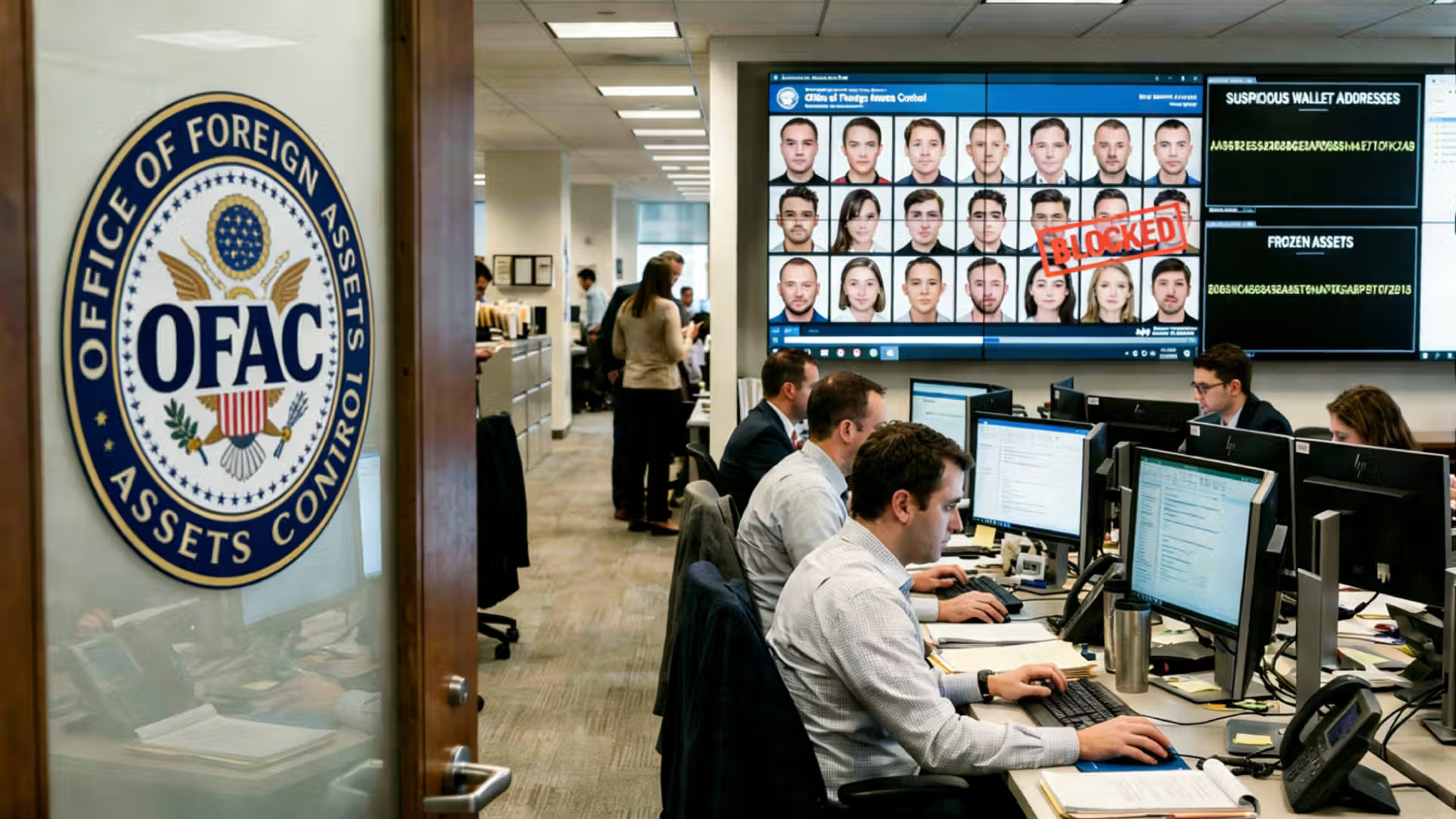
Federal authorities disrupted two major financial and drug trafficking networks associated with the Sinaloa Cartel, resulting in strict blacklisting and potential enforcement actions with financial penalties exceeding 1000000 dollars. The Office of Foreign Assets Control implemented these major actions to block assets and halt cryptocurrency operations moving illicit wealth across borders. Law enforcement targeted key operatives who converted bulk cash from illicit fentanyl sales into digital currencies or routed funds through Mexican businesses. The coordinated effort involved multiple federal task forces and international financial intelligence units to secure the global financial system against transnational organized crime.
Table of Contents



Sinaloa Cartel Money Laundering
The financial infrastructure supporting the Los Chapitos faction of the Sinaloa Cartel relies heavily on sophisticated methods to obscure the origins of retail drug profits. Operatives working within the United States collect vast amounts of physical currency generated from the street-level distribution of synthetic opioids, methamphetamine, and cocaine. This physical cash must be integrated into the legitimate financial system or moved across borders without detection by anti-money laundering compliance systems. To achieve this, specialized networks coordinate with domestic couriers who execute organized currency collections across multiple jurisdictions, including Colorado, California, and Texas. The collected funds are then centralized under specific network managers who direct the next phase of the laundering cycle.
Digital assets have emerged as a primary vehicle for moving illicit narcotics profits from domestic distribution hubs to cartel leaders based in Mexico. Financial brokers exploit the borderless nature of public ledger networks to bypass traditional banking controls, transferring value through specialized digital currency addresses. These brokers systematically convert bulk cash into stablecoins or other virtual assets, allowing them to move tens of millions of dollars without triggering traditional threshold reporting requirements. Once the digital assets are transferred to destination wallets controlled by cartel administrators in Sinaloa, they are liquidated back into fiat currency. This digital laundering mechanism provides the organization with rapid liquidity, enables the seamless procurement of fresh chemical precursors from international suppliers, and finances ongoing turf wars that threaten regional security.



Exploit Of Corporate Structures And Front Entities
Beyond the use of digital currencies, transnational criminal organizations frequently integrate legitimate commercial enterprises into their laundering schemes to absorb illicit cash flows. Front companies and seemingly ordinary commercial operations provide a facade of legitimacy, allowing illicit funds to blend with legal revenue streams. In this specific case, network enablers utilized family members as trusted straw owners and front persons to establish and manage businesses in Mexico. These enterprises included a private security company, Grupo Especial Mamba Negra, and a regional restaurant establishment, Gorditas Chiwas. By routing illicit wealth through the corporate bank accounts of operational businesses, the network could justify large financial transactions and obscure the underlying criminal origin of the capital.
The involvement of professional gatekeepers, such as security advisors and financial managers, enhances the resilience of these illicit operations against standard regulatory scrutiny. These individuals provide specialized knowledge to protect criminal assets, enforce debts related to multi-kilogram narcotics shipments, and set up layered corporate ownership structures. Legitimate businesses are also used to co-mingle funds, purchase assets, and pay for the logistical costs of cross-border smuggling operations. When financial institutions fail to conduct deep corporate transparency checks, these front companies successfully maintain active banking relationships, enabling the continuous flow of capital from major consumer markets back to foreign criminal organizations.


Regulatory Enforcement Actions And Global Sanctions Compliance
The enforcement mechanisms deployed by federal regulators carry significant financial and operational consequences for individuals and entities assisting transnational criminal syndicates. Under executive orders targeting international narcotics proliferation and global terrorism, all property, bank accounts, and corporate interests of designated parties within the United States are instantly frozen. The regulatory framework applies a strict liability standard, meaning that financial institutions can face substantial civil monetary penalties for processing transactions involving blocked persons, regardless of intent. Furthermore, any commercial entity globally that is owned fifty percent or more by blocked individuals faces automatic blocking actions, amplifying the impact of the regulatory intervention across international supply chains.
The broader compliance implications extend to international financial networks, where foreign banks risk losing access to the domestic clearing system if they knowingly service designated cartels or their proxies. Regulators utilize specialized whistleblower programs, such as the initiative managed by the Financial Crimes Enforcement Network, to incentivize the disclosure of sanctions evasion and hidden corporate ties. These programs offer substantial financial awards to individuals providing actionable intelligence that leads to successful enforcement outcomes where penalties exceed the statutory million-dollar threshold. To prevent systemic exposure, compliance departments must maintain robust transaction monitoring, update customer screening databases continuously, and scrutinize relationships with third-party logistics firms, security companies, and cash-intensive retail businesses.
AML Typologies For Fentanyl Networks
Anti-money laundering professionals must maintain a high level of awareness regarding specific operational patterns and behavioral indicators that signal cartel-linked financial manipulation. Identifying these methods requires analyzing transaction data for anomalies that deviate from standard commercial behavior, particularly concerning digital asset usage and cash management.
- Bulk Cash Conversion to Virtual Currency: Financial couriers deposit high volumes of cash into automated kiosks or exchange accounts, followed by immediate transfers to external wallets.
- Layered Corporate Ownership via Straw Persons: Businesses registered under the names of close relatives or associates of high-risk individuals, lacking clear commercial logic or independent capital.
- Rapid Transit Across Digital Asset Addresses: Utilizing multiple intermediary digital wallets to move funds rapidly, mimicking mixing behavior without using formal anonymity tools.
- Co-mingling of Funds in Cash-Intensive Sectors: Small businesses, such as restaurants or local service firms, are showing sudden spikes in revenue or processing transactions inconsistent with local market sizes.
- Cross-Border Wire Transfers for Ambiguous Services: Frequent commercial payments sent to foreign entities for vague consulting, security, or logistical support without verifiable contracts.
Key Points
- Office of Foreign Assets Control blocked more than a dozen individuals and entities tied to Sinaloa Cartel fentanyl networks.
- Networks utilized bulk cash collection within the United States and converted funds into cryptocurrency for cross-border transmission.
- Cartel operatives deployed corporate front structures, including a security company and a restaurant, to obscure illicit wealth.
- Sanctions enforcement applies strict liability, meaning financial institutions face civil penalties for facilitating transactions with blocked entities.
- Whistleblower incentives managed by FinCEN offer financial rewards for reports leading to enforcement actions exceeding one million dollars.
Related Links
- Office of Foreign Assets Control Recent Actions
- Financial Crimes Enforcement Network Whistleblower Program
- Drug Enforcement Administration Asset Forfeiture and Sanctions
- Financial Action Task Force Laundering of Illicit Proceeds
Other FinCrime Central Articles about Catel-Related Money Laundering
- US Treasury Disrupts Mexican Cartel Money Laundering Operations via Casinos
- Feds Seize 14 Million Dollars From Massive Cartel Laundering Ring
- Billions In Cartel Proceeds Moved Through Chinese Networks Says FinCEN
Source: US Treasury
Some of FinCrime Central’s articles may have been enriched or edited with the help of AI tools. It may contain unintentional errors.
Want to promote your brand, or need some help selecting the right solution or the right advisory firm? Email us at info@fincrimecentral.com; we probably have the right contact for you.