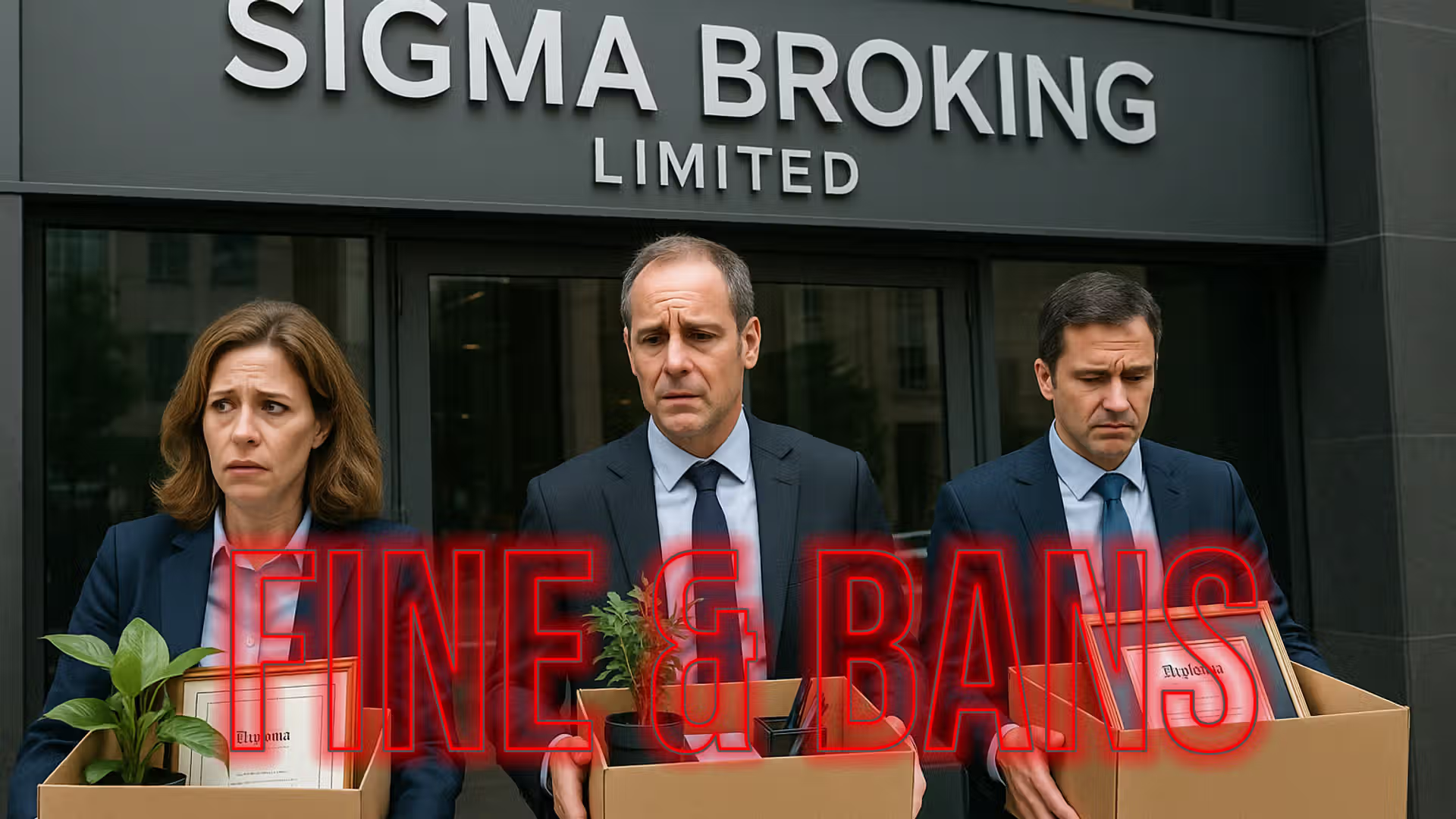
A £1,087,300 fine against Sigma Broking Limited, accompanied by personal fines and bans for several senior managers, has sent shockwaves through the UK’s financial sector and the compliance community. The Financial Conduct Authority (FCA) issued the hefty penalty in August 2025 after uncovering one of the country’s most extensive transaction reporting failures, underscoring the rising risks for both firms and their leaders when compliance falls short.
Table of Contents


Transaction Reporting Failures at Sigma Broking: Scale, Repetition, and Regulatory Gaps
Sigma Broking’s case has rapidly become a cautionary reference for compliance professionals. Between December 2018 and December 2023, the firm submitted nearly 925,000 inaccurate transaction reports—an error rate approaching 100% for that five-year period. These failures were not the result of a single mistake but stemmed from persistent technical misconfigurations and inadequate oversight within Sigma’s compliance and IT processes. What makes this episode even more significant is that Sigma had already faced regulatory scrutiny for similar failures just a few years earlier.
Transaction reporting is a critical pillar of the UK’s financial crime prevention architecture. Under the FCA Handbook SUP 17 and the retained EU regulation MiFIR, firms must report complete and accurate details for every relevant transaction, typically by the close of the following business day (T+1). These reports are essential for the FCA to monitor for market abuse, insider trading, and wider money laundering risks. Sigma’s inability to meet this requirement for such an extended period compromised regulatory oversight and increased systemic risk.
The FCA’s detection of widespread reporting anomalies in Sigma’s submissions during 2023 triggered an in-depth investigation. Regulators soon realized the magnitude of the deficiencies: not only was the majority of Sigma’s reporting incomplete or inaccurate, but the firm’s internal controls had failed to escalate and address these risks even after an earlier enforcement action.
Senior Managers in the Crosshairs: Fines, Bans, and Personal Accountability
While Sigma Broking faced a substantial corporate fine, the FCA’s action did not stop there. Individual accountability was a defining feature of this case. Following an earlier 2022 enforcement, three Sigma directors were fined a combined total exceeding £200,000, and two were banned from holding senior roles in any FCA-regulated firm. The regulator’s rationale was clear: senior management’s failure to implement and monitor effective reporting controls amounted to a breach of individual responsibilities under the Senior Managers and Certification Regime (SMCR).
The SMCR requires that those in key leadership roles can be held personally responsible for systemic regulatory failings within their firms. By imposing bans and fines on individuals—rather than simply penalizing the company—the FCA reinforced the message that leadership cannot be passive or detached where compliance and risk management are concerned. Sigma’s senior managers found themselves held to the highest standards, with direct career consequences.
This approach reflects an industry-wide shift in UK regulation. It is no longer sufficient for firms to treat compliance failures as operational setbacks; leadership teams are expected to drive remediation, monitor risks actively, and escalate problems. Failure to do so now brings personal as well as institutional consequences.
Why Repeated Failures Are So Damaging: Risks to Market Integrity and Financial Crime Defenses
Sigma Broking’s repeated breaches illustrate the broader dangers posed by poor transaction reporting. Accurate reporting forms the backbone of regulatory intelligence—allowing the FCA to detect patterns of market abuse, insider dealing, and suspicious transaction flows that may indicate money laundering. When nearly a million reports are incorrect, the regulator’s ability to protect markets is fundamentally weakened.
Sigma’s persistent non-compliance, even after a prior fine, exposed a culture where risk signals went unaddressed and root causes were not resolved. Technical misconfigurations were left unchecked, and board-level oversight failed to translate into effective action. This left the FCA with little choice but to pursue swift, public, and personal enforcement measures.
Market confidence relies on the integrity of firms’ data submissions. The Sigma case has reinforced the FCA’s stance that repeated or systemic failures—particularly those affecting core financial crime controls—will result in more severe and visible sanctions, up to and including bans for those in senior positions.
Lessons for Compliance: How Firms Are Responding to Heightened Enforcement
The fallout from the Sigma Broking case is already influencing compliance teams across the UK and Europe. Regulatory expectations are now clear: transaction reporting cannot be an afterthought, and leadership must take a hands-on approach. Key responses emerging from the industry include:
- Enhanced system validation, including automated reconciliation tools and rigorous user acceptance testing before deployment and after changes
- Regular, independent compliance audits to identify blind spots and ensure corrective actions are implemented
- Structured escalation frameworks, empowering staff at all levels to raise issues rapidly and transparently to senior management and the board
- Increased training for both operational teams and executives, focusing on both regulatory requirements and technology risk
- Active board-level engagement, with senior managers taking direct responsibility for reviewing and challenging compliance reporting processes
The SMCR and recent FCA guidance make clear that personal accountability is here to stay. Firms are responding by strengthening governance, documenting escalation procedures, and investing in both human and technical resources to safeguard against future lapses.
As technology and regulation continue to evolve, so do the challenges of effective transaction reporting. The Sigma case has highlighted that both firms and their leaders must be relentless in pursuing accuracy, transparency, and a strong compliance culture.
The Road Ahead for Compliance Leaders: Sigma’s Legacy for the Industry
Sigma Broking’s £1.1 million fine and the accompanying bans and fines for senior managers are a defining moment for the UK’s compliance landscape. The message is unambiguous: fines are no longer a cost of doing business, and personal sanctions are a genuine risk for executives who fail to meet their obligations.
This enforcement action sets a new standard for accountability, with the FCA demonstrating its readiness to move quickly and decisively when it identifies serious compliance failings. For the wider industry, Sigma’s experience serves as a powerful motivator to invest in compliance systems, foster a culture of escalation, and ensure that responsibility for regulatory risks is owned at the highest levels.
The era of viewing transaction reporting as a routine administrative task is over. Compliance leaders must be proactive, informed, and directly engaged—or risk sharing Sigma’s fate. As enforcement becomes faster, more targeted, and more personal, the stakes for getting it wrong have never been higher.
Related Links
- FCA Handbook: SUP 17 Transaction Reporting
- FCA Senior Managers and Certification Regime
- FCA Enforcement Guide
- MiFIR (Markets in Financial Instruments Regulation)
- FCA Financial Crime Guide
Other FInCrime Central Articles About FCA’s Fines and Bans
- FCA Hits Barclays with Solid £42 Million Fine over Financial Crime Lapses
- Monzo Penalized £21 Million as FCA Targets AML Lapses
- Upper Tribunal Affirms FCA’s Ban and £1.1M Fine for Barclays ex-CEO Jes Staley
Source: FCA
Some of FinCrime Central’s articles may have been enriched or edited with the help of AI tools. It may contain unintentional errors.
Want to promote your brand with us or need some help selecting the right solution or the right advisory firm? Email us at info@fincrimecentral.com; we probably have the right contact for you.