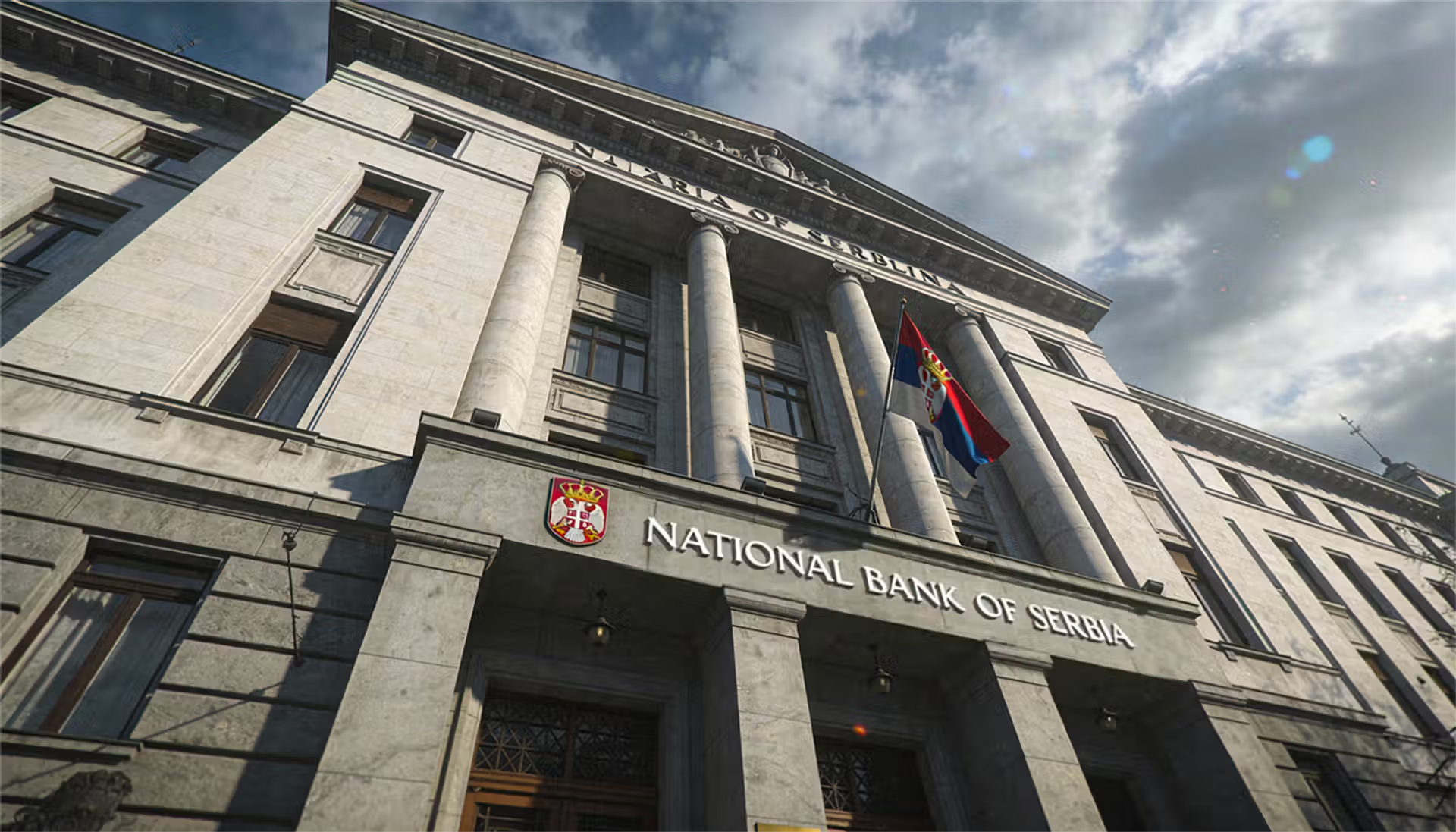
Serbia has received a detailed assessment from the Council of Europe regarding its financial safeguards, leading to a mandatory three-year roadmap for corrective actions. The Council of Europe anti-money laundering body, MONEYVAL, published these findings on February 4, 2026, following an extensive on-site visit conducted in May 2025. While the report acknowledges Belgrade has made significant strides in risk assessment and prosecution, it highlights persistent gaps in the supervision of lawyers and the recovery of criminal assets. Serbian authorities are now tasked with addressing structural challenges to better combat high-level corruption and organized crime syndicates. Consequently, the nation has been placed under a regular follow-up procedure to ensure its legal framework aligns with international expectations.
Table of Contents


Serbia Anti Money Laundering Progress and Shortcomings
The latest evaluation by MONEYVAL indicates that Serbian authorities have developed a more sophisticated understanding of the financial crimes threatening their domestic market. Through regular national risk assessments, the government has successfully identified key areas of vulnerability, allowing for more targeted mitigation strategies. These coordinated efforts have been supported by comprehensive action plans and monitoring systems that have matured significantly over the last several years. Despite this forward momentum, the evaluators noted that the analysis of how corruption influences the legal framework remains fragmented. To improve the overall efficacy of the system, Serbia must consolidate these analyses to prioritize countermeasures against the most damaging forms of financial misconduct. This involves moving beyond a general understanding of risk and into a more granular application of preventative measures across all reporting entities.
The report emphasizes that the Belgrade administration has demonstrated a clear commitment to aligning its internal policies with the standards set by the Financial Action Task Force. This alignment is not merely a matter of legislative updates but requires a fundamental shift in how different government departments interact. Currently, the silos between intelligence gathering and law enforcement occasionally slow down the transition from detection to prosecution. By bridging these gaps, Serbia can ensure that the progress made in identifying risks translates into tangible results in the courtroom. Furthermore, the authorities have been encouraged to look more closely at the role of professional intermediaries, such as accountants and real estate agents, who often operate in high-risk zones for illicit financial activity.



Structural Challenges in Financial Supervision and Intelligence
The money laundering prevention authority, known locally as Uprava za sprecavanje pranja novca, plays a central role in the national defense against illicit financial flows. This body has been praised for its broad access to data and intelligence, which has directly supported a rising number of investigations and convictions. However, the MONEYVAL report points to specific structural and operational challenges that still hinder the full potential of this agency. While the National Bank of Serbia demonstrates an advanced understanding of sectoral risks within the banking industry, other regulatory bodies face resource constraints. Specifically, the Securities Commission has been hampered by staffing shortages since 2022, which impacts its ability to conduct thorough oversight. Strengthening these institutional frameworks is essential for creating a consistent supervisory environment where all sectors, not just banking, are held to the same high standards of transparency.
Beyond the immediate staffing issues, there is a need for a more integrated technological approach to financial intelligence. The sheer volume of data processed by the national authority requires robust automated systems that can identify suspicious patterns in real time. While Serbia has implemented some automated notifications for targeted financial sanctions, the broader scope of suspicious transaction reporting still relies heavily on manual intervention in certain sectors. Improving the digital infrastructure of the supervisory bodies would not only increase efficiency but also reduce the likelihood of human error or oversight. This technological leap is particularly important as criminals increasingly turn to virtual assets and complex digital platforms to disguise the origins of their wealth.
Professional Sector Vulnerabilities and Beneficial Ownership
A significant portion of the report focuses on the designated non-financial businesses and professions, which often serve as gatekeepers to the financial system. While there has been progress in outreach and the application of remedial actions, the implementation of risk-based supervision remains uneven across these groups. The legal sector is of particular concern to international observers, as the significance of lawyers in facilitating complex transactions necessitates more rigorous enforcement and supervisory engagement. Furthermore, while Serbia generally ensures that basic and beneficial ownership data is available and accurate, there is an overreliance on banks and the tax police to verify this information. Improvements are recommended to ensure that the registry of beneficial owners remains current and that the data is not simply collected but actively monitored for discrepancies that could signal shell company activity.
To address these vulnerabilities, the Serbian government must consider implementing more stringent licensing and registration requirements for high-risk professionals. This would involve not only initial checks but also ongoing monitoring to ensure that those with legal or financial credentials are not inadvertently or intentionally facilitating money laundering. The legal sector, in particular, requires a tailored approach that respects professional privilege while ensuring that it does not become a shield for criminal activity. Enhanced training for lawyers on their reporting obligations and the signs of potential financial crime is a key recommendation from the 2026 assessment. By fostering a culture of compliance within these professional groups, Serbia can significantly strengthen its overall defensive posture against illicit actors.
International Cooperation and Asset Recovery Mandates
The ability to pursue criminal assets across borders remains a critical benchmark for the Serbian justice system. Although law enforcement bodies engage in both formal and informal international cooperation, the report suggests that more proactive measures are required for the identification, seizure, and confiscation of assets linked to transnational organized crime. Currently, the prosecution of money laundering is on the rise, including successful cases of self-laundering and third-party laundering. However, the Council of Europe urges a sharper focus on high-level corruption cases that often involve sophisticated financial structures. While the authorities have promoted the use of extended confiscation, the absence of non-conviction-based confiscation in the current law limits the tools available to investigators. By strengthening the coordination of asset recovery within the country and aligning it with international joint investigations, Serbia can more effectively dismantle the financial foundations of criminal enterprises.
The focus on asset recovery is not just about punishment but about removing the primary incentive for organized crime. When criminal groups see that their ill-gotten gains can be seized even across international borders, the risk profile of operating within or through Serbia changes. This requires a shift toward financial investigations that start early in the criminal process, rather than being an afterthought following a conviction. The 2026 report highlights that while Serbia has the legal mechanisms for certain types of confiscation, the actual volume of recovered assets does not always match the scale of the crimes being prosecuted. To close this gap, there must be a more strategic use of financial intelligence to trace funds as they move through various shells and jurisdictions. This proactive stance will be a major area of focus for the regular follow-up process that Serbia now enters.
Key Points
- Serbia has been placed under a regular follow-up process by MONEYVAL to monitor its progress on a three year roadmap of recommended actions.
- The National Bank of Serbia shows an advanced understanding of banking risks, but the Securities Commission suffers from staffing constraints that impact supervision.
- Money laundering convictions are increasing, yet authorities must prioritize cases involving high-level corruption and serious transnational organized crime.
- Beneficial ownership data is largely accessible, but regulators warn against overreliance on the banking sector and tax police for data maintenance.
- Cross-border asset recovery remains a challenge, necessitating more proactive measures to identify and seize assets linked to international crime rings.
Related Links
- MONEYVAL Assessment Report for the Republic of Serbia 2026
- FATF Recommendations on International Standards on Combating Money Laundering
- Council of Europe Anti Money Laundering and Countering the Financing of Terrorism
- United Nations Security Council Targeted Financial Sanctions Guidelines
- Administration for the Prevention of Money Laundering Serbia Official Portal
Other FinCrime Central Articles Related to Serbia
- Serbia’s Crypto Dragnet Signals a Hard Reset on Money Laundering
- Reverse Money Laundering: Using Clean Funds for Financial Crime
Source: Council of Europe
Some of FinCrime Central’s articles may have been enriched or edited with the help of AI tools. It may contain unintentional errors.
Want to promote your brand, or need some help selecting the right solution or the right advisory firm? Email us at info@fincrimecentral.com; we probably have the right contact for you.