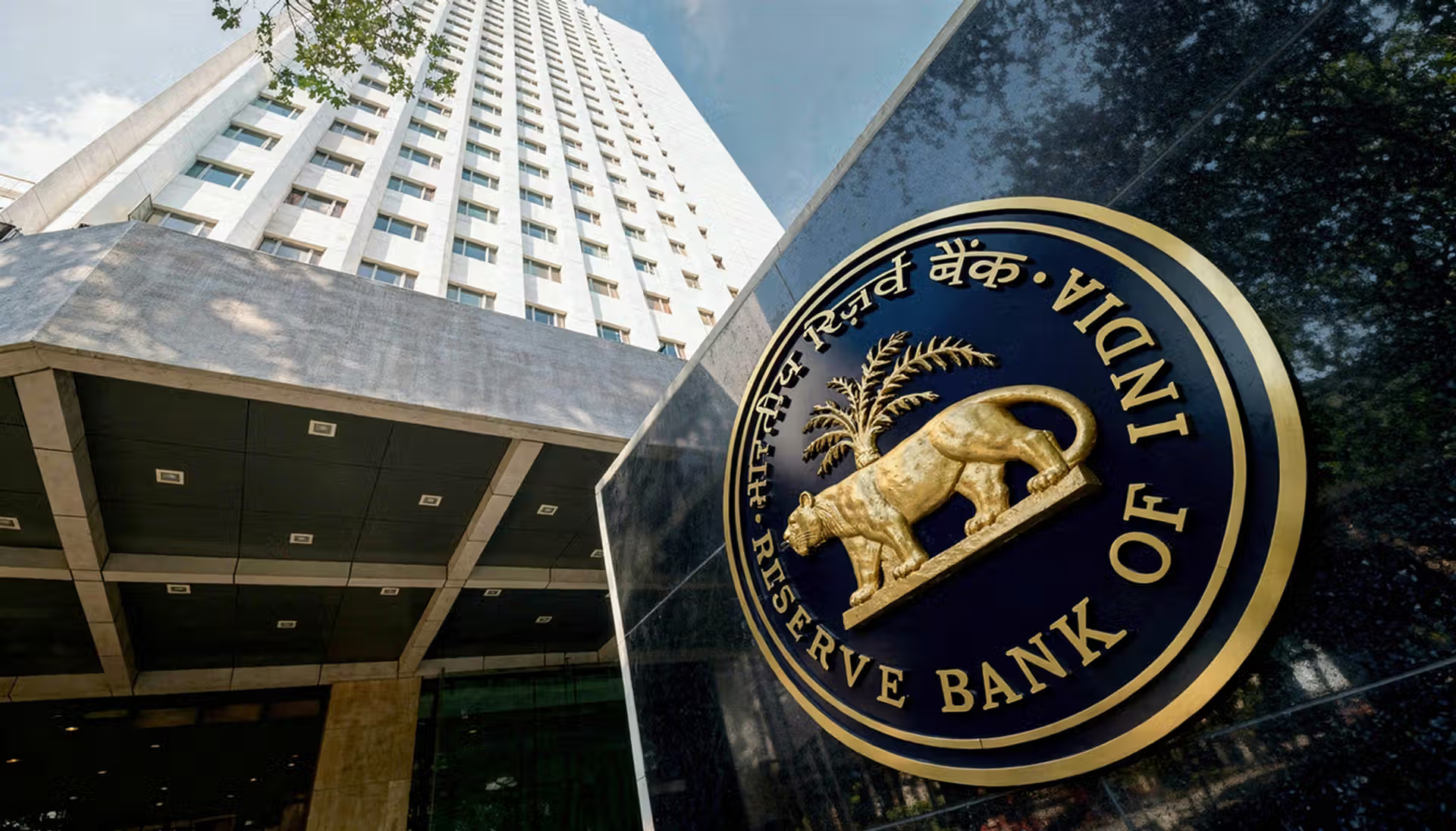
The Reserve Bank of India issued the Reserve Bank of India Commercial Banks Know Your Customer Amendment Directions 2025 on December 29, 2025, to modify existing anti-money laundering protocols with immediate effect. This regulatory change addresses a critical gap in the accountability framework for customer data shared through the national registry. Under the new rules, the primary legal burden for verifying customer identity and address shifts specifically to the entity that last updated the record. These directions are issued under the Banking Regulation Act and the Prevention of Money Laundering Act to ensure the integrity of the Indian financial system. The amendment aims to reduce administrative friction while maintaining rigorous standards for ongoing transaction monitoring across all regulated commercial banking institutions.
Table of Contents


Centralized KYC Registry
The modern framework for preventing illicit financial flows relies heavily on the Centralized KYC Registry as a unified repository for digital identity management. This system allows commercial banks to share verified customer data, but the lack of clear liability previously caused redundancy and legal ambiguity within the compliance departments. The 2025 amendment introduces a specific explanation to paragraph 65 of the master directions to rectify this issue by assigning definitive ownership to data entries. It mandates that the reporting entity that last performed an upload or update is the one legally responsible for the accuracy of the identity and address verification. This clear delegation ensures that the registry remains a reliable source of truth for the entire banking sector while eliminating the need for every subsequent bank to perform the same manual checks. By centralizing this responsibility, the regulator seeks to create a more efficient onboarding process that does not sacrifice the security of the national anti-money laundering infrastructure. The registry serves as a digital shield, ensuring that once an identity is vetted by a regulated professional, that vetting can be leveraged safely by others in the financial ecosystem. This approach recognizes the interconnected nature of modern banking, where a single customer may maintain relationships with multiple providers. Without such a centralized mechanism, the burden of repetitive verification often leads to fatigue and oversight, which are conditions that money launderers frequently exploit. The Reserve Bank of India has observed that clarity in responsibility is the most effective way to maintain high data quality over the long term.
Accountability and CDD Procedures
While the amendment allows banks to download and rely on existing records without re-verifying identity, it does not provide a blanket exemption from all oversight duties. Any commercial bank utilizing the registry remains fully responsible for every other aspect of the customer due diligence process. This includes maintaining accurate risk profiles, performing enhanced due diligence for high-risk individuals, and monitoring all account activities for suspicious patterns that might indicate criminal intent. The reliance on the central registry is only permissible if the records are current and fully compliant with the Prevention of Money Laundering Rules of 2005. If a bank detects discrepancies or if the records are outdated, the exemption from re-verification ceases to apply immediately. This dual layer of responsibility ensures that the convenience of digital data sharing does not lead to a relaxation of the vigilance required to detect money laundering. Furthermore, the bank that downloads the data must verify that the information matches the current status of the customer to the best of their ability through non-identity-related checks. The division of labor between the uploader and the downloader is designed to optimize resources, allowing institutions to focus their investigative efforts on behavior rather than just documentation. This shift is critical because identity theft and document forgery are becoming more sophisticated, requiring banks to look beyond the surface level of a government-issued ID. By trusting the initial verification of a peer institution, a bank can dedicate more staff hours to analyzing transaction flows and the ultimate beneficial ownership of complex corporate structures.
Legal Mandate and Regulatory Compliance
The Reserve Bank of India exercises its statutory authority under the Payment and Settlement Systems Act and the Foreign Exchange Management Act to enforce these new standards. These directions are a direct response to an office memorandum from the Department of Revenue titled CKYCR and the ultimate responsibility of reporting entities. By aligning banking operations with this memorandum, the regulator ensures that there is a consistent legal standard across different types of financial institutions. Failure to adhere to these directions can lead to significant administrative penalties and formal enforcement actions under the Prevention of Money Laundering Act. The amendment emphasizes that the ultimate goal is to facilitate a seamless flow of legitimate capital while creating a hostile environment for those attempting to conceal the origins of illicit funds. This regulatory precision is essential for India to remain compliant with global standards set by international financial oversight bodies like the Financial Action Task Force. The legal framework surrounding these amendments is designed to be airtight, leaving no room for banks to claim ignorance regarding their specific duties. Every compliance officer must now update their internal manuals to reflect that the last uploader carries the weight of identity verification. This structural change also simplifies the process for regulators during audits, as they can quickly identify which institution failed if a fraudulent account is discovered within the central system. The integration of the Banking Regulation Act into these directions further solidifies the power of the central bank to intervene when it sees systemic weaknesses in the way identity data is handled.
Strategic Implementation of KYC Norms
The immediate commencement of these amendment directions signals the urgency with which the central bank views the modernization of the customer identification process. By providing a clear roadmap for liability, the RBI is encouraging banks to move away from siloed verification processes toward a more integrated and transparent digital ecosystem. This transition is not merely about administrative ease but is a strategic move to harden the financial system against the evolving tactics of money launderers. The focus on the uploader of the record as the point of accountability forces institutions to improve their initial data collection and verification quality. As banks integrate these rules into their core systems, the ability of the government to audit and track identity data across the country will be significantly enhanced. This amendment represents a significant milestone in the ongoing efforts to refine the national anti-money laundering framework for the digital age. It acknowledges that technology is a double-edged sword that can both hide and reveal criminal activity. By mandating a more structured and accountable use of the central registry, the RBI is ensuring that technology serves the side of law enforcement. The commercial banking sector must now rise to the challenge by ensuring its digital interfaces with the registry are robust, and their internal verification teams are more diligent than ever. The long-term success of this initiative will depend on the collective integrity of all reporting entities as they contribute to a shared pool of national financial intelligence. As the global financial community watches India’s digital transformation, these KYC amendments serve as a model for how a large economy can balance efficiency with rigorous security and legal clarity.
Key Points
- The 2025 amendment clarifies that the entity last updating a record in the central registry is solely responsible for identity and address verification.
- Commercial banks downloading data from the registry are exempt from redundant verification steps if the records are current and compliant with 2005 rules.
- Reporting entities maintain full legal responsibility for all other customer due diligence procedures including transaction monitoring and risk profiling.
- The regulation is issued under the authority of the Prevention of Money Laundering Act and the Banking Regulation Act to enhance national financial security.
Related Links
- Reserve Bank of India KYC Master Direction 2025
- Prevention of Money Laundering Act 2002 Official Text
- Department of Revenue Office Memorandum on CKYCR Responsibility
- FATF Guidance on Digital Identity and AML Compliance
Other FinCrime Central Articles About RBI’s Latest Actions
- India and Italy Unite to Block Terror Money Networks
- India Cracks Down on 25 Offshore Crypto Exchanges for Money Laundering
- Binance Strengthens KYC Compliance in India for AML Regulations
Source: Reserve Bank of India
Some of FinCrime Central’s articles may have been enriched or edited with the help of AI tools. It may contain unintentional errors.
Want to promote your brand, or need some help selecting the right solution or the right advisory firm? Email us at info@fincrimecentral.com; we probably have the right contact for you.