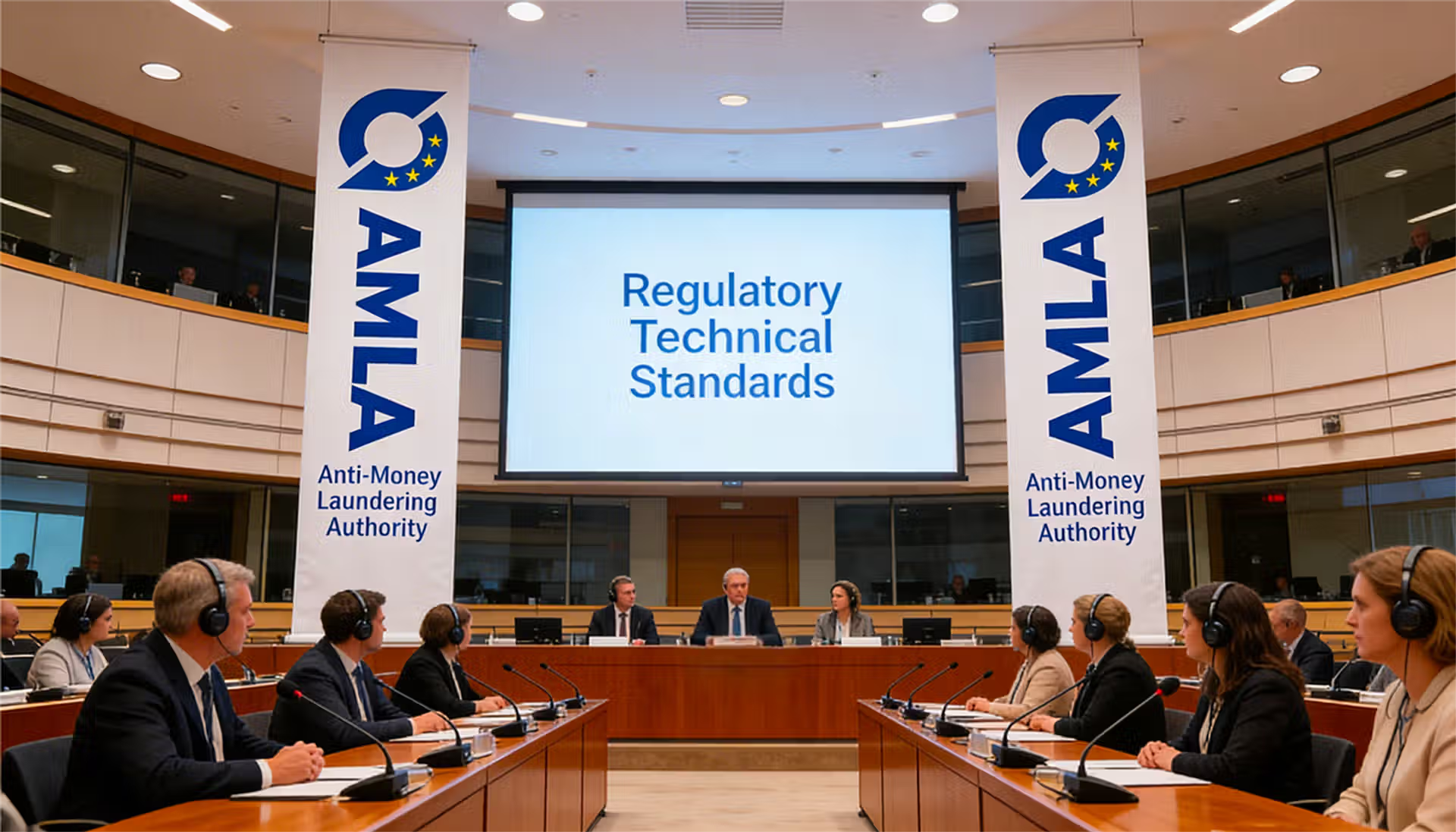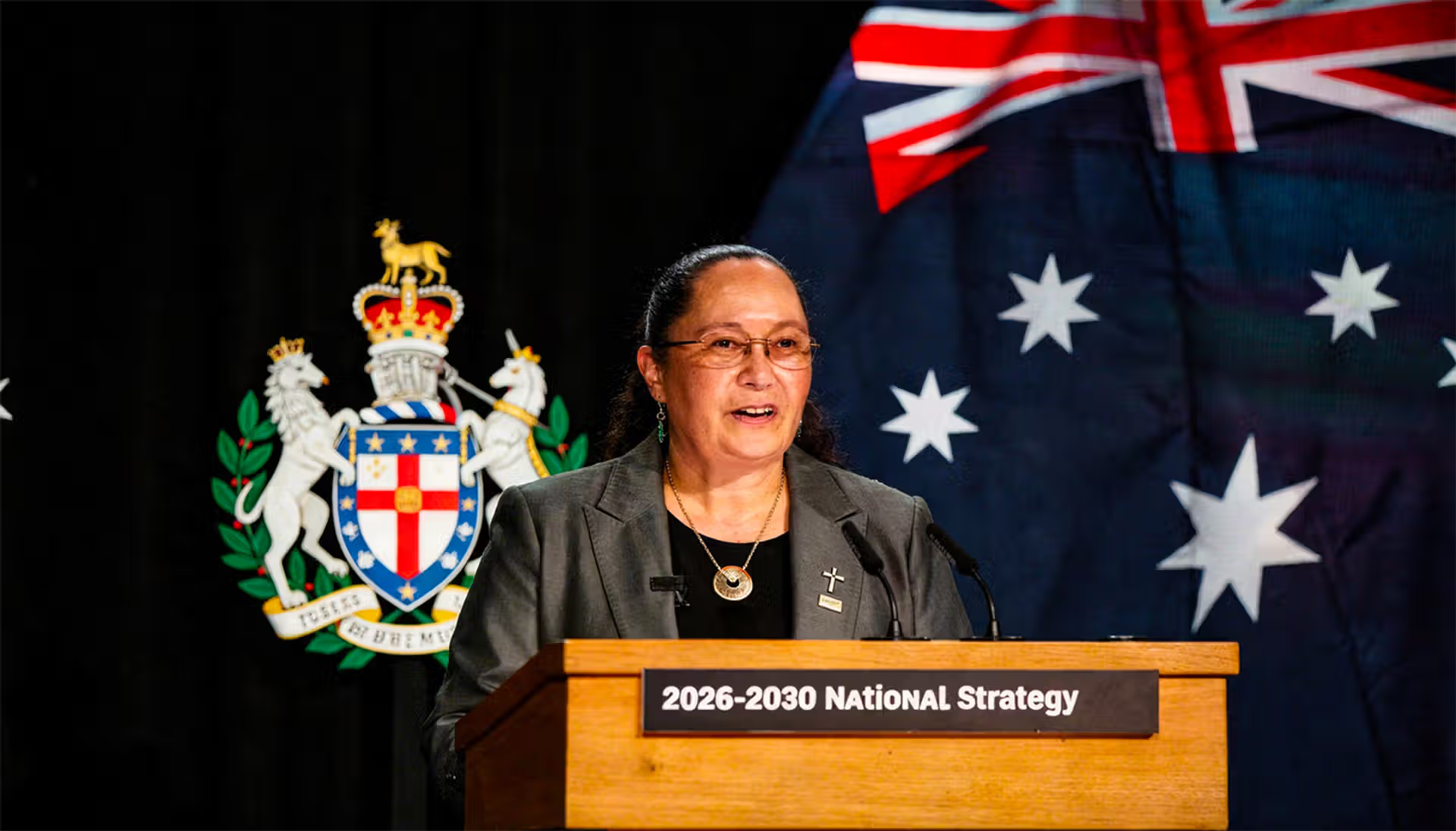
Associate Minister of Justice Nicole McKee officially launched the National Anti-Money Laundering and Countering Financing of Terrorism Strategy 2026-2030 to overhaul the existing financial integrity framework. This new strategic roadmap introduces a four-year work programme designed to mitigate the estimated 1 billion dollars in illicit funds laundered annually within the domestic economy. By transitioning to a single-supervisor model under the Department of Internal Affairs, the government aims to sharpen enforcement against organized crime while reducing the compliance burden for low-risk transactions. These reforms represent the most significant regulatory shifts since the original 2009 legislation took full effect.
Table of Contents


New Zealand AML Strategy and the Evolution of Financial Oversight
The implementation of the National Anti-Money Laundering and Countering Financing of Terrorism Strategy 2026-2030 marks a decisive pivot in how the South Pacific nation addresses the movement of illicit capital. For over a decade, the domestic framework operated under a fragmented supervisory structure involving the Reserve Bank of New Zealand, the Financial Markets Authority, and the Department of Internal Affairs. The new strategy acknowledges that this divided approach often led to inconsistent guidance and unnecessary administrative hurdles for businesses. By consolidating all supervisory functions into the Department of Internal Affairs by July 2026, the government intends to create a more cohesive defense against the sophisticated techniques used by international money laundering syndicates.
Money laundering in the local context is frequently used to disguise the origins of proceeds from drug trafficking, fraud, and organized theft. The Ministry of Justice has identified that these criminal activities not only undermine the integrity of the financial system but also cause direct harm to local communities by sustaining the operations of gangs and terrorist networks. The 2026 strategy prioritizes a risk-based approach, which moves away from broad, box-ticking exercises toward a system that targets high-value, high-risk entities. This transition is expected to save millions in compliance costs for small businesses while allowing law enforcement to focus their investigative resources on the most serious threats to national security and economic stability.



Legislative Amendments and Enhanced Reporting Standards
To support the objectives of the new national strategy, the government has progressed several key legislative instruments, including the Statutes Amendment Act 2025 and the upcoming Omnibus Amendment Bill scheduled for mid-2026. These legal changes provide the necessary authority for the Department of Internal Affairs to act as the sole regulator and introduce a new funding model based on an industry levy. One of the most significant technical updates involves the relaxation of address verification requirements for low-risk customers, a move that aligns the local regime with international standards. Previously, the rigid requirement for physical address proof was cited as a major friction point for young citizens and low-income individuals trying to access basic financial services.
Furthermore, the reform package has extended the timeframes for filing critical reports. Under the new rules, the period for submitting Prescribed Transaction Reports has increased from ten to twenty working days, while law firms now have five working days instead of three to submit a Suspicious Activity Report to the Financial Intelligence Unit. These adjustments are not intended to weaken the system but to improve the quality of the data provided to the New Zealand Police. By giving compliance officers more time to conduct thorough internal investigations before reporting, the Financial Intelligence Unit receives higher-quality leads, which are essential for mapping complex money laundering chains that involve multiple jurisdictions and shell companies.
International Compliance and the Role of the Financial Action Task Force
As a member of the Financial Action Task Force, New Zealand is subject to rigorous peer reviews that assess its effectiveness in combating illicit finance. The 2024 Follow-Up Report from the global watchdog highlighted substantial progress, re-rating the country as compliant or largely compliant across a majority of technical recommendations. However, the report also emphasized the need for more robust supervision and better access to beneficial ownership information. The 2026 National Strategy is a direct response to these international critiques, ensuring that the country maintains its reputation as a safe and transparent place to conduct global business. Failure to meet these global standards could lead to the country being placed on the increased monitoring list, which would significantly increase the cost of international capital for local banks.
The strategy also addresses the rising threat of digital and virtual asset exploitation. With the ban on virtual currency ATMs and new prohibitions on large cash payments for international funds transfers, the government is closing loopholes that were previously exploited for rapid, anonymous wealth transfers. The Ministry of Justice has emphasized that staying ahead of these technological curves is a primary pillar of the 2026-2030 work programme. This includes updating the Identity Verification Code of Practice to allow for the use of secure digital identities, which will facilitate faster onboarding for legitimate customers while making it significantly harder for criminals to use forged documentation to open accounts.
Disrupting Criminal Profits through Targeted Enforcement
The ultimate measure of the new strategy’s success lies in its ability to disrupt the financial incentives behind serious crime. By empowering the single supervisor with enhanced powers to compel interviews and conduct on-site inspections, the regime shifts from a passive monitoring role to an active enforcement stance. The introduction of an infringement regime will allow for immediate penalties for non-compliance, ensuring that reporting entities take their obligations seriously. This is particularly relevant for high-value dealers and real estate agents, sectors that have historically been vulnerable to the placement phase of money laundering where cash is converted into tangible, high-value assets.
Analysis of the current criminal landscape suggests that the purchase of real estate and the use of professional services remain the preferred methods for domestic money launderers. The 2026 strategy seeks to bridge the gap between the public and private sectors by fostering a genuine partnership where intelligence is shared more freely. This collaborative approach is designed to create a hostile environment for illicit funds, making it increasingly difficult for organized crime groups to enjoy the proceeds of their illegal activities. As the work programme unfolds over the next four years, the focus will remain on building a resilient, agile, and effective system that protects both the economy and the citizens of the nation.
Key Points
- The National Anti-Money Laundering and Countering Financing of Terrorism Strategy 2026-2030 establishes a unified four-year work programme for the justice sector.
- Supervision of all reporting entities will transition to a single-supervisor model led by the Department of Internal Affairs starting in July 2026.
- Recent legislative amendments have extended the reporting deadlines for suspicious activities and prescribed transactions to improve data quality for law enforcement.
- The strategy aims to reduce compliance costs for low-risk businesses while increasing the focus on high-risk sectors such as virtual assets and real estate.
- New Zealand remains committed to the Financial Action Task Force standards to ensure continued access to international financial markets and protect its global reputation.
Related Links
- Beehive.govt.nz – National strategy launched to cut AML red tape
- Financial Action Task Force – New Zealand Mutual Evaluation and Follow-Up Reports
- New Zealand Legislation – Anti-Money Laundering and Countering Financing of Terrorism Act 2009
- Department of Internal Affairs – AML/CFT Codes of Practice and Guidance
Other FinCrime Central Articles About New Zealand’s AML/CFT Reforms
- Regulatory Relief for NZ Businesses: AML Act Amendments Introduced
- AML Reform Proposals Promise a Smarter Approach to Financial Crime in New Zealand
- New Zealand Police’s Latest National Risk Assessment on Money Laundering and Terrorism Financing
Source: NZ’s Ministry of Justice
Some of FinCrime Central’s articles may have been enriched or edited with the help of AI tools. It may contain unintentional errors.
Want to promote your brand, or need some help selecting the right solution or the right advisory firm? Email us at info@fincrimecentral.com; we probably have the right contact for you.