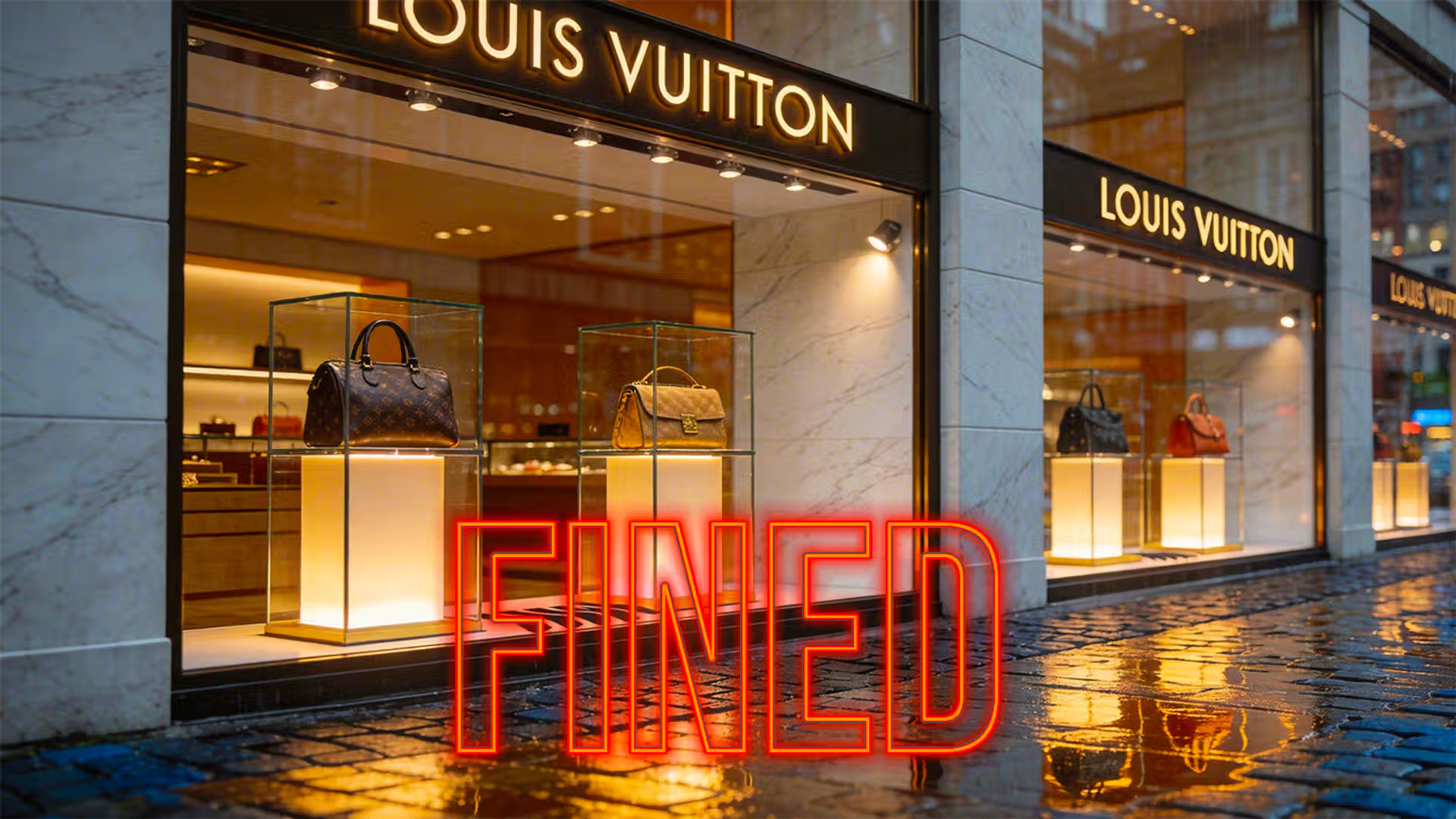
The Public Prosecution Service has imposed a 500,000 euro fine on the Dutch branch of Louis Vuitton for significant violations of the Money Laundering and Terrorism Financing Prevention Act. This enforcement action follows a comprehensive investigation into a sophisticated money laundering network that utilized luxury retail channels to disguise the origins of criminal proceeds. Authorities determined that the fashion house failed to perform adequate customer due diligence while accepting millions in cash payments over a multiyear period. The case highlights the critical role of non-financial institutions in the broader financial ecosystem and the legal consequences of failing to implement robust preventative measures against illicit financial flows.
Table of Contents


Dutch Anti-Money Laundering Regulations and Retail Compliance
The financial penalty levied against the Dutch subsidiary of this luxury retailer underscores a rigorous enforcement climate within the Netherlands regarding the Money Laundering and Terrorism Financing Prevention Act, commonly referred to as the Wwft. Under these regulations, retailers are obligated to act as gatekeepers of the financial system, mirroring many of the same responsibilities typically associated with banking institutions. The Public Prosecution Service concluded that the company fell short of these mandates by allowing a single customer to conduct a series of high-value transactions without triggering the necessary internal alerts or verification procedures. This failure to monitor and report suspicious activity enabled a criminal organization to convert illicit cash into portable high-value assets with relative ease.
Regulatory expectations for retailers operating in high-value sectors are clear regarding the necessity of a risk-based approach to compliance. The Wwft mandates that businesses must not only identify their customers but also investigate the source of funds when transactions meet certain risk profiles. In this specific instance, the fashion house allegedly ignored multiple red flags, including the frequent use of different aliases by a recurring customer and the sheer volume of physical currency being exchanged for designer handbags. Such oversight is viewed by the National Public Prosecutor’s Office as a fundamental breakdown of the know your customer principle, which serves as the first line of defense against the integration of criminal wealth into the legitimate economy.
The settlement of 500,000 euros was reached as an out-of-court resolution, a decision the Public Prosecution Service attributed to the need to manage limited judicial resources at the Rotterdam District Court. While the retailer has opted to pay the fine to resolve its corporate liability, the underlying criminal case against the individuals involved remains active. This highlights a growing trend where regulatory bodies prioritize corporate accountability through financial sanctions while simultaneously pursuing criminal prosecutions against the specific actors who orchestrated the laundering scheme. The message to the luxury sector is definitive, as the cost of compliance failures now includes both substantial financial loss and significant reputational damage.



The Mechanics of the Underground Banking and Daigou Scheme
Central to this investigation is a complex laundering operation that began with an underworld banker who specialized in collecting and redistributing proceeds for criminal syndicates. This individual reportedly funneled large sums of illicit cash to a female suspect based in Lelystad, who acted as a primary purchaser of luxury goods. Between August 2021 and February 2023, this individual is suspected of spending more than 2 million euros on high-end merchandise, predominantly designer bags, at various retail locations across the Netherlands. The acquisition of these goods was not for personal use but was instead a critical step in a value transfer process known as the Daigou trade.
The Daigou model involves the purchase of luxury items in Western markets for resale in territories where such goods are more expensive or heavily taxed, such as China. While the trade itself can be a legitimate personal shopping service, it is frequently co-opted by money launderers to facilitate cross-border value movement. By shipping designer products in standard cardboard moving boxes, the suspects were able to move criminal wealth across borders under the guise of commercial trade. Once the goods were sold in the secondary market, the resulting proceeds appeared to be legitimate business income, thereby completing the laundering cycle and providing the criminal organization with clean, usable funds.
Investigators uncovered extensive evidence of this operation, including security camera footage, receipts, and thousands of encrypted chat messages that detailed the logistics of the scheme. During searches of the suspect’s residence, authorities discovered numerous boxes prepared for international shipment, confirming the scale of the export operation. The use of luxury retail items as a vehicle for laundering is particularly attractive to criminal groups because these products maintain high resale value and are easily transportable. This case serves as a landmark example of how traditional retail sectors are targeted by sophisticated financial criminals seeking to exploit gaps in transaction monitoring and reporting.
Internal Collusion and the Exploitation of Reporting Thresholds
The effectiveness of the laundering scheme was significantly bolstered by the alleged involvement of an insider within the fashion house. A former sales associate is accused of facilitating the illicit transactions by providing the primary buyer with tactical information regarding inventory and compliance protocols. This individual reportedly alerted the suspect when new and expensive inventory arrived, ensuring the rapid turnover of criminal cash into high-value assets. More importantly, the employee is alleged to have provided guidance on how to structure payments to avoid triggering mandatory reporting requirements.
Until the beginning of 2026, Dutch law required retailers to report all cash transactions involving 10,000 euros or more to the Financial Intelligence Unit. The suspects allegedly utilized a technique known as structuring, where large sums of money were broken down into multiple smaller payments that fell just below this legal threshold. By keeping individual transactions under the limit, the participants aimed to remain below the radar of automated compliance systems. The involvement of a staff member who understood these internal triggers allowed the criminal network to navigate the company’s defensive measures with precision, highlighting the significant threat posed by internal fraud and collusion in AML environments.
The regulatory response to such tactics has been a tightening of the legal framework surrounding cash transactions. As of January 1, 2026, the Netherlands has implemented a ban on accepting cash payments of 3,000 euros or more for professional sellers of goods. This legislative change is specifically designed to eliminate the room for maneuver previously enjoyed by those who structured payments just below the old 10,000 euro mark. The case against the fashion house and its former employee demonstrates that even with strict thresholds in place, the subjective element of suspicious activity reporting remains vital. Retailers are expected to identify patterns of behavior that suggest an attempt to circumvent the law, regardless of whether a single transaction exceeds a specific numerical limit.
Systemic Implications for Global Luxury Retail Compliance
This enforcement action signals a new era of accountability for the global luxury goods industry, which has historically faced less scrutiny than the traditional banking sector. The Dutch Public Prosecution Service has made it clear that luxury brands will be held to the same standards as other financial gatekeepers when it comes to preventing the misuse of their services. The 500,000 euro fine serves as a precedent for other jurisdictions, suggesting that the era of anonymous high-value cash purchases in the luxury sector is coming to a close. Brands must now invest heavily in sophisticated AML software, employee training, and enhanced due diligence processes to mitigate the risk of being utilized by criminal enterprises.
The convergence of underground banking, the Daigou trade, and retail compliance failures creates a complex threat landscape that requires proactive management. For global fashion houses, the challenge lies in balancing a high-end customer experience with the intrusive nature of modern AML requirements. However, the legal and financial risks of non-compliance far outweigh the costs of implementing a robust framework. As regulators globally move toward lower cash thresholds and more frequent audits, the ability to accurately verify customer identities and the source of wealth will become a core competency for any successful high-value retailer.
The ongoing trials of the three main suspects in the Rotterdam District Court will likely yield further insights into the operational methods of modern money laundering networks. This case has already provided a roadmap for how illicit funds can penetrate even the most prestigious brands through a combination of structured payments and insider help. Moving forward, the focus for both regulators and the private sector will be on closing the remaining loopholes in the global trade of high-value assets. The resolution of the case against the Dutch branch of the fashion house marks a significant victory for law enforcement in their efforts to disrupt the financial infrastructure of organized crime.
Key Points
- The Public Prosecution Service fined the Dutch branch of a major luxury retailer 500,000 euros for violating anti-money laundering laws.
- A suspect from Lelystad allegedly laundered over 2 million euros by purchasing designer handbags with criminal cash and reselling them via the Daigou trade.
- The scheme involved the use of multiple aliases and the structuring of cash payments to remain below the 10,000 euro reporting threshold.
- An internal employee allegedly assisted the laundering operation by providing tips on stock and advice on avoiding compliance triggers.
Related Links
- Financial Intelligence Unit Netherlands Reporting Guidelines
- Netherlands Authority for the Financial Markets AML Oversight
- Dutch Government Policy on Cash Payment Limits
- FATF Guidance on the Risk Based Approach for High Value Goods
Other FinCrime Central Articles About Luxury Goods Used As Money Laundering Vectors
- Money Laundering Case Engulfs Louis Vuitton Netherlands as Luxury Sector Faces Reckoning
- Luxury Goods and Sponsorship Deals at the Heart of Former Jumbo CEO AML Case
- Seized Luxury Assets in Bologna Exposes Sophisticated Money Laundering Operation
Source: NL Openbaar Ministerie
Some of FinCrime Central’s articles may have been enriched or edited with the help of AI tools. It may contain unintentional errors.
Want to promote your brand, or need some help selecting the right solution or the right advisory firm? Email us at info@fincrimecentral.com; we probably have the right contact for you.