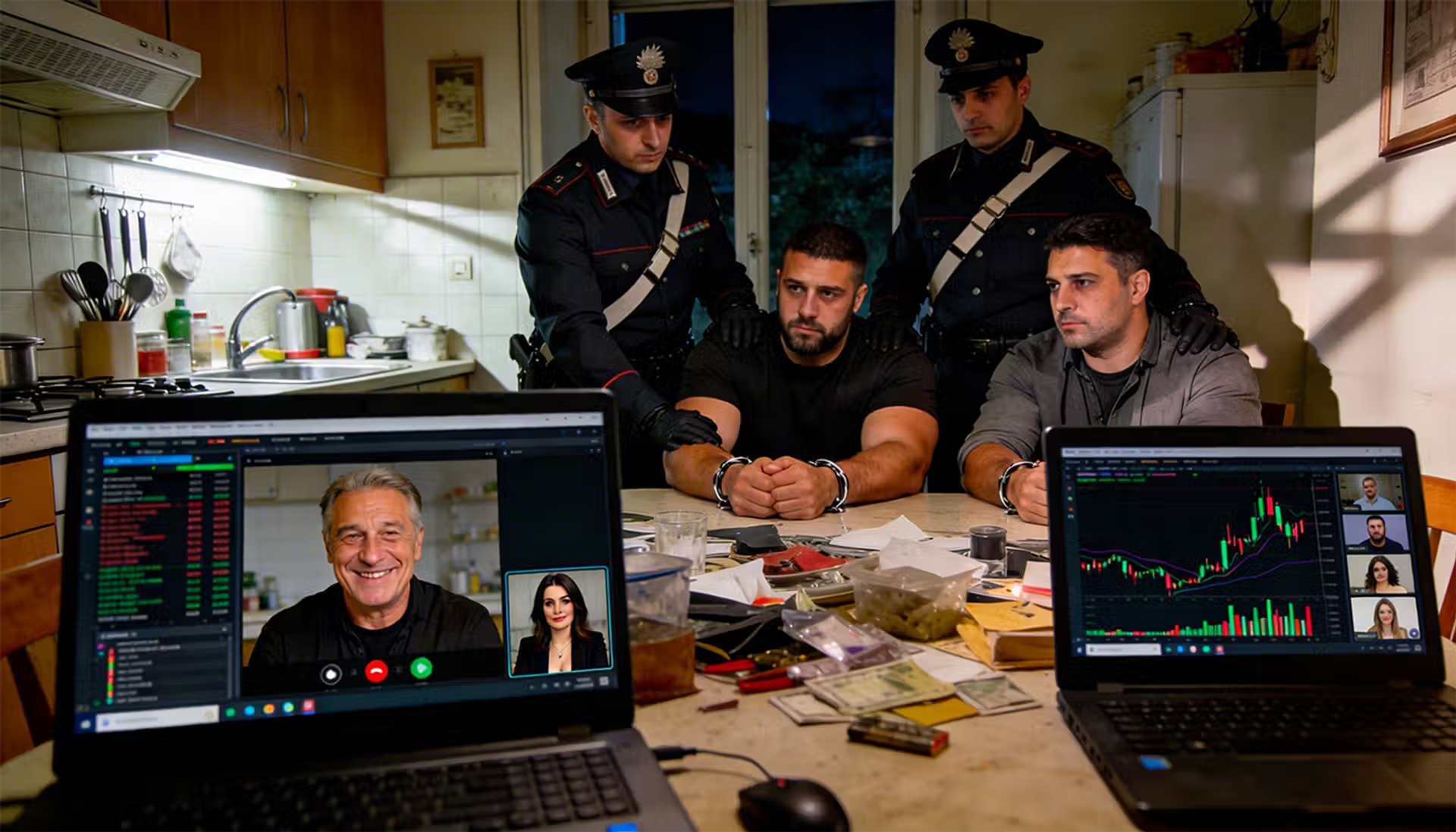
The Korea Customs Service recently dismantled a major criminal organization involved in laundering 148.9 billion won through unauthorized digital asset transfers. Investigations revealed that three Chinese nationals orchestrated the scheme by exploiting domestic bank accounts and international cryptocurrency platforms between September 2021 and June of the previous year. The suspects have been referred to the prosecution for serious violations of the Foreign Exchange Transactions Act. This case highlights the increasing complexity of cross-border financial crimes that utilize virtual assets to bypass traditional monitoring systems. Authorities remain vigilant as they continue to investigate the broader network of domestic bank accounts used to facilitate these illicit movements.
Table of Contents


Foreign Exchange Transactions Act Violations in South Korea
The primary mechanism for this massive illicit operation involved the systematic circumvention of the Foreign Exchange Transactions Act. By moving 148.9 billion won outside of authorized channels, the criminal ring managed to avoid the rigorous reporting requirements that typically govern large-scale international transfers. Under South Korean law, the act serves as a foundational pillar for maintaining financial stability and preventing the unauthorized outflow of capital. The suspects specifically targeted the high liquidity of the digital asset market to bridge the gap between foreign currencies and the Korean won. This method allowed them to obscure the origin of the funds while making the transfers appear as routine market activity.
Financial regulators have observed that the use of unauthorized foreign exchange schemes is a growing trend among money laundering syndicates. By operating outside the purview of the Korea Customs Service and the Financial Intelligence Unit, these groups can move significant sums of money without triggering the automated alerts associated with traditional wire transfers. The prosecution of the three Chinese nationals serves as a stern warning to those attempting to leverage the perceived anonymity of the blockchain to facilitate capital flight or the cleaning of criminal proceeds. The scale of the 150 billion won case underscores the sheer volume of capital that can be moved when multiple digital wallets and domestic bank accounts are synchronized in an illegal network.



Exploitation of Cosmetic Surgery and Education Fees
One of the most deceptive aspects of this money laundering case was the use of legitimate-sounding justifications for the fund transfers. To maintain a veneer of legality, the suspects funneled the laundered money through bank accounts under the guise of paying for cosmetic surgery fees and overseas study costs. These categories are common in South Korea for legitimate foreign exchange, as the country is a global hub for medical tourism and international education. By blending their illicit activities with these high-volume sectors, the criminals hoped to disappear into the background noise of daily financial traffic. This tactic is known in anti-money laundering circles as layering, where the true source of wealth is buried under layers of seemingly ordinary transactions.
The investigation by the Korea Customs Service found that the funds were often broken down into smaller amounts to further avoid detection. These smaller payments were made to appear as individual tuition payments or medical bills for foreign nationals visiting Seoul. This granular approach to money laundering makes it significantly more difficult for compliance officers at commercial banks to identify suspicious patterns. The use of domestic students and medical patients as cover stories exploited the trust inherent in the Korean financial system. However, the disconnect between the reported purpose of the funds and the actual flow of cryptocurrency eventually allowed investigators to trace the assets back to the digital wallets controlled by the suspects.
Digital Wallets and Global Cryptocurrency Maneuvers
The technical execution of the scheme involved a sophisticated global circuit of digital asset purchases and transfers. The suspects reportedly acquired cryptocurrency in various countries, taking advantage of different regulatory environments and price discrepancies. Once purchased, the assets were moved into a series of digital wallets located in South Korea. This international hopping was designed to break the audit trail and make it nearly impossible for a single jurisdiction to track the entire lifecycle of the money. By converting the digital assets into Korean won on domestic exchanges, the ring was able to inject the laundered cash directly into the local economy via numerous bank accounts.
This case emphasizes the critical role of virtual asset service providers in the modern anti-money laundering landscape. South Korea has recently tightened its oversight of these entities, requiring them to implement real-name account verification and report suspicious activity to the authorities. Despite these hurdles, the 150 billion won ring managed to operate for nearly two years by using a vast network of mule accounts and non-custodial wallets. The ability to move such a large volume of value across borders in near real-time remains a significant challenge for customs officials. The subsequent conversion of these digital tokens back into fiat currency is the final stage of the process, which allows the criminals to enjoy the fruits of their labor within the traditional financial system.
Strengthening Regulatory Oversight and Enforcement
In response to this significant breach, South Korean authorities are moving to enhance the monitoring of cross-border virtual asset transactions. The Korea Customs Service has indicated that it will increase its cooperation with international law enforcement agencies to track the movement of digital assets that originate from overseas. As money laundering techniques evolve, the legal framework must also adapt to ensure that new technologies are not used as tools for financial crime. This includes potential amendments to the Foreign Exchange Transactions Act that specifically address the unique characteristics of stablecoins and decentralized finance platforms.
The successful referral of the three suspects to the prosecution marks a major victory for the Korea Customs Service in its ongoing battle against crypto-related crime. It serves as a case study for financial institutions on the importance of verifying the underlying purpose of high-value transfers, even when they appear to be related to common industries like healthcare or education. Moving forward, the integration of advanced blockchain analytics will be essential for identifying the clusters of wallets used by such organizations. By focusing on the intersection of digital assets and traditional banking, regulators aim to close the loopholes that allowed 150 billion won to be laundered with relative ease.
Key Points
- South Korean customs uncovered a massive 150 billion won money laundering scheme involving cryptocurrency and unauthorized foreign exchange.
- The suspects used three Chinese nationals to manage the illegal transfers between September 2021 and June of the previous year.
- Laundered funds were disguised as legitimate payments for cosmetic surgery and overseas educational expenses to evade bank monitoring.
- The criminal ring exploited numerous domestic bank accounts and international digital wallets to obscure the trail of the laundered won.
- Authorities referred the suspects to the prosecution for violating the Foreign Exchange Transactions Act following a lengthy investigation.
Related Links
- Korea Customs Service Official Website
- South Korea Financial Intelligence Unit AML Reports
- FATF Guidance on Virtual Assets and VASPs
- Bank of Korea Foreign Exchange Transaction Regulations
- South Korea Ministry of Justice Prosecution News
Other FinCrime Central Articles About Korea
- KoFIU Sanctions Korbit With 1.9M$ Penalty for Significant AML Violations
- Korea Financial Intelligence Unit (KoFIU) Revamps Regulatory Compliance Standards
- Major Blow to Crypto Market as Korea’s FIU (KOFIU) Imposes Heavy Penalties on Exchanges
Source: Yonhap News Agency, by Kim Han-joo
Some of FinCrime Central’s articles may have been enriched or edited with the help of AI tools. It may contain unintentional errors.
Want to promote your brand, or need some help selecting the right solution or the right advisory firm? Email us at info@fincrimecentral.com; we probably have the right contact for you.