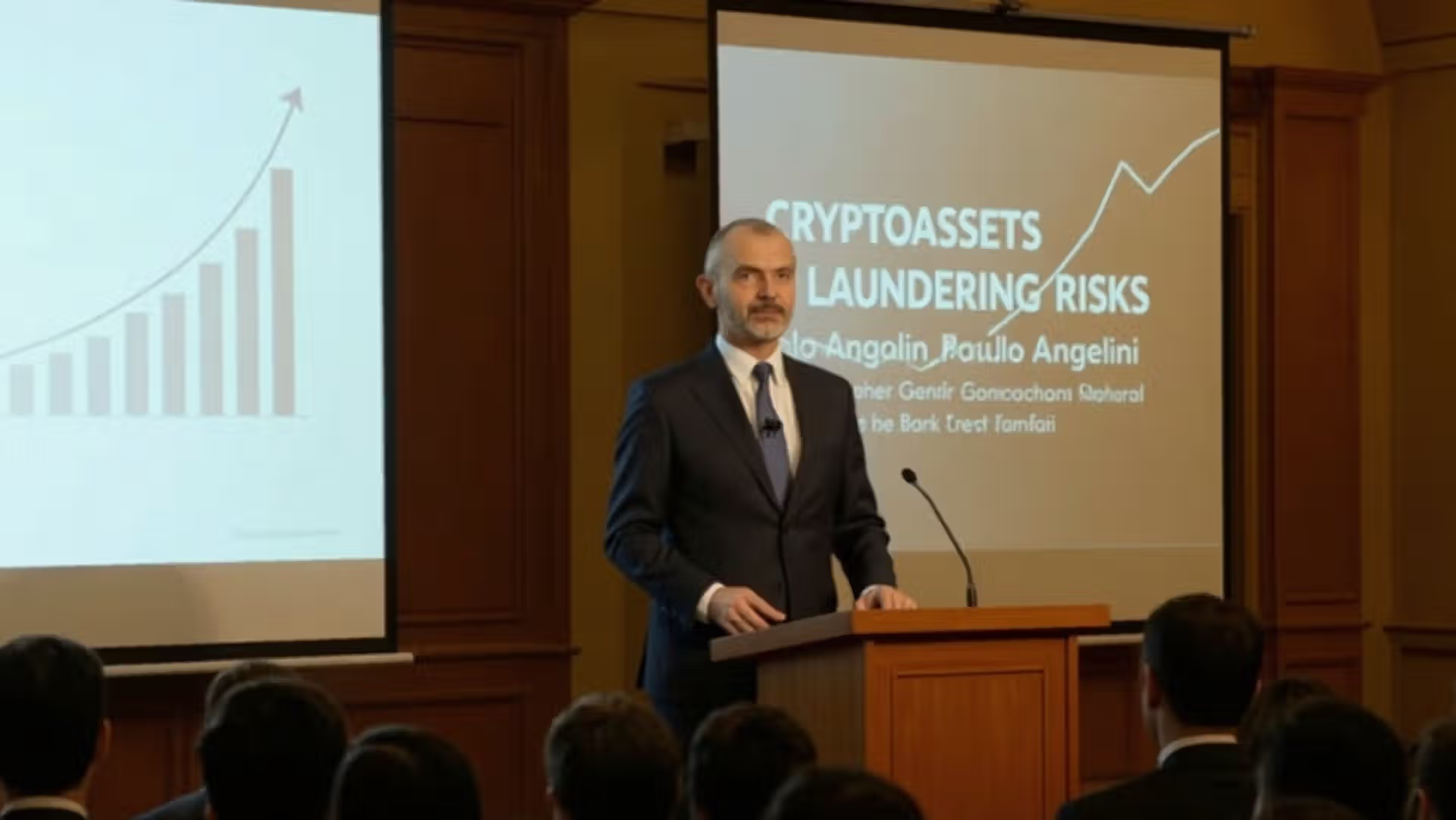
Rapid changes in digital finance are reshaping how illicit funds move across borders, which is why the latest remarks from a senior Italian authority gained strong attention across the AML community. Paolo Angelini, Deputy Director General of the Bank of Italy, delivered a policy speech in Rome on November 28, 2025 at the UIF Bocconi Workshop on economic crime. His intervention stressed the operational risks created by new digital tools used by criminal networks. The speech also detailed how regulatory gaps are shaping new laundering patterns across Europe. The remarks provided a structured overview of current risks and the challenges national authorities now confront.
Table of Contents


Cryptoasset laundering
The speech set out how criminals increasingly exploit digital instruments to move and conceal proceeds of crime, especially through channels that sit outside traditional oversight. While many transactions still flow through regulated intermediaries, a growing share of illicit activity leverages mechanisms designed to bypass customer checks. According to the speech, self-custodied wallets allow users to store and move significant value with minimal traceability, and this characteristic shifts laundering methodologies away from high-risk cash transport into digital formats. These wallets mirror the functional role of physical cash containers, except they can store far higher amounts and require only a small device to operate.
Angelini noted that cryptoassets were built to reduce the need for intermediaries, which creates a structural challenge for AML frameworks developed around supervised institutions. Even though the EU introduced obligations for cryptoasset service providers under MiCAR, criminal actors can still execute transfers that never touch a regulated platform. This creates a blind spot for supervisors and law enforcement, who must rely on blockchain analytics rather than direct reporting. Criminal groups exploit this space by moving value across jurisdictions with inconsistent regulatory coverage.
Stablecoins received particular attention due to their role in shielding illicit funds from the high volatility typical of other digital instruments. Large-scale criminal networks treat these instruments as a form of digital cash that retains value during long operational cycles. The speech highlighted that stablecoins issued outside the EU regulatory perimeter weaken the capacity of authorities to detect suspicious flows. When transactions avoid European service providers entirely, the normal reporting and monitoring mechanisms fail to capture the activity. This increases the difficulty of identifying cross-border schemes, especially when transactions originate from platforms based in jurisdictions with limited AML controls.
Organized crime adoption of digital financial tools
Angelini presented evidence that Italian criminal organizations have rapidly integrated technological tools into their operations. The official estimates cited from national datasets show that a meaningful portion of domestic businesses displayed links to organized crime during the last decade. Criminal networks use digital environments to expand economic influence and to disguise illicit proceeds within legitimate commercial activity. As businesses increasingly adopt digital payment infrastructures, criminal actors exploit these same channels with greater sophistication.
The speech referred to growth in fraud models built on the crime-as-a-service structure, where specialized entities provide tools that support illegal activity at scale. This industrialization lowers the barrier to entry for laundering operations. When combined with synthetic identities, manipulated biometric data, and sophisticated phishing schemes, criminal groups can bypass customer verification procedures with higher success rates. Italian authorities have recorded a rise in fraud incidents against bank customers, and these events often act as entry points for laundering operations.
Technology also facilitated the expansion of illicit markets that generate substantial criminal revenue. One example discussed was the significant increase in psychotropic substance consumption, which fuels a steady flow of funds requiring integration into the financial system. As transnational criminal groups coordinate operations across borders, their financial activity becomes more complex and difficult for national authorities to track without advanced analytical capabilities. The speech described this environment as one where law enforcement faces escalating challenges, particularly when digital tools remove the physical constraints that previously limited criminal mobility.
Regulatory blind spots and emerging AML challenges
Angelini warned that regulatory inconsistencies across jurisdictions create opportunities for laundering. Even though major economies have adopted AML obligations for cryptoasset intermediaries, gaps remain that criminals exploit strategically. A user in Europe might try to avoid domestic controls by conducting transactions through platforms headquartered in jurisdictions with weaker oversight. While traditional banks still apply due diligence when converting digital value into fiat currency, the ability to operate in digital form for extended periods reduces exposure to detection.
The speech underscored the increasing relevance of decentralized finance structures, where services operate without identifiable intermediaries. When criminal activity is routed through these environments, the standard AML toolset cannot function properly. Transactions occur through automated mechanisms rather than supervised institutions, leading to an absence of mandatory reporting. This lack of governance presents a serious compliance challenge for national authorities.
Angelini also noted that some stablecoin issuers hold the technical capacity to block or recover assets involved in suspicious activity, but these powers are not uniformly regulated. Without clear legal frameworks that define responsibilities and enforcement parameters, authorities face uncertainty about how to leverage these capabilities in investigations. The speech emphasized that issuers based outside the major regulatory blocks pose a particular challenge. When their products circulate widely but fall outside direct supervision, the financial system becomes vulnerable to misuse.
The scale of stablecoin circulation, while still small relative to traditional monetary aggregates, has triggered international concern due to the growth potential of these instruments. If widely adopted, criminal networks could bypass conversion into traditional payment systems altogether. Angelini stressed that such a development would severely impede AML effectiveness and could diminish the visibility of illicit flows. Ongoing work by global standard-setting bodies aims to mitigate these risks, but operational and legal gaps persist.
Broader implications for AML cooperation
Angelini concluded that technological change has intensified both criminal capabilities and the tools available to those working against them. The Bank of Italy and its financial intelligence unit maintain extensive datasets that support advanced modeling of criminal behavior. These analytical capabilities allow authorities to map infiltration patterns and identify systemic vulnerabilities within the economy. By combining quantitative methods with detailed micro-level information, supervisory bodies can track complex schemes that previously escaped detection.
The speech stressed that the effectiveness of national AML systems depends on strong cooperation between supervisory authorities, investigative bodies, judicial institutions, financial intermediaries, and academic researchers. Criminal organizations develop cross-border structures, so AML frameworks must rely on information sharing and coordinated responses. The workshop itself served as a demonstration of this collaborative approach. According to Angelini, the collective commitment of institutions and industry remains essential to safeguarding the integrity of the financial system as digital innovation accelerates.
Key Points
• Speech delivered by Paolo Angelini in Rome on November 28, 2025
• Emphasis on misuse of digital tools for illicit finance
• Stablecoins highlighted as a significant laundering risk
• Self-custodied wallets identified as a major blind spot
• International regulatory gaps exploited by criminal networks
Related Links
- FATF Virtual Assets Guidance
- European Banking Authority AML Resources
- Bank of Italy Financial Intelligence Unit
- European Commission MiCAR
Other FinCrime Central Articles About MiCA
- ESAs Set Clear Guidelines for Crypto-Asset Classification Under MiCAR
- France Threatens Passporting Block Over MiCA Money Laundering Concerns
- The ESMA MiCA Rulebook: Professionalism and Protection for Crypto Investors
Source: Banca d’Italia
Some of FinCrime Central’s articles may have been enriched or edited with the help of AI tools. It may contain unintentional errors.
Want to promote your brand, or need some help selecting the right solution or the right advisory firm? Email us at info@fincrimecentral.com; we probably have the right contact for you.