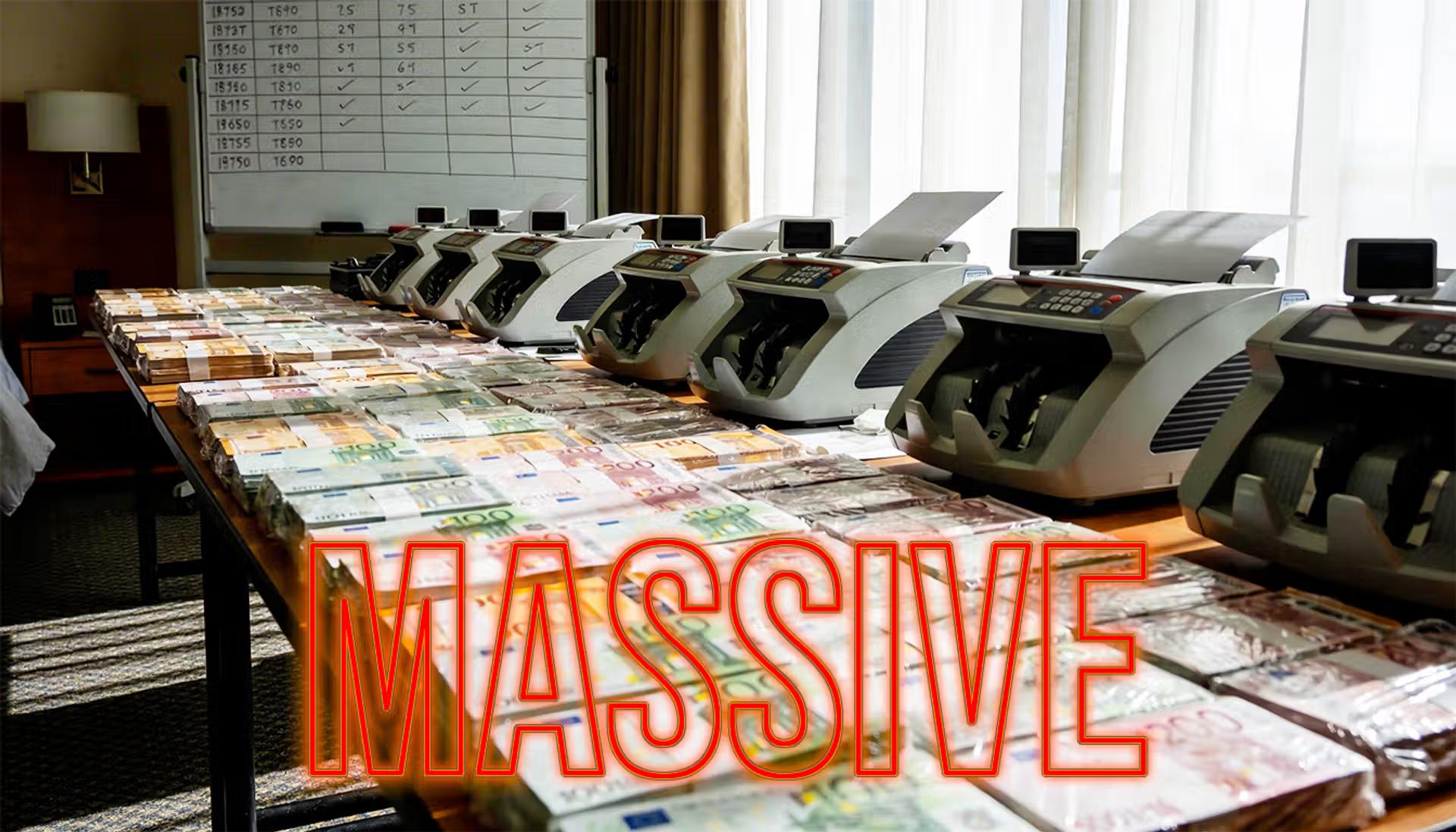
The Guardia di Finanza of Ancona recently dismantled a sprawling international money laundering network responsible for circulating 5 billion euros through sophisticated underground banking channels. This massive operation, which led to the issuance of seizure orders totaling 1 billion euros, targeted a criminal structure that specialized in cleaning illicit funds for thousands of entrepreneurs. Investigators successfully confiscated assets and valuables worth 50 million euros as part of a crackdown on the systematic export of capital to foreign jurisdictions. The case underscores the extreme complexity of modern financial crimes and the specialized techniques used by authorities to track capital that bypasses traditional banking oversight.
Table of Contents


Italian Financial Police Expose CMLN Multi-Billion Money Laundering Scheme
The initial phase of the money laundering investigation began with a series of routine audits on textile manufacturers in the Marche region, but quickly escalated as officers identified a recurring pattern of massive cash withdrawals. These firms, predominantly managed by Chinese nationals, were found to be using business accounts to receive payments and immediately emptying them via ATMs, with some individual accounts showing withdrawals exceeding 200,000 euros in a single year. This behavior served as the primary indicator that the companies were not participating in legitimate commerce but were instead functioning as nodes in a much larger capital diversion pipeline. As the financial police deepened their inquiry, they discovered that the movement of 5 billion euros was facilitated by a highly organized shadow economy designed to erase the audit trail of domestic profits.
The laundering process evolved significantly as the criminal organization matured, moving from localized fraud to a professionalized, service-oriented model based in northern Italy. To protect the illicit capital from detection, the group established a vast network of shell companies that offered laundering services to legitimate Italian businesses seeking to hide their revenue. These businesses would pay the shell companies for fictitious services, effectively transferring their taxable income into the hands of the laundering syndicate. In return, the syndicate would return the funds to the business owners in cash, minus a commission, effectively creating a self-sustaining loop of untraceable currency that deprived the state of essential tax revenue while feeding the underground market.
The sophistication of this network was mirrored in its geographical expansion. By shifting operations to major commercial hubs in Northern Italy, the laundries could hide their high-volume transactions among the massive daily flow of legitimate corporate banking. The intermediaries involved in these transactions were not mere amateurs; they were professional facilitators who understood the nuances of the European financial system. Their ability to manage hundreds of millions of euros in a short timeframe without triggering immediate red flags demonstrates a level of expertise that challenges even the most robust anti-money laundering frameworks currently in place.



The Role of Shell Companies and Underground Banking Systems
Central to the laundering infrastructure were 433 shell companies that existed solely as legal facades for the movement of 5 billion euros. These entities possessed no physical assets, no workforce, and no genuine business activity, yet they generated a staggering volume of financial documentation. These companies functioned as high-velocity conduits, often remaining active for less than twelve months to avoid the scrutiny that comes with long-term fiscal reporting. During their brief existence, they would move hundreds of millions of euros through diverse accounts, ensuring that by the time authorities began an audit, the company would be liquidated, and the funds would have already reached their next destination.
The investigation revealed that when traditional bank transfers became too risky due to enhanced monitoring, the organization pivoted to a clandestine underground banking system. One such operation was discovered within a hotel in Cinisello Balsamo, where couriers and managers handled millions of euros in physical currency outside the view of any regulatory body. This shadow bank acted as a clearinghouse, matching the needs of those who had excess illicit cash with those who needed to receive laundered funds from digital transfers. By maintaining a massive pool of liquid assets that rivaled legitimate credit institutions, the underground bank ensured the seamless conversion of digital credits into physical paper money, a crucial step in the laundering cycle.
To further obscure the destination of the laundered 5 billion euros, the suspects utilized a technique involving virtual and time-delayed bank accounts. These accounts were structured to appear as though they were based in European jurisdictions, providing a veneer of legitimacy to the transfers. However, the underlying financial infrastructure was rooted in China, allowing the capital to exit the European Economic Area with minimal resistance. This strategy was specifically designed to circumvent the suspicious transaction reports that banking intermediaries are required to file, demonstrating a deep understanding of the regulatory gaps that exist between international financial zones.
Sophisticated Technology and Professional Intermediaries in Financial Crime
The technological arsenal used by the laundering syndicate was extensive and highly specialized. During raids in 2025, the Guardia di Finanza seized advanced hardware capable of managing over 40 corporate accounts simultaneously, allowing a single operative to orchestrate complex sequences of transfers across multiple jurisdictions. This automation of the laundering process meant that billions of euros could be fragmented and moved across the globe in a matter of hours. The use of forged passports and residence permits facilitated the creation of thousands of fake identities, which were then used to open the bank accounts necessary to support this digital shell game.
Furthermore, the organization exploited the role of professional data processing centers and accounting firms to give their activities an air of total compliance. These centers were responsible for the digital integration of the fraudulent transactions into the national electronic invoicing system, making it nearly impossible for automated tax filters to distinguish between a fake invoice and a real one. By utilizing National Service Cards and smart cards, the perpetrators could log into government portals and manage the fiscal profiles of their shell companies with the same tools used by legitimate accountants, effectively hiding their crimes in plain sight.
The intermediaries, or brokers, played a pivotal role by connecting the criminal core with the broader Italian business community. These individuals acted as consultants for tax evasion and money laundering, marketing the services of the shell companies to entrepreneurs who wanted to reduce their tax burden. This commercialization of financial crime meant that the laundering network could scale rapidly, eventually involving over 60,000 companies. The brokers ensured that the flow of illicit capital remained constant, managing the logistics of cash collection and the distribution of the laundered funds, thereby isolating the primary organizers from the end-users of the scheme.
Impact on the Textile Sector and Judicial Consequences
The dismantling of this 5 billion euro laundering operation has had a profound impact on the economic landscape, particularly within the textile sector of the Marche region. This industry, which is a strategic asset for the local economy, had been distorted by the presence of firms that used laundered funds to gain an unfair competitive advantage. By removing 433 fraudulent businesses from the commercial register and cancelling their VAT numbers, the authorities have restored a level of market integrity that had been eroded by years of systematic financial abuse. The operation serves as a clear warning that the misuse of corporate structures for the purpose of capital flight will be met with significant judicial force.
The recovery of assets has been a priority for the Ancona Public Prosecutor’s Office, which has targeted the tangible wealth accumulated by the launderers. The seizure of 28 properties, including luxury apartments in Milan and industrial warehouses, represents the physical manifestation of the illicit profits that were siphoned out of the legitimate economy. Even highly liquid assets like fine art and luxury goods were not safe from the reach of the investigators, who sought to ensure that no portion of the 5 billion euros remained in the hands of the criminal network. The ongoing application of Legislative Decree 231/2001 against the 329 joint-stock companies involved ensures that the entities themselves are held accountable for their role in facilitating the laundering.
As the legal process continues, the focus remains on the 281 individuals reported for their participation in this global conspiracy. The case highlights the necessity of a multifaceted approach to combating financial crime, combining traditional boots-on-the-ground police work with sophisticated digital forensics and international cooperation. While the suspects benefit from the presumption of innocence until a final verdict is reached, the volume of evidence regarding the underground bank and the simulated import-export transactions provides a detailed roadmap of how modern syndicates move billions of euros across borders. This investigation will likely serve as a benchmark for future anti-money laundering efforts across Europe.
Key Points
- The investigation uncovered a 5 billion euro money laundering operation using a network of 433 shell companies and underground banks.
- Authorities issued a 1 billion euro seizure order and have already confiscated 50 million euros in property, art, and cash.
- The criminal organization used sophisticated technology and virtual bank accounts to bypass European anti-money laundering regulations and export capital to China.
- More than 60,000 entities were linked to the scheme, which utilized a cash-back mechanism to return laundered funds to business owners.
Related Links
- Ministry of Justice Italy Reports on International Financial Fraud
- FATF Guidance on Money Laundering Risks in the Textile and Garment Sector
- Ancona Public Prosecutor Office Judicial Notices on Tax Crimes
Other FinCrime Central Articles About Italy’s Fight Against Money Laundering and Terrorism Financing
- Italy Seizes 8 M€ and Arrests 9 in Hamas Fake Charity Crackdown
- Italy highlights AML threats from cryptoassets and stablecoins
- Italy Enforces EU Crypto Regulation to Tackle Illicit Transactions in 2025
Source: Guardia Di Finanza
Some of FinCrime Central’s articles may have been enriched or edited with the help of AI tools. It may contain unintentional errors.
Want to promote your brand, or need some help selecting the right solution or the right advisory firm? Email us at info@fincrimecentral.com; we probably have the right contact for you.