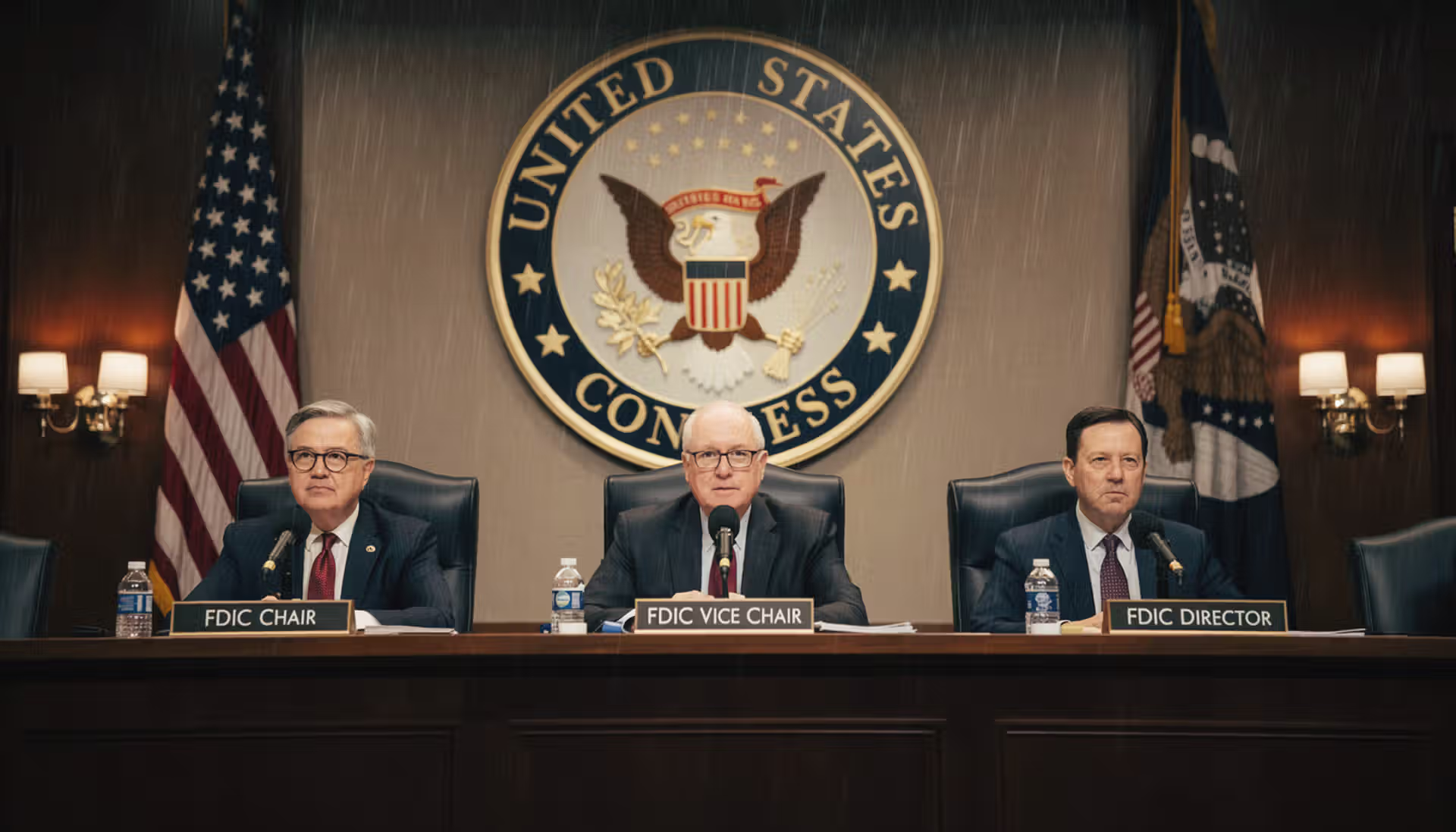
FDIC Acting Chairman Travis Hill used his testimony before the House Financial Services Committee on 2 December 2025 to describe how the agency will implement the GENIUS Act across insured institutions. His remarks clarified that the statute is complete and no revisions are being considered, and the work ahead focuses on translating its requirements into formal rules. The hearing made clear that the FDIC will issue regulatory proposals that define how banks may apply to establish stablecoin issuing subsidiaries and how prudential obligations will operate. These details will directly influence AML frameworks because tokenized liabilities require monitoring practices aligned to emerging risk profiles. Hill’s comments also demonstrated a broader shift toward measurable outcomes in compliance programs that operate across both traditional and digital activities.
Table of Contents


GENIUS Act implementation and AML alignment
Hill stated that the GENIUS Act had already been passed by Congress earlier in 2025 and that the FDIC carries the responsibility to implement the statute rather than modify it. This clarification anchors the regulatory path that banks must follow and removes speculation about potential legislative changes. Hill explained that the agency will soon publish a proposed rule describing the process for banks that intend to establish stablecoin issuing subsidiaries. The forthcoming rule will outline application procedures, eligibility conditions, and supervisory expectations for institutions entering the stablecoin market under a federally backed framework. He added that a second proposed rule will define prudential requirements covering reserve management, liquidity practices, governance structures, and operational reliability. These statements represent implementation steps mandated by federal law rather than amendments to the statute, and they set the parameters within which AML teams must prepare.
The implications for AML functions are substantial. Stablecoin issuance introduces transactional characteristics that differ from traditional deposit products, and the oversight model requires controls that can capture real-time token movements across platforms. Hill’s testimony indicated that the FDIC’s implementation strategy acknowledges these complexities and intends to build supervisory expectations that reflect them. By confirming that the agency is executing an enacted statute rather than rewriting it, Hill established a predictable foundation for compliance planning. AML teams will need to align their risk assessments and monitoring approaches with this regulatory trajectory while preparing for increased scrutiny of tokenized payment flows.
Regulatory expectations for AML teams under the new framework
Hill’s comments signaled that significant AML expectations will emerge through regulation rather than statutory revision. The agency intends to supervise stablecoin activities in a manner consistent with their financial risk characteristics, and AML obligations will align with those prudential expectations. Banks issuing stablecoins under the GENIUS Act framework will be required to demonstrate transaction monitoring capabilities that reflect token velocity, cross-border mobility, and platform interoperability. The formal prudential rules that follow the upcoming proposals are expected to establish standards that influence how AML programs classify and monitor risks tied to tokenized liabilities.
Hill emphasized that the FDIC views tokenized forms of value as instruments that require strong, risk-aligned AML controls supported by high-quality data. The need for real-time visibility into transactional patterns was highlighted as an operational requirement for institutions participating in stablecoin issuance. Although these themes appeared as supervisory direction rather than rulemaking, they reinforce the need for AML frameworks that bridge traditional and digital payment environments. Hill’s remarks also implied that institutions will be evaluated on their ability to integrate stablecoin activity into existing suspicious activity detection processes while adapting them to account for new channels and transaction types.
The testimony also confirmed that banks no longer need to notify supervisors before engaging in digital asset activities outside of the stablecoin licensing process, reflecting a completed supervisory change. This revision does not alter AML laws but raises the expectation that banks exercising this flexibility must maintain controls suited to the risks of the services they offer. AML teams must therefore prepare for examinations that review how digital asset exposure is incorporated into enterprise risk assessments and how monitoring processes capture behavioral patterns unique to these assets.
Outcome-driven AML expectations in evolving supervisory practice
Hill’s testimony repeatedly referenced a broader shift within the FDIC toward evaluating compliance programs based on measurable outcomes rather than procedural volume. This direction affects AML programs because it prioritizes evidence of risk mitigation rather than documentation produced to satisfy examination routines. AML teams will need to demonstrate how their alerts, investigations, escalation pathways, and governance functions contribute to tangible reductions in financial crime exposure. The expression of need for an outcome-oriented approach is not a change to statute, but it signals how supervisory tone will evolve in upcoming examinations.
This shift is also connected to parallel supervisory goals that extend beyond digital asset oversight. Hill described how the FDIC seeks to focus supervision on core material risks, and this includes AML vulnerabilities that may emerge across bank fintech partnerships, correspondent relationships, and high-speed payment channels. By aligning examinations with real-world risk, the FDIC intends to reduce the burden of procedural checks that do not provide meaningful insight into safety and soundness. AML programs will be evaluated on their ability to identify significant patterns of illicit behavior, manage typologies that evolve with market dynamics, and support decisions that maintain institutional integrity.
The testimony also addressed customer identification practices. The FDIC has already provided flexibility, allowing partial taxpayer identification information in specific onboarding scenarios while enabling reliance on trusted third-party verification. AML teams must ensure these arrangements preserve identity assurance and support downstream monitoring activities. Hill connected these changes to the broader need for efficient operations that maintain strong risk control, and AML teams will play a critical role in ensuring that this balance is maintained.
A supervisory direction that strengthens AML effectiveness
Hill’s testimony outlined a regulatory landscape where AML expectations expand as part of the implementation of the GENIUS Act and reflect a broader movement toward risk-aligned supervision. AML programs will need to adapt to stablecoin issuance frameworks supported by formal prudential rules, digital asset exposure that demands enhanced monitoring logic, and examination practices that emphasize outcomes rather than administrative volume. Institutions that prepare for these developments will be better positioned to demonstrate resilience and regulatory alignment as tokenized liabilities and digital payment channels gain prominence. Hill’s remarks clarified that the focus is not on revising the statute but on executing it in a way that ensures safety, soundness, and financial crime control across modernized banking operations.
Key Points
- Hill confirmed that the GENIUS Act is enacted and not subject to revision
- FDIC will issue rules that define stablecoin issuer applications and prudential obligations
- AML teams should expect new requirements derived from regulation rather than statute
- Tokenized liabilities require real-time AML visibility and risk-aligned monitoring
- Examinations will increasingly focus on measurable AML outcomes
Related Links
- FDIC Rules and Regulations
- FDIC Supervisory Insights
- OCC News and Issuances
- Federal Reserve Supervision Resources
- FATF Recommendations
Other FinCrime Central Articles About Stablecoin Regulation
- OCC Directs Wells Fargo to Strengthen AML Practices and Risk Management Procedures
- Crypto Multi-Chain Monitoring Gaps Create Growing AML Friction
- GENIUS Act Drives US Stablecoin Crackdown to Combat Money Laundering
Source: US House
Some of FinCrime Central’s articles may have been enriched or edited with the help of AI tools. It may contain unintentional errors.
Want to promote your brand, or need some help selecting the right solution or the right advisory firm? Email us at info@fincrimecentral.com; we probably have the right contact for you.