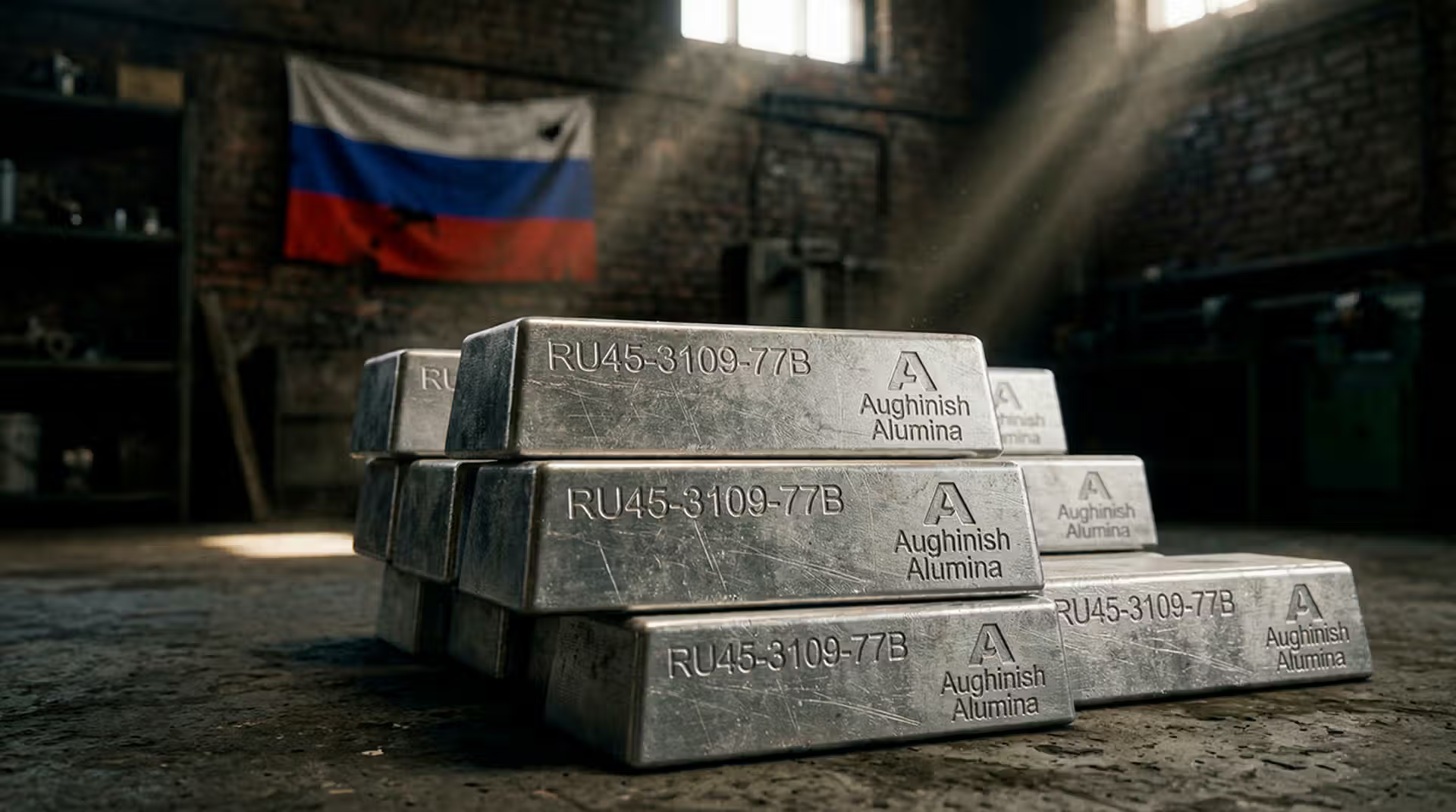
European authorities face intense pressure to reform trade regulations following revelations that an Irish refinery supplied raw materials to Russian smelters linked to sanctioned weapons manufacturers. The Belgian government is currently lobbying the European Union to expand its sanctions regime to prevent EU-produced materials from supporting the Russian military effort. This diplomatic push comes after investigative reports detailed how Aughinish Alumina exported over half of its production to Russian facilities owned by its parent company, Rusal. While these shipments remain technically legal under current frameworks, the resulting aluminum was sold to a Moscow-based trader supplying forty sanctioned arms companies.
Table of Contents


Identifying Vulnerabilities in the Alumina Supply Chain
The structural integrity of international trade monitoring is currently under scrutiny due to the flow of sensitive materials through legitimate corporate channels. Aughinish Alumina represents a critical node in this discussion as the largest alumina refinery in Europe. Recent investigations indicate that since early 2023, the facility has directed a massive portion of its output to Siberian smelters. These exports are valued at approximately 400 million dollars for the year 2024 alone. The primary issue stems from a regulatory gap where the European Union bans the import of Russian aluminum but allows the export of alumina to Russia. This creates a functional loophole where the raw material required for metal production continues to flow into the Russian industrial complex without violating the letter of existing law.
From an anti-money laundering and sanctions compliance perspective, this case illustrates the complexity of beneficial ownership and parent company influence. Because the refinery is owned by a Russian giant, the transfer of materials is an internal corporate movement that bypasses many standard red flags associated with third-party trade. However, the end use of the resulting product is what triggers a significant alarm. The Siberian smelters involved in this chain reportedly sold over 650 million dollars’ worth of aluminum to a specific Moscow trader. This intermediary serves as a central hub for the Russian defense industry, distributing the metal to dozens of entities that are explicitly named on international sanctions lists. This circular flow of value and material highlights how corporate structures can be utilized to maintain military production capabilities despite broad economic restrictions.
Financial oversight bodies are now examining how such vast quantities of material can be moved without triggering more aggressive intervention. The challenge lies in the dual-use nature of alumina and the economic significance of the refinery itself. As a major employer in Ireland and a vital part of the European metal market, the facility holds a position that complicates immediate regulatory crackdowns. Analysts suggest that the current situation represents a failure of the sanctions regime to account for the entire production lifecycle. By focusing only on the finished product, regulators have allowed the foundational ingredients of military hardware to move freely. This oversight provides a blueprint for how state-linked corporations can navigate around Western blockades by exploiting specific commodity exclusions.



Diplomatic Responses to Sanctions Evasion Risks
The political fallout from these trade revelations has reached the highest levels of government in both Brussels and Dublin. Belgium has taken a lead role in advocating for a total closure of the alumina loophole, characterizing the current trade flows as deeply disturbing. The Belgian foreign ministry is actively working to convince other member states that the safety of the European bloc depends on a more comprehensive definition of prohibited exports. There is a growing consensus among European leaders that the legal technicality allowing these shipments undermines the moral and strategic goals of the sanctions program. The involvement of sanctioned arms companies as the ultimate beneficiaries makes the continued export of raw materials politically untenable for many EU officials.
In Ireland, the government has acknowledged the severity of the situation while balancing domestic economic interests. The Prime Minister has expressed formal concern regarding the diversion of Irish materials into the Russian armaments industry. While noting that the supply chain involves intermediaries, the Irish administration is under pressure from opposition lawmakers to take a more proactive stance. Critics argue that the government has been insufficiently curious about the activities of major industrial players within its borders. The debate has moved toward a broader discussion on corporate responsibility and the necessity for companies to vet their trading partners beyond the bare minimum of legal compliance.
International experts in anti-corruption and sanctions enforcement argue that this case is a textbook example of a glaring loophole. By allowing a Russian-owned entity to supply its own domestic plants from an EU base, the regulatory framework effectively subsidizes the Russian war economy. There are calls from various international bodies to treat alumina with the same restrictive intensity as finished aluminum products. The argument is that the distinction between raw materials and finished goods is irrelevant when the entire supply chain is controlled by an entity with clear ties to a sanctioned state. This perspective is gaining traction in the European Parliament, where representatives are calling for an end to the game of hide and seek played by multinational corporations.
Implications for Future AML and Sanctions Policy
The long term impact of the Aughinish Alumina case will likely manifest in more rigorous reporting requirements for multi-jurisdictional industrial groups. Anti-money laundering professionals are focusing on the transparency of these supply chains and the role of Moscow-based traders who act as clearinghouses for sanctioned entities. The fact that 40 different arms companies were able to source material originating from an EU member state suggests a need for enhanced due diligence that looks several steps beyond the immediate buyer. Compliance officers are now being warned that technical legality does not equate to a lack of risk, especially when dealing with high-value commodities and complex ownership structures involving sanctioned jurisdictions.
Furthermore, the role of the EU sanctions envoy is becoming more prominent as the bloc seeks to harmonize enforcement. There is a push to empower European authorities to act more swiftly when new routes for material diversion are identified. The current reliance on member state-level enforcement often leads to inconsistencies that sophisticated actors can exploit. By centralizing the oversight of sensitive material exports, the EU hopes to eliminate the tactical advantages currently enjoyed by firms with parent companies in restricted nations. This shift represents a move toward a more holistic view of economic warfare, where the focus is on the total suppression of an adversary’s industrial capacity rather than targeted product bans.
As the investigation continues, the focus will remain on the financial tracks left by these transactions. The movement of 400 million dollars in goods requires a corresponding movement of capital, often through international banking channels. Tracking these payments and identifying the financial institutions that facilitate the trade of alumina to Russia is a priority for investigators. If the financial side of the transaction can be restricted, the physical movement of goods may follow. This intersection of trade compliance and financial oversight is where future AML efforts will be most concentrated, aiming to create a seamless barrier against the circumvention of international law.
Strengthening Oversight of Industrial Trade Flows
Moving forward, the European Union is expected to introduce new tiers of monitoring for commodities that have significant military applications. Alumina is now at the top of the list for potential reclassification. The goal is to create a system where the export of such materials requires explicit authorization and proof of non-military end use, regardless of the buyer’s identity. This would shift the burden of proof onto the exporting company, requiring them to demonstrate that their products are not contributing to the buildup of sanctioned military forces. Such a change would fundamentally alter the operating environment for refineries and other industrial facilities across the continent.
The Ukrainian government has been vocal in its support for these changes, arguing that any economic link to Russia serves to prolong the conflict. Ukrainian officials have stressed that the total isolation of the Russian economy is the only way to ensure regional security. This sentiment is echoed by various human rights groups and anti-corruption foundations, who view the alumina loophole as a failure of moral leadership. The pressure is not just coming from within the EU, but from a global coalition of actors who see the Irish refinery case as a test of Europe’s commitment to its own stated principles.
In conclusion, the situation surrounding Aughinish Alumina serves as a critical case study in modern sanctions evasion and the necessity for evolving AML strategies. The ability of a Russian-owned firm to legally export hundreds of millions of dollars in raw materials from the heart of the European Union highlights significant flaws in the current regulatory architecture. As Belgium and other nations push for reform, the focus must remain on closing these gaps and ensuring that corporate structures cannot be used as shields for illicit or harmful trade. The resolution of this issue will set a precedent for how the EU handles dual-use materials and complex corporate ownership in the years to come.
Key Points
- The Irish refinery Aughinish Alumina, exported 400 million dollars worth of raw material to Russia in 2024.
- Current EU law prohibits Russian aluminum imports but allows alumina exports to Russian soil.
- The alumina was processed by Rusal-owned smelters and sold to 40 sanctioned weapons manufacturers.
- Belgium is leading a diplomatic effort to close this trade loophole within the European Union framework.
- The case involves a complex supply chain involving a Moscow-based trader serving as a military supplier.
Related Links
- European Commission Sanctions Against Russia
- FATF Guidance on Counter Proliferation Financing
- Irish Department of Foreign Affairs Sanctions Information
- The Guardian: Irish metals refinery is in supply chain that feeds Russian war machine
- Council of the European Union Restrictive Measures
Other FinCrime Central Articles About Russia-Related Sanctions Evasion
- Bank of Scotland Pays 160,000 Pounds Following Russian Sanctions Breach
- Sanctions, Russia, and Evasion Tactics
- NCA Exposes Fake Banks Turning UK Crime Cash Into Funding for the Russian War Effort
Source: OCCRP, by Alena Koroleva, Ingrid Gercama, Lars Bové, and Conor Gallagher
Some of FinCrime Central’s articles may have been enriched or edited with the help of AI tools. It may contain unintentional errors.
Want to promote your brand, or need some help selecting the right solution or the right advisory firm? Email us at info@fincrimecentral.com; we probably have the right contact for you.