Dubai’s real estate market, a magnet for property investments, has seen rapid growth over the past two decades, but concerns over money laundering have begun to surface. With promises of high returns and a booming construction industry that has reshaped the city’s skyline, Dubai has become a prime destination for foreign investors. The city’s strategy of building towering skyscrapers and lavish villas has attracted investors globally. In 2024, Dubai’s real estate transactions reached a remarkable value of nearly €190 billion. However, hidden beneath this growth and prosperity lie questions about the origin of the funds fueling this market.
Table of Contents
The Issue of Money Laundering in Dubai’s Property Market
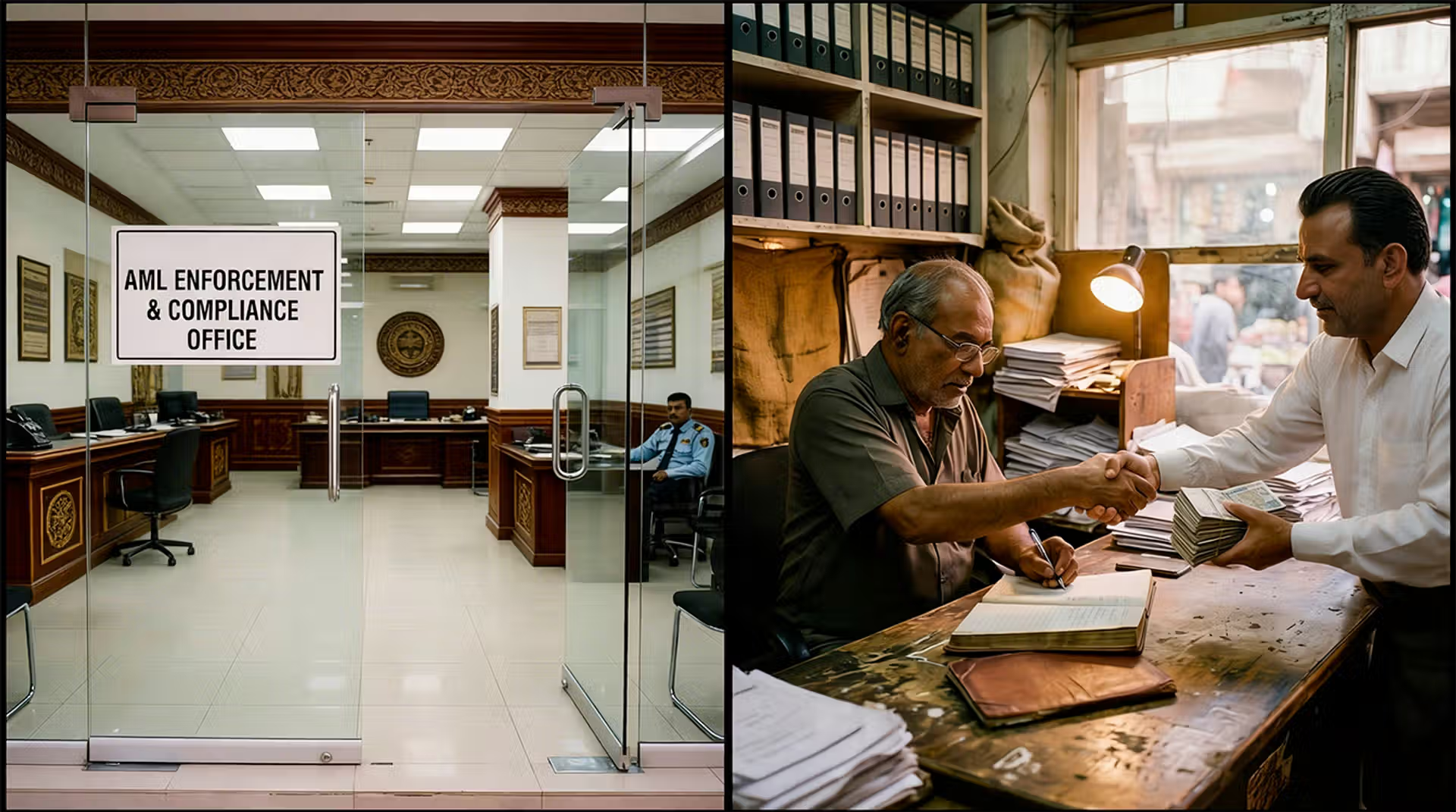
A closer examination of Dubai’s property transactions reveals a concerning trend: a significant portion of these deals is conducted with cash or cryptocurrency, both of which are key facilitators of money laundering activities. These methods enable individuals to conceal the origin of their funds, making it difficult for authorities to trace illegal activities. A judicial source notes the ease with which money can be transferred to Dubai, bypassing traditional banking channels entirely. This loophole has allowed individuals to funnel illicit money into the emirate’s booming real estate sector without drawing attention.
Among the foreign nationals contributing to this influx of investment, French nationals have emerged as significant players. In fact, approximately 3,000 French property owners have been identified through various real estate documents analyzed by Le Monde. While the majority of these individuals own only one property, a small number of wealthy French nationals hold extensive real estate portfolios, with some owning as many as 15 or more properties. This raises concerns about the origins of the money used to make such significant investments.
Case Study: The Curious Case of Jean S.
Jean S., a French businessman who made his fortune in the sausage casing industry, stands out as an example of how Dubai’s real estate market has attracted unusual investors. In December 2016, at the age of 91, Jean S. purchased 15 apartments in a small residential building just a stone’s throw from the iconic Burj Khalifa. The total cost of the apartments was 45.5 million dirhams (€11.3 million). These properties were immediately rented out, generating income that continues to this day. What makes this case particularly curious is that Jean S. passed away over five years ago, yet he is still listed as the owner of these properties.
Jean S.’s son, Jean-François S., confirmed that he only recently discovered the existence of these properties and that they were not included in his father’s estate. The family immediately sought the assistance of a tax lawyer to regularize the situation with French authorities. This case highlights the ease with which individuals can conceal real estate investments in Dubai and the challenges involved in tracing ownership after a person’s death.
Business Owners and Tax Evasion
A significant number of French nationals identified as property owners in Dubai are business owners operating in various sectors, including taxi services, fast food, and private security. These entrepreneurs, often generating cash income, find it relatively easy to evade taxes by funneling their profits into Dubai’s real estate market. A judicial source confirmed that these individuals can quickly transfer large sums of money into Dubai without facing scrutiny from French tax authorities, offering them a secure and profitable investment avenue.
Among the more intriguing cases is that of Svetlana A., a 43-year-old French woman born in Russia and working as a project manager for a large IT company in Nice. Despite her relatively modest profession, Svetlana A. has amassed an extensive property portfolio in Dubai, acquiring over 100 apartments and three luxury villas in 2022 alone. The total value of these purchases is estimated at €50 million, with rental income generating an estimated €4 million over the next three years. Svetlana’s investments span across some of Dubai’s most iconic skyscrapers, including Burj Royale, Opera Grand, and I-Rise Tower, among others.
What sets her apart from other property owners is her purchase of an entire building in June 2022. The Amara Residences, a five-story building with 73 apartments, was bought for 68 million dirhams (€17.4 million). Svetlana A.’s wealth can be traced to her involvement in blockchain and artificial intelligence technologies, as she claims to be highly skilled in these fields. Prior to her investments in Dubai, her name appeared in connection with companies based in Cyprus and Gibraltar that were involved in cryptocurrencies. She is also listed as the co-inventor of multiple patents, which she later used to launch a cryptocurrency called Verasity in 2018.
Cryptocurrency and Dubai’s Real Estate Market
The rise of cryptocurrency has had a profound impact on Dubai’s real estate market, with many investors using digital assets to fund property purchases. Svetlana A.’s involvement in Verasity and her ties to cryptocurrency investments have led to questions about whether her real estate success was fueled by the sudden surge in the value of digital currencies. While her lawyer denies any connection between her wealth and Verasity, further investigations suggest otherwise. Svetlana A. was the sole shareholder of Veraviews Limited, a British company later transferred to Verasity Limited SRL in Costa Rica. She also retains signing rights for a Dubai-based company directly linked to the founder of Verasity.
This case highlights the growing trend of cryptocurrency’s role in facilitating money laundering and tax evasion through real estate investments in Dubai. As cryptocurrency transactions remain largely unregulated and anonymous, they offer a perfect vehicle for hiding illicit wealth. The link between Dubai’s real estate market and cryptocurrency is becoming increasingly difficult to ignore.
The Role of Confidentiality in Real Estate Transactions
One of the most significant factors enabling money laundering in Dubai’s real estate market is the high level of confidentiality surrounding property transactions. The lack of transparency in the ownership structures of many properties makes it difficult for authorities to track the movement of illicit funds. This issue is further compounded by the presence of criminal organizations seeking to conceal and launder their ill-gotten gains through real estate.
Among the more notorious examples is Dounia M., a French-Moroccan woman married to a notorious drug trafficker. Dounia M. has been involved in several high-profile property purchases in Dubai, spending over €8 million on luxury real estate between 2016 and 2017. These properties, including apartments with views of the Burj Khalifa and villas on the Trump International Golf Club, raise suspicions about the source of the funds. Dounia M.’s husband, who is a fugitive from French justice, was convicted for his involvement in a murder related to drug trafficking. Despite his imprisonment in Morocco, Dounia continues to acquire properties in Dubai, further cementing the emirate’s reputation as a hub for money laundering and illicit financial activity.
Conclusion: Dubai’s Role in the Global Money Laundering Network
Dubai’s real estate market has become a haven for illicit financial activity, including money laundering, tax evasion, and the concealment of criminal wealth. The combination of high transaction volumes, confidentiality, and the use of cash and cryptocurrency has made the city an attractive destination for individuals seeking to hide their assets. While the authorities in Dubai continue to promote the city as a global investment hub, the lack of regulation and oversight in the real estate sector raises serious concerns about its role in the global money laundering network. As long as these loopholes remain, Dubai will continue to attract investors looking to conceal the origin of their funds and launder illicit wealth through real estate.
Related Links
- Dubai Real Estate Overview
- Cryptocurrency and Money Laundering
- The Rise of Money Laundering in Dubai
- How Dubai’s Real Estate Became a Money Laundering Haven
- Understanding Cryptocurrency Regulations in Dubai
Other FinCrime Central News Reports About Lack of Compliance in the Real Estate Business
- The Opacity in Real Estate Ownership Index Exposes Key Loopholes in AML Frameworks
- FinCEN’s New Rule to Protect U.S. Real Estate from Illicit Finance
- Singapore Money Laundering Suspects Spend $30M on Dubai Properties
- Overview of the Australian AML/CFT Amendment Bill 2024: Implications and Controversy
Source: Le Monde