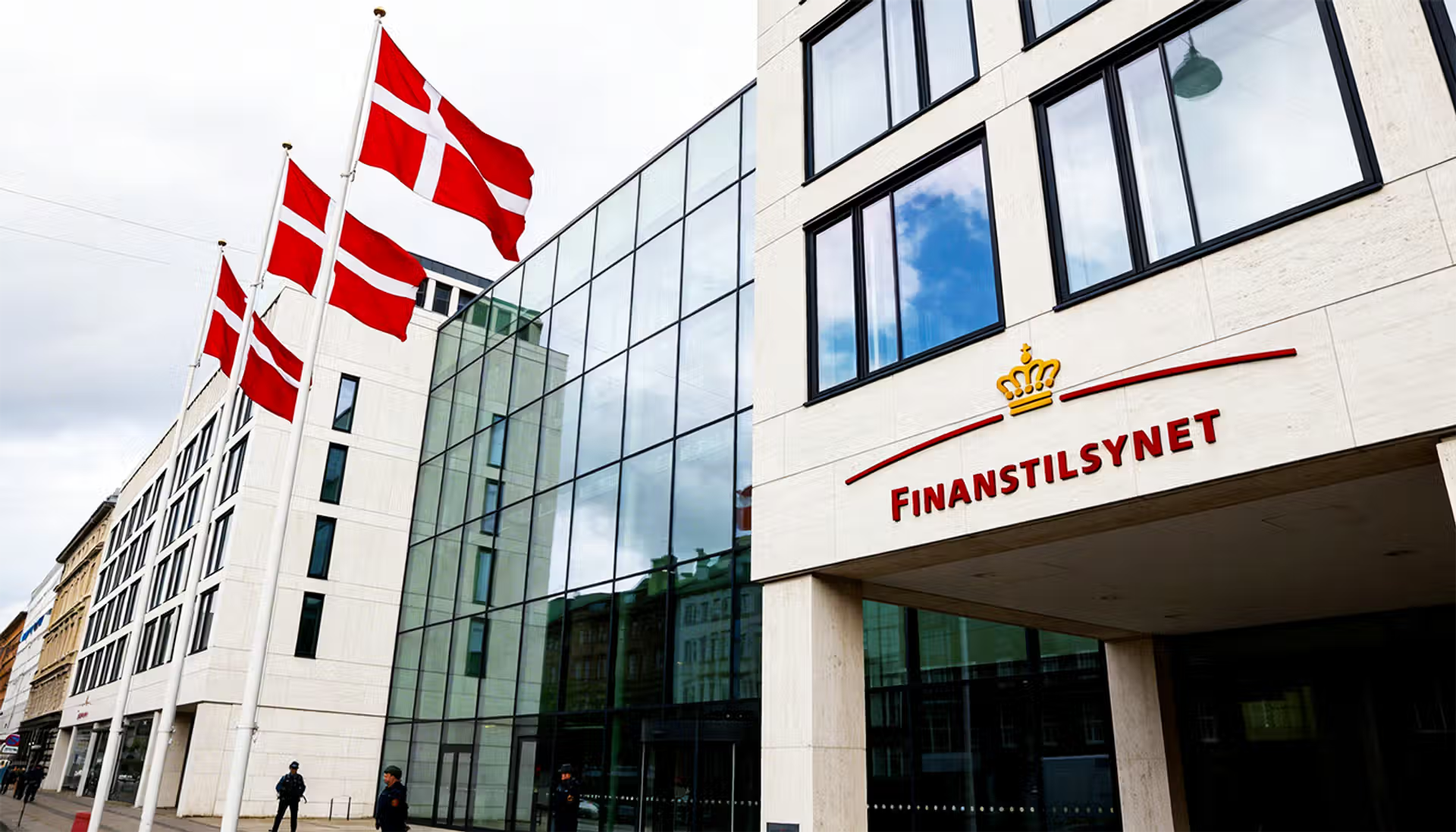
The Danish Financial Supervisory Authority has initiated a comprehensive strategic project to reduce the regulatory burden on smaller financial institutions within the national banking sector. This initiative seeks to establish a more proportional framework for banks that do not operate on an international scale or possess complex operational structures. By focusing on domestic entities with simpler risk profiles, the regulator aims to streamline compliance without undermining the overall stability of the financial system. The plan specifically targets areas such as recovery planning, capital redemption, and risk management to ensure that smaller savings banks are not held to the same granular standards as large systemic banking groups. This move follows previous adjustments to liquidity and fit and proper assessments, signaling a long-term commitment to risk-based supervision in Denmark.
Table of Contents


Streamlined financial regulation for smaller Danish banks
The primary objective of the new strategy is to address the expansion of financial regulation that has occurred since the global financial crisis. Most of these rules originated at the European Union level and were designed as uniform requirements for all institutions regardless of their size or complexity. The Danish Financial Supervisory Authority is now identifying specific areas where national discretion allows for a more flexible approach for non-complex banks. This national proportionality regime is intended to reflect actual risks rather than imposing unnecessary administrative weights on small domestic lenders. By moving away from a one-size-fits-all model, the regulator hopes to foster a more efficient banking environment while maintaining robust protections for consumers and investors alike.



Operational changes to recovery plans and capital instruments
Specific reforms are already being drafted to change how smaller banks handle their recovery plans and capital management. One significant proposal involves changing the frequency of recovery plan submissions from an annual requirement to once every three years for companies eligible for simplified obligations. Additionally, the threshold for submitting a basic capital raising plan instead of a comprehensive recovery strategy is expected to rise from a balance sheet total of one billion Danish Krone to two billion. The regulator is also introducing simplified processes for permits related to the redemption of its own capital instruments, particularly for market-making purposes. These changes are designed to provide small and medium-sized banks with greater operational flexibility when managing their own shares and capital adequacy.
Enhancements to corporate governance and solvency calculations
The Danish Financial Supervisory Authority plans to further develop proportionality within the executive order on management, which governs corporate governance and risk management. Proposals for these specific updates are expected to be ready for implementation by 2027 to ensure sound operations remain a priority during the transition. In terms of solvency, the regulator intends to provide guidance that allows smaller banks to use simpler methods for calculating their capital needs and solvency supplements. This change would reduce the need for exhaustive supplementary analyses and sensitivity calculations that are typically required for larger, more complex entities. By refining these technical requirements, the authority ensures that capital coverage remains sufficient while the process for determining that sufficiency becomes far less burdensome for small-scale staff.
Strategic alignment with European and national standards
This proportionality work is positioned as an independent national initiative that complements broader efforts by the European Banking Authority to simplify financial oversight. While much of the detailed regulation is determined at the European level, the Danish regulator actively participates in those technical processes to advocate for risk-based and proportionate rules. The current project will continue to explore other potential areas for simplification throughout 2026 to ensure the framework remains relevant. The overarching goal remains a balanced supervisory environment where the intensity of regulation is directly mapped to the systemic importance and risk profile of each individual bank. Through these efforts, Denmark seeks to maintain a secure financial market that is also accessible and manageable for the smaller institutions that serve local communities.
Key Points
- The Danish Financial Supervisory Authority is launching a national proportionality regime to simplify rules for small and non-complex banks.
- Recovery plan submission frequency will be reduced from annually to every three years for eligible smaller financial institutions.
- The balance sheet threshold for simplified recovery reporting is being raised from one billion to two billion Danish Krone.
- New simplified methods for calculating solvency needs and capital supplements will be introduced to reduce administrative burdens.
- The initiative aims to balance regulatory simplification with the continued protection of financial stability and investor safety.
Related Links
- Danish Financial Supervisory Authority Strategy and Publications
- European Banking Authority Proportionality and Simplification Reports
- European Commission Banking Union and Financial Regulation Framework
- Financial Action Task Force Guidance on Risk-Based Approach
Other FinCrime Central Articles About the Latest Sanctions From the Danish Regulators
- Danish FSA Identifies Major Risk Failures at Safenetpay ApS
- Saxo Bank Fined 46 Million Dollars for Anti-Money Laundering Failures
Source: Finanstilsynet
Some of FinCrime Central’s articles may have been enriched or edited with the help of AI tools. It may contain unintentional errors.
Want to promote your brand, or need some help selecting the right solution or the right advisory firm? Email us at info@fincrimecentral.com; we probably have the right contact for you.