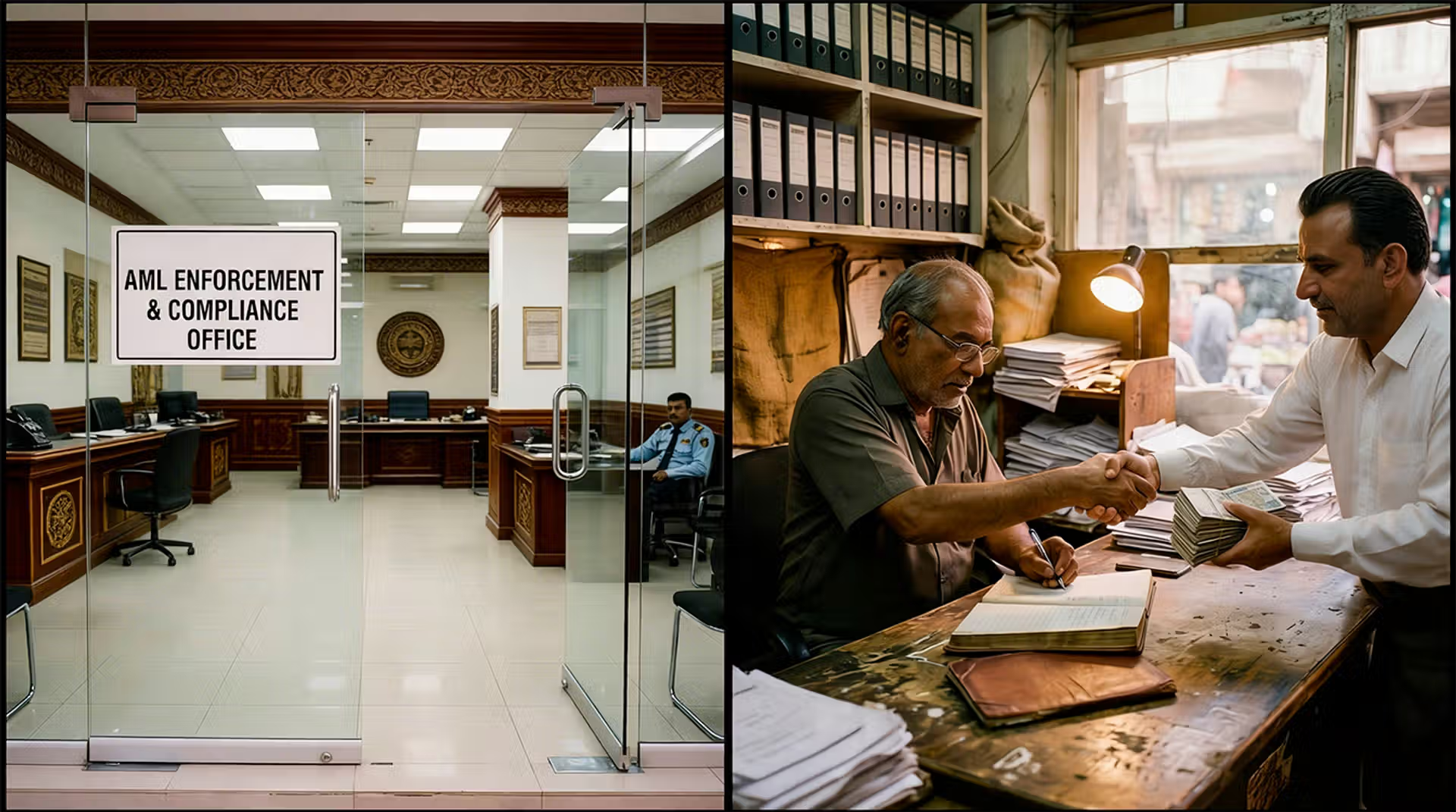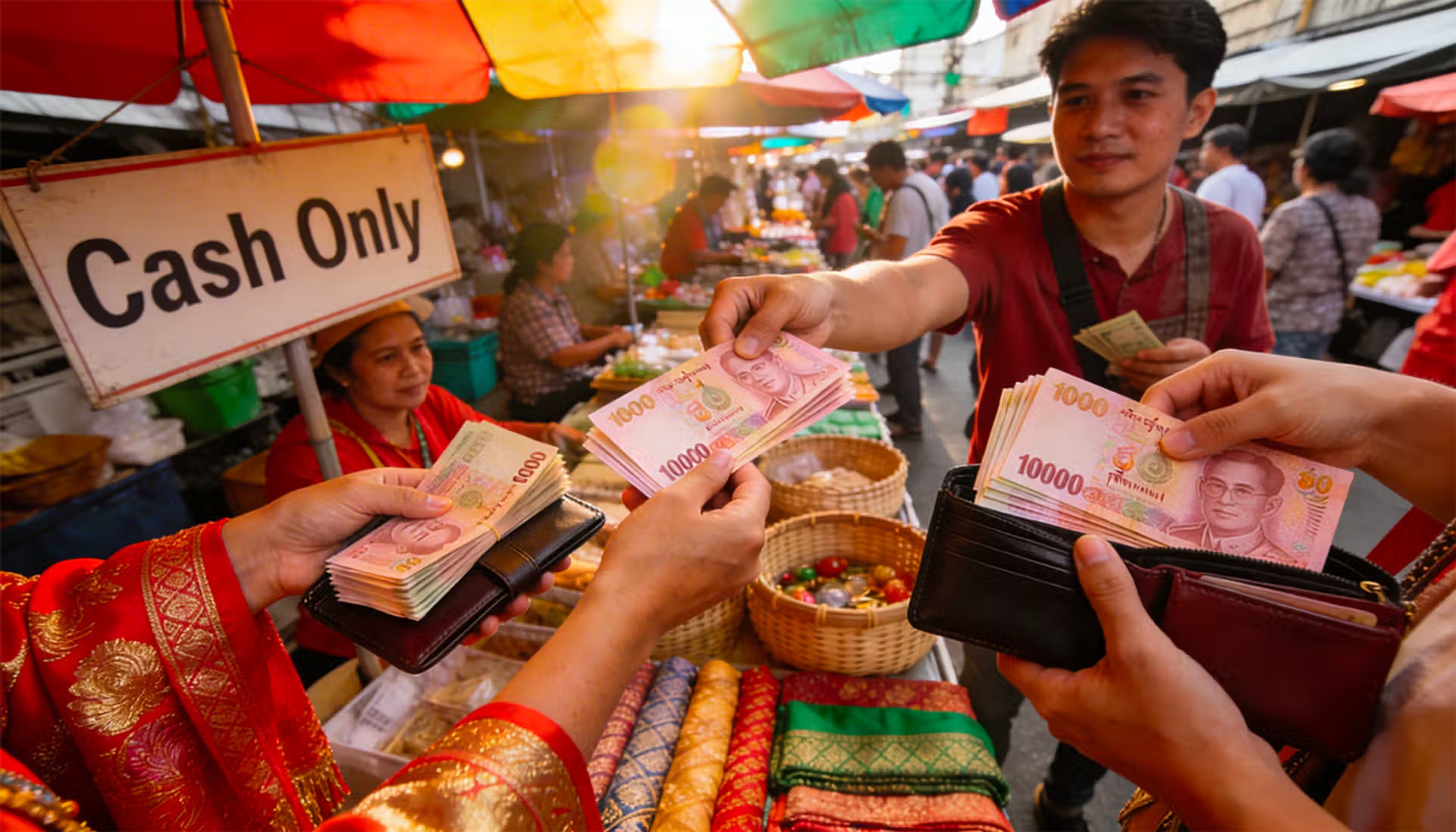
The Bank of Thailand has confirmed that a significant surge in cash withdrawals during September 2025 was directly linked to expanded regulatory measures intended to freeze accounts associated with online piracy and fraudulent activities. Under current anti-money laundering laws, individuals found guilty of laundering assets can face imprisonment for up to ten years and a fine ranging from 20,000 to 200,000 baht. The central bank recently clarified that the public reacted to these stringent enforcement actions by moving funds into physical currency to avoid potential account restrictions. This temporary shift in liquidity patterns prompted the central bank to issue public reassurances while maintaining strict oversight of commercial banking activities to prevent the illicit movement of funds.
Table of Contents


Regulatory Crackdown on Mule Accounts and Piracy
The primary driver behind the unusual financial behavior observed in late 2025 was the government’s intensive campaign against mule accounts, which are frequently used to facilitate money laundering and online scams. The Ministry of Digital Economy and Society, in collaboration with the Anti Money Laundering Office, expanded the criteria for identifying suspicious accounts, leading to the freezing of over one million bank accounts by early 2026. This aggressive stance was necessary to disrupt the flow of billions of baht linked to transnational organized crime and online gambling syndicates. However, the breadth of the measures initially caused widespread concern among legitimate merchants and consumers who feared their funds might be caught in the sweep. The central bank noted that this anxiety led many people to withdraw cash for daily spending, temporarily reverting to physical currency transactions instead of relying on the digital payment infrastructure.



Strategic Cash Management and Election Oversight
Looking forward to the early months of 2026, the central bank has implemented a strategic plan to manage cash reserves in anticipation of heightened demand during both the Chinese New Year and the national election cycle. To maintain financial stability and ensure that the increased supply of banknotes does not facilitate illegal political financing or money laundering, the regulator has instructed commercial banks to strictly monitor all high-value withdrawals. Banks are required to report any cash transactions of two million baht or more to the Anti Money Laundering Office, while electronic transfers exceeding 100,000 baht also trigger mandatory reporting requirements. This level of scrutiny is designed to identify and flag abnormal transaction patterns that could signal the distribution of illicit funds during the sensitive electoral period. The authorities are working to ensure that the liquidity available in the market remains consistent with actual public spending needs rather than being diverted for criminal purposes.
Enhanced Compliance Framework for Financial Institutions
To further fortify the financial system against illicit flows, the central bank has introduced stricter documentation requirements for large transactions, particularly those involving foreign currency and high-value assets like real estate or digital currencies. Starting in late 2025, financial institutions were directed to perform enhanced due diligence on all non-resident inflows exceeding 200,000 dollars. These measures remove the simplified know your business shortcuts for high-risk categories, requiring banks to verify the source of funds and the specific purpose of the transfer on the trade date. By tightening the verification process for assets such as gold and physical banknotes, the regulator aims to close loopholes that have historically been exploited for layering and integrating criminal proceeds. These reforms are part of a broader 2024 to 2026 strategic plan to enhance the resilience of the Thai economy against evolving financial threats and cybercrime.
Analysis of Systemic Safeguards and Public Trust
The recent fluctuations in Thailand’s cash supply highlight the delicate balance between aggressive enforcement of anti-money laundering regulations and the maintenance of public confidence in the banking sector. While the freezing of over one million accounts demonstrates the government’s commitment to eradicating mule account networks, the resulting spike in cash withdrawals suggests a significant level of public apprehension regarding financial accessibility. To address this, the central bank and the Anti Money Laundering Office have streamlined the appeal process for account holders, promising reviews within hours to minimize the impact on innocent parties. The ongoing efforts to integrate behavioral detection technology and stricter reporting thresholds reflect a transition toward a more proactive and data-driven defense against financial crime. As the nation moves through the 2026 election, the success of these measures will depend on the ability of regulators to suppress illicit activities without disrupting the legitimate flow of commerce or eroding trust in digital financial systems.
Key Points
- The Bank of Thailand reported that the surge in cash withdrawals in September 2025 was caused by public anxiety over measures to freeze accounts linked to piracy.
- Law enforcement agencies have frozen more than 1.1 million bank accounts since 2023 to combat mule accounts and online scams worth billions of baht.
- Commercial banks are required to report cash transactions of two million baht or more and suspicious electronic transfers to the Anti-Money Laundering Office.
- Central bank authorities are closely monitoring cash supplies during the 2026 election and the Chinese New Year to prevent illegal financial activities.
- New regulations effective from late 2025 mandate stricter document checks for foreign currency inflows exceeding 200,000 dollars to manage volatility and AML risks.
Related Links
- Anti-Money Laundering Act B.E. 2542 (1999) Official Text
- Bank of Thailand Strategic Plan for Financial Stability 2024-2026
- FATF Mutual Evaluation Report of Thailand on Anti-Money Laundering
- Anti-Online Scam Center (AOC) Statistics and Mule Account Measures
Other FinCrime Central Articles About Thailand
Source: Bank of Thailand
Some of FinCrime Central’s articles may have been enriched or edited with the help of AI tools. It may contain unintentional errors.
Want to promote your brand, or need some help selecting the right solution or the right advisory firm? Email us at info@fincrimecentral.com; we probably have the right contact for you.