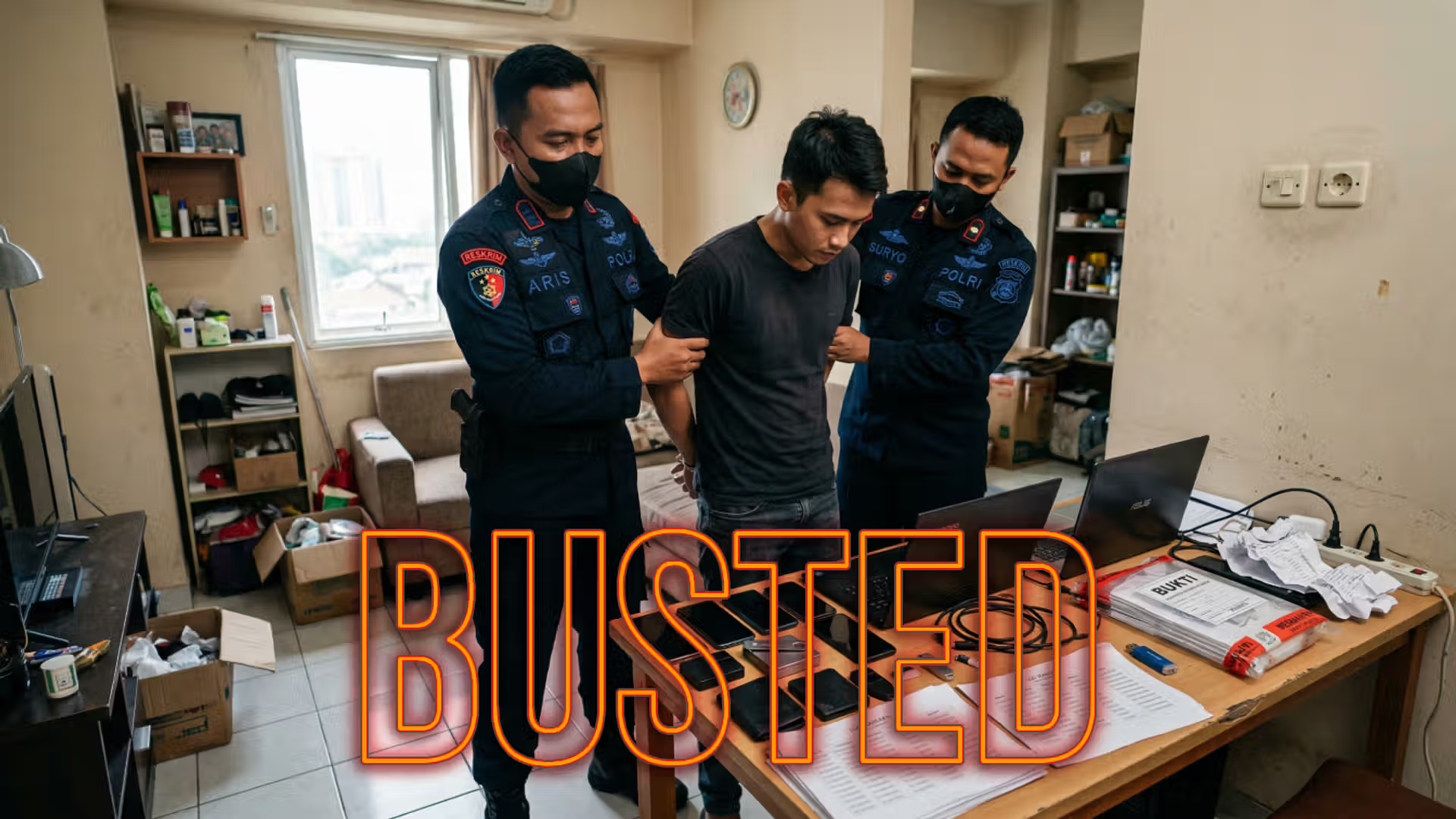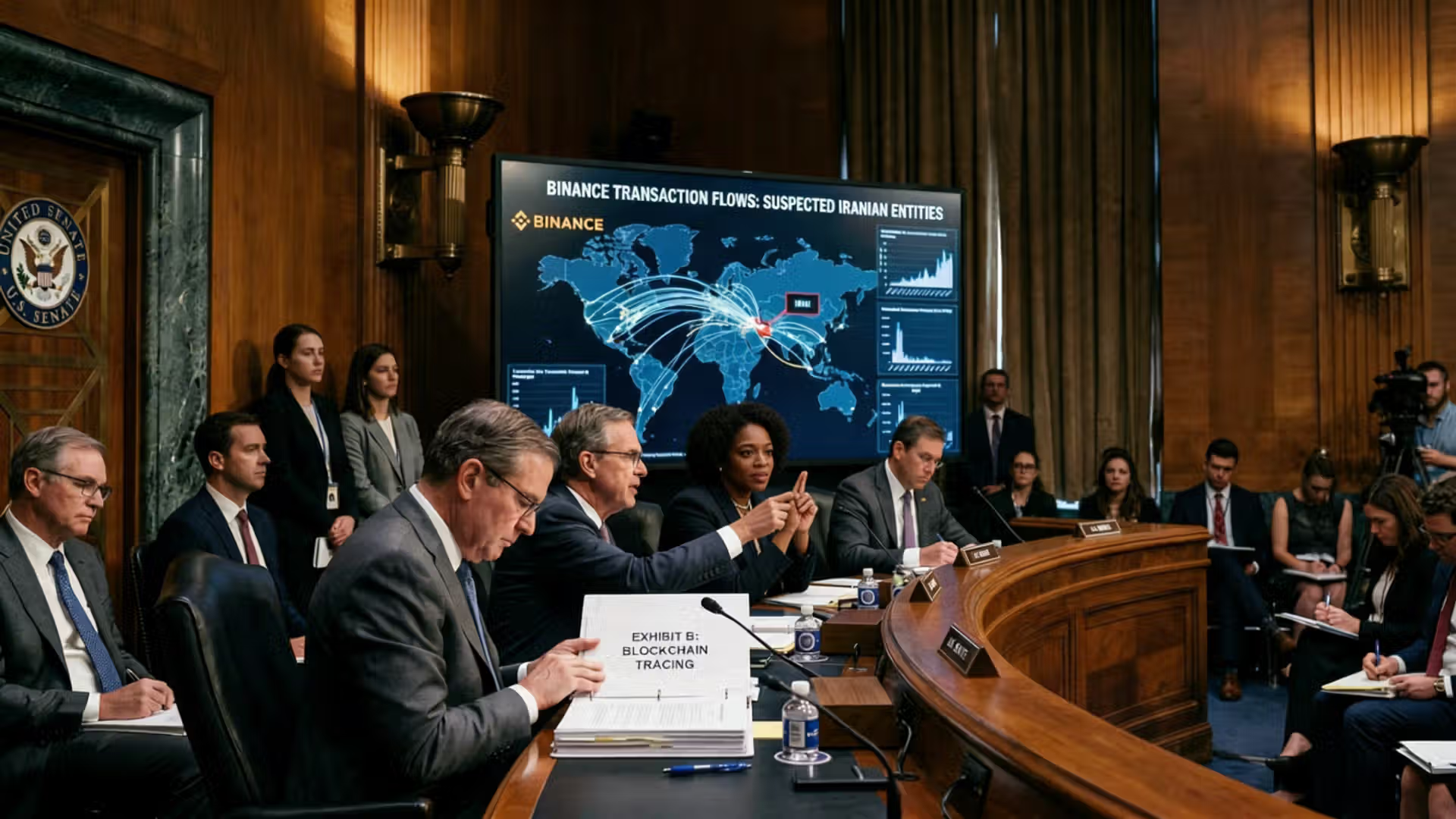
The US Senate has intensified its federal investigation into Binance after evidence suggested a massive $1.7 billion discrepancy in reported transactions involving sanctioned entities. This escalation follows an April 1 formal demand for detailed transaction records, internal methodology, and comprehensive wallet addresses to address potential misrepresentations made to the Senate Permanent Subcommittee on Investigations. The exchange now faces an April 14 deadline to clarify why its previous disclosure of $110,000 in Iranian-linked flows differs so drastically from independent reporting. Regulatory scrutiny has reached a critical juncture as lawmakers seek to determine if the exchange deliberately misled the public regarding its exposure to high-risk jurisdictions. Federal officials are particularly focused on the mechanics of these transactions and whether the platform’s anti-money laundering protocols were intentionally bypassed to maintain high trading volumes.
Table of Contents


Sanctions Evasion Risks and Transaction Monitoring Failures
The core of the current federal inquiry involves the mechanical failures of automated monitoring systems that allegedly allowed nearly $1.7 billion to flow through accounts linked to sanctioned jurisdictions. Regulatory bodies remain deeply concerned with how a global exchange could report a figure as low as $110,000 for direct transactions with sanctioned exchanges while secondary analysis suggests a much broader network of illicit transfers. This discrepancy highlights a fundamental weakness in the attribution of funds and the identification of indirect flows, which often utilize complex layering techniques to bypass traditional screening filters. Federal investigators are now demanding a year-over-year accounting of every interaction between the platform and known high-risk exchanges to determine if the underreporting was a result of technical limitations or a deliberate narrowing of the reporting methodology. The gap between these figures suggests that a significant amount of capital moved through the platform without the necessary level of oversight, potentially fueling the financial activities of sanctioned regimes.
Transaction monitoring serves as the backbone of any robust anti-money laundering framework, yet the allegations suggest that the systems in play may have been configured to ignore certain types of volume. When a financial institution or crypto asset service provider fails to capture the full scope of geographical risk, they expose the global financial system to significant threats from state-sponsored actors and designated entities. The inquiry specifically looks at the use of virtual private networks and drop accounts, which are often employed by individuals in prohibited regions to mask their true location and identity. By utilizing stolen or purchased verified accounts, these actors can successfully pass initial onboarding checks, requiring the exchange to maintain persistent and sophisticated behavioral monitoring to catch subsequent red flags. The failure to address these vulnerabilities in real time suggests a systemic breakdown in the compliance architecture that governs high-volume digital asset trading. Without granular oversight, the speed of blockchain technology becomes a liability rather than an asset in the fight against financial crime.
Furthermore, the investigation explores the possibility that detection mechanisms were intentionally weakened or relaxed after certain regulatory milestones were reached. Maintaining the integrity of screening tools is a legal requirement, and any reduction in the sensitivity of these tools without a valid risk-based justification could be viewed as a violation of federal mandates. The subcommittee is particularly interested in whether tools designed to spot illicit indirect transfers were modified in a way that permitted larger volumes of capital to move without triggering internal alerts. This line of questioning underscores the importance of continuous auditing and the necessity for exchanges to prove that their compliance budgets and staff levels remain adequate to handle the evolving complexity of global sanctions evasion. It is not enough to have tools in place; they must be rigorously calibrated to detect even the most subtle patterns of money laundering and layering.




Delays in Law Enforcement Response and Vendor Management
Another critical area of the probe involves the significant time gaps between the receipt of law enforcement warnings and the actual suspension of suspicious accounts or vendors. Reports indicate that the exchange may have waited several months before acting on credible information regarding terrorist financing and shell entities. Such delays are highly problematic in the context of anti-money laundering because they provide illicit actors with a wide window of opportunity to move funds out of reach of authorities. In the fast-paced world of cryptocurrency, where transactions settle in seconds, a two-month delay in freezing an account can result in the permanent loss of traceable assets. The subcommittee has noted specific instances where shell entities and suspected vendors remained active on the platform long after they were flagged by external investigators, allowing millions of dollars to circulate within the ecosystem.
Effective vendor management is a pillar of institutional compliance, yet the case involving the vendor Blessed Trust suggests a lack of urgency in mitigating third-party risks. If a vendor is implicated in facilitating transactions for designated groups, the standard regulatory expectation is an immediate cessation of the relationship and a thorough look back at all historical transactions associated with that party. The five-month delay alleged in the Senate letter suggests a failure in the internal escalation process where warnings from law enforcement were not translated into immediate operational changes. This lack of agility not only complicates criminal investigations but also damages the overall trust in the exchange as a safe and regulated environment for legitimate commerce. When a vendor relationship is allowed to persist despite clear warning signs, it suggests that the compliance function may be subordinate to other corporate priorities, such as maintaining liquidity or market share.
The inquiry also brings to light the controversial use of internal account tags that allegedly protected certain high-value or internal accounts from standard enforcement actions. Tags such as those instructing staff not to block certain accounts represent a major red flag for auditors and regulators. In a compliant system, no account should be exempt from scrutiny based on its internal status, especially if it exhibits behavior consistent with money laundering or sanctions violations. The existence of these tags suggests a tiered compliance structure where business interests might have been prioritized over legal obligations. Such practices, if proven, demonstrate a fundamental conflict of interest within the compliance department and suggest that the independence of the anti-money laundering officers may have been compromised by institutional pressures to protect revenue-generating accounts.

Internal Whistleblowing and Compliance Culture
The health of a financial institution’s compliance culture is often judged by how it treats employees who raise concerns about potential wrongdoing. The Senate inquiry has requested information regarding the dismissal of personnel for unauthorized disclosure, raising questions about whether the exchange fostered a culture of silence. In the eyes of regulators, a robust compliance program must include clear channels for internal reporting and strong protections for whistleblowers. If staff members feel that reporting a violation to law enforcement or even to their own superiors will lead to professional retaliation, the entire anti-money laundering framework becomes ineffective. The subcommittee is now seeking to understand if compliance staff were disciplined for doing their jobs, which would point toward a top-down failure in corporate governance and a disregard for ethical standards.
A transparent and cooperative relationship with law enforcement is essential for any entity operating in the financial sector. When an exchange is perceived as being obstructive or slow to provide requested documents, it invites deeper and more aggressive oversight. The current demand for the methodology used to calculate previous transaction figures is a direct result of a perceived lack of candor. Investigators are not only interested in the numbers themselves but also in the logic and data sets used to arrive at those numbers. This level of granular detail allows regulators to verify whether the exchange is operating in good faith or if it is engaging in a pattern of obfuscation to hide the true extent of its exposure to high-risk jurisdictions. For a global leader in the digital asset space, anything less than total transparency can be interpreted as an admission of systemic risk or regulatory defiance.
The broader implications of this case extend to the entire cryptocurrency industry, as it sets a precedent for how global exchanges must handle cross-border sanctions and anti-money laundering responsibilities. As digital assets become more integrated into the global economy, the standards for transparency and accountability are rising to match those of traditional banking institutions. The Senate probe serves as a reminder that regulatory scrutiny does not end with a settlement or a public statement of cooperation. Ongoing monitoring and the ability to provide accurate, timely, and complete data to Congressional subcommittees are now mandatory components of operating a large-scale digital asset exchange. The outcome of this inquiry will likely influence future legislation and the rigor with which other platforms are audited in the coming years, potentially leading to new reporting requirements that demand real-time visibility into high-value transactions.
Future Implications for Regulatory Oversight and Exchange Trust
As the April 14 deadline approaches, the exchange must provide a transparent accounting of its actions or face further escalations that could include more severe penalties or restrictions. The focus on specific wallet addresses and the methodology of fund attribution means that there is little room for vague or generalized responses. The subcommittee’s insistence on seeing the raw data reflects a growing sophistication among regulators who are no longer willing to take an exchange’s self-reported figures at face value. This transition toward data-driven oversight ensures that compliance claims are backed by verifiable evidence, reducing the likelihood of systemic risks being ignored until they reach a crisis point. The ability to reconstruct transaction histories across multiple chains and layers is now a vital skill set for both compliance officers and government investigators alike.
The resolution of this case will also impact the level of trust that institutional and retail investors place in centralized exchanges. Trust is built on the foundation of legal compliance and the assurance that a platform is not being used to fund illicit activities or evade international sanctions. By addressing the discrepancies in the reported billion-dollar flows, the exchange has an opportunity to demonstrate a renewed commitment to transparency and moral leadership within the sector. Conversely, a failure to provide satisfactory answers will only reinforce the narrative that the crypto industry requires even more stringent and intrusive regulation to protect the global financial order from being undermined by rogue actors. The era of loose oversight is coming to an end, and only the platforms that embrace rigorous anti-money laundering standards will survive the transition.
Furthermore, the global nature of these transactions means that international cooperation will be paramount in the coming months. As the US Senate moves forward, other jurisdictions are likely to take note and launch their own inquiries into the movement of funds between digital asset platforms and sanctioned regions. This creates a multi-front regulatory challenge for any exchange that operates across borders without a uniform and highly robust compliance system. The lessons learned from this investigation will likely form the basis for new international standards on how digital asset service providers must verify the source and destination of funds, especially when dealing with intermediaries and privacy-enhancing technologies. The ultimate goal is to create a digital financial system that is both innovative and immune to the corrosive effects of organized financial crime.
Key Points
- Binance is under investigation for a $1.7 billion discrepancy regarding transactions linked to Iran.
- Senator Blumenthal has demanded the disclosure of specific wallet addresses and internal monitoring methodologies.
- The inquiry focuses on delays in responding to law enforcement warnings about terrorist financing.
- Allegations suggest that internal tags may have been used to exempt specific accounts from compliance blocks.
- The Senate subcommittee has set a strict deadline of April 14 for the production of all requested documents.
Related Links
- Financial Action Task Force Recommendations on Virtual Assets
- Office of Foreign Assets Control Sanctions Compliance Guidance
- United States Senate Permanent Subcommittee on Investigations Reports
- Financial Crimes Enforcement Network Advisory on Illicit Activity in Digital Assets
- Department of Justice Crypto Enforcement Framework
Other FinCrime Central Articles About Biannce Suspected Sanctions Evasion and Terrorism Financing
- Money Trail to Hamas Exposes Binance in Hard-Hitting Case
- Binance Sues WSJ Over 1 Billion Dollar Iran Sanctions Claims
- Binance Wins Dismissal of Terrorism Financing Lawsuit in New York Court
Source: Cryptorank
Some of FinCrime Central’s articles may have been enriched or edited with the help of AI tools. It may contain unintentional errors.
Want to promote your brand, or need some help selecting the right solution or the right advisory firm? Email us at info@fincrimecentral.com; we probably have the right contact for you.