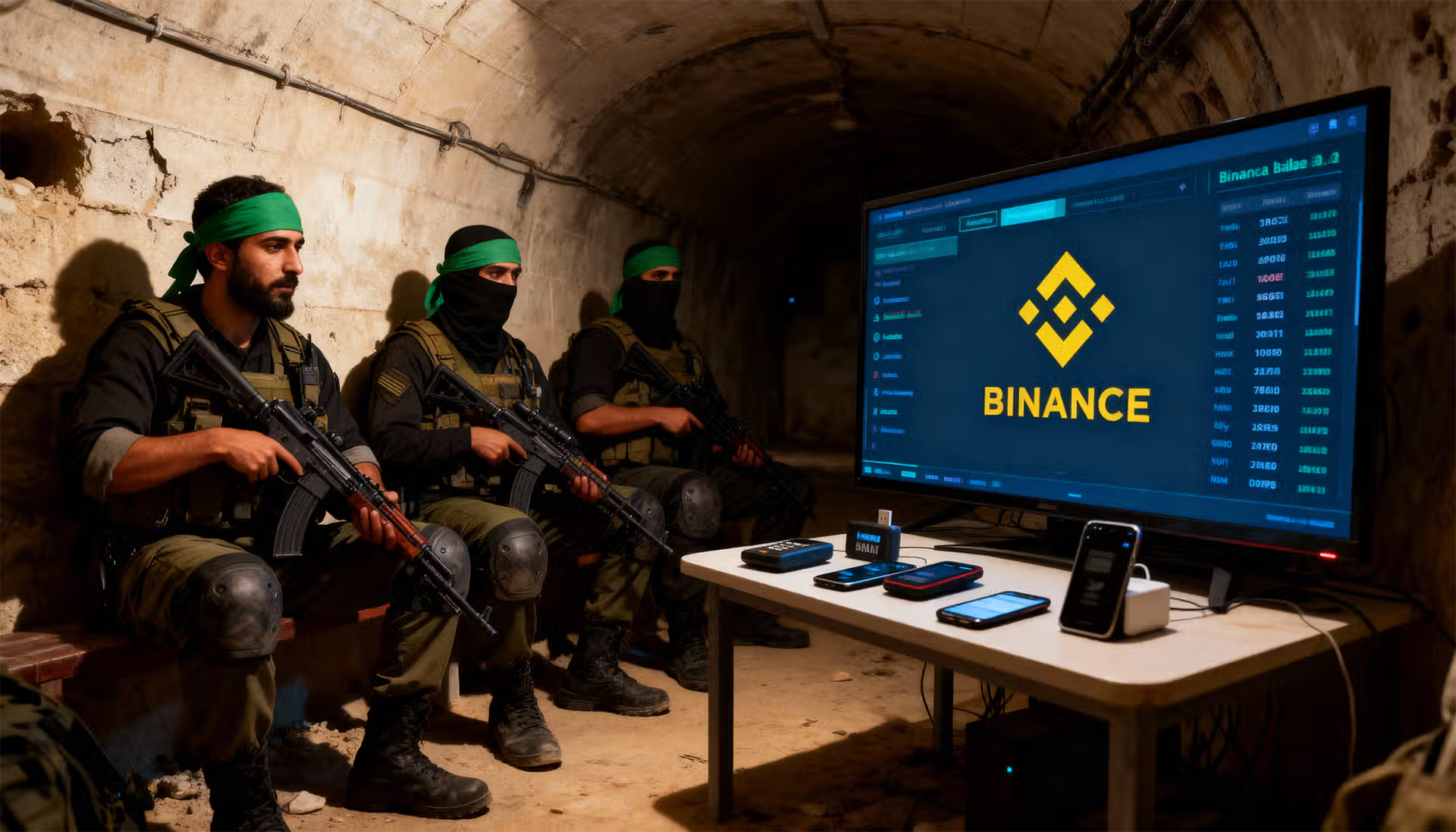
A significant money-laundering controversy has emerged from a federal lawsuit in North Dakota alleging that Binance and its former leadership enabled extensive financial flows supporting Hamas ahead of and after the October 2023 attacks. The complaint asserts that the platform’s governance choices allowed covert movement of crypto assets that would have been far more difficult through regulated financial channels. Structural reliance on pooled wallets, incomplete identity verification and opaque internal ledger transfers are presented as core enablers of laundering mechanisms. The filing emphasises how the exchange’s operating model heightened exposure to high-risk transactions. This case illustrates the depth of AML vulnerabilities that can arise when digital-asset platforms scale without proportionate controls.
Table of Contents


Money Laundering Exposure Within the Lawsuit
The lawsuit states that Binance allegedly facilitated large volumes of crypto transactions that ultimately supported Hamas operations by enabling masked flows through an intentionally opaque architecture. According to the filing, the exchange developed systems that allowed high-risk customers to transact with minimal friction, including limited verification requirements and the routine use of omnibus wallets. These wallets commingled the assets of millions of users, reducing visibility into the origin and destination of funds. The complaint describes how this pooling structure allowed Hamas-linked transfers to blend seamlessly into the general balance of the exchange.
Internal ledger transfers also play an important role in the allegations. The lawsuit explains that once assets entered Binance, transfers between users frequently occurred off-chain, meaning they were recorded only on internal systems and not on public blockchain ledgers. This design effectively masked the movement of assets between counterparties. The filing underscores that such internal transfers can prevent third parties, including regulators and blockchain-analysis providers, from identifying laundering patterns.
Regulatory failures identified in earlier U.S. enforcement actions are also central to the lawsuit. In 2023, Binance admitted to violations of the Bank Secrecy Act and sanctions regulations and agreed to a multibillion-dollar penalty. The lawsuit builds on those findings by arguing that similar systemic weaknesses continued beyond the enforcement date. It alleges that Binance did not meaningfully improve screening of inbound deposits, did not appropriately monitor customer behaviour and did not maintain sufficient records to track transactions linked to Hamas. As a result, the filing claims that the platform facilitated the equivalent of hundreds of millions of dollars in transfers connected to Hamas-aligned financial networks. These claims rely extensively on documented evidence submitted in the complaint and in previous government actions gov.uscourts.ndd.70568.1.0.
Another important aspect raised in the lawsuit concerns guidance from internal staff. The complaint recounts internal discussions suggesting that some compliance officers recognised the presence of high-risk users but were discouraged from freezing accounts or escalating concerns. According to the filing, this internal culture contributed to a permissive environment for laundering activity.
By framing these weaknesses within the broader lifecycle of customer onboarding, transaction processing and withdrawal, the lawsuit reflects how gaps at multiple stages of an exchange workflow can create a cumulative AML threat. The allegations therefore extend beyond isolated operational oversights, suggesting an overarching business model that made financial anonymity accessible at scale.
Operational Structures Supporting Illicit Flows
The lawsuit highlights several operational characteristics that allegedly increased the risk of illicit behaviour. A central element is the platform’s reliance on omnibus wallets, which consolidate all customer funds into a small number of large addresses. This model makes it difficult to associate specific on-chain withdrawals with individual users. Because outbound transactions appear to originate from Binance itself, blockchain observers cannot determine which user initiated a transfer. The complaint argues that this structure allowed Hamas-associated fund flows to move through the exchange without drawing attention on the blockchain.
Another operational factor highlighted is the creation of internal sub-accounts. According to the lawsuit, Binance allowed the creation of multiple sub-accounts under a single primary user profile. These sub-accounts could receive or transfer assets without undergoing separate verification or monitoring. The complaint states that this feature allowed certain users operating on behalf of Hamas to divide their activities across several sub-accounts, reducing the likelihood of detection and complicating audit trails. The filing further notes that when a sub-account was removed for compliance reasons, other related accounts were often allowed to continue operating, creating opportunities for further laundering activity.
The complaint also focuses on how the exchange handled deposits. It alleges that Binance did not screen inbound transfers to determine whether funds originated from sanctioned wallets or Hamas-linked clusters. According to the lawsuit, this meant that large deposits could enter the system unchecked, be mixed internally and then be sent back onto the blockchain in a different form or through a different address. This process contributed to the layering phase of money laundering, in which illicit funds are separated from their origins through multiple transactions.
The filing also references specific financial ecosystems operating outside the exchange but interacting with it. These include entities in regions where Hamas-related networks have historically been active. According to the lawsuit, these external actors often deposited funds into Binance wallets, moved assets internally through off-chain transfers and then withdrew them to new blockchain addresses. This sequence introduced multiple layers of obfuscation that are characteristic of complex laundering schemes.
Further context within the lawsuit describes how Hamas has increasingly adopted crypto assets to raise and move funds. The complaint notes that traditional financial restrictions, sanctions and monitoring have pushed Hamas to alternative channels. Blockchain-based transactions can benefit actors seeking pseudonymous fund transfers if they exploit platforms with limited AML safeguards. The lawsuit argues that the exchange’s approach, particularly during the years leading up to the 2023 attacks, provided an accessible environment for these practices.
The lawsuit also points to evidence from government seizures and enforcement actions that documented interactions between Hamas-linked wallets and Binance-controlled wallets, suggesting that on-chain indicators were present but not addressed. The filing highlights that regulatory bodies, including FinCEN and OFAC, have emphasised the importance of screening for such indicators. The complaint asserts that Binance’s internal controls did not sufficiently align with these expectations and therefore facilitated continued laundering exposure gov.uscourts.ndd.70568.1.0.
Broader AML Failures Connected to Hamas Financial Activity
The allegations in the lawsuit extend beyond operational practices to examine the broader governance structure of the exchange. According to the complaint, Binance intentionally avoided establishing a formal corporate location, which contributed to a fragmented compliance environment. This structure allegedly limited accountability, reduced the effectiveness of oversight mechanisms and restricted the implementation of unified AML controls.
The lawsuit also describes how the exchange expanded rapidly without implementing proportionate compliance infrastructure. It claims that growth was prioritised over risk management, highlighting how high-volume activity from regions linked to Hamas fundraising networks was allowed to continue despite clear red flags. The filing suggests that internal discussions acknowledged governance gaps but did not resolve them.
The complaint further references the exchange’s admitted violations of U.S. law, including failures to maintain an effective AML programme, failures to file required reports and failures to prevent sanctions breaches. These issues are presented as significant contributors to the laundering risk associated with Hamas activity. By drawing a connection between structural weaknesses and specific fund flows, the lawsuit demonstrates how governance decisions can influence exposure to financial crime.
Another important theme is the interaction between external networks and the exchange. The complaint details examples of entities known for coordinating fund transfers on behalf of Hamas interacting with Binance-linked wallets before and after the 2023 attacks. Although individual names and account numbers are not repeated here, the lawsuit lists multiple instances in which funds appeared to move from external wallets associated with Hamas operations into Binance and back out to other blockchain addresses. These movements allegedly reflect a layered laundering process, combining both on-chain and off-chain pathways.
The lawsuit also claims that in certain instances, the exchange received warnings from analytics providers identifying high-risk transactions linked to Hamas, yet did not take adequate action to freeze accounts or file reports. Such behaviour, if established, would represent a significant deviation from expected AML practices. The complaint suggests that susceptibility to high-risk transactions stemmed from a deliberate business model rather than incidental errors.
In addition, the filing describes Binance’s internal controls for U.S. users, noting that the company maintained banking relationships in the United States that were used to move substantial volumes of fiat currency. These connections illustrate how laundering concerns extended beyond crypto assets into the traditional financial system. The lawsuit argues that these cross-border interactions, combined with weak internal controls, allowed funds connected to Hamas to move through both crypto and banking channels.
Overall, the allegations signal how a combination of governance decisions, operational structures and compliance gaps can collectively enable laundering activity aligned with Hamas fundraising. The lawsuit therefore presents a multifaceted view of AML deficiencies that allegedly supported illicit financial ecosystems operating across multiple jurisdictions.
Lessons for AML Practitioners
The lawsuit offers a detailed case study on how weaknesses in digital-asset platforms can translate into significant AML risks when exploited by entities such as Hamas. Industry professionals examining the case will observe that many of the issues raised are not unique to the exchange but are inherent to any system that emphasises speed, volume and anonymity without adequate safeguards.
A key takeaway is the importance of screening inbound transfers, not only outbound movements. The complaint highlights that failure to monitor deposits allowed high-risk assets to enter the ecosystem. AML frameworks must therefore include robust measures to detect suspicious sources before assets reach customer accounts.
Another lesson concerns the use of omnibus wallets. While they are common in digital-asset exchanges, their implementation must be accompanied by internal systems capable of tracking beneficial ownership. The inability to attribute transactions to individual users is a significant red flag for regulators. AML practitioners should consider how wallet design influences traceability and how internal records supplement on-chain information.
The lawsuit reinforces the need for continuous monitoring, enhanced due diligence for high-risk regions and proactive reporting. It also highlights the risks associated with internal culture. If compliance teams are discouraged from escalating concerns, even effective policies may fail in practice.
The broader message is that AML programmes must evolve with technology. Organisations interacting with digital assets should anticipate the methods used by groups such as Hamas and design controls that address both on-chain and off-chain activity. This includes understanding cross-border linkages, external typologies and rapidly shifting financial ecosystems.
The case underscores that regulatory consequences for inadequate controls can be significant. For platforms handling global flows, oversight is not only a legal requirement but a direct safeguard against inclusion in illicit financial networks. The lawsuit therefore serves as a reminder that AML frameworks must be embedded across technical, organisational and strategic layers to mitigate exposure to actors like Hamas.
Key Points
- The lawsuit alleges that Binance enabled laundering activity supporting Hamas through pooled wallets and limited verification controls.
- Internal off-chain transfers allegedly obscured the movement of assets linked to Hamas fundraising networks.
- Regulatory penalties issued in 2023 are cited as evidence of structural AML weaknesses.
- The complaint claims inbound transfers from Hamas-associated sources were insufficiently screened.
- AML practitioners can draw lessons on screening, governance and monitoring from the case.
Related Links
- OFAC Sanctions Guidance for Virtual Currency Industry
- FATF Virtual Assets and VASP Guidance
- FinCEN Advisory on Illicit Finance Risks in Virtual Currency
Other FinCrime Central Articles About Binance
- ICIJ uncovers deep laundering flaws inside Binance and Other Crypto Exchanges
- Binance Founder Zhao Wins Trump Pardon After AML Conviction
- French Authorities Intensify Scrutiny of Binance Over Money Laundering
Source: Court Listener (PDF)
Some of FinCrime Central’s articles may have been enriched or edited with the help of AI tools. It may contain unintentional errors.
Want to promote your brand, or need some help selecting the right solution or the right advisory firm? Email us at info@fincrimecentral.com; we probably have the right contact for you.